Sphynx Cat
Updated March 26, 2026
Sphynx Cat
Updated March 26, 2026
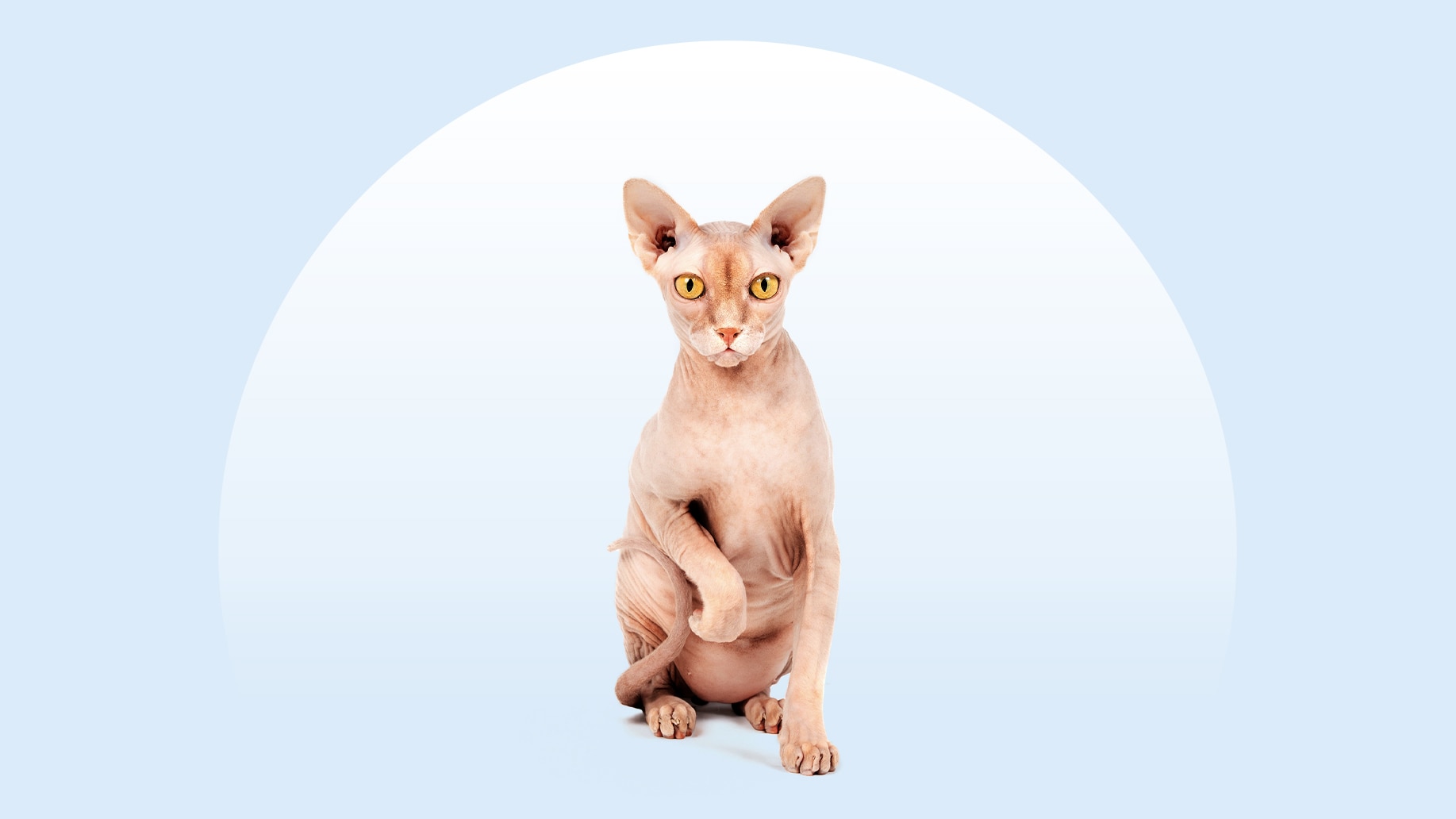
Virtually hairless and highly social, Sphynx cats need lots of love and attention—and a sweater or two to keep warm. While these energetic kitties enjoy playing fetch and hunting toy mice, their favorite activity will always be spending time with you.
Affectionate, Playful, Inquisitive
7–14 pounds
7–14 years
Sphynx cats are intelligent, curious, and completely unapologetic about wanting your attention. If they’re not on your lap, they’re snuggled inside your shirt or riding on your shoulder like a parrot. Basically, their happy place is you.
While they adore their pet parents, these tiny extroverts are always up for making new friends. They’re great with older kids and will keep everyone laughing with their playful antics.
With higher grooming needs than some cats, Sphynx require hands-on pet parents. But weekly baths and ear cleanings just mean more bonding time.
Recommended Products



Sphynx Cat Characteristics
Sphynx Cat Appearance
No fur, no problem. Sphynx cats have more wrinkles than hair, but they’re just as soft and snuggly as other felines.
But not all are completely hairless cats: Many Sphynx have fine peach fuzz on their bodies, faces, and tails.
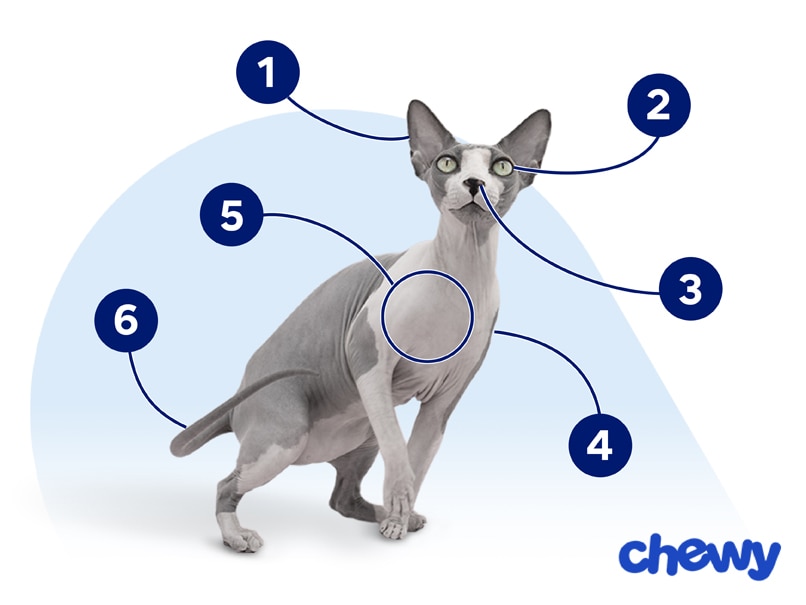
- Ears
Sphynx cats have extra-big, batlike ears that sit high on their heads.
- Eyes
Their large, lemon-shaped eyes vary in color, including blue, green, gold, hazel, and yellow.
- Nose
The bridge of their noses should be covered with a soft, fine down. Their nose color typically matches their skin and ranges from pink to black.
- Coat Length
Sphynx cats have little to no fur. Some are covered in very fine fuzz, while others are almost completely bare. They may or may not have whiskers.
- Coat Color
Color and pattern in a Sphynx show up in the pigmentation of their skin rather than a traditional coat. A black Sphynx cat, for example, will have black skin. Patterns include solid, tabby, tortoiseshell, and point.
- Tail
Long and slender, the Sphynx’s tail tapers to a fine point and may have a small tuft of hair at the tip.
Sphynx Cat Temperament
Sphynx cats form intense emotional bonds and want to be involved in everything you do. (Read: They can be clingy.)
This is why they thrive in households where they can get ample attention, says Leslie Sinn, DVM, DACVB, a veterinarian at Behavior Solutions in Ashburn, Virginia.
Because of their curious nature, Sphynx cats are more likely to join the party than hide under the bed. All guests are fair game to a Sphynx in search of a warm lap or head scratches.
As high-energy, loving cats, they make good playmates for children. However, they do best with older kids who are taught to handle them and their delicate skin gently.
But their friendliness doesn’t stop at humans. Sphynx cats love the company of other pets, especially another Sphynx. They just might become best friends with your dog, too, when everyone is socialized and introduced properly.
Sphynx cats also tend to have a mischievous side. They’ll use their long toes to open cabinets, doors, and anything else that catches their interest. They’re vocal, too—expect chirps, meows, and trills throughout the day.
While the typical Sphynx is outgoing, affectionate, and a little sassy, it’s important to remember that all cats are individuals, says Kelly Engler, DVM, a veterinarian at Animal Behavior Wellness Center in Fairfax, Virginia. Your Sphynx may not fit the exact breed profile, and that’s totally normal.
Related Breeds



How to Care for a Sphynx Cat
Sphynx require special attention to their nearly bare skin. Because they don’t have fur to soak up natural oils, they tend to get oily—and so can anything they lie on, like your bed or couch, says Dr. Engler.
The remedy? Weekly baths to keep their skin healthy and comfortable (and your furniture grease-free).
Grooming
Diet
Exercise
Environment
Sphynx Cat Health
Sphynx cats have a reported lifespan of 7–14 years, although recent research in the United Kingdom found that the Sphynx breed had the shortest life expectancy at birth (6.68 years) of all the cats included in the study.
Their lifespan depends on genetics, proper nutrition, and staying on top of their health needs. Dr. Engler recommends wellness visits once or twice per year, including blood work and a full physical exam.
Knowing what health issues to watch for helps you catch problems early and keep your Sphynx by your side as long as possible.
- Hypertrophic cardiomyopathy (HCM): This heart condition, which has genetic underpinnings in the Sphynx breed, causes the heart muscle walls to thicken, which can lead to blood clots and heart failure. Drs. Engler and Sinn both flag this as a top concern for the breed. Once your Sphynx turns 1 year old, they should see a cardiologist yearly for heart screenings. Breeders should also test for HCM as a preventive step.
- Skin conditions: Sphynx cats’ delicate, unprotected skin is prone to oiliness, sunburn, irritation, and infections. Regular baths, sun protection, and vet checkups will help prevent issues. They’re also genetically predisposed to urticaria pigmentosa, a skin condition that causes itchy, raised, pigmented spots or lesions.
- Dental disease: Sphynx are susceptible to gingivitis and root resorption, says Dr. Sinn. Brush your Sphynx’s teeth daily and take them for regular exams to help prevent or treat these issues.
- Ear infections: Those large, furless ears collect more dirt, oil, and wax than other breeds. Without regular cleanings, this can lead to yeast and bacterial ear infections.
- Neuromuscular condition: A genetic disorder can lead to fatigue and muscle weakness in affected cats.
Sphynx Cat History
The Sphynx cat breed began as an adorable accident. In 1966, a domestic cat in Canada gave birth to a hairless kitten due to a natural genetic mutation.
Named Prune (for the cute wrinkles), cat breeders immediately saw the potential for a new hairless cat breed. Not so coincidentally, this was also the breed’s original name: the Canadian Hairless Cat.
Breeders continued to refine the breed through the 1970s by crossing it with the Devon Rex and the American Shorthair.
The Cat Fanciers’ Association (CFA) officially recognized the Sphynx as a breed in 2002. Today, they continually rank as one of the most popular cat breeds in the world.