How To Get a Cat To Like You: 14 Ways That Work


Whether you’re a cat parent or simply have an affinity for your friends’ pets, you’ve probably faced the challenge of winning over a reticent feline. Odds are, it’s not you personally that the cat has a problem with—it’s your behavior.
“A lot of the time, the reasons for a cat’s behavior are what people do or don’t do,” says Marilyn Krieger, certified cat behavior consultant at The Cat Coach.
With the help of cat behavior experts, we’ve compiled a list of tips to help you make your cat like you. Follow this advice, and you’ll have cats eating out of the palm of your hand in no time—literally and figuratively.
Key Takeaways
- Cats are cautious by nature. Let them approach you first and avoid sudden movements or direct eye contact.
- Creating a calm, cat-friendly environment with enrichment, routine, and safe hiding spots can help a cat feel secure.
- Use positive reinforcement like treats, soft voices, and gentle petting to encourage trust and affection.
- Pay attention to a cat’s body language and let them guide the pace of interaction.
- Socializing kittens early in life is the best way to raise affectionate, confident adult cats.
How To Get a Cat To Like You
1. Let the Cat Approach You
iStock.com/CHOLTICHA KRANJUMNONG
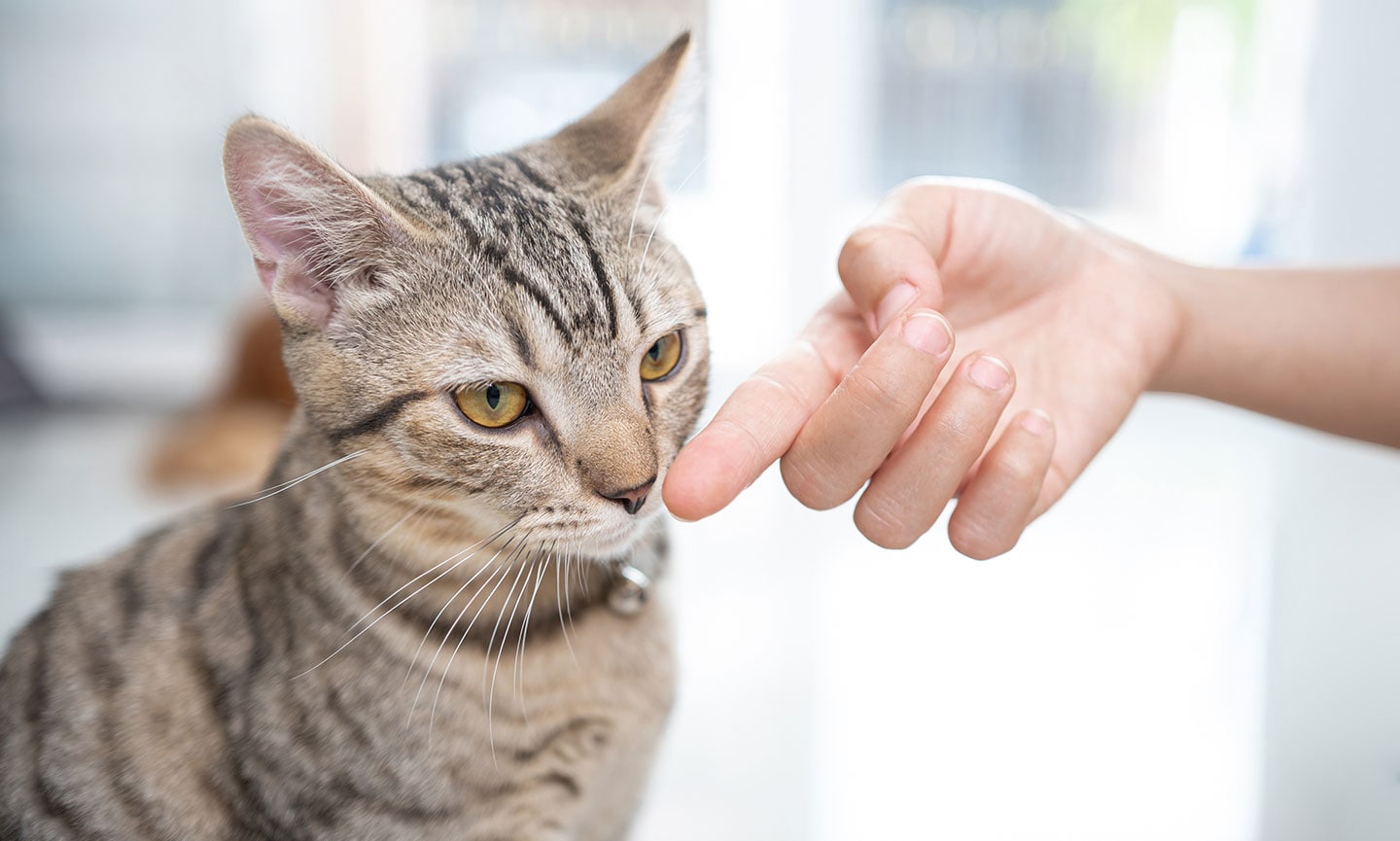
Learning how to get a cat to come to you involves giving them space and letting them make the first move. As much as you may want to greet your kitty with a big ol’ hug and snuggle, don’t.
“This is a common mistake for people who love cats,” Krieger says. “They’ll go up to the cat and corner the cat, try to pet the cat, and try to win over the cat.”
In this situation, she explains, your advances will either be ignored or cause the cat to bolt.
Instead of making a beeline for the cat, encourage the feline to come toward you, says Krieger. What does that look like exactly?
- Crouch down or sit on the floor.
- Extend your index finger toward the cat.
- Let the cat sniff you.
From there, you can begin to pet or scratch the cat’s head―but take it slow.
“Make friends at the pace of the cat,” Dr. Koski says. “If they walk away, let them go.”
The key is to let the cat set the tone of the interaction, and to give them space to relax.
2. Avoid Intimidating Body Language

iStock.com/Vovchyn Taras
If a cat feels fear, they’re more likely to hide or avoid you. So, in order to make a cat like you, it’s important to make them feel comfortable.
“Cats are tiny little things compared to people,” Krieger says, “so it’s very important that they feel safe and secure.”
Try this:
- Crouch down so you appear smaller (and less intimidating).
- Do not make direct eye contact, which “can be considered intimidating or even aggressive,” says Marci Koski, Ph.D., a certified feline behavior and training professional at Feline Behavior Solutions in Vancouver, Washington, and Portland, Oregon.
- Do not directly position your body or attention toward them.
Basically, play hard to get. “They’ll get to you in their own time,” Dr. Koski says.
3. Stay Calm
iStock.com/Nitiphonphat
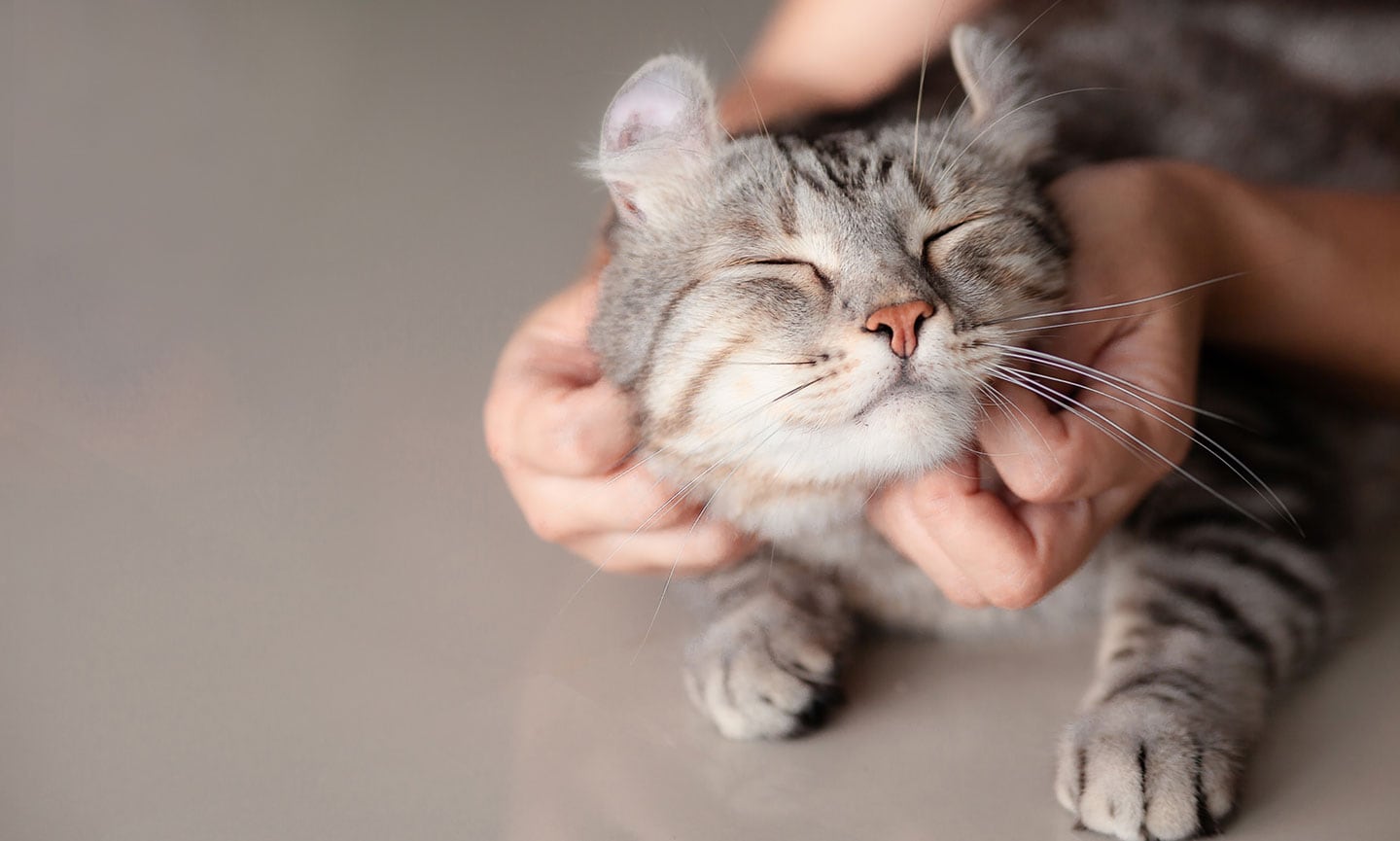
If you’re a “dog person,” you may be used to interacting with pets in a jumpy, excited manner. But according to our experts, that kind of behavior tends to send cats running.
Don’t make any sudden movements, gestures, or sounds, says Dr. Koski. “The more predictable you can be in your actions, the more trusting the kitty will be of you,” she says.
In addition to staying cool as a cucumber, Krieger advises engaging in behaviors that cats and kittens can associate with positive results. That could mean rewarding them with catnip, a toy, or a treat. Krieger recommends giving the cat a bite of food or a treat in greeting and making a habit of using the cat’s name.
“Make everything positive, so everything good happens around you,” she says.
4. Observe Their Body Language
iStock.com/miniseries
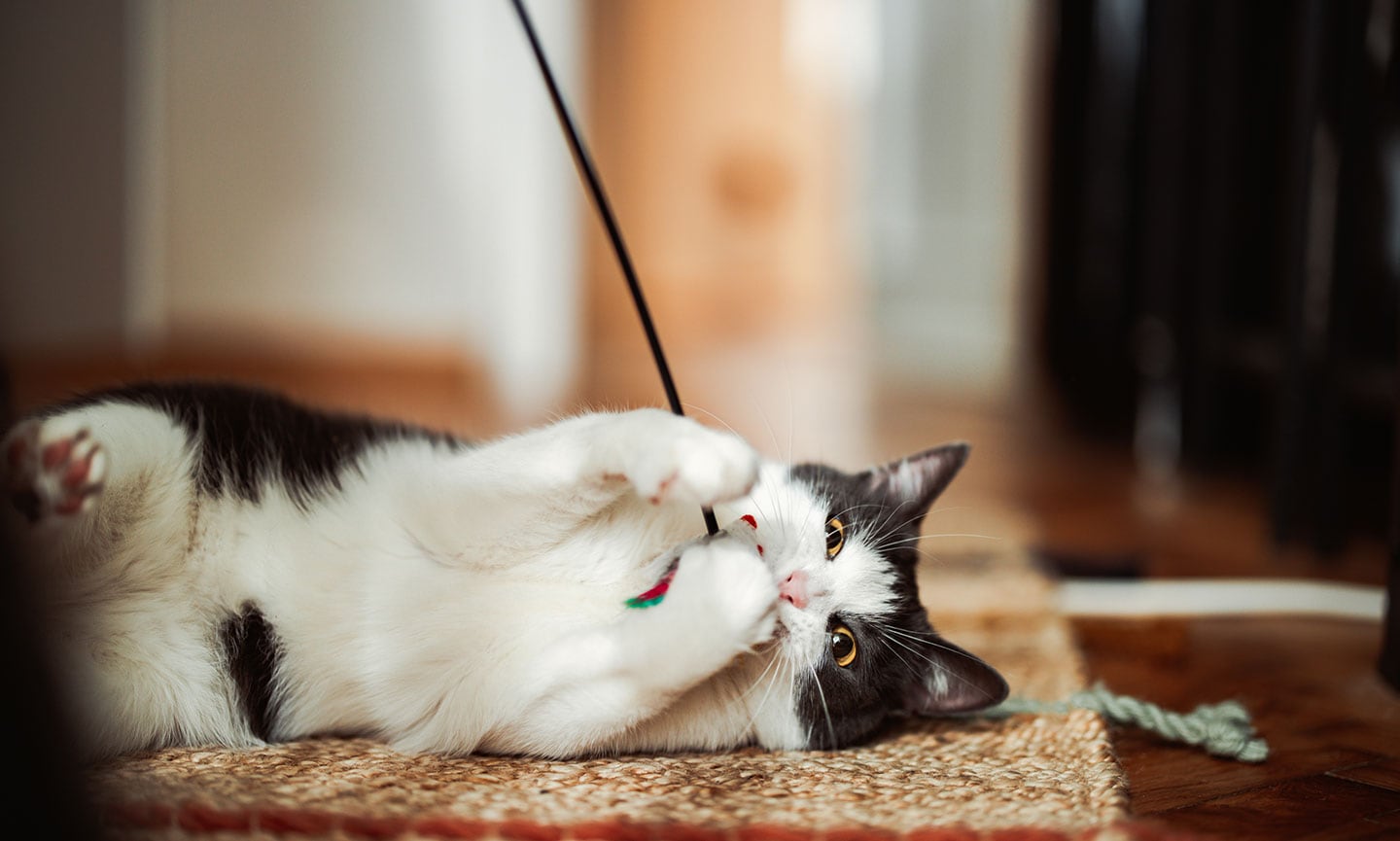
Once you’ve slowly and calmly introduced yourself to a cat, they may be up for some playtime.
Be mindful of the cat’s body language, and confer with the cat’s parent (if that’s not you), before attempting to engage.
Has the cat approached you and allowed you to touch them? Are they displaying signs of comfort, such as purring or kneading? If so, then they may be interested in playing.
“A short play session can be a good way to bond,” Dr. Koski says. “Grab a wand toy, move it like a snake or bird or mouse, and give the cat an opportunity to let her guard down.”
Krieger recommends wand toys, ball-and-track toys, and puzzle feeders—all of which are mentally stimulating for cats.
Recommended Products



5. Consider Their Preferences
iStock.com/Dima Berlin
Just like people, different cats have vastly different personalities and preferences.
If you’re meeting a friend’s or significant other’s cat, you can ask questions; if you’re adopting a new cat, you’ll have to take the time to observe the cat’s behaviors and get a feel for what they do and do not enjoy.
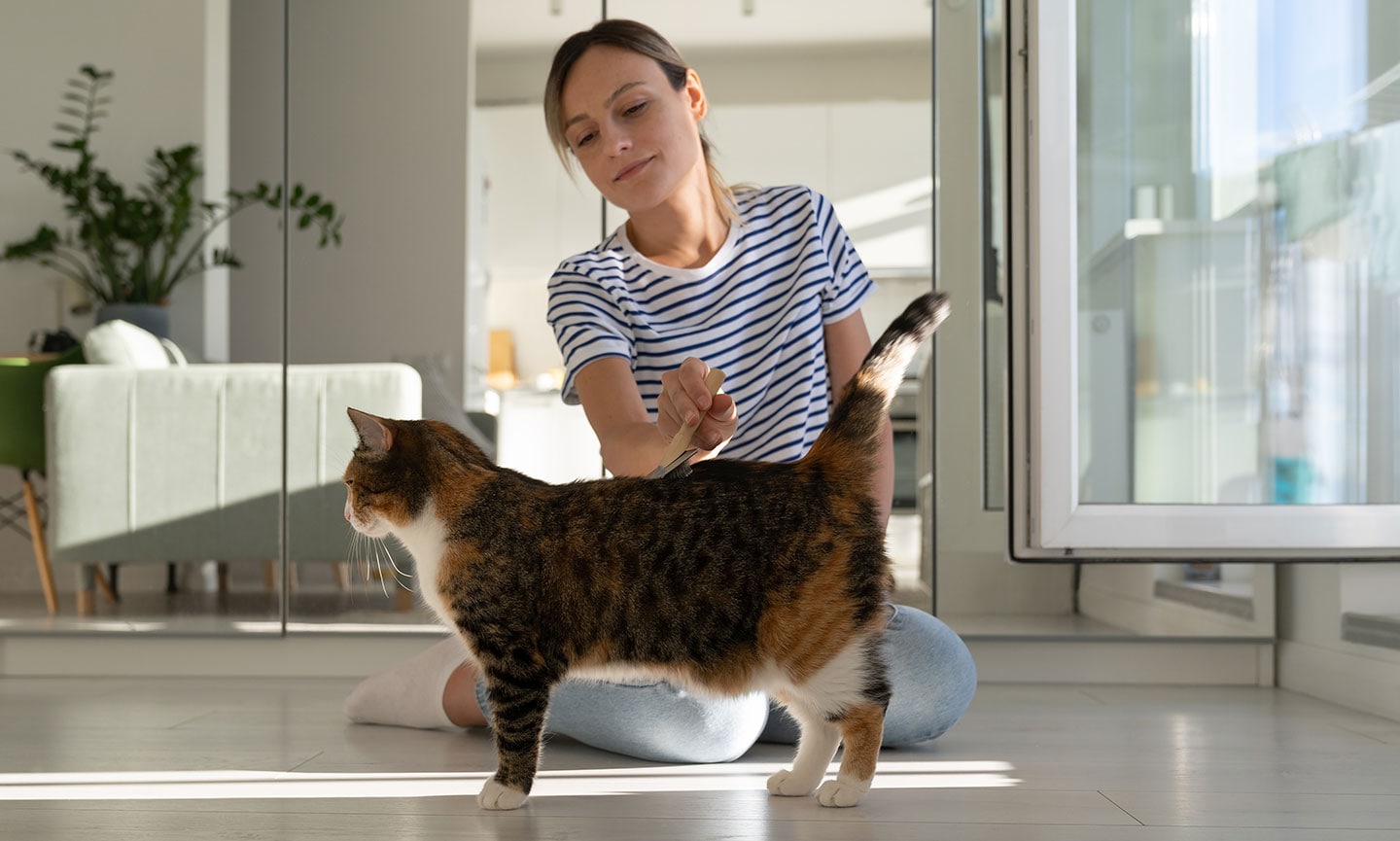
“If the cat likes to be brushed, then you can brush the cat,” Krieger suggests. “Whatever it is, then that’s what you can do to encourage the cat to come forward.”
Dr. Koski offers a tip for simple petting: “Most cats enjoy being rubbed on the forehead, neck, cheeks, and around the ears,” she says, “so stick to these areas with a new cat.”
6. Use Positive Reinforcement
iStock.com/valentinrussanov
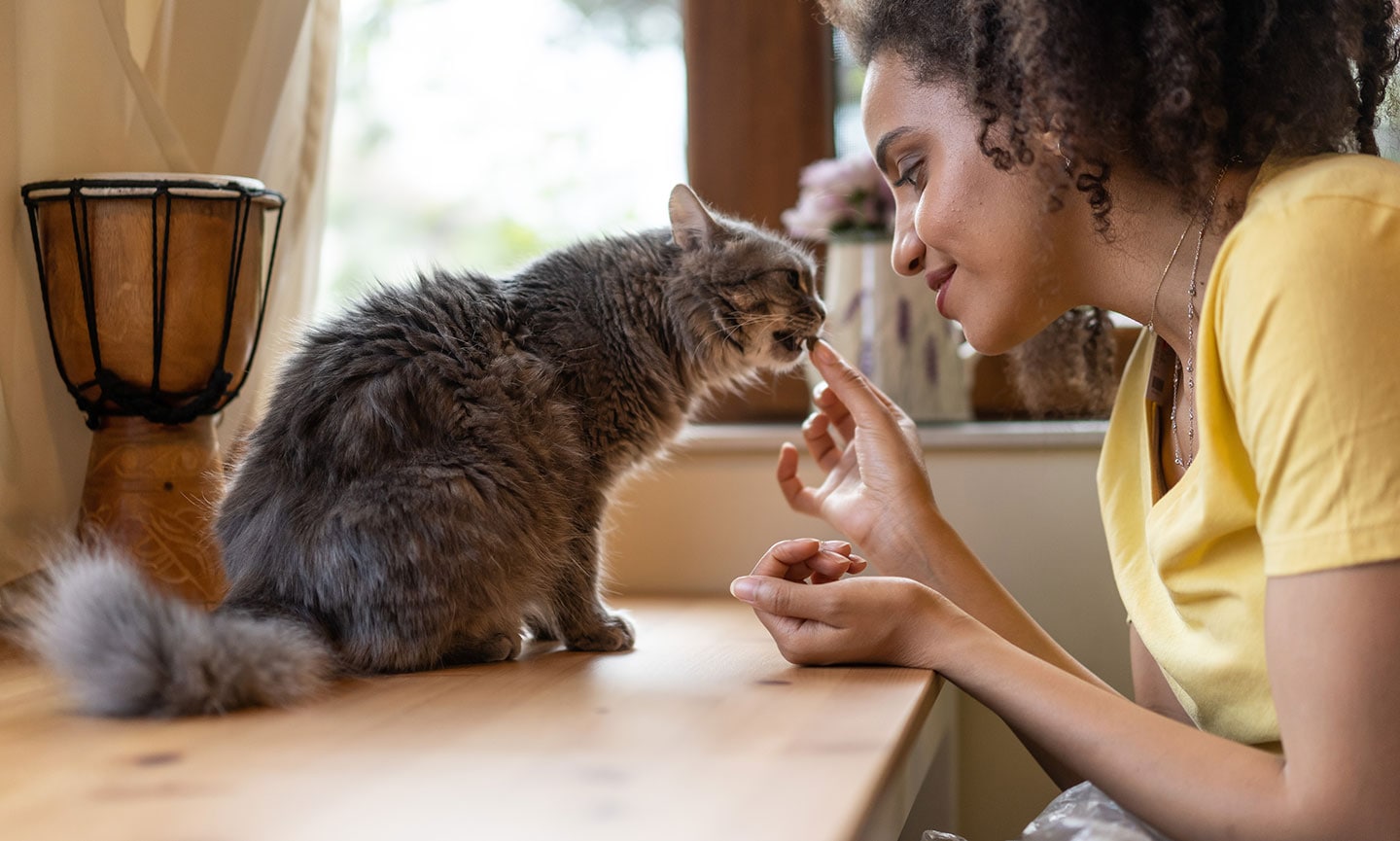
While there’s no guaranteed way to make a cat love you instantly, using treats and patience can help speed up the bonding process. Simply give a cat or kitten a tasty morsel and they’ll be more likely to warm up to you.
However, this doesn’t mean showering the cat with treats all day long. Dr. Koski recommends using cat treats strategically, “to either reward good social interactions with you or to entice a shyer cat to move toward you and get to know you better.”
Recommended Products



Keep in mind that not all cats have the same tastes—if you want to build a lasting friendship, it’s best to do your research.
“Some cats are not very food-motivated, so you might have to search for a treat that they like,” Dr. Koski explains. To start, she suggests cooked, plain chicken breast, a little nugget of stinky cheese, or tuna flakes.
7. Play With Your Cat Regularly (If They’re Open to It)
Predictable routines set your cat up for success.
“Routine helps cats feel calm, so give them scheduled activities,” says Quandt. “Then they don’t have to pester you or meow incessantly.”
8. Enrich Their Environment

Chewy Studios
If you want to foster a positive relationship with your pet, it’s important to create a feline-friendly home where your cat loves to relax and bond.
“Think like a cat,” says Stephen Quandt, a certified cat behaviorist in at Feline Behavior Associates in New York City. “Be the ‘mom cat’ and give your cat what they want and need.”
Quandt suggests making sure your home has the following kitty amenities:
- Scratching posts and pads: Scratching is a natural and necessary behavior for cats, so be sure to provide fun, scratch-friendly surfaces.
Recommended Product

- Cat trees: Instinctually, cats feel safe and cozy in high spaces, where they can keep a lookout for predators (even when the only “predator” in the home is a vacuum cleaner).
Recommended Product

- Cat toys: Provide your cat with plenty of enriching, interactive toys, as well as daily play sessions.
Recommended Products


- Puzzle feeders: Treat-dispensing toys provide cats with valuable mental enrichment. “Cats need to problem-solve in order to get food in nature, so give your cat problem-solving activities,” says Quandt.
Recommended Products
9. Provide a Safe Haven
Cats are creatures of comfort and caution. Creating a safe space where your cat can retreat and relax without interruption helps build trust. This can be a cozy cat bed, a quiet corner, or even a covered hideaway where they can observe their environment without feeling threatened.
Recommended Products


10. Meet Their Basic Needs
A happy, well-cared-for cat is much more likely to bond with you. Make sure your cat or kitten has all the things they need to thrive, including fresh water (try a cat water fountain), nutritious food, a clean litter box, and a predictable daily routine.
Recommended Products



11. Pet Them Gently
Cats have preferences when it comes to petting. Most enjoy gentle strokes along the head, cheeks, and under the chin—but always let them guide the interaction.
Avoid sudden movements or grabbing, especially in areas like the belly or tail, which many cats find sensitive.
12. Brush Their Fur
If your cat enjoys grooming, brushing can be a bonding activity. Regular brushing not only helps reduce shedding and hairballs, but also mimics social grooming behaviors between friendly cats.
Recommended Products


Start slow and keep sessions short to make it a positive experience.
13. Talk to Them Softly
Cats are sensitive to sound, and a gentle voice can go a long way in making them feel safe. Speak softly and use a calm, soothing tone when addressing your cat. Over time, they may begin to recognize your voice as a source of comfort.
14. Socialize Them as a Kitten
Kittens have a critical socialization window between 2 and 9 weeks of age. During this time, positive experiences with humans help them grow into friendly, confident adult cats. If you’re raising a kitten, use gentle handling, treats, and play to build trust early on.
How To Tell if a Cat Likes You
Unlike humans, our feline friends can’t offer kind words or send thoughtful texts—but there are plenty of telltale signs that they love you, if you know how to speak “cat.”
“We all want our cats to like us,” says Quandt. “What can be challenging is interpreting their signals accurately. We tend to anthropomorphize [them] by assigning human emotions to our animals, and they are not humans. They are sentient, feeling creatures who evolved in their own ways for their own purposes that initially had no connection to us.”
Therefore, it’s our job as pet parents to learn about a cat’s nature and pay close attention to their expressions. That gives us a better chance to interpret them correctly and provide what they want and need.
The following body language and behaviors suggest you have a feline admirer:
- Greeting you with meows and purrs
- Rubbing up against your legs
- Head butting and nudging, a common sign of affection
- Long, slow blinking, signaling a calm state
- Resting with an exposed abdomen, inviting belly rubs
- Spending time near you
What About Befriending Homeless Cats?
It can be tempting to interact with outdoor cats. However, unfamiliar outdoor cats should never be handled.
“Do not attempt to pet the cat or pick the cat up,” cautions Sarah Wooten, DVM, a Colorado-based veterinarian.
Stray cats are unlikely to have up-to-date vaccinations, and a bite could be a rabies risk. Feral cats—meaning cats that have never been pets, and are more akin to wild animals—are especially likely to bite or scratch, and are stressed by human contact.
The good news: You don’t have to physically touch a feral cat to make an impact on their life. There are a number of ways to safely, humanely, and effectively improve the lives of homeless animals.
FAQs About How To Get a Cat To Like You
How do you attract cats?
You can use treats and toys to attract a cat to you. Speaking quietly and moving slowly can help put them at ease.
How do I get a cat to come to me?
Start by sitting or crouching down at their level and extending your hand or a treat. Speak softly and give them time to approach on their own terms. Patience and consistency are key.
How do you get a cat to trust you?
To get a cat to trust you, start by being patient and letting them initiate interactions. Respect their space and speak softly. Never chase them or pick them up against their will. Forcing a cat to do something they don’t want to do will break their trust and could lead to fear or avoidance.
How do I get a cat to love me instantly?
Not all cats will accept new people right away. Some cats who were socialized well as kittens and have a naturally outgoing personality may be more likely to approach new people without hesitation and enjoy their company, but a lot of cats will take some time to feel comfortable and spontaneously interact with a new person.
It’s best to be patient and go at the cat’s pace, giving them space to come up to you on their own and giving them treats, petting them in the way they prefer, and engaging with them in interactive play, such as with wand toys. Doing these things while being patient with a cat is best way to make them like you as quickly as possible.
Attributions
Maura McAndrew contributed to this article.