How Often Should I Take My Cat to the Vet?


Photo by Chewy
Routine vet visits are one of the best ways to protect your cat’s health. But how often does your feline friend really need to see the vet? The answer depends on their age, lifestyle, and any health conditions they may have.
Whether you’re raising a curious kitten or caring for a beloved senior, this guide outlines how often to take your cat to the vet—plus what to expect at each visit and signs it’s time to head to the clinic right away.
Key Takeaways
- Kittens need vet visits every three to four weeks until 16 weeks of age for vaccinations and health checks.
- Healthy adult cats should visit the vet annually for preventive care, vaccines, and early illness detection.
- Senior cats benefit from exams every six months to monitor for age-related conditions like kidney disease or arthritis.
- Emergencies require immediate vet attention. Don’t wait if your cat shows serious symptoms.
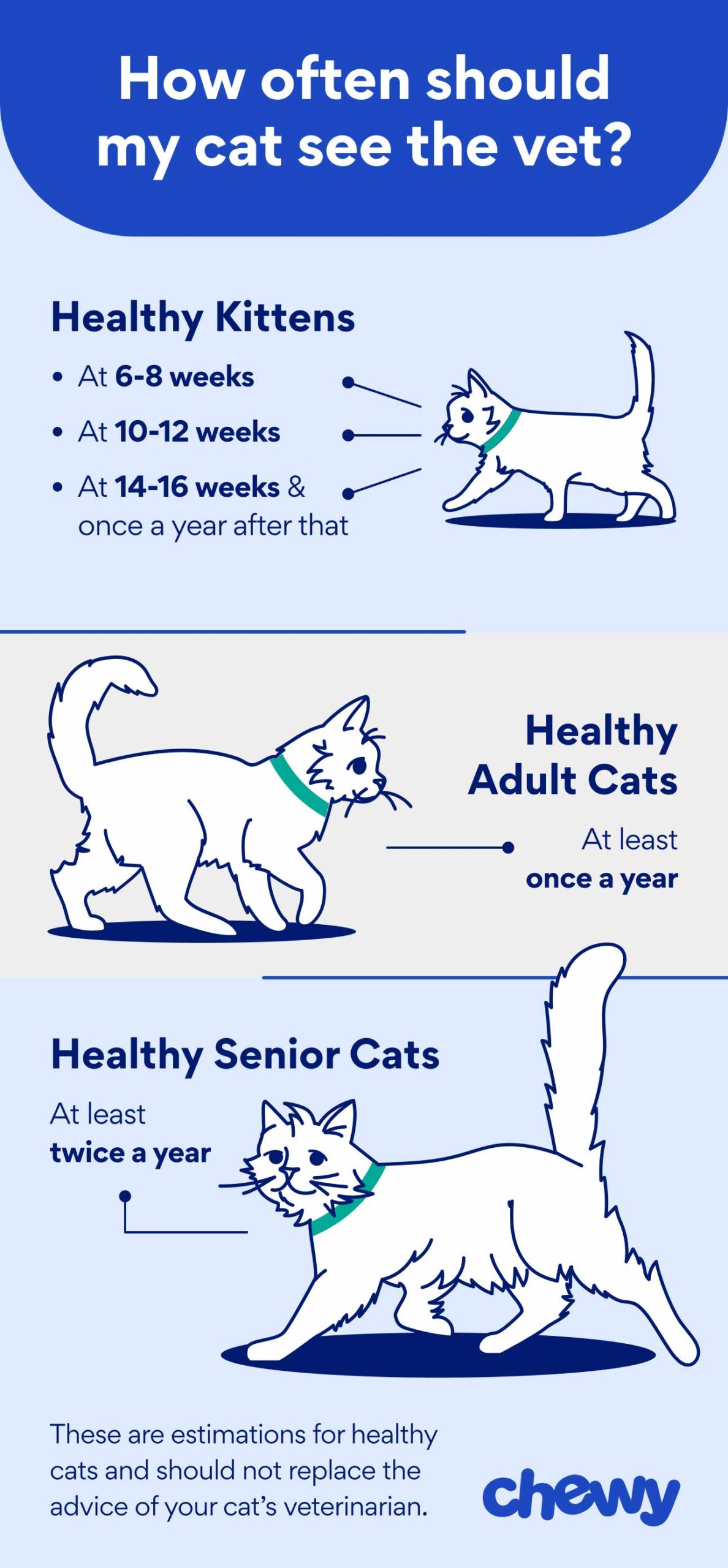
Photo by Chewy
How Often Should I Take My Kitten to the Vet?
Kittens have developing immune systems and need frequent vet visits to ensure proper growth and disease prevention. Most kittens should visit the vet every three to four weeks from about six to 16 weeks of age.
These appointments typically include:
- Core vaccinations (such as feline distemper and rabies)
- Feline leukemia (FeLV) testing and vaccines (if recommended)
- Parasite screenings and deworming
- General health checks to monitor development
Your vet may also discuss:
Once your kitten completes their vaccine series, they’ll usually transition to annual visits unless other health concerns arise.
How Often Should I Take My Adult Cat to the Vet?
Healthy adult cats (typically ages 1–7) should see the vet at least once a year for a wellness checkup. These visits help detect early signs of illness and ensure your cat stays up to date on preventive care.
A typical adult cat visit includes:
- Full physical exam
- Vaccine boosters (based on lifestyle and risk)
- Parasite prevention and treatment
- Dental health checks
- Bloodwork and urinalysis (as recommended)
If your cat has a chronic health condition or takes regular medication, your vet may recommend more frequent visits to monitor their care.
How Often Should I Take My Senior Cat to the Vet?
Cats are considered seniors around age 7–10, depending on breed and health. Senior cats are more prone to age-related conditions, so most vets recommend checkups every six months.
These biannual exams may include:
- Comprehensive physical exams
- Blood work and urinalysis
- Screening for kidney disease, diabetes, hyperthyroidism, and arthritis
- Weight and mobility assessments
Early detection of health issues can greatly improve your cat’s quality of life and extend their lifespan.
Emergency Vet Visits
Even with regular checkups, emergencies can happen. Contact your vet immediately or visit an emergency clinic if your cat experiences:
- Difficulty breathing
- Continuous vomiting or diarrhea
- Refusal to eat or drink for more than 24 hours
- Lethargy or collapse
- Straining to urinate or not urinating at all
- Sudden behavioral changes or disorientation
- Bleeding that doesn’t stop
- Seizures or tremors
When in doubt, it’s always best to call your vet and describe your cat’s symptoms.
What Happens at a Vet Visit?
At a typical vet visit, your veterinarian will perform a nose-to-tail physical exam, including:
- Checking eyes, ears, mouth, teeth, skin, and coat
- Listening to the heart and lungs
- Palpating the abdomen for abnormalities
- Monitoring weight and body condition
They may also recommend:
- Blood tests and urinalysis to screen for hidden conditions
- Vaccinations based on your cat’s age and risk factors
- Flea, tick, and heartworm prevention
Recommended Product

- Dental cleanings and X-rays if needed
These visits are also a great time to ask questions about diet, behavior, or any changes you’ve noticed at home.
Is It OK to Skip Annual Checkups?
It might be tempting to skip a vet visit if your cat seems healthy—especially if they live indoors and appear fine. But cats are masters at hiding illness, and skipping wellness exams can allow serious conditions to go unnoticed.
Annual or biannual checkups help vets spot early warning signs, keep vaccines current, and ensure your cat is receiving appropriate parasite prevention. Skipping them can delay diagnosis and lead to more complicated, costly treatments down the road.
From kittenhood to their golden years, regular vet visits are key to keeping your cat happy and healthy. Preventive care allows for early diagnosis, better outcomes, and peace of mind for you as a pet parent.
Set reminders for annual or semiannual checkups, and don’t hesitate to call your vet if you notice something is off. Proactive care today helps ensure more purrs tomorrow.
Attributions
This article was created with assistance from AI tools, and reviewed by a human editor for accuracy and clarity.