How To Read a Cat’s Ears



Photo by Chewy
Cats have a reputation for being hard to read. But in reality, domesticated felines are actually quite expressive, using every inch of their posture to communicate with humans and other cats. In fact, one recent study found that cats have close to 300 unique facial expressions—including the positions of their ears.
While cat ear language is only one part of the cat communication puzzle, it’s a helpful tool to know. Learning what different ear positions mean can help you better understand what your feline friend is trying to tell you.
Key Takeaways
- A cat’s ear positions can give us clues about how they’re feeling.
- Natural or forward-facing ears usually signal a relaxed and friendly cat.
- Airplane ears (flattened to the sides) typically indicate discomfort, stress, or overstimulation.
- Ears flattened back are often associated with fear and aggression.
- To understand how a cat is feeling, look at their body language as a whole—not just their ears.
How Do Cats Use Their Ears To Communicate?
A cat’s ears—along with their tail, whiskers, and eyes—shift position depending on their mood and focus.
Cats have incredible hearing and use their ears to gather information about their surroundings. While they don’t intentionally use their ears to communicate with us, we can infer their emotional state based on ear position and other body language cues. For instance, a cat who’s relaxed will hold their ears very differently from one who’s stalking prey.
But cat body language is made up of multiple elements, including ears, so it’s important to look at the full picture.
“You have to take everything else into consideration as well,” says Lynn Bahr, DVM, CEO of Dezi & Roo. “The ears tell part of the story, but not the whole story.”
What Do Different Cat Ear Positions Mean?
Learning common cat ear positions is a great way to get more acquainted with your cat’s body language.
While general interpretations of cat ear position meaning are helpful, there are many nuances to these movements.
“We kind of focus on the extremes because they’re easier to understand,” says Certified Cat Behavior Consultant Mikel Maria Delgado, PhD.
When looking at ear positions, Dr. Delgado recommends considering the complete picture—including the cat’s environment and circumstances, and any other changes to body language. That will help you make the best, most accurate read on your cat’s ear movements.
Neutral
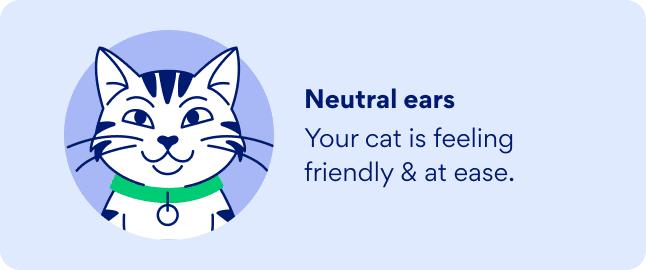
Photo by Chewy
In a neutral position, a cat’s ears are relaxed and pointed slightly forward. This typically signals that your cat is feeling friendly and at ease. Neutral ears are often accompanied by a tail pointing straight up, which is also a sign of an easygoing kitty.
When your cat fits this description, it’s usually a good time to greet them with some gentle petting or invite them to cuddle. They’re relaxed and ready to chill out with their family.
Straight Up and Forward
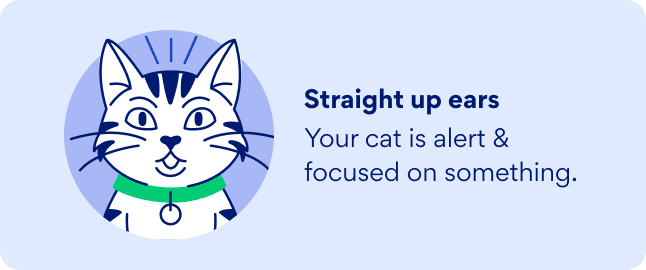
Photo by Chewy
The ears’ primary function is hearing, and a cat will turn their ears in many subtle directions to stay alert to surrounding noises. When a cat’s ears are straight up and forward, “they’re typically alerted about something,” Dr. Delgado says. You may even notice each ear moving in a different direction as they listen.
These curious cats are seeking more information about their environment through sound. This ear position is also common during hunting, as they direct their ears toward the sound of prey.
If you see your cat’s ears in this position, it may be a good time to bring out their favorite cat toy. They’re likely ready to engage in a good chase!
Recommended Products



Flattened Sideways
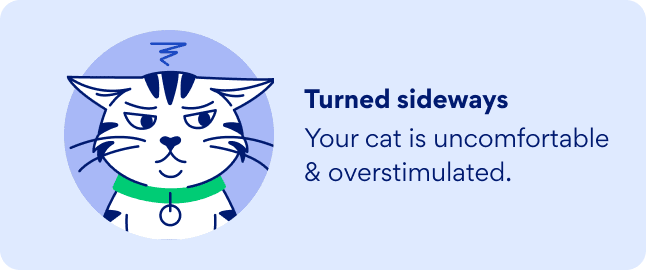
Photo by Chewy
When a cat’s ears flatten out to the sides in a horizontal “T” shape, this is often called airplane ears. This position usually indicates discomfort.
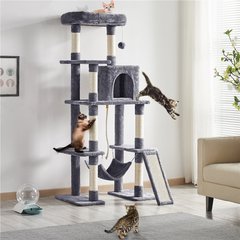
It may be that your cat is feeling overstimulated, either by too much petting, loud noises, or too much activity. It’s a good idea to offer your cat places to get away from stimulation, like covered cat beds or cat trees.
Recommended Products

In more serious cases, your cat’s airplane ears may be an indicator that they feel physically unwell.
When you see a cat’s ears in this position, consider what’s happening in the environment and remove possible stressors. If their airplane ears persist for a long time or are accompanied by behavior or appetite changes, contact your veterinarian.
Flat and Back

Photo by Chewy
A cat holding their ears down and pinned back is upset and potentially aggressive.
“Flattened ears are often a sign of fear,” says Dr. Delgado. “We believe that cats pin their ears back to protect them. If they think they’re going to get in a fight, they’re going to put those ears down so that they’re not as vulnerable to bites and scratches from another animal.”
If your cat’s ears are flat and back, give your cat some space. Approaching them now puts you at risk of being scratched or bitten.
If possible, remove stressors—such as other pets or people—and give your cat time to calm down before interacting again. Allow them to approach you when they’re ready.
Reading Cat Body Language
Ear positions are a great place to start when learning to read your cat’s body language. But to truly get the full picture, you’ll need to look beyond the ears. The tail, eyes, whiskers, and overall posture communicate something about their current mood and needs.
You’ll also want to consider the environment. Is it loud? Are unfamiliar animals around? Has their routine changed?
“All of these things are important to understanding cats,” Dr. Delgado says. “I think sometimes when people focus too much on one body part, they miss part of the message.”
Every cat is an individual and will communicate in different ways. One of the best things a pet parent can do is pay attention to their cat’s unique patterns—how they move, respond, and react in different situations.
“It takes practice and attention,” says Dr. Delgado. “We have to make a lot of inferences based on our experience with that cat.”
FAQs About Cat Ears and Communication
Why are my cat’s ears twitching?
Ears twitching often means your cat is reacting to sounds in their surroundings, listening for predators or watching for prey.
However, if the twitching is frequent or accompanied by behavior changes, this may be a sign your cat is dealing with ear mites, an ear infection, or fleas.
Why does my cat do airplane ears when I pet her?
For many cats, flat ears that are out in a “T” shape—also known as airplane ears—are a sign of discomfort. If your cat’s ears shift into airplane mode while you’re petting them, they may be overstimulated. Give them a break from petting and allow them some space.
What should I do when my cat’s ears are back?
In the language of cat ears, back and down translates to fear or aggression. This is not a good time to approach your cat, as they may swat or bite. Step away, give them room to retreat if needed, and wait for them to approach you once they’ve calmed down.
Attributions