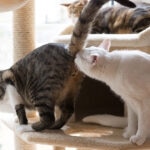
How To Keep Cats off Counters


Cats love to explore every nook, cranny, cubby, and high spot they can find. That definitely includes the kitchen counter.
If your favorite indoor cat is all about that counter-surfing life, know that you’re not the only pet parent dealing with this seemingly odd behavior. And while your kitty may have free rein over the rest of your home, there are some important safety reasons why you should discourage them from hanging out near hot burners and human food.
So, how do you keep cats off counters and tables? Ahead, we’re exploring some reasons why cats like perching on kitchen counters, and what cat parents can do to curb this behavior.
Key Takeaways
- Cats jump on counters because they enjoy high vantage points, are attracted to food smells, or are curious about running water.
- Never punish cats for climbing—redirect the behavior using alternatives like cat trees, stools, or puzzle feeders.
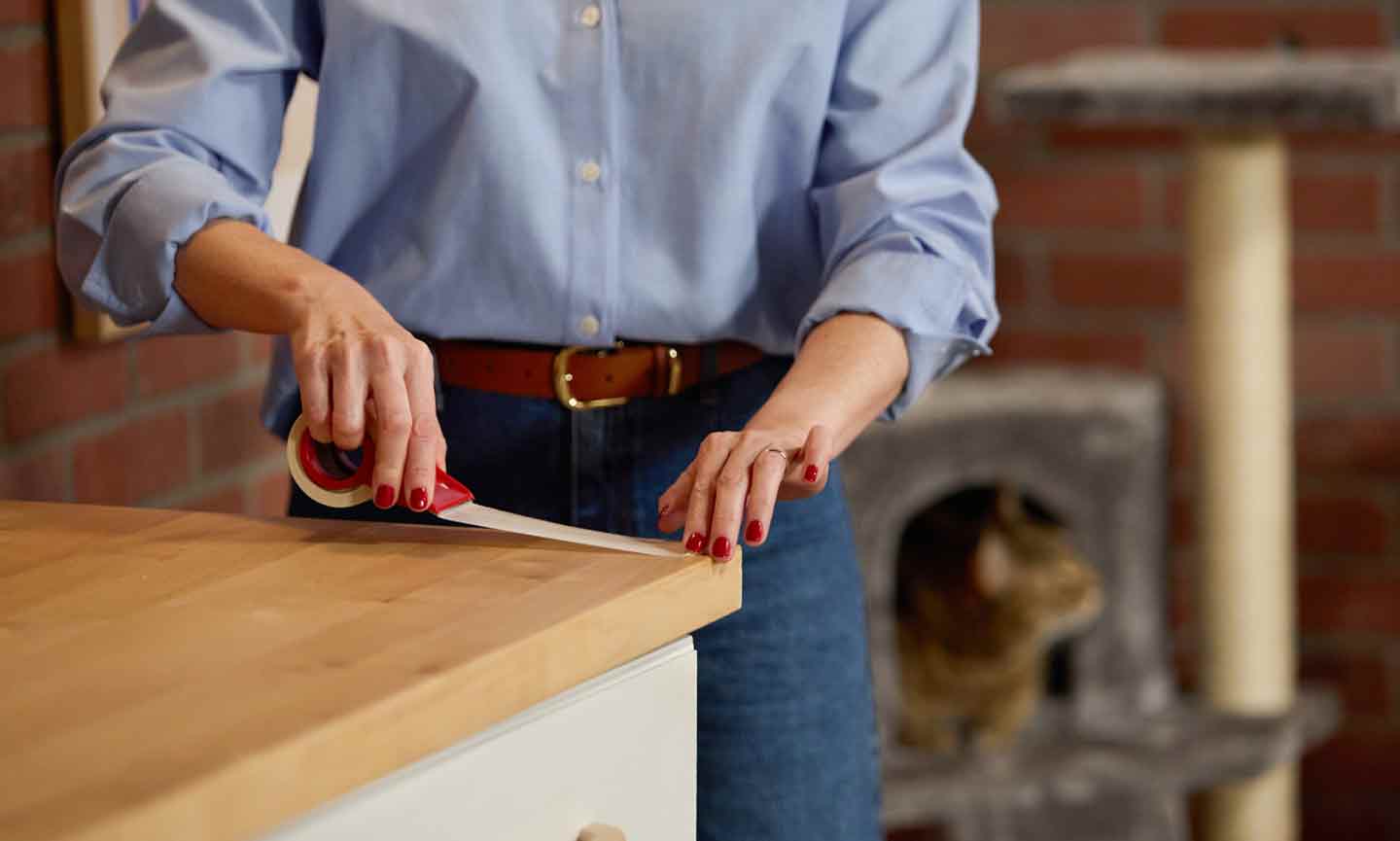
- Use gentle, passive deterrents like double-sided tape, foil, or cookie trays with water to make counters less appealing.
- Keep counters clear of food, avoid preparing your cat’s meals on them, and consider using a cat water fountain if your cat is drawn to sinks.
- Clicker training and environmental enrichment are effective, positive ways to teach your cat to stay off counters long-term.
Why Do Cats Jump on Counters?
Kitchen counters and tables are extremely inviting to cats, for a handful of reasons. Let’s dive into the specifics about why cats like hanging out on countertops so much.
They Love High Places
Cats have retained a few wild instincts from their ancestors, including the desire to perch as high as possible.
“Being able to look over their territory from above helps keep them safe from predators,” explains Samantha Bell, a Los Angeles–based cat expert for Best Friends Animal Society, a nationwide network of animal shelters headquartered in Kanab, Utah.
“Even though our domestic indoor cats don’t need to worry about actual predators, their instincts still tell them that being up high is the best way to oversee the action and get away from things that cause them stress.”
Countertops Feel Sturdy
Cats are great at jumping, and when they land they prefer to do so on a nice, sturdy surface. “Once they’ve figured out that the counter is sturdy, they will continue to jump there without hesitation,” says Bell.
Kitchen Countertops Are Full of Food
“We might call them ‘countertops,’ but if a cat could speak they might call them ‘the grocery store,’” says Stephen Quandt, a certified cat behavior specialist in New York City.
“They associate countertops with good smells, as well as their food—and human food—and they want it!”
It’s Close To Running Water
Cats love running water, and kitchen countertops put them in close proximity to the sink. If you have a leaky faucet, your cat may be drawn to it. They might also hang out in the area waiting for you to turn it on.
How To Keep Cats off Counters
As much as you’d love to let your favorite feline friend go wherever they please, countertops and tables should be off-limits for kitties since it’s where humans prepare and keep food. Dirty kitty paws and the items we consume simply don’t go together.
Plus, kitchen counters can pose some potential hazards, like sharp knives, hot surfaces, open flames, or toxic foods your kitty shouldn’t eat.
Follow these expert tips and tricks to help keep your cats off the kitchen counters.
1. Provide Alternative High Spaces

We can’t eliminate a cat’s instinctive desire to sit in a high place with a nice vantage point. “Not allowing cats to express instinctive behaviors causes them stress and creates even worse behavior issues,” notes Bell.
Punishing them when they climb onto the countertops—by using loud noises or squirting them with a spray bottle—also won’t work.
Instead, we need to provide them with an appropriate alternative to the counter that’s going to satisfy their needs, then use positive reinforcement when they use that alternative.
Some good alternatives include:
A chair or stool next to the countertop: “Find their favorite treat and reserve it for when they’re on the stool. Never set the cat on the stool, though,” says Bell. “They need to choose to go on the stool on their own and then get rewarded for it. When you catch your cat on it, reward them with something of great value to them.”
A cat tower: Quandt recommends putting a cat tower or climbing tree in another room to provide your cat with a place to perch. If it has cubbies, scratching posts, catnip, and toys associated with it, these things can help draw and keep your cat’s attention.
A couple of excellent options include the Yaheetech Cat Scratching Tree and Frisco’s 42-inch Heavy Duty Faux Fur Cat Tree & Condo.
Recommended Products
2. Use Natural Cat Counter Deterrents
As mentioned above, it’s really important that you don’t punish your cat for jumping up onto the kitchen counter or table. But that doesn’t mean you can’t deter them from the area.
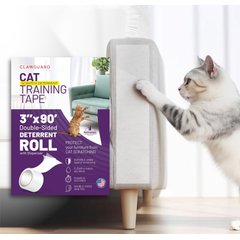
“Passive, environmental deterrents won’t hurt or scare your cat, but will convince them not to walk [on kitchen counters],” says Quandt. “Cookie trays with water in them, aluminum foil, and double-sided tape on the edge of the counter are examples of what’s called ‘remote correction’ in which you don’t get the blame.”
Recommended Product
3. Don’t Leave Food on Kitchen Counters

Cats have an impressive sense of smell, so if there’s anything tempting on the countertops, then you better believe their nose will take them straight to the source. As a general rule, don’t leave food out on countertops or tables.
4. Avoid Preparing Your Cat’s Food on the Counters
“Some cats will benefit—and you will, too—if you don’t prep their meals on your countertop,” Quandt adds.
“For cats who can’t resist a climbing expedition when you crack open that can, consider turning a different part of your home into the ‘food area.’ Your cat will quickly learn this and will follow you to that area at mealtime.”
5. Buy a Cat Water Fountain
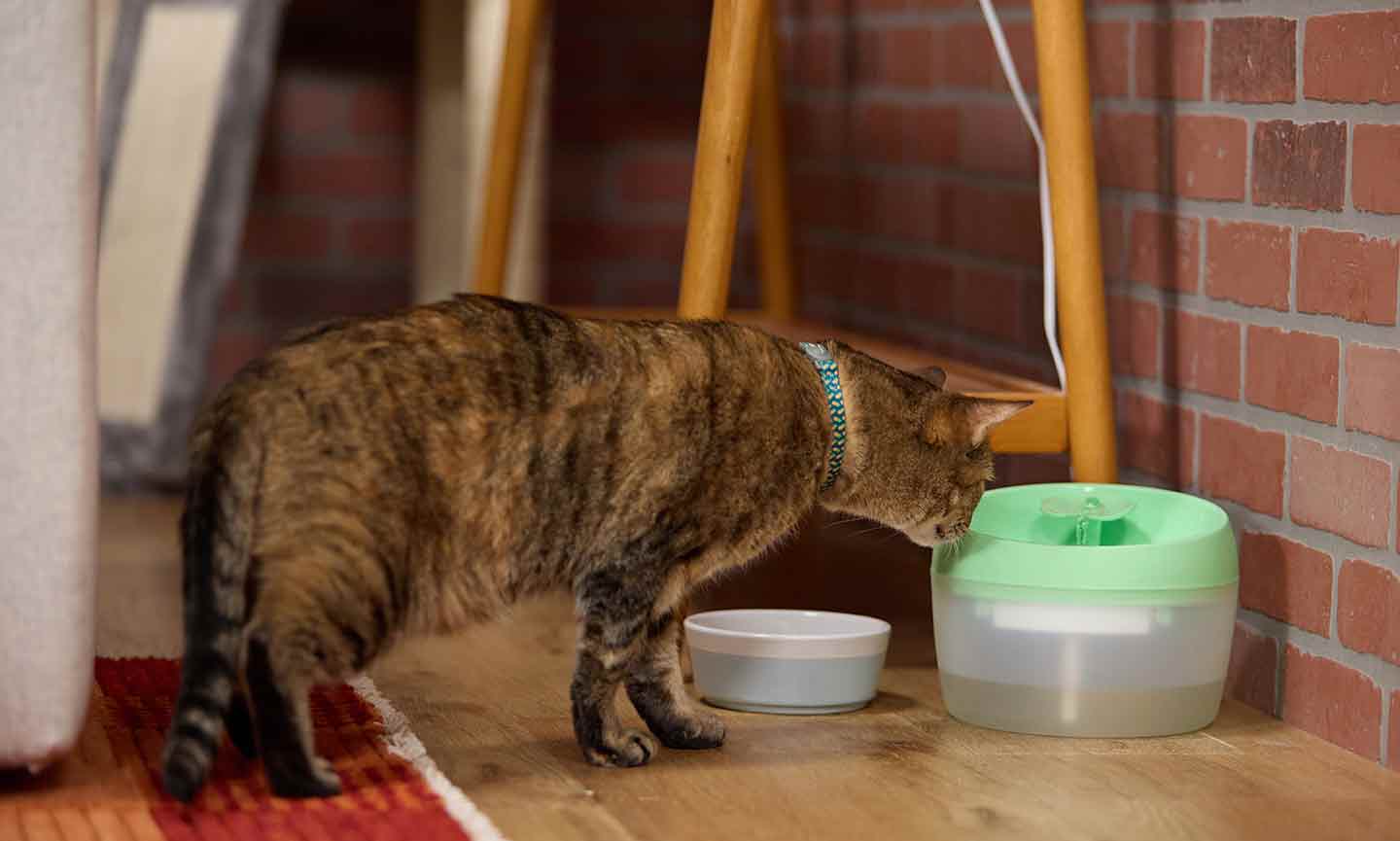
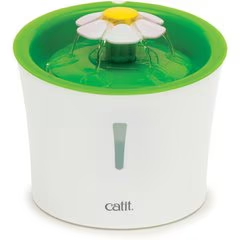
If it’s the running water your cat seems to love, then consider providing them with a water dish with a water fountain feature. These keep water flowing, which is enticing to your feline friend.
The Catit Flower Plastic Cat Fountain is a cute option that features a little daisy on the top.
Recommended Product
6. Enrich Your Cat’s Environment
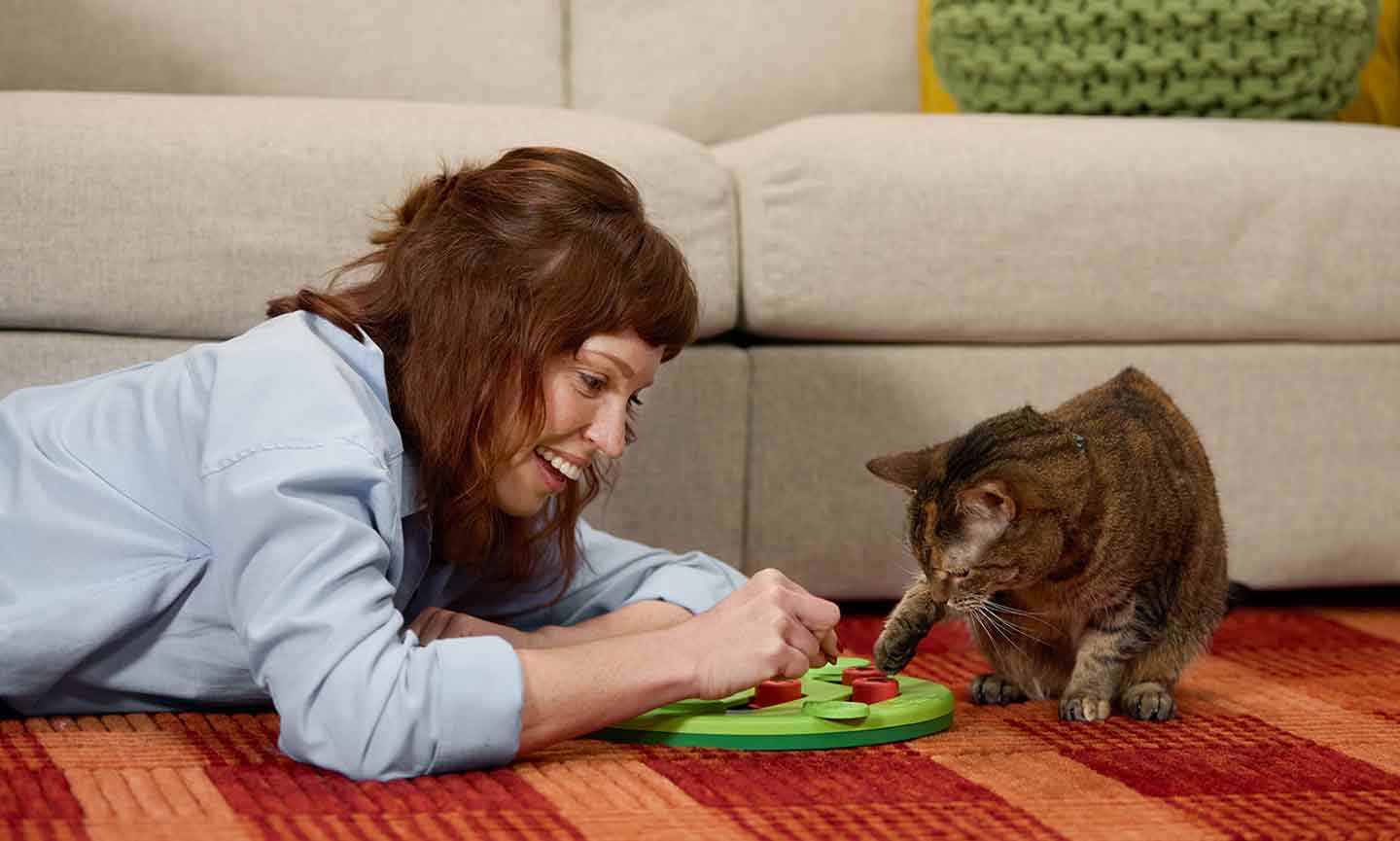
Prowling kitchen countertops for scrumptious morsels or other interesting finds is mentally stimulating for your cat. You can recreate that same sense of curiosity by providing your cat with puzzle feeders.
Quandt recommends keeping one in the kitchen and loading it up with their daily allotment of treats.
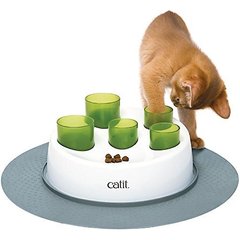
Try something like the Catit Senses 2.0 Cat Digger Slow Feeder. You can also DIY your own food game by hiding treats in fun spots, like near their cat tree, scratcher, or by the windowsills.
Recommended Product
7. Train Your Cat Not to Jump on Counters With Clicker Training
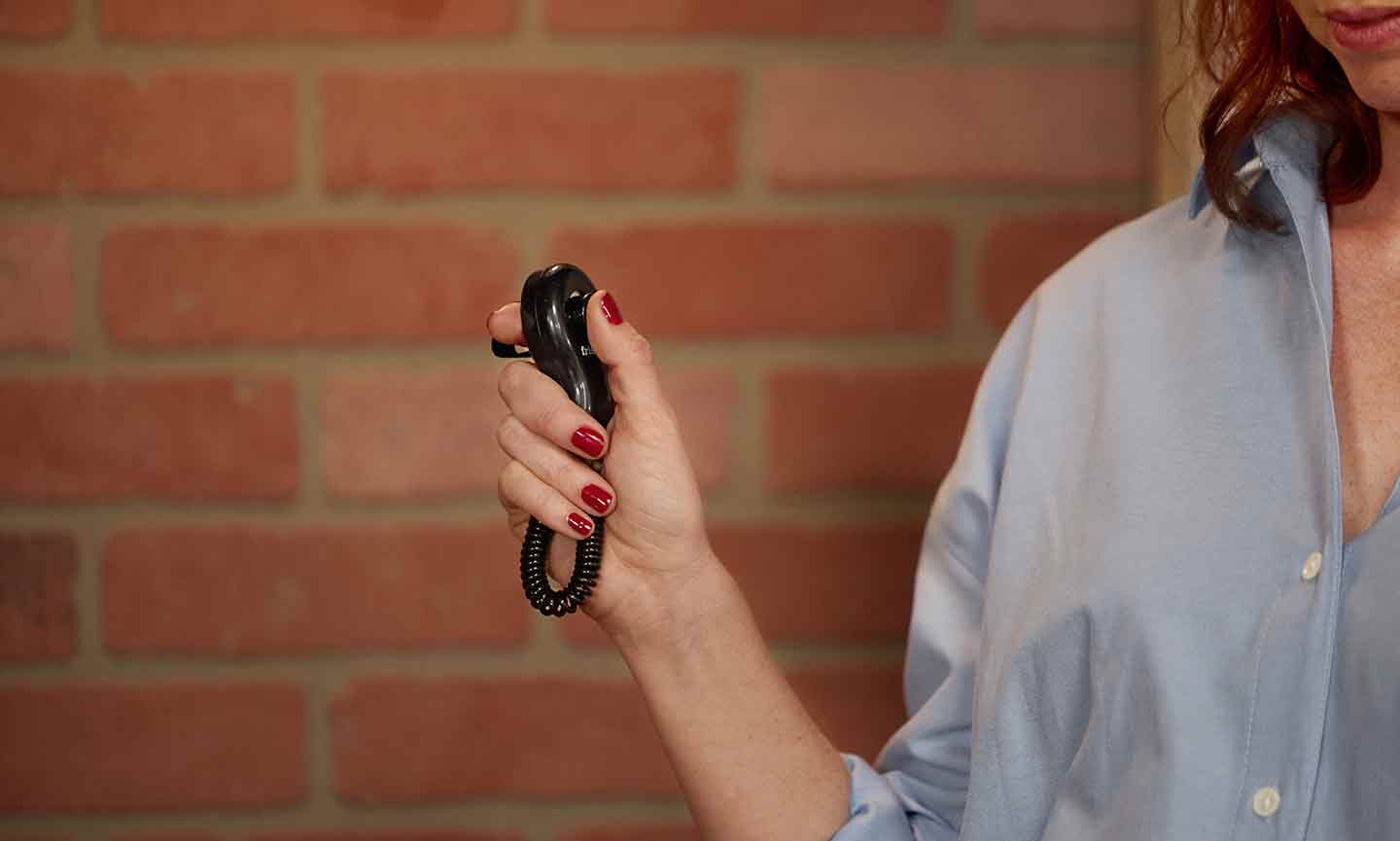
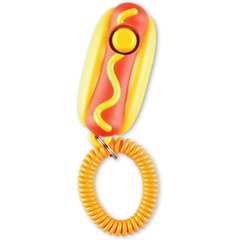
Clicker training involves teaching a cat to associate a sound with a reward, and Quandt says it is a very powerful teaching tool. (Check out the Brightkins Hot Dog Clicker.)
Recommended Product
So, how do you train cats not to jump on counters? If your cat jumps on the counter, place a treat on their cat tower, the ground or their bed, and then use the clicker once they jump off.
Over time and with enough repetition, your cat will associate the clicking sound with jumping off the countertop whether there’s a treat involved or not. When you’re in the room, this allows you to simply click the device to get them off the counters.
Curbing this cat behavior can take some time, so practice patience with your four-legged friend and stay the course.
Quandt says, “Think about training your cat not to jump up as an opportunity to provide enrichment and positive reinforcement to engage your little hunter and deepen the bond between you and them.”
That advice applies to all sorts of training, including keeping your cat from scratching furniture and general cat care advice on how to enrich your indoor cat’s life.
FAQs About How To Keep Cats Off Counters
How can I keep cats off counters naturally?
You can use passive, non-harmful deterrents like double-sided tape, aluminum foil, or cookie sheets with water to make counters less appealing. Providing high-up alternatives and using positive reinforcement can also help naturally redirect their behavior.
How do I keep cats off counters at night?
Before bedtime, ensure your cat’s environment is enriched with puzzle feeders or high perches to keep them occupied. You can also close off access to the kitchen or use motion-activated pet deterrent devices overnight.
What scent keeps cats off counters?
Cats dislike citrus scents, such as lemon or orange. You can use citrus-scented sprays (pet-safe only) or place orange or lemon peels near areas you want them to avoid. Always test these methods in a small area to ensure they don’t irritate your cat.
Attributions