Crate Training an Older Dog? Follow These Pro Training Tips

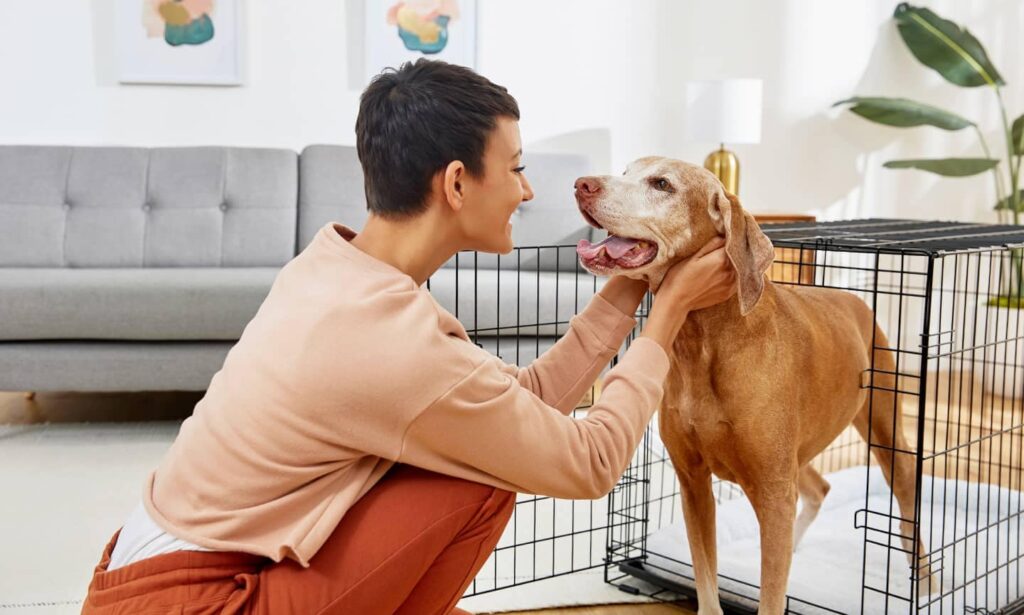
Photo by Chewy Studios
Crate training: It’s not just for puppies! Adult and senior dogs can be crate trained, too—and there are so many reasons to do so, from housetraining to travel to simply allowing your dog to chill out in a place all their own. With time and patience, crate training an older dog can make a big difference for you and your pup.
So how do you crate train an older dog? Read on to find out everything you need to know.
The Benefits of Crate Training for Older Dogs
No matter their age, every dog should learn to be comfortable in a crate. Here are some of the benefits of crate training older dogs:
- Housetraining: Maybe you’ve adopted an older dog who was never potty trained. Maybe your older dog could use extra encouragement to hold it until they get outside. Crate training lets you keep your dog in a safe space that they won’t want to soil, which helps to reduce potty accidents. (If your older dog was housetrained and is having consistent potty accidents, consult your vet. They could be experiencing a medical issue or age-related incontinence.)
- Travel: Crate training makes traveling with your dog extra easy. Riding with your dog in a crate that is secured to your car keeps them safe when you’re on the road. Plus, when you arrive at your destination, a crate is a secure and cozy spot for them to hang out in a hotel, vacation rental or friends’ home when they can’t be with you.
- Vet and Groomer Visits: Animal care specialists like veterinarians and groomers routinely crate dogs before and after they are caring for them. Crate training your adult dog helps ensure your pup will be comfortable in those situations, making their appointment more enjoyable for them and for you.
- Keeping Your Dog Calm at Home: Your house isn’t always a soothing, serene environment for your dog. Events like house parties and holidays like Halloween can stress your pup out. When you crate train an older dog, you help make sure there is a safe space for them no matter what’s going on.
Supplies for Crate Training an Older Dog
Ready to crate train your dog? Here’s what you’ll need to get started:
- A dog crate that is the right size for your dog. It should be large enough that your dog can comfortably stand up, turn around, and lie down, but not much larger than that.
- Lots of small treats.
- A treat-dispensing toy or dog food bowl that fits in the crate with your dog.
- A crate mat or dog bed that fits inside the crate. (This is optional, for dogs who like to lay on a softer surface. Some dogs prefer the plain floor of the crate. You can also use a towel or your dog’s favorite blanket.)
Recommended Products

How to Crate Train an Older Dog: Step-by-Step Instructions
Before you begin, there’s one rule you absolutely must follow throughout each step of this process: Take things slowly. This is true for all dogs, but especially for adult and senior dogs. That’s because older dogs are more likely to have had negative experiences with crates in the past, which could cause them to fear or mistrust going inside the crate. Adult and senior dogs also typically take longer to adjust to new experiences, especially if they haven’t been properly socialized.
If your dog always stays comfortable during the training, you’ll make faster progress than if you rush your dog, which could make them even more suspicious of the crate than they already were. So your No. 1 goal should be to ensure they’re feeling comfortable and calm throughout the process.
These steps aren’t meant to be completed in one day, and it could take as long as a month or longer for your dog to fully accept the crate as their home within your home. To make sure your dog stays comfortable and content, each training session should last only as long as your dog is willing to happily participate—that could be as short as a minute or two, or as long as you’re willing to keep training. The key is to follow their lead. Practice patience, keep training positive, and move through these steps at your dog’s pace.
1. Choose a Crate Location
You should keep your dog’s crate someplace they can easily access it, in a place that’s quiet and restful, but not isolated from the rest of the house. Ideal spots are an out-of-the-way corner of a common area like a living room or dining room.
2. Get Your Dog Interested
After you set up the crate and place it in an ideal location, lock some dog treats inside it. That’s right: While your dog is still outside the crate, you’re going to put dog treats inside it and lock the door. Leave the crate door locked, so your dog can’t get in, but allow them to sniff around the outside of the crate. Leave the treats inside for a couple days (or swap in some new ones if your dog loses interest). This will help your dog get interested in getting into the crate, which sets you up for the next step.
3. Let Your Dog Explore Inside the Crate
Open the crate and let your dog go in and eat the treats. Drop extra treats in the crate, keeping the door open, until your dog decides to walk out. As soon as your dog walks out, drop more treats in the crate and shut the door (with your dog on the outside). Repeat this step until your dog eagerly enters the crate every time the door is open.
To make the crate even more of a positive place for your pup, you can also let your dog into the crate around mealtimes, and then put your dog’s food bowl or food toy in the crate. Leave the door open while they are inside, and let your dog leave the crate if they want, but shut the door behind them as soon as they leave—with their food bowl or food toy still in the crate. Then open the door to let them back in, and so on, until they finish their meal.
4. Move the Crate Door
Just like you did in the previous step, open the crate, drop treats in, and allow your dog to enter the crate. Then move the door an inch in either direction and drop a treat in the crate. Repeat this until your pup is very relaxed about you moving the crate door back and forth. As usual, let them leave the crate at any time, but shut the door (and put treats in the crate) when they do.
5. Shut the Crate Door
When your dog is comfortable with you moving the door, it’s time to start working up to closing it. Move the door a quarter of the way closed, and drop in a treat. If your dog remains calm, move the door halfway closed and drop a treat. If your dog is still relaxed, close the door a little more. Slowly build up to shutting the door all the way, before dropping a treat in, making sure your dog stays relaxed.
If your dog tries to leave at any point during this step, allow them to exit the crate, but then shut the door and put treats in the crate (as usual) until your next training session.
6. Lock the Door
Once your dog is comfortable with the crate door closed, lock the door and then drop treats into the crate. Do this for one minute, and then open the door. If your dog leaves the crate, close the door and add treats to the crate as usual. If the dog stays in the crate, drop treats in with the door closed for another minute, and then open the door again. Repeat this step until your dog stays in the crate even when the door is open.
7. Step Away From the Crate
When your dog is comfortable with the crate door locked, hand your dog a food toy or chew in the crate. Then drop in extra treats. Next, take a few steps away from the crate. After just a second or two, return to the crate and drop more treats.
If that goes well, step away for a few seconds longer, then return and drop treats again. Watching your dog for signs of stress, gradually increase the amount of time you spend away from the crate. Remember to end your session if your dog appears anxious.
8. Work up to Longer Stays
Gradually work up to walking out of the room and increasing the amount of time you’re away between treats. When your pup is staying content in the crate for long enough for you to run a 20- or 30-minute errand, you can even try leaving the house—and keep building up to even longer stays. You can use a pet camera to check in on them while you’re away. Just remember to keep locking the crate with treats inside between training sessions.
What If My Dog Still Won’t Use Their Crate?
If you are crate training an older dog, but these steps are not working, consider these tips:
- Plan potty breaks. Before longer stays in the crate, give your dog a chance to do their business outside, and take them outside again immediately after letting them out of the crate when you return.
- Don’t crate your dog for too long. Your dog needs exercise and potty breaks at regular intervals. Failing to provide these can teach them to dislike or fear crate time. Each dog is unique, so it’s up to you to determine their capacity for crate time. However, no adult dog should be crated for longer than 4 hours.
- Your dog’s crate should never be used for punishment. You want them to enjoy their time inside this little den of theirs, not to see it as a place they’re forced to go for time out.
If all else fails, seek the advice of a professional. Experts like a certified professional dog trainer (CPDT-KA/CPDT-KSA) or certified behavior consultant -canine (CBCC-KA) will be able to offer advice tailored to your unique dog, show you where you might be making training mistakes, and can also advise you to consult a veterinarian, certified applied animal behaviorist (CAAB), or veterinary behaviorist if necessary.
The time you spend crate training your older dog can pay off for years to come. After all, proper crate training for older dogs helps them feel safe and comfortable in a variety of situations, and makes tasks like travel and housetraining so much easier. Just remember to stay patient and positive to maximize your success. Happy training!
Attributions