Resource Guarding in Dogs: Why It Happens and How To Stop It

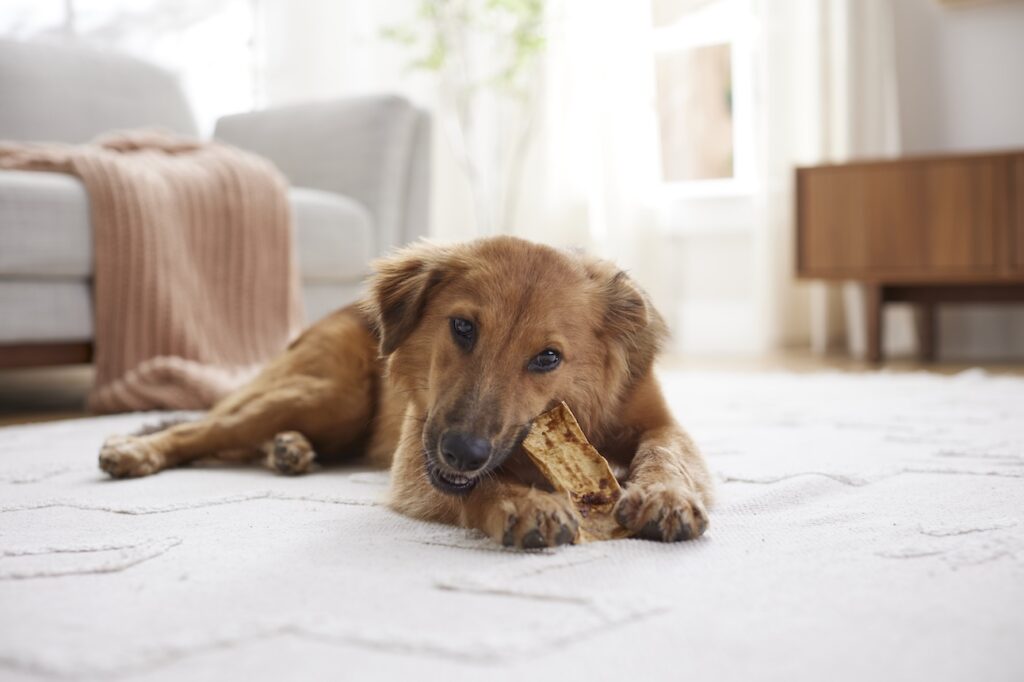
Photo by Chewy
Resource guarding is a dog’s way of saying “Mine!” with an object, like their food bowl, that they consider valuable.
This drive to protect what a dog considers to be their property is understandable when you look at it from an evolutionary perspective: After all, eating is essential for survival, especially because animals in the wild never know when or where that next meal is coming from.
But our dogs live a comfortable and predictable life, with scheduled meals and a steady flow of tasty treats. So, what causes resource guarding in dogs? And how can you stop this behavior?
Key Takeaways
- Resource guarding is an instinctual behavior where dogs protect items they find valuable, such as food or toys.
- Signs of resource guarding in dogs can be subtle, like freezing and staring, to more aggressive behaviors like growling or snapping.
- Preventing dog resource guarding involves using positive reinforcement.
- Behavior modification is often needed to stop resource guarding behaviors.
- Working with a certified dog trainer who uses positive reinforcement can help dogs who resource guard.
What Is Resource Guarding in Dogs?
Resource guarding is when a dog displays protective behavior over an item they see as valuable. This behavior can range from as subtle as freezing in place over their beloved possession, to as obvious as barking and lunging at anyone who gets too close.
Logically, resource guarding makes sense when a dog is guarding a high-value item, like their food bowl. But resource guarding can extend to objects that don’t appear high-value, like an empty food bowl, dirty laundry, or even garbage.
The items a dog resource guards might not make sense to us. To some dogs, a used napkin is as precious as a juicy steak.
What Causes Resource Guarding in Dogs?
Resource guarding is an instinctual survival response. However, not every dog exhibits it. A dog might resource guard because of:
- Genetics
- Early experiences, like food scarcity
- Household dynamics, in which multiple dogs are jockeying for position
- Stressful home changes like new family members, visitors, schedule shifts, and construction
Some pet parents might find their typically relaxed dog resource guard a high-value goodie, like a brand-new treat, when encountering it for the first time.
How Can You Tell if a Dog Is Resource Guarding?
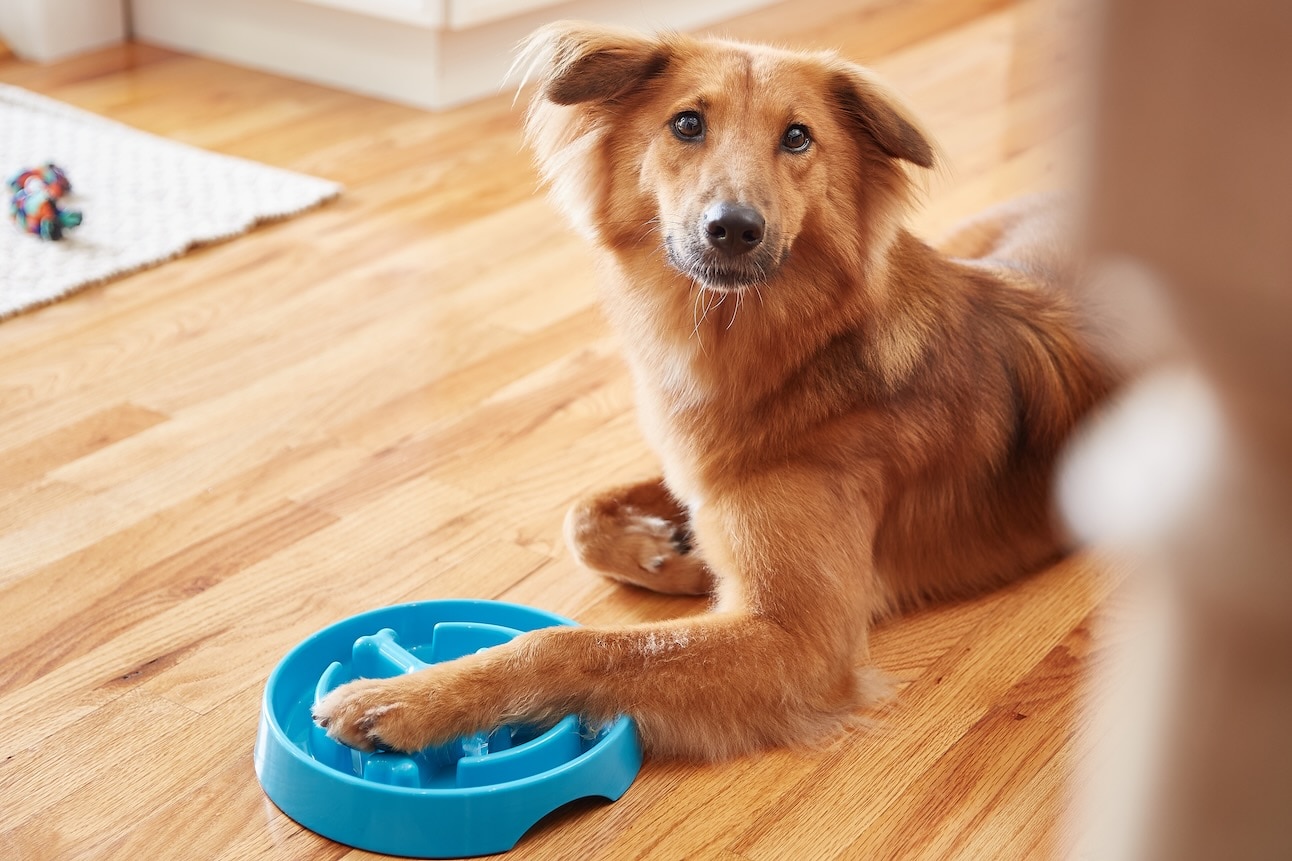
Photo by Chewy
Some cases of resource guarding in dogs are tough to miss. Behaviors like barking, growling, and lunging at a perceived thief look scary and over-the-top for a reason; they work to maintain control of the prize.
That said, resource guarding behaviors can be subtle enough to go undetected at first. Common dog resource guarding behaviors include:
- Moving the item to a new location: If a dog thinks a treasured goody is at risk of being taken away, they might move it to a different spot.
- Freezing: A dog might hover above the item without moving, often with a hard stare at the trespasser.
- Eating faster: Rather than risking the goody being taken away, a resource guarding dog might opt to eat quicker.
- Low growl: A rumbly growl might occur along with a freeze, or even while the dog is eating.
- Exposed teeth/lip curl: This is another defensive warning signal that a person or animal is getting too close to the valued item.
- Air snap or bite: If all other signals are ignored and the trespasser continues to move closer to the treasured item, a resource guarding dog might resort to behaviors that make their displeasure very If the precursor warning behaviors like freezing and growling are ignored, a dog might assume that more obvious aggression is the only option left.
Preventing Resource Guarding in Dogs
If possible, try to prevent resource guarding by helping a puppy learn to trade objects.
Outdated advice suggests putting your hand in your dog’s food while they eat or taking away chews without warning, but both techniques can backfire and make dogs wary about you being close to treasured items.
Instead, teach your pup that people being near their food bowl makes good things happen. Do this by dropping high-value goodies nearby it, then leaving your dog alone to enjoy them.
Similarly, instead of taking away items, offer a trade using something even more enticing. That way, your pup will learn to gladly give up the goods.
How To Stop Resource Guarding
The first step to stopping resource guarding in dogs is to make a list of objects that make your pup display guarding behaviors. Identifying the triggers that provoke a guarding reaction will help keep everyone in the household safe.
If there are no young children present and the adults in the home understand all of the dog’s triggers, the behavior can be easily managed. But other cases of resource guarding need a more hands-on approach.
Management
Management is a quick fix that acknowledges a dog’s tendency to guard things and gives them space when they have something valuable. In this scenario, a dog who guards their food bowl would have meals in a private area, and enjoy toys and bones uninterrupted. This common-sense approach keeps everyone safe, but it doesn’t address a dog’s underlying emotional response to a perceived threat.
In short: Because resource guarding doesn’t resolve without intervention, a management approach won’t treat the behavior. But in some scenarios, management is a fine option.
Behavioral Modification
Households that require hands-on training should use behavioral modification to help the dog feel OK about people near special objects. The goal is to pair something your dog feels stressed about—protecting the resource—with something extra delicious like cheese, chicken, hot dogs, or a special store-bought treat.
Recommended Products
The training process is straightforward: When your dog is enjoying a guarded resource, like a meal, simply walk by at a far-enough distance that your dog can see you but isn’t threatened by your presence, and toss a special goody to them. Don’t pause to watch your dog; just throw the goody and move on.
Repeat this process a few times, taking note of your dog’s body language. Eventually, your dog will begin to equate your presence with the delivery of something delicious instead of a threat, and their body language should reflect that change.
Instead of reverting to the defensive behaviors like eating faster or freezing, your dog might look toward you expectantly with loose, waggy posture as you approach. Once you’re seeing consistent, positive body language as you pass by, begin to gradually decrease the distance from your dog as you walk by.
Of course, this won’t happen during a single training session, especially if your dog has been exhibiting the behavior for a long time. Expect to do dozens of short, positive sessions spread out for as long as necessary. As always, your dog will set the pace for this behavioral modification training.
Dog Trainers for Resource Guarding
So, when is it time to call in an expert? If your dog has injured someone in an effort to maintain possession of an item, or if you have children or people in your home who have difficulty following instructions, the safest approach is to find a qualified, science-based positive reinforcement trainer to assist.
Attributions