Andalusian
Updated September 29, 2026
Andalusian
Updated September 29, 2026
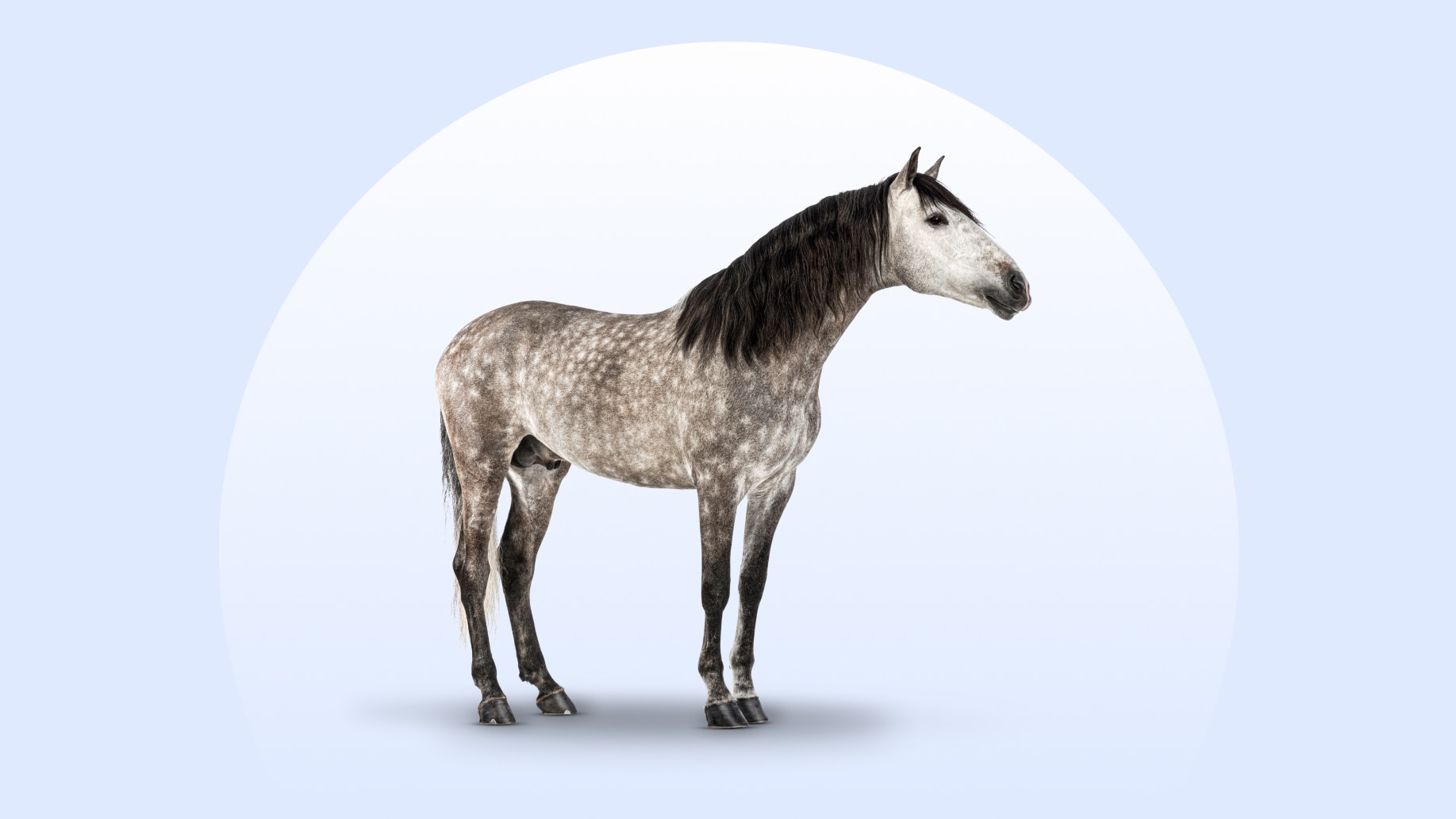
Majestic Andalusian horses are known all over the world for their expressive features and beautiful movement. Andalusians are versatile partners who can excel in dressage, jumping, driving, trail riding, and other disciplines.
Friendly, Sensitive, Loyal
900–1,100 pounds
15.2–16.2 hands (62–66 inches)
About 25 years
All colors and patterns; gray and bay are most common
The Andalusian is an athletic Spanish horse known for their flowing mane and tail, expressive movement, intelligence, and willing temperament. Also associated with the Pura Raza Española (PRE), the breed has roots on the Iberian Peninsula and a long history as a riding and war horse.
Andalusian Appearance
Andalusians have an eye-catching combination of strength and elegance. They have muscular bodies; high, rounded neck carriage; animated movement; and long, thick manes and tails. Their conformation and natural movement help make them particularly well-suited for dressage.
The International Andalusian and Lusitano Horse Association (IALHA) governs the breed standard.
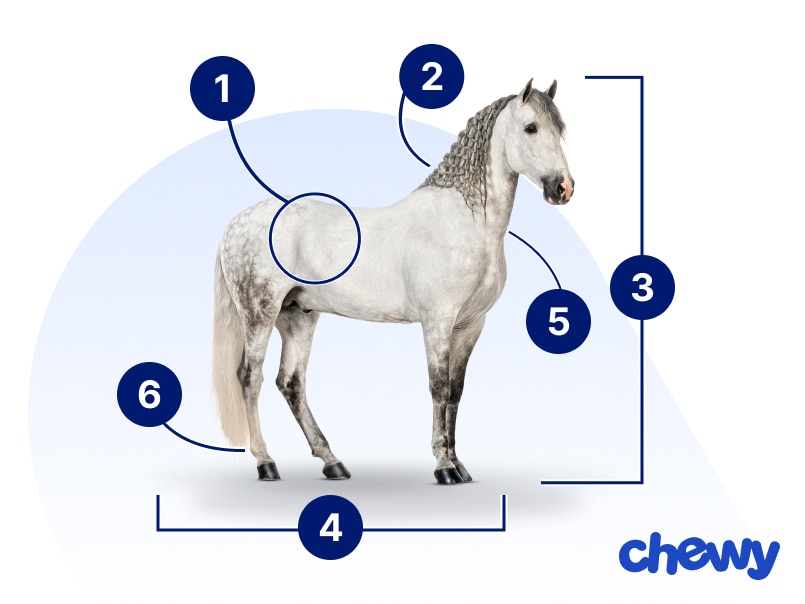
- Colors and Patterns
All colors and patterns can occur, although gray and bay are the most common. The IALHA accepts any solid color, including buckskin, dun, and palomino.
- Height
Andalusians and Lusitanos typically stand 15.2–16.2 hands, with some individuals measuring slightly above or below this range.
- Conformation
The breed has a muscular build and characteristic arched neck carriage.
- Movement
Andalusians are known for animated movement. Their natural movement and conformation are particularly suited to dressage, including competition at the Grand Prix level.
- Head and Neck
An elevated, curved neck carriage is characteristic of the breed.
- Legs and Hooves
The Andalusian horse has powerful, well-defined legs with broad, supple joints and exceptionally strong, durable hooves. The lower legs have minimal feathering, while flexible hocks and fetlocks contribute to the breed’s elevated, graceful movement and ability to perform precise, collected movements.
Andalusian Temperament
Every horse has an individual personality, but Andalusians are generally known for being friendly, quiet, docile, sensitive, kind, calm, and loyal. They like being around people and can be good companions for individuals and families.
Their intelligence and willingness to learn also make them highly trainable. They can be a good match for riders of various experience levels. Their athleticism allows them to participate in many activities, including dressage, jumping, trail riding, and driving.
Related Breeds
How to Care for a Andalusian
Andalusians are considered relatively easy to care for, but horse owners should pay particular attention to weight management and grooming. They can gain weight easily, while their signature long, thick manes and tails require extra time to keep clean and free of tangles. Routine veterinary, dental, and hoof care are also important.
Grooming
Training
Diet
Exercise
Environment
Andalusian Health
Andalusians can be affected by several health concerns. Horse owners should work with their veterinarians to monitor weight, hooves, skin, and overall health.
- Equine metabolic syndrome (EMS): Andalusians can develop EMS, a metabolic disorder involving problems with insulin regulation. Affected horses may be overweight, have difficulty losing weight, or develop a cresty neck. Diet, exercise, and maintaining a healthy body condition are important parts of management.
- Laminitis: This painful condition involves inflammation and damage inside the hoof, and can cause lameness. EMS can increase the risk, and consuming too much sugar-rich pasture grass may also trigger pasture laminitis.
- Cushing’s disease: Also called pituitary pars intermedia dysfunction (PPID), this progressive endocrine disorder can cause signs including a long or curly coat, abnormal shedding, lethargy, muscle loss, increased drinking and urination, and laminitis. Treatment can help manage the condition.
- Melanoma: Melanoma is common in gray horses, making it relevant to Andalusians because gray is a common breed color. About 80% of gray horses older than 15 develop melanoma. Horse owners should tell their veterinarians about suspicious lumps or nodules.
Andalusian History
The Andalusian comes from the Iberian Peninsula, particularly the Andalusia region of southern Spain. The breed can be traced to the Middle Ages, when Carthusian monks bred these horses. They were originally used as war horses.
Over the centuries, Andalusians were selectively bred for athleticism and bravery. Modern horses retain that athletic versatility and are now used for everything from dressage and driving to trail and Western riding.
In North America, the IALHA serves as a registry for Andalusian and Lusitano horses. The United States Equestrian Federation (USEF) also has an Andalusian/Lusitano competition division.
FAQs
What are Andalusian horses used for?
Are Andalusians easy keepers?
How long do Andalusian horses live?
How big do Andalusian horses get?
What is the difference between an Andalusian and a Pure Spanish Horse?
This article was created with assistance from AI tools. The content has been reviewed for accuracy and edited by a human.