Clydesdale Horse
Updated August 12, 2026
Clydesdale Horse
Updated August 12, 2026
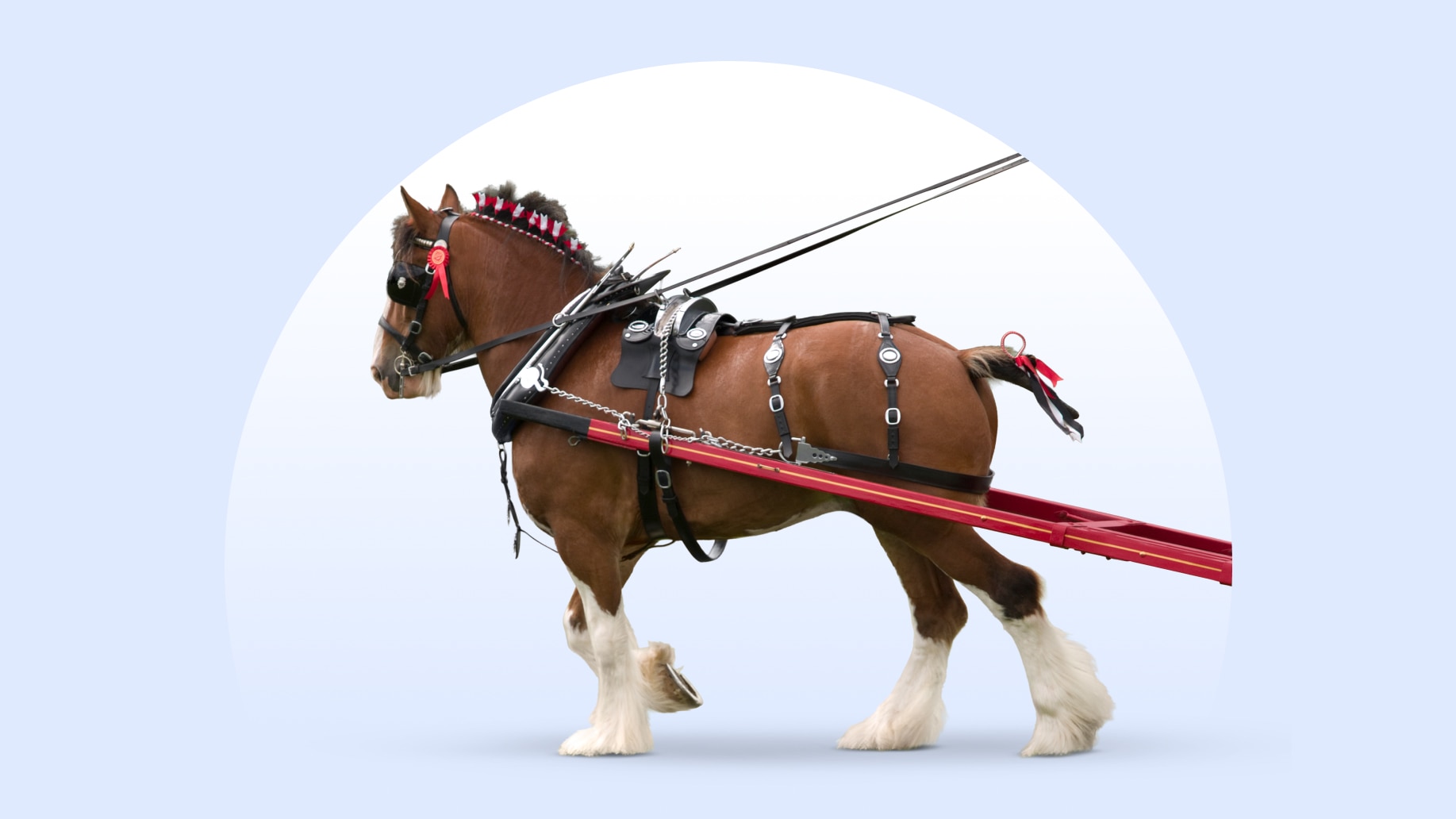
Clydesdales are powerful draft horses known for their gentle temperament and distinctive feathered legs. Originally developed in Scotland, they were bred for farm work and hauling heavy loads. Most notably, Clydesdales are featured in Budweiser beer advertisements, to the delight of viewers especially during the Super Bowl.
Calm, Willing, Gentle Giants
1,600–2,200 pounds
16–18 hands (64–72 inches), with an occasional individual over or under
20–25 years
Most commonly bay with white markings; also black, brown, and roan
Clydesdale horses excel in driving, carriage work, farm work, pleasure riding, and showing. Despite their large size, these horses are generally willing, calm, and people-oriented.
Regular grooming is especially important to keep this breed’s feathered legs healthy. Clydesdales thrive with plenty of space, consistent exercise, and a balanced diet designed for large horses.
Clydesdale Horse Appearance
The Clydesdale is one of the world’s most recognizable draft horse breeds. Known for their towering height, powerful build, and long feathering around the lower legs, these horses combine strength with an elegant, active way of moving. Their expressive faces and flashy white markings make them stand out in the show ring and on parade.
- Colors and Patterns
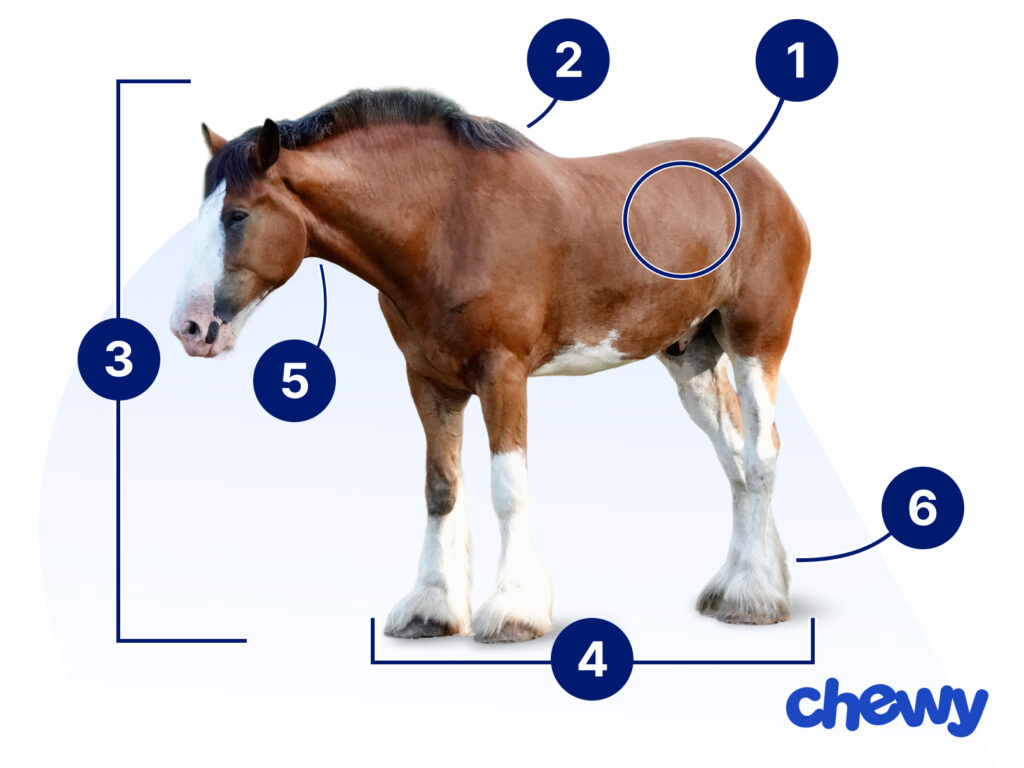
Most are bay with four white stockings and a broad white blaze. Black, brown, and roan also occur, and many have white body markings.
- Height
Typically 16–18 hands (64–72 inches), although some individuals are taller.
- Conformation
A large draft horse with a muscular body, deep chest, broad shoulders, and powerful hindquarters built for pulling heavy loads.
- Movement
Clydesdales have an energetic, high-stepping stride with noticeable knee action that gives them an elegant appearance despite their size.
- Head and Neck
They have a broad forehead, straight facial profile, large nostrils, and an arched, muscular neck.
- Legs and Hooves
Strong, straight legs support large, durable hooves. Long, silky feathering covers the lower legs.
Clydesdale Horse Temperament
Clydesdales are often described as gentle giants. They tend to be calm, willing, and easy to handle when properly trained and socialized. Their patient nature makes them popular for carriage driving, exhibitions, pleasure riding, and educational events.
While their size means they require confident handling, they generally enjoy working with people and form strong bonds with their owners.
Related Breeds

How to Care for a Clydesdale Horse
Because of their impressive size, Clydesdales require thoughtful daily management. Horse owners should plan for regular grooming, quality nutrition, routine hoof care, and enough turnout to support healthy muscles and joints.
Preventive veterinary and dental care are also essential throughout the horse’s life.
Grooming
Training
Diet
Exercise
Environment
Clydesdale Horse Health
Like all other horses, Clydesdales benefit from preventive veterinary care, vaccinations, parasite control, dental care, and regular hoof trimming. Health concerns include:
- Skin irritation beneath feathering: Moisture and debris trapped in the feathered legs can contribute to skin infections, like scratches, if not cleaned and dried regularly.
- Feather mites: The long leg hair can provide an environment where mites may thrive, making routine inspection and grooming important.
- Hoof health: Because Clydesdales carry substantial body weight, regular farrier care is essential to maintain healthy, balanced feet.
- Joint strain: Their large size places additional stress on joints, making appropriate body condition and regular exercise important throughout life.
- Heart and kidney disease in older horses: As Clydesdales age, heart or kidney disease may become contributing factors to age-related decline.
Clydesdale Horse History
The Clydesdale originated in the Scottish region once known as Clydesdale, now part of Lanarkshire. During the 18th century, local mares were crossed with imported Flemish stallions to develop larger, stronger horses capable of working farms and hauling heavy loads. The breed gained recognition throughout Scotland before spreading worldwide.
The Clydesdale Horse Society was established in Scotland in 1877, followed by the Clydesdale Breeders of the USA in 1879 to maintain pedigrees and oversee breed registration in the United States.
Today, Clydesdales compete in registered halter and hitch classes, appear in parades and exhibitions, and continue to serve as ambassadors for draft horses around the world.
FAQs
How big do Clydesdales get?
Are Clydesdales good riding horses?
Why do Clydesdales have feathered legs?
Where did the Clydesdale breed originate?
What are Clydesdales best known for today?
This article was created with assistance from AI tools. The content has been reviewed for accuracy and edited by a human.