Water Dragon Care Sheet


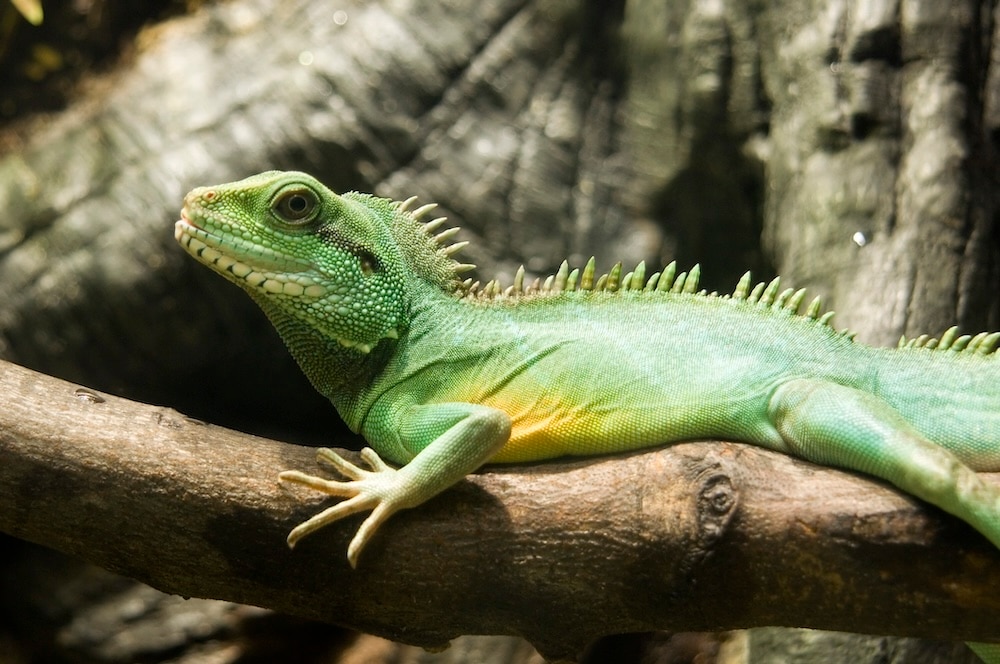
Photo by stockcam/E+
Water dragons are lizards native to Thailand, Vietnam, and China, and are sometimes called Chinese water dragons or Asian water dragons. If you’ve recently gotten a water dragon or you’re thinking about getting one as a pet, learn how to give them everything they need for a long, healthy life.
Water Dragon Overview
- Because water dragons get frightened easily, don’t keep them in noisy or busy environments.
- Male water dragons are usually larger than females, and housing multiple males together can lead to aggressive behaviors.
- When frequently handled as juveniles, water dragons grow to enjoy being held by their humans.
Fun Facts About Water Dragons
- Water dragons are mostly tail; 75% of their total body length comes from their tail.
- If you hear a hissing sound or notice body puffing or aggressive posturing, your water dragon is stressed.
- You might notice a color change from green to brown if there’s been a change in temperature or humidity in your water dragon’s habitat.
Water Dragon Habitat
Water dragons love to climb and need a tall, ventilated glass enclosure. Juveniles need at least a 55-gallon tank, and adults should have at least a 540-gallon tank for one to two dragons. Water dragons need enclosures that have a large water area for them to dive and swim.
Increase tank size as they grow, as adults can reach up to 3 feet long. Keep adult males alone as they are territorial and will fight when kept together. You may keep females together if you size up the enclosure accordingly.
Line the bottom of the terrestrial side of the tank with substrate that holds moisture well, such as sphagnum moss, orchid bark, or coconut fiber.
Recommended Products

Don’t use gravel or wood chips, as these can be harmful to your lizard if ingested.
Create a visual barrier on the tank’s outer walls using cardboard, paper, or solid-colored tape. Water dragons may rub their noses against the clear glass walls of their habitats, so this visual barrier helps minimize injuries.
Provide decor including at least two hideouts on each side of the tank for each water dragon. Use sturdy branches and large rocks for basking and climbing. Live or artificial plants can be added as well—live plants can help increase humidity, and both live and artificial plants can provide additional hiding and climbing spots.
Recommended Products

Provide the right lighting and heating to ensure your water dragon maintains a healthy body temperature, as they’re cold-blooded.
The temperatures inside the enclosure should be 95–100 F in the basking zone and 80–85 F in the cool zone. Keep a thermometer in each zone so you can check temperatures throughout each day.
Recommended Product

If their enclosure gets too cold, your water dragon may start to show signs of brumation, a state of dormancy similar to hibernation.
The humidity level should be 70%–80%, so use a humidity gauge to monitor it. Low humidity could cause shedding problems in your water dragon.
Recommended Products
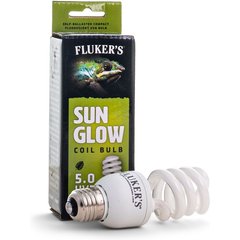
Add an incandescent light and ceramic heater in the basking area. If you’re keeping multiple water dragons in one enclosure, each lizard should have their own basking area.
You can also install an under-tank heating pad and connect it to a thermostat so the rest of the enclosure stays within a comfortable range for your pet.
Recommended Product

Don’t use hot rocks, as they can cause injury to water dragons.
These lizards need 10–12 hours of ultraviolet (UV) light every day, so install a full-spectrum UV bulb. Replace the bulb every six to 12 months or so as potency wanes.
Cleaning and Maintenance
Spot-clean the habitat daily by removing soiled materials and discarded food. Deep-clean the enclosure weekly with a reptile habitat cleaner or a 3% bleach solution.
After removing your water dragon, old substrate, decor, and accessories, scrub the tank, then leave the solution on the tank for at least 10 minutes to ensure it’s properly disinfected.
Thoroughly rinse the enclosure, allowing it to fully dry before adding new substrate, cleaned decor and accessories, and your pet.
What Do Water Dragons Eat?
Insects should make up roughly 90% of your water dragon’s diet. Feed various gut-loaded (recently fed) worms and insects, including:
- Butterworms
- Crickets
- Earthworms
- Grasshoppers
- Hornworms
- Silkworms
- Superworms
- Mealworms
- Waxworms
Dust the live insects and worms with supplements, rotating between a calcium plus vitamin D supplement for one feeding session, then a calcium supplement without vitamin D for the next. Dust them with a multivitamin weekly.
Recommended Products
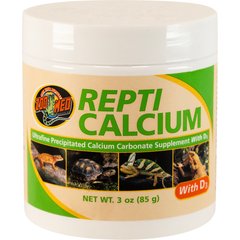
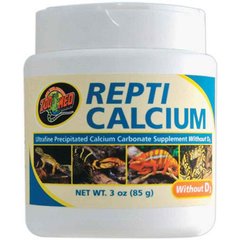
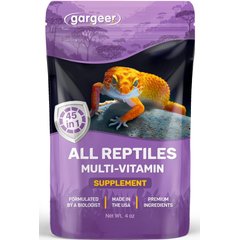
Fruits and vegetables should make up less than 15% of their diet. Offer foods like:
- Kale
- Mustard greens
- Collard greens
- Romaine lettuce
- Carrots
- Sweet potatoes
- Green beans
- Mangoes
- Cantaloupe
- Raspberries
- Blueberries
Previously frozen and thawed newborn and juvenile mice, such as pinkies and fuzzies, are great for occasional treats, but try to give them only when your water dragon is old enough and large enough to consume them.
Never feed your water dragon live rodents, as they can become aggressive and hurt your pet.
Juvenile water dragons need to eat daily, while adults can eat every two to three days.
Water bowls need to be large and shallow enough for your pet to soak in. Wash the bowls and fill them with fresh, clean water daily.
Recommended Product

Water Dragon Handling
Approach your water dragon from where they can see you. Avoid startling or picking them up from behind, and never grab their tail.
If you have a juvenile water dragon, you can start handling them regularly. This helps your pet get used to you and being handled. Continue this daily interaction to encourage socialization.
Water Dragon Health
Take your water dragon to the vet annually for a checkup. On a daily basis, monitor their appearance and behavior. Healthy dragons have clean eyes, ears, and vents, and a good appetite. Also, they are alert, bask often, and climb regularly.
If your water dragon has sunken or swollen eyes, lumps, bumps, or abscesses, or they can’t walk properly, consult your vet.
If your pet is refusing food, isn’t basking, is rapidly losing weight, or has stuck shed, call your vet right away, as these could also be signs of a larger issue.
Pet Water Dragon Supply Checklist
- Appropriately sized habitat
- Substrate and sphagnum moss
- Food and water dishes
- Hideaways, climbing decor, and plants
- Heat lights and fixtures
- UVB lighting
- Under-tank heater
- Thermometers, thermostat, and humidity gauge
- Multivitamin supplement
- Calcium supplement, with and without vitamin D
- Live insects and worms
- Cricket keeper, food, and quencher
- Water mister
FAQs About Water Dragons
Can you keep a water dragon as a pet?
Yes, you can keep a water dragon as a pet, as long as you have the space for the large enclosure they need.
Is a water dragon an iguana?
While they share similar features and are both large lizards, a water dragon is not an iguana.
How hard is it to take care of a water dragon?
Since water dragons need large habitats and specific temperature and humidity levels, caring for them is challenging, especially for inexperienced reptile owners. Take on the responsibility of caring for a water dragon only if you have the time and space to do so, and carefully research their needs.
What is the lifespan of a water dragon?
Water dragons can live up to 15 years when given proper care.
How big a tank do you need for a water dragon?
Juveniles need at least a 55-gallon tank, while a single adult needs at least a 540-gallon tank.
How big do water dragons get?
Expect your water dragon to grow to around 2–3 feet long, including their tail.
Click here for a printable PDF version of this care sheet!
Attributions