Rabbit Enrichment: Fun Ways To Keep Your Bunny Happy and Healthy

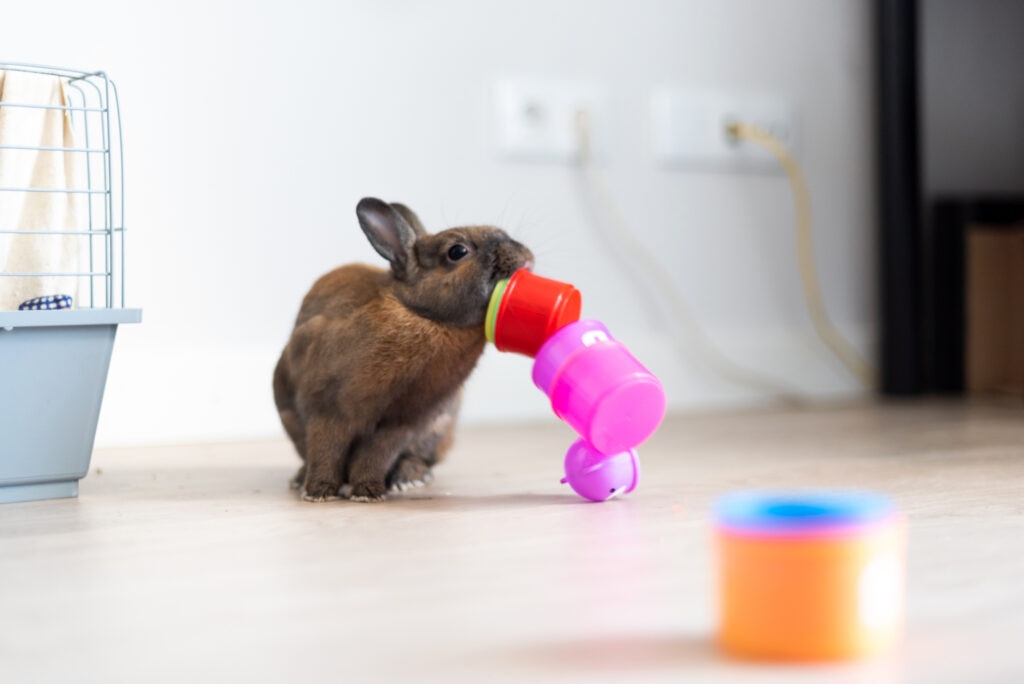
Photo by Alicia Fdez/iStock/Getty Images Plus
Rabbit enrichment means giving your rabbit opportunities to use their body and brain in ways that encourage natural behaviors like chewing, digging, foraging, exploring, and hiding.
And bunny enrichment is about more than toys.
A safe space to explore, plenty of hay, hiding places, exercise, and positive interactions with you will help keep your rabbit physically and mentally engaged.
Key Takeaways
- Rabbit enrichment supports physical and mental well-being.
- Good enrichment encourages natural rabbit behaviors like gnawing, digging, foraging, hiding, and exploring.
- Rotate rabbit enrichment toys regularly to keep things interesting.
- DIY bunny toys can work just as well as store-bought options when they're made with rabbit-safe materials.
- Enrichment doesn’t replace the basics. Rabbits still need plenty of space, daily exercise, social interaction, and unlimited grass hay.
What Is Rabbit Enrichment?
Rabbit enrichment is anything in your rabbit’s environment or routine that gives them an outlet for natural behaviors, including:
- Chewing
- Digging
- Foraging
- Exploring
- Hiding
- Playing and exercise
- Positive social interaction
Rabbits are social animals, so time with you or a bonded rabbit companion is an important part of enrichment, too.
And because rabbits are prey animals, enrichment isn’t only about activity.
A secure place to retreat to is just as important for helping your rabbit feel safe.
Recommended Product
Why Is Rabbit Enrichment Important?
Enrichment benefits your rabbit’s body and brain. Regular activity helps them maintain a healthy weight, while exploring and foraging help prevent boredom and build confidence.
Chewing matters, too. Rabbits’ teeth grow continuously, so they need unlimited grass hay to help wear them down.
Recommended Product
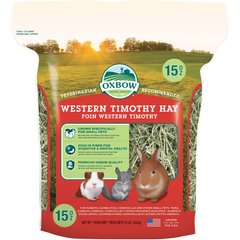
Safe chew toys add extra gnawing opportunities, but they shouldn’t replace hay.
Recommended Products
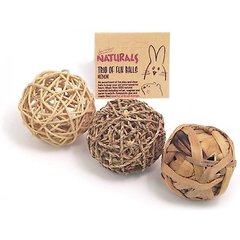
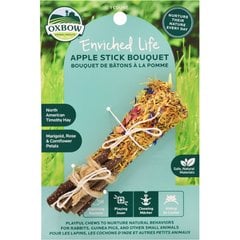
Giving your rabbit appropriate things to chew, dig in, and investigate may also redirect unwanted behaviors, like chewing furniture or digging at carpet.
Best Rabbit Enrichment Toys
Rabbits’ toys don’t need to be fancy, and no single toy is best for every rabbit.
Some love shredding cardboard, while others would rather play with a ball, zip through a tunnel, or search for food.
Recommended Products
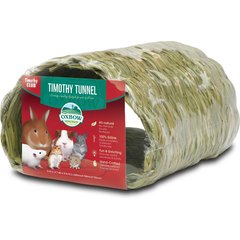
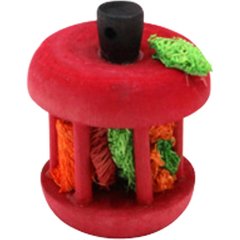
Offering variety helps you discover what your bunny enjoys most.
Gnawing Toys for Rabbits
Safe gnawing toys give your bunny something to chew instead of furniture, carpet, or electrical cords. Options include:
- Untreated wooden rabbit toys
Recommended Product

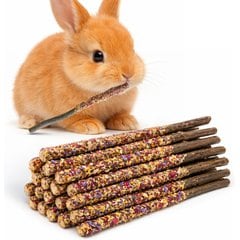
- Rabbit-safe branches, such as apple or willow
Recommended Product
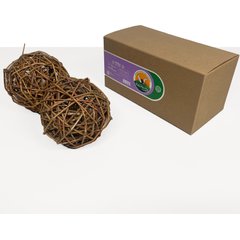
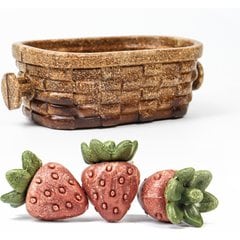
- Untreated willow balls or baskets
Recommended Products
Recommended Products
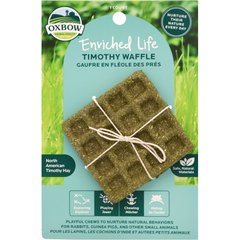
- Cardboard
Inspect chew toys regularly and remove anything with sharp edges, loose pieces, or other damage.
Foraging Toys
Wild rabbits spend much of their day grazing and searching for food, so turning mealtime into an activity is great enrichment.
Try hiding hay, greens, or part of your rabbit’s daily pellets in:
- Cardboard tubes or boxes
- Plain paper bags
- Rabbit-safe treat puzzles or snuffle mats
- Hay balls
Treats should be only a small part of your rabbit’s diet, so whenever possible, use food they’d already be eating that day.
Digging Toys
Some rabbits take digging very seriously.
A digging box, such as a large cardboard box or sturdy container filled with shredded plain paper or hay, gives your bunny an appropriate place to scratch and burrow.
Recommended Product
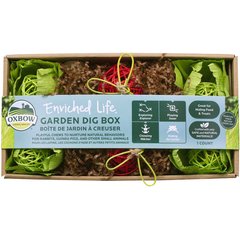
Watch closely when introducing a new material, especially if your rabbit tends to eat non-food items.
Tunnels and Hideouts
Tunnels encourage rabbits to run, explore, and investigate. Both cardboard and rabbit-safe commercial tunnels work well.
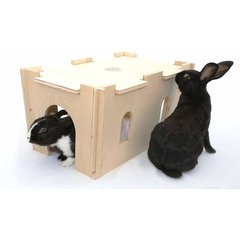
Hideouts are just as important. A cardboard box with two openings makes an inexpensive retreat, and many rabbits will happily remodel it by chewing new windows and doors.
How To Play With Your Rabbit
The best way to play with your rabbit is to let your bunny take the lead. Sit or lie on the floor and let your rabbit approach you, rather than picking them up. Set up boxes, tunnels, and low obstacles, then let your rabbit decide how to explore.
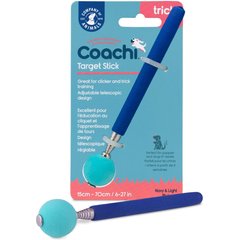
Many rabbits also enjoy positive-reinforcement training. With a clicker or other consistent cue, rabbits can learn behaviors such as:
- Coming when called
- Following a target
Recommended Products
- Spinning in a circle
- Hopping into their carrier or enclosure
Keep sessions short and use small pieces of your rabbit’s regular food or veterinarian-approved treats as rewards.
Avoid chasing games. Being pursued or grabbed can frighten a prey animal. If your rabbit starts zooming or playing with you, let them set the pace and move away whenever they choose.
DIY Rabbit Toys You Can Make at Home
Some of the best DIY bunny toys are made from things you already have at home:
- Cardboard tubes: Stuff them with hay for your rabbit to find and pull out.
- Cardboard boxes: Cut rabbit-sized openings to create hideouts, tunnels, or cardboard castles.
- Plain paper bags: Add hay for another foraging activity.
- Egg cartons: Hide a few pellets or greens inside.
- Hay-filled boxes: Add plain paper or cardboard pieces to encourage searching and digging.
- Untreated wicker baskets: These are great for climbing into, tossing, or chewing.
How Often Should You Rotate Rabbit Enrichment Toys?
There’s no set schedule, but changing or rearranging enrichment every few days or once a week can keep things interesting.
You don’t have to replace everything at once. Add one or two new items, move a tunnel, or bring back a favorite that’s been put away for a while.
Pay attention to what your rabbit uses and replace anything that’s heavily chewed or damaged.
Rabbit Enrichment Safety Tips
Before giving your rabbit a new toy or activity:
- Choose untreated, rabbit-safe materials and avoid chemically treated wood.
- Avoid paints, finishes, and glues.
- Remove tape, staples, plastic, string, labels, and small pieces that could be swallowed.
- Check toys regularly for sharp edges or damage.
- Rabbit-proof play areas by covering electrical cords and removing toxic plants.
- Supervise your rabbit when introducing anything new.
If you’re unsure whether a material, plant, or branch is safe, ask your veterinarian.
FAQs About Rabbit Enrichment
What is the best rabbit enrichment?
The best rabbit enrichment offers a variety of safe ways to hide, explore, forage, chew, dig, and exercise. Every rabbit is different, so watch which activities your bunny likes the most.
Do rabbits need toys every day?
Rabbits need daily enrichment, but they don’t need a new toy every day. Plenty of space, unlimited hay, hiding spots, safe chews, and chances to explore all count.
What are the best gnawing toys for rabbits?
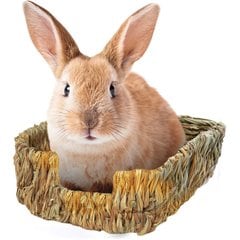
Untreated wood, rabbit-safe branches, untreated wicker, plain cardboard, and woven grass or hay toys are all good options. However, grass hay should always come first. The chewing it requires supports your pet’s dental and digestive health.
Can rabbits play with cardboard?
Yes. Plain cardboard is one of the best and cheapest enrichment options. Remove tape, staples, and plastic first, and replace the cardboard once it’s soiled or heavily chewed.
How do I know if my rabbit is bored?
No single behavior proves boredom, but destructive or repetitive behaviors and inactivity are reasons to take a closer look at your rabbit’s environment.
If your rabbit suddenly becomes less active, stops eating, or produces fewer droppings, don’t assume boredom. These can be signs of illness and require prompt veterinary
Attributions
References
- Smith MV. Textbook of Rabbit Medicine. Elsevier; 2023. Exercise. p. 1.
- Quesenberry KE, Orcutt CJ, Mans C, et al. Ferrets, Rabbits, and Rodents. Saunders; 2021. Husbandry. p. 146.
- Quesenberry KE, Orcutt CJ, Mans C, et al. Ferrets, Rabbits, and Rodents. Saunders; 2021. Hay. p. 171.