The Best Parakeet Toys for Mental Stimulation


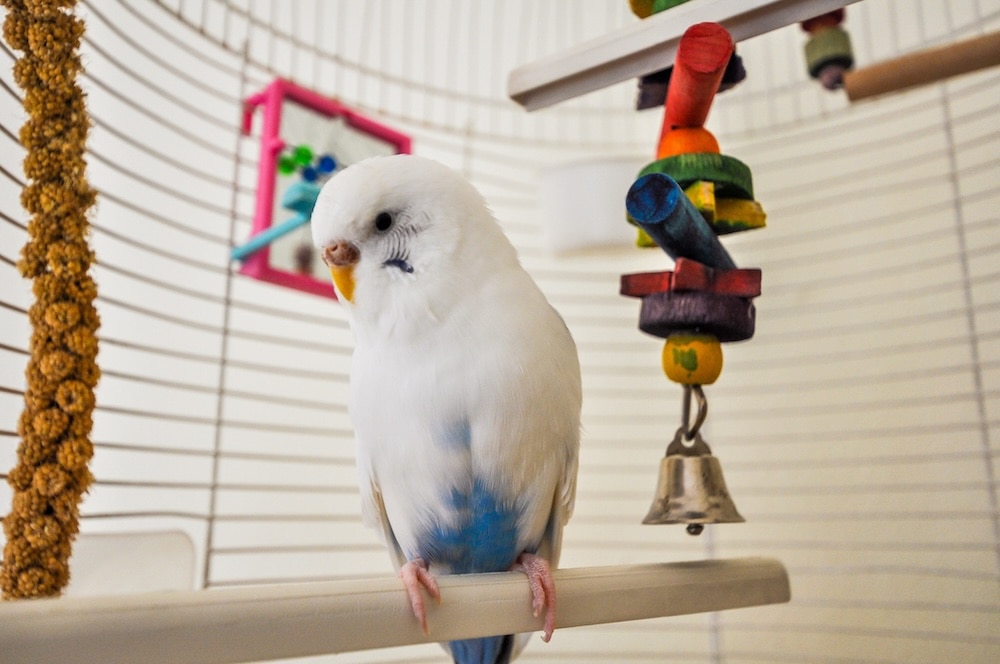
Photo by JanJBrand/iStock/Getty Images Plus
Parakeets (budgies) are energetic, active, and curious little birds who need daily enrichment through interaction and play. Let’s take a look at the toys your parakeet might love.
Key Takeaways
- Bored parakeets often become self-destructive or pick on other birds in the enclosure, but well-chosen toys help prevent negative behaviors.
- Toys should be brightly colored and non-toxic, and those that make noise, such as bells, are also engaging.
- Keep a stock of toys and rotate them every week or two for consistent variety to prevent boredom.
What To Look for in Parakeet Toys
Parakeets are intelligent, curious birds who enjoy exploring their environment. Keeping a rotating selection of toys in their habitat helps keep them mentally engaged and encourages natural behaviors like foraging and climbing.
Various textures, colors, sounds, and movements are interesting to parakeets, as they offer different challenges and rewards. Choose well-made durable toys designed for birds that don’t have any sharp edges or small or loose parts that could harm your parakeet.
Once you’ve installed toys securely, watching your parakeet explore and play is part of the fun! Be observant, because each bird is different. It’s important to take note of which toys your parakeet favors most so you can keep them happy and entertained.
Best Parakeet Toys for Mental Stimulation
When it comes to parakeet toys, there are dozens of options, from those for shredding, chewing, and foraging to puzzles, bells, and climbing toys. You may even hear your parakeet make sounds to express happiness when they’re enjoying interactions with toys.
1. Foraging Toys
Often very intricate in design, foraging toys encourage problem-solving and come in handy with these bright little birds, who love to investigate new things.
Recommended Products
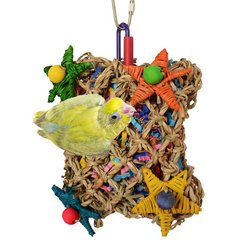
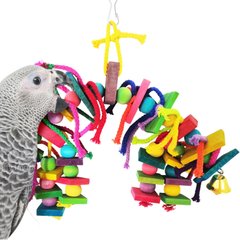
They come in different difficulty levels, so if your parakeet has never used one, start with easier toys and work your way up.
2. Shredding and Chewing Toys
Parakeets love chewing and shredding things, and you can encourage their natural behavior with toys made to be destroyed.
Recommended Products
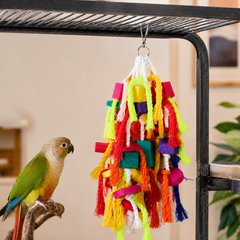

Look for paper, cardboard, and bird-safe woods, and replace damaged toys.
3. Puzzle and Interactive Toys
Similar to foraging toys, puzzles and interactive toys require problem-solving skills. These toys teach cause-and-effect with sliders, moving parts, hidden treats, and bird-safe balls.
Recommended Products
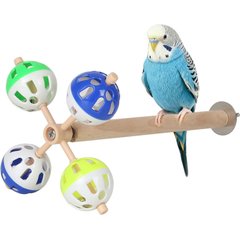
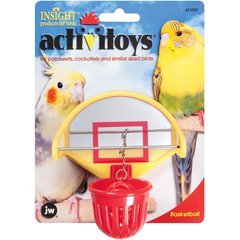
They’re ideal for curious, active parakeets who enjoy a challenge.
4. Swings, Ladders, and Climbing Toys
Parakeets love exploring their environment by climbing. Swings are among the most popular parakeet toys, but these birds also love ladders and other climbing toys. They’re terrific choices for adventurous birds, and they test balance and coordination.
Recommended Products
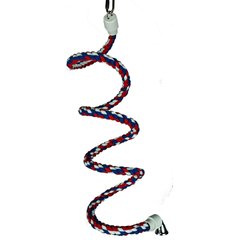
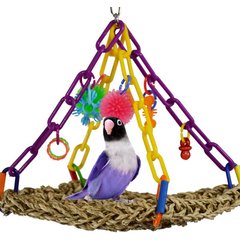
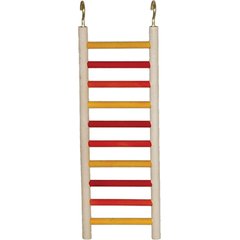
Rope-and-ladder rungs fray and wear down over time as your parakeet uses them, so inspect them regularly and remove them when you notice damage. Make sure they’re made of non-toxic material/fiber.
5. Bells and Sound Toys
Bells, chimes, and other sound-producing toys made of non-toxic metals can bring many hours of entertainment for your parakeet. Pleasant sounds from ringing bells provide auditory stimulation and another form of cause-and-effect play and exploration.
Recommended Products
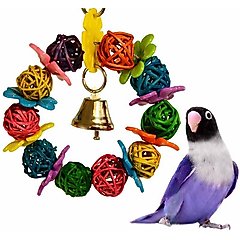
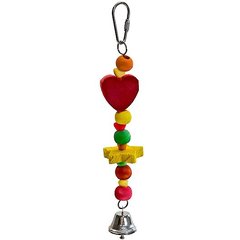
Not all parakeets enjoy the sounds that bells make, so if you discover that your bird likes a quieter toy, swap it out for one they prefer. Whenever you do include bells in your parakeet’s toy rotation, use only hose with an open end because the jingle–bell type can trap claws.
How To Keep Toys Engaging
Figuring out how to keep your parakeet’s toys interesting is a necessity. These birds delight in exploring, so when they see the same thing every day, it becomes boring. Here are a few ideas to help keep them mentally stimulated and happy.
- Rotate toys periodically to keep things interesting.
- Have at least one replacement for each toy on hand.
- Try different-colored options of the same toy and see how they respond.
- Not all bells sound the same; try a couple of different types.
- Change toy placement to encourage exploration.
- Introduce unfamiliar toys gradually, with one new toy installed at a time.
- Combine foraging, chewing, and climbing activities.
- Avoid overcrowding the cage; parakeets need room to take short flights.
- Remember that toys supplement—not replace—social interaction and exercise.
Parakeet Toy Safety
Setting up toys for your parakeet is exciting, but be mindful of a few safety rules to keep your bird safe.
Before installing a toy (even if it’s new), inspect it for sharp edges and loose parts. Check parts like clips, bells, chains, and ropes, and remove any that can hurt your parakeet. Inspect all of your bird’s toys during weekly cage cleanings.
Safe toys for parakeets have no sharp edges, objects with openings, or loose threads that can catch your parakeet’s feet or beak.
Make sure the size of the toy is appropriate for your budgie. If a parakeet accidentally wedges their foot or head into a toy, they will panic and could injure themselves.
Also, avoid toys with metals, paints, coatings, and adhesives if you aren’t certain that they are safe. Some materials, like lead and zinc, are dangerous for birds and can cause toxicity and even death.
Parakeets need a wide selection of toys they can chew, shred, and climb on throughout the day to exercise their minds and bodies. The time they spend foraging and solving problems plays a vital role in their physical and mental health and can’t be overlooked, so go wild and curate a whole collection for your feathered friend!
FAQs About Parakeet Toys
What toys are best for parakeets?
Parakeets thrive with a mix of different toys, including chewing or shredding toys, foraging and puzzle toys, swings and ladders, and bells.
How many toys should a parakeet have?
At least three to five at a time for variety, but if their cage is big enough, more toys are welcome—just make sure your bird has enough room to take short flights and stretch their wings.
How often should you rotate parakeet toys?
Rotating parakeet toys every one to two weeks is a good way to start, as that’s often enough for your parakeet to always have something new to be interested in. Keep a small stock of toys you can swap out so you don’t have to keep buying new toys.
Attributions