5 Parrot Talking Myths and Facts

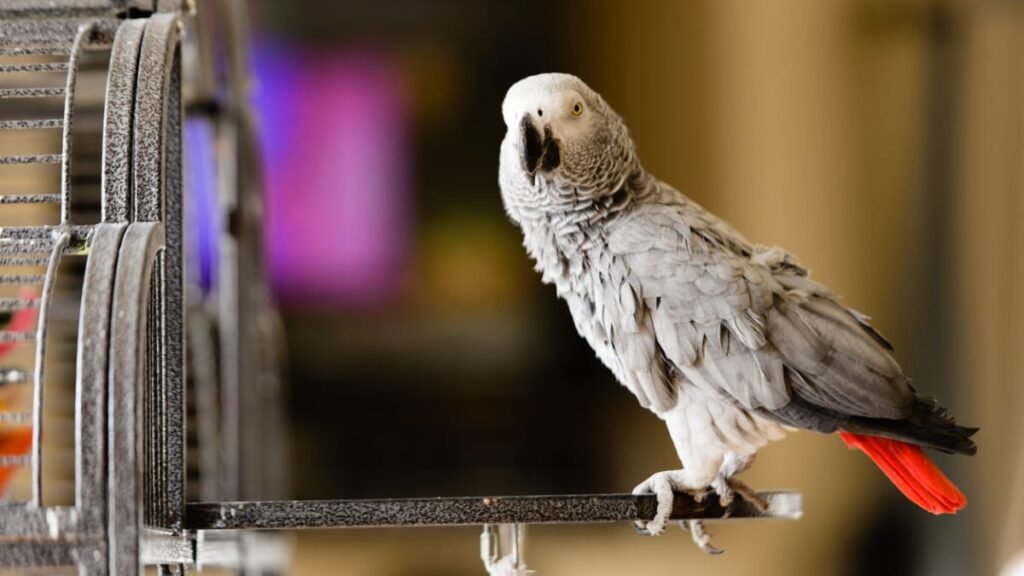
Photo by iStock.com/WhitneyLewisPhotography
Can parrots talk? It’s one of the first questions visitors ask when they visit a home with a pet parrot. We humans are fascinated by the parrot’s unique ability to mimic human speech. The answer to, “Can your parrot talk?” is usually, well, complicated.
While many parrot lovers bring home a parakeet or a cockatiel hoping to teach their bouncing baby bird to speak, they often discover a few common myths about parrot speech.
Here, we’ll dispel some of those myths, sharing some fun facts about talking parrots, including how and why parrots can talk.
Key Takeaways
- Parrots are the most talkative companion bird species, but other bird like Mynahs, Australian lyrebirds, and Starlings can mimic human speech.
- Each individual bird's ability to talk depends on their size, species, training, and whether they are male or female.
- Both male and female companion birds of various species can learn to talk.
- Male birds generally tend to be more vocal in the wild and thus have a larger propensity for talking.
- Many pet birds learn to talk and become chatty simply because they enjoy interacting with their pet parent.
Myth 1: All Parrots Can Talk
Most parrots have the ability to talk, and many parrots do, but some parrots will never speak a word. Why? Simply because each and every parrot is an individual.
Some species, like African grey parrots and Amazon parrots, seem to have a higher propensity for mimicking and using human speech. Scientists are not exactly sure why some companion parrot species are more likely than others to talk.
Even within the parrot species, with their reputation for being good talkers, an individual bird may never talk. If talking ability is high on your list of wants from a pet bird, consider adopting a parrot that already has a vocabulary.
Myth 2: Parrots Are the Only Birds That Talk
People normally think of parrots when they think of talking birds, and that might be because parrots are some of the most common pet birds. There are actually many nonparrot species of birds that can also talk, and some may surprise you!
Mynah birds, while a somewhat unusual pet bird, are known to be excellent mimics and talkers. Crows, ravens and other members of the corvid family are very good mimics, although they do not mimic human speech as well as a parrot can. Their voices are gravelly and not as clear.
One of the most common birds in the United States is another excellent mimic. Starlings, a songbird native to Europe and introduced to North America, can mimic speech quite clearly, and YouTube has many videos of pet starlings speaking.
Perhaps one of the most impressive mimics is the Australian lyrebird. Not only can it mimic the sound of human speech, but it can make incredibly complex sounds, such as that of a chainsaw in use. So, although parrots are the best-known of the avian chatterboxes, they certainly are not the only ones capable of mimicking speech.
Myth 3: Parrots Talk Because They Have Vocal Cords
Although some parrots can sound exactly like the people they live with, they produce sounds without vocal cords. In people, vocal cords (often referred to as the vocal fold) are a part of a muscle on the side of the larynx that is covered with special tissues that can vibrate at a high speed and are modulated by the larynx.
Parrots are able to create sounds with very different anatomy. The vocal tract in the parrot is complex, but it starts with the syrinx. Instead of using the larynx, birds like parrots, crows and songbirds have a syrinx located where the trachea splits into the lungs. Air flowing through the syrinx and vibrating on the walls creates sound, which is modulated by the rest of the vocal tract.
Although it is fascinating that parrots talk without vocal cords, it is even more amazing that they can make the same sounds without lips and teeth. Just try saying “parrot” without using your lips, and you’ll see. Yet a parrot’s anatomy allows it to make those pesky consonant sounds and much more.
Myth 4: If You Teach Your Bird to Whistle, It Won’t Learn To Talk
One of the more common myths is that if your parrot learns to whistle first it is less likely to learn to speak because talking is harder. This isn’t really true. Parrots make a wide variety of noises and mimic a lot more than words. They are likely to whistle, “beep” and “ring,” as well as talk.
It may be that whistling is less difficult to learn, but it won’t stop a parrot from talking. Some parrots may really enjoy whistling and never learn to talk, but this is an individual preference, not a generality.
Remember that, while it is enjoyable for a parrot to learn all types of noises, the main reason for mimicking is for interaction. The more attention, praise, and treats a bird receives for making a particular sound, the more likely the bird is to repeat it.
So if you want your bird to talk, you may not want to respond to your bird when it whistles. Instead, lavish praise and attention for noises you wish to encourage. Keep in mind that your parrot may learn to talk no matter what you do or don’t do.
Myth 5: Only Male Parrots Talk
It is true that, in some species, males are more likely to have a larger repertoire of sounds and words. This is particularly true in cockatiels and budgies (parakeets); however, there are often exceptions to this. Female cockatiels and budgies can learn to talk if you spend a lot of time teaching them and they choose to do so.
The better likelihood of males learning to talk may have something to do with their natural behavior in the wild, where the male is more vocal. Females, however, have the ability to mimic words, but maybe not the propensity.
In many parrots, such as macaws, Amazons and African greys, the sex of the bird makes no difference in whether or not the bird speaks. Males and females are just as able and just as likely (or unlikely) to learn words and phrases.
Whether or not a parrot learns is really all about the individual. Some parrots, it seems, are just natural-born talkers and some are not.
FAQs About Parrot Talking Myths
Are male birds more talkative than female ones?
Wild male birds are more vocal and male pet birds tend to have a larger vocabulary than female ones. However, female birds can be trained and can learn to enjoy interacting through speech and mimicry with their pet parent.
An individual bird’s ability to speak depends on their species, training, and natural propensity. Macaws, Amazons, and African greys are about equal across female and male birds when it comes to their ability to speak.
If I teach my parrot to whistle, can they still learn to talk?
Companion birds enjoy the interactivity and attention they get from their human family for speaking and they’ll repeat the noises and words for which they are most praised.
Do parrots have vocal cords?
No, parrots do not have vocal cords. Parrots produce sound using a syrinx instead of a larynx, and it’s located where their trachea splits into their lungs. Air flowing through the syrix and vibrating creates sounds.
Attributions