How To Teach a Bird to Talk: A Step-by-Step Guide

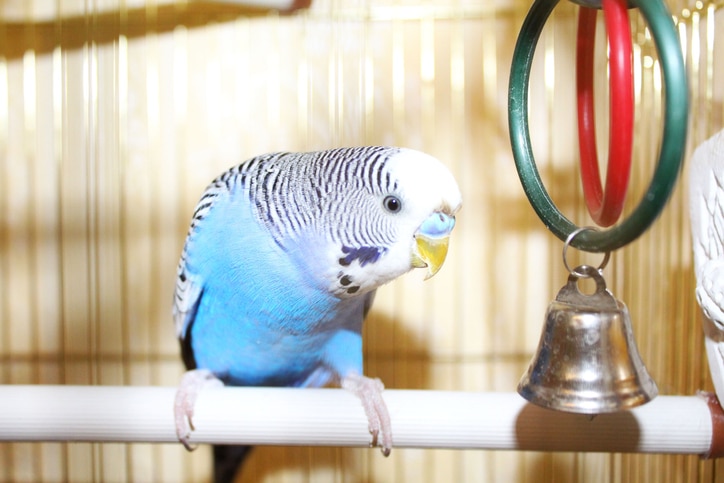
Photo by Alex_Schmidt/iStock / Getty Images Plus via Getty Images
If you want to learn how to teach your bird to talk, it requires time, consistency, and a thoughtful approach. That said, there are tried-and-true steps to help increase the chances of your bird developing the gift of gab.
One thing that sets parrots apart from other pet birds is their potential to talk. Learn which parrots are the chattiest, how to teach your bird to talk using positive reinforcement, and how long it may take to teach your parrot words and phrases.
Key Takeaways
- Some pet birds in the parrot family are better talkers than others, such as African greys and Amazons.
- Birds may learn words as contact calls to communicate with their human flock.
- Positive reinforcement, like praise or treats, can encourage birds to repeat words they’ve learned.
- Pet birds can mimic more than words, including household sounds and noises like kisses or laughter.
- Not every pet bird will talk, and some prefer whistles, chirps, or other sounds.
What Types of Birds Can Talk?
Pet birds vary in their vocal abilities, with some birds being chattier than others. Most parrot species are capable of learning to talk.
Here’s a rundown of the more prolific bird talkers, from chattiest to not-so-chatty:
- African grey parrots
- Amazon parrots
- Quaker parrots
- Indian ring-necked parakeets
- Cockatoos
- Parakeets (budgies)
- Conures
- Cockatiels
How Long Does It Take To Get a Bird to Talk?
Each bird learns at their own pace. Some birds learn to talk rather quickly; others might take months or even years to say their first word.
While there is no fixed timeline for how to teach your bird to talk, with consistent training and positive reinforcement using treats or praise, many pet birds can start to mimic words and/or phrases within a few months to a year. Other birds may begin learning even earlier, within days or weeks.
The timing largely depends on the individual bird, but frequent repetition and the tone of your voice can greatly influence when your bird begins to talk.
Recommended Product
How To Teach Your Bird To Talk
1. Get Familiar With Your Bird
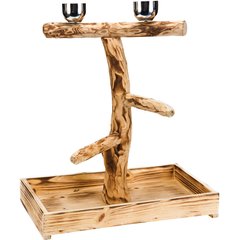
Pay attention to when your bird is most social and open to interaction with you. For example, some birds may initially prefer to be spoken to from the safety of their cage, while more confident birds may like perching on you or on a bird perch.
Recommended Product
2. Start Talking To Your Bird
Birds in the wild use contact calls to stay connected, and pet birds often use contact calls for their human flock, which can include words they learn from you.
If you greet your bird with a hearty “hello” every time you enter their room, they might say “hello” as a response call.
When talking to your bird, use short, commonly used words. To build context, associate specific words or phrases with actions—for example, say “treat” when giving your bird a treat, says Valli Parthasarathy, PhD, DVM, DACVB, a veterinary behaviorist at Synergy Veterinary Behavior in Portland, Oregon.
“Since bird vocalization is often a social connectivity mechanism, reinforcing words with social interactions and enthusiastic praise can help some birds learn, while others benefit from getting some other reward after saying the word,” she explains.
3. Repeat Words Often
Birds learn by repetition, and you’ll have more success by focusing on one word or phrase as opposed to overwhelming your bird with an array of words all at once.
Lisa Desatnik, a certified avian behaviorist from the Cincinnati area, offers the following tips:
- Use an upbeat tone.
- Repeat one- or two-syllable words often.
- Play a recording on loop to help reinforce learning.
- Turn on the radio or TV. Some birds pick up words and phrases when listening.
- Don’t curse around your bird! The emphasis that is often put on curse words plus the reaction when birds repeat them encourages them to learn those words faster.
4. Reward Your Feathered Friend
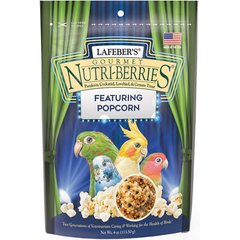
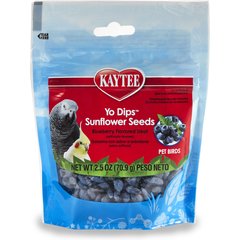
Some birds may respond better to a reward, like a favorite treat or an expression of praise, after talking.
“In general terms, anything a bird likes can be used as a reinforcer for desired behavior,” says Parthasarathy. “That can range from a preferred treat, such as a seed, to head scratches, to being spoken to by their person.”
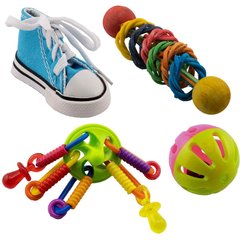
You can also teach your bird to say a cue word for an activity or action, such as associating a foot toy with the phrase, “Wanna play?” Some birds are so accustomed to hearing the words “Step up” that they repeat that phrase when stepping up onto a hand or a perch.
Recommended Products
5. Stay Patient
Just because a bird can talk doesn’t mean they will. Even if your bird never speaks, they may still communicate through chirps, whistles (cockatiels are expert whistlers), or by mimicking household noises.
So it’s best to have realistic expectations. “Some companion parrots will learn quicker than others, and not all companion parrots will mimic human speech, says Desatnik.
While having a bird who speaks can be exciting, Parthasarathy says it’s important to remember birds require a lot of care—and it can be challenging at times.
“So if you are looking for a bird, do your research on what it means to care for this animal for the next several years or decades,” she says.
What Words Should I Teach My Bird?
In general, the following simple words and phrases are great conversation starters for your pet bird:
- Greetings: “hi,” “hello,” “bye,” “how are you?,” “who’s a good bird?,” “pretty bird”
- Affectionate phrases: “I love you,” “good bird,” “kisses,” “tickle, tickle”
- Silly sounds: kisses, laughing
- Tricks/training: “spin,” “wave,” “dance,” “step up,” “go potty”
- Names: your name, your bird’s name, other pets’ names, family member names
While not all birds will become chatty companions, following key steps on how to teach your bird to talk can greatly improve their chances of picking up words and phrases.
Whether your bird learns a few words or develops an extensive vocabulary—or prefers whistles to words—the process itself strengthens the bond between you and your feathered friend.
FAQs About How To Teach a Bird to Talk
What birds are easiest to teach to talk?
African grey parrots, Amazon parrots, Quaker parrots, Indian ring-necked parakeets, cockatoos, budgies, conures, and cockatiels are among the more prolific pet birds, and the easiest to teach how to speak.
How long does it take to teach a bird to talk?
Every bird learns at its own pace. Some parrots may learn to talk within days or weeks, while others can take a few months or even years to say their first word. Frequent repetition and using an upbeat tone of voice help speed up the learning process.
Can you teach any pet bird to talk?
Most parrot species are capable of learning to talk, but individual birds vary in their chattiness, and some may never mimic human speech—preferring instead to mimic household sounds or communicate in their own chirps and whistles.
What words should I teach my bird first?
You should start by teaching your bird the names of family members, your bird’s name, silly sounds like laughter or kisses, or simple, commonly used words like “hi,” “hello,” and “bye.”
How do you encourage a bird to talk?
Consistent repetition, an upbeat tone, and positive reinforcement—such as treats or praise—can help encourage your bird learn to repeat words and phrases.
Attributions
This content was medically reviewed by Sandra Mitchell, DVM.