Anisocoria in Cats: Why Are My Cat’s Pupils Different Sizes?

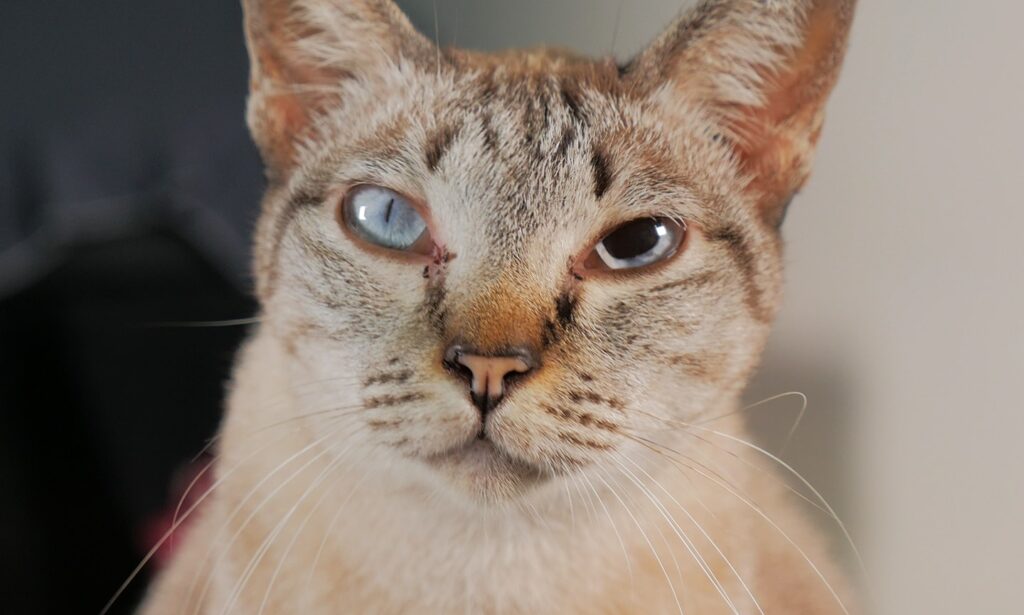
Photo by tavan amonratanasareegul/Creatas Video+/Getty Images Plus
Anisocoria in cats is a term used to describe when their pupils are unequal in size. This condition—well, symptom really—can have a number of causes, but the bottom line is that any changes in your cat’s eyes should prompt a call to your veterinary care team right away.
Cats are resilient creatures and they do an excellent job hiding when they’re in pain. Anisocoria may signal a change in your cat’s eyes or in their overall health. We talked to two vet experts to get the scoop on anisocoria in cats, its potential causes, and what you should do if you notice it.
Key Takeaways
- Sudden eye changes or asymmetric pupils in your cat should be treated as urgent.
- Anisocoria itself isn’t painful, but the underlying cause may be painful or affect your cat’s vision.
- Diagnostic tools your vet may use include a physical exam and an eye exam, a dye test, ophthalmoscopy, blood tests, a CT scan, or other imaging.
- A treatment plan for anisocoria depends on the underlying cause.
What Is Anisocoria in Cats?
Anisocoria is a condition in which the pupils of the eyes are different sizes.
There’s genetic anisocoria, where the cat has varying eye size from birth, or the condition can develop later in life. If your cat suddenly develops anisocoria, it’s usually an indication that something is wrong, and you’ll want to get to the underlying cause, says Dr. Bethany Hsia, DVM, veterinarian and co-founder of CodaPet in Fresno, California.
Causes of Anisocoria in Cats
So, what are those underlying causes? There are a lot of potential culprits, according to Dr. Kelly Diehl, DVM, former emergency veterinarian, veterinary internist and Senior Director of Science Communication at Morris Animal Foundation in Denver, CO.
Some causes of anisocoria in cats are:
- Damage to the cornea: Damage to the cornea or the eye itself can result in changes in pupil size.
- Other eye abnormalities: Uveitis (or inflammation of the inner portion of the eye) and retinal disease can cause abnormal pupil sizes.
- Primary brain/nervous system problems: Neurological disorders can affect the optic nerve, leading to an unequal pupil size and other symptoms.
- Glaucoma: Eyes changes can be caused by glaucoma, a condition in which there is increased intraocular pressure in the eyes.
- Congenital defects: In this case, your cat was born with this, rather than you seeing it come on suddenly.
- Infectious diseases (that affect the eye or elsewhere in the nervous system): Feline immunodeficiency virus (FIV), feline leukemia virus (FeLV) and toxoplasmosis can all cause anisocoria, as can certain fungal and parasitic infections. This is more common in outdoor cats, but can affect indoor cats, too.
- Spastic pupil syndrome: This is most often associated with FeLV, but it’s a condition in which the size of the pupils change, alternating between eyes.
- Horner’s syndrome: This is a neurological disorder that affects a cat’s sympathetic nervous system. This often starts as a middle ear infection, but can have other causes, too.
- High blood pressure: Dilated pupils are more common with high blood pressure, but the condition can cause anisocoria,
- Head trauma: A head injury can cause bleeding in the brain that increases pressure and affects the size of the pupils.
- Cancer within the eye: This will cause the affected eye and pupil to change shape.
- Ingestion of a toxic substance: Pupil changes can signal that your cat got into something they weren’t supposed to, like a toxic plant.
Dr. Diehl adds that as cats age, their iris (the colored part of the eye) can deteriorate—a condition called iris atrophy. This atrophy can lead to some differences in pupil size (anisocoria), but it’s not something to worry about.
Some breeds are more prone to abnormalities in pupil size, too. For example, Siamese cats can have slight differences in pupil size, but Dr. Diehl says that’s just part of being a Siamese cat. Again, likely nothing to worry about!
Yet, of course, you always want to check in with your veterinarian before ruling out a more serious cause of anisocoria rather than something that’s part of the natural aging process or a breed-specific issue.
Any sudden eye changes should always be treated as a medical emergency until a veterinarian tells you otherwise.
Is Anisocoria in Cats Painful? Plus, Other Anisocoria Symptoms
On its own, anisocoria (abnormal pupil sizes) isn’t painful, according to Dr. Diehl, but she says that sometimes the underlying cause could be and can affect your cat’s vision, which can be uncomfortable for them.
Some related signs you might see with anisocoria include:
- Sensitivity to light
- Discharge from the eyes
- Redness in the eyes
- Squinting
- Droopy eyelid and cloudy or bluish cornea
- A visible third eyelid
If there’s a neurological cause, you might also notice a head tilt, balance or coordination issues and/or eye drooping, Dr. Diehl says.
Is Anisocoria in Cats an Emergency?
This is a “better safe than sorry” type of situation. While not all causes of anisocoria are an emergency, some can be life-threatening.
If you notice your cat has asymmetric pupils, you should take them to the emergency vet, just in case.
Dr. Diehl says she wouldn’t just “wait and see” without at least calling your veterinary care team first, even if you think your cat seems fine otherwise.
How Do Veterinarians Diagnose the Cause of Anisocoria?
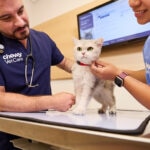
Diagnosis typically starts with a physical examination to see if there’s anything going on with the eye specifically. This will inform the next steps.
If your vet uncovers a corneal ulcer by use of a dye test, for example, the exam might end there and you’ll be sent home with eye drops. If there’s nothing obvious, your vet may order additional diagnostic tests, such as an ophthalmoscopy to examine the inside of the eye.
If there are signs of an underlying disease or a more serious cause, blood tests, a CT scan or additional imaging may be recommended.
Treating Anisocoria in Cats
There is no treatment for anisocoria per se, but your veterinarian will work to treat the underlying condition, which can resolve the anisocoria in some cases, according to Dr. Hsia.
Depending on the underlying condition, treatment options can include:
- Eye drops for ulcers or infections
- Antibiotics, antifungals or antiparasitics to treat infection
- Surgery to remove a tumor
- Nutritional supplements to address deficiencies
If your vet uncovers some type of poisoning, they may recommend an antidote or use a treatment like activated charcoal, to counteract the effects.
Keep in mind that some causes of anisocoria are more serious than others, so treatment may not resolve the problem completely. In this case, your vet may focus on symptom management and comfort care.
Can Anisocoria in Cats Go Away?
Often, if the underlying cause of the anisocoria is treated, the asymmetry of the pupils will go away. But if you see any abnormalities in your cat’s eyes, you should make an emergency appointment ASAP.
Dr. Hsia says anisocoria in cats is not always an emergency, but should be evaluated by a veterinarian or veterinary ophthalmologist to determine the underlying cause and appropriate treatment. Never wait for anisocoria to resolve on its own without getting a clean bill of health from your vet.
FAQs About Anisocoria in Cats
What is anisocoria in cats?
Anisocoria in cats is a term used to describe when their pupils are different sizes. It is a symptom rather than a diagnosis, and should be evaluated promptly by a veterinarian. Though it can have several underlying causes, any new or sudden eye changes should warrant a visit to the veterinarian.
Is anisocoria in cats an emergency?
Sudden anisocoria should be treated as a medical emergency that warrants an immediate visit to your veterinarian’s office. Some of the underlying causes of anisocoria in cats can be serious or life-threatening, so call your vet or go to an emergency vet right away if you notice this symptom.
Is anisocoria painful for cats?
Anisocoria itself is not painful, but the underlying cause can be painful or affect your cat’s vision. If you notice unequally sized pupils, sudden eye changes, or other unusual signs, contact your veterinarian right away.
How do veterinarians diagnose anisocoria in cats?
Diagnosis usually starts with a physical exam and an eye exam. Depending on what the veterinarian finds, they may use a dye test, ophthalmoscopy, blood tests, a CT scan, or other imaging.
Can anisocoria in cats go away?
Anisocoria can go away in some cases when the underlying cause is treated, but it may not resolve completely in every cat. Since some causes of anisocoria are serious and life-threatening, you should visit the vet’s office immediately to get a complete diagnosis.
Why are my cat’s pupils different sizes?
Different-sized pupils can have a range of underlying causes, and any sudden changes in your cat’s eyes should be evaluated by a veterinarian right away.
Attributions
Expert input provided by Bethany Hsia, DVM, veterinarian and co-founder of CodaPet in Fresno, CA; and Kelly Diehl, DVM, former emergency veterinarian, veterinary internist and Senior Director of Science Communication at Morris Animal Foundation in Denver, CO.