Kitten’s First Vet Visit: Checklist, What To Expect, and Cost


Photo by Thais Ceneviva/iStock
Part of being a kitten parent is making sure your pet is kept healthy. And that means taking your new cat to the veterinarian.
Here’s when you should take your new kitten to vet, how to prepare for the vet visit, and what you can expect.
Key Takeaways
- Kittens should see a vet within a few days of adoption or purchase to ensure they’re healthy and protected under applicable laws.
- Your vet will check for parasites, discuss vaccinations, and offer care tips based on your kitten’s health and lifestyle.
- Expect to bring health records and spend up to 90 minutes at your first vet visit.
- Costs vary by location and services but can range from $30 to $200+.
When To Take a Kitten to the Vet
As a rule, a cat adopted from a shelter should be seen by a veterinarian within a week of coming home. For cats that are purchased from breeders or pet stores, it is recommended to schedule a visit within a few days.
When To Take a Newborn Kitten to the Vet
Newborn kittens should see a veterinarian immediately if they are orphaned, show signs of illness, or are not feeding well. In general, it’s ideal to have a vet examine a newborn kitten within the first few days of life to assess their health, check for birth defects, and ensure they’re nursing properly.
If the mother cat is present and healthy, the vet may recommend a visit when the kittens are around 6–8 weeks old for their first vaccinations and deworming.
Scheduling a Vet Visit After Buying a Kitten
When you purchased your new kitten from a cat breeder, you may have been told to “go see a vet within the next few days.” But why?
First off, new pet parents in some states are protected by lemon laws. Lemons? No, we’re not talking about cars. Many protective laws for domestic animals are called that because in the eyes of the law, pets are considered property, not individuals.
In order to be protected by these laws, your new kitten must be examined by a veterinarian within seven to 20 days of purchase, depending on the state.
The main incentive, if you purchased a kitten, is that if the vet finds a birth defect, such as a heart murmur, you have recourse. Most lemon laws also make the breeder or pet store responsible for any illness that occurs soon after purchase.
However, if you did not get a new kitten exam performed within the specified timeframe (usually within three days of purchase), then the law will not apply.
Scheduling a Vet Visit After Adopting a Kitten
What about the adopted kitten? Government-run shelters and non-profit humane societies perform physical examinations and check for parasitic diseases (intestinal worms, mites on the skin, etc.) prior to adoption. Many kittens have already been vaccinated and spayed or neutered prior to being adopted. So, you should receive some veterinary records with your new kitten.
But it’s always a good idea to also make an appointment with your family veterinarian within a week of bringing your kitten home. Your veterinarian will want to become familiar with your new adoptee and review the records provided by the shelter and provide or schedule any needed additional care.
Plus, your vet will discuss important aspects of caring for your kitten, such as socialization, what the vaccines given at the shelter protect against, and what tests the shelter may have conducted.
It’s very likely that you won’t meet the veterinarian at the shelter during the adoption process—so, you need to establish a relationship with a local vet right away.
New Kitten Vet Checklist: What To Bring
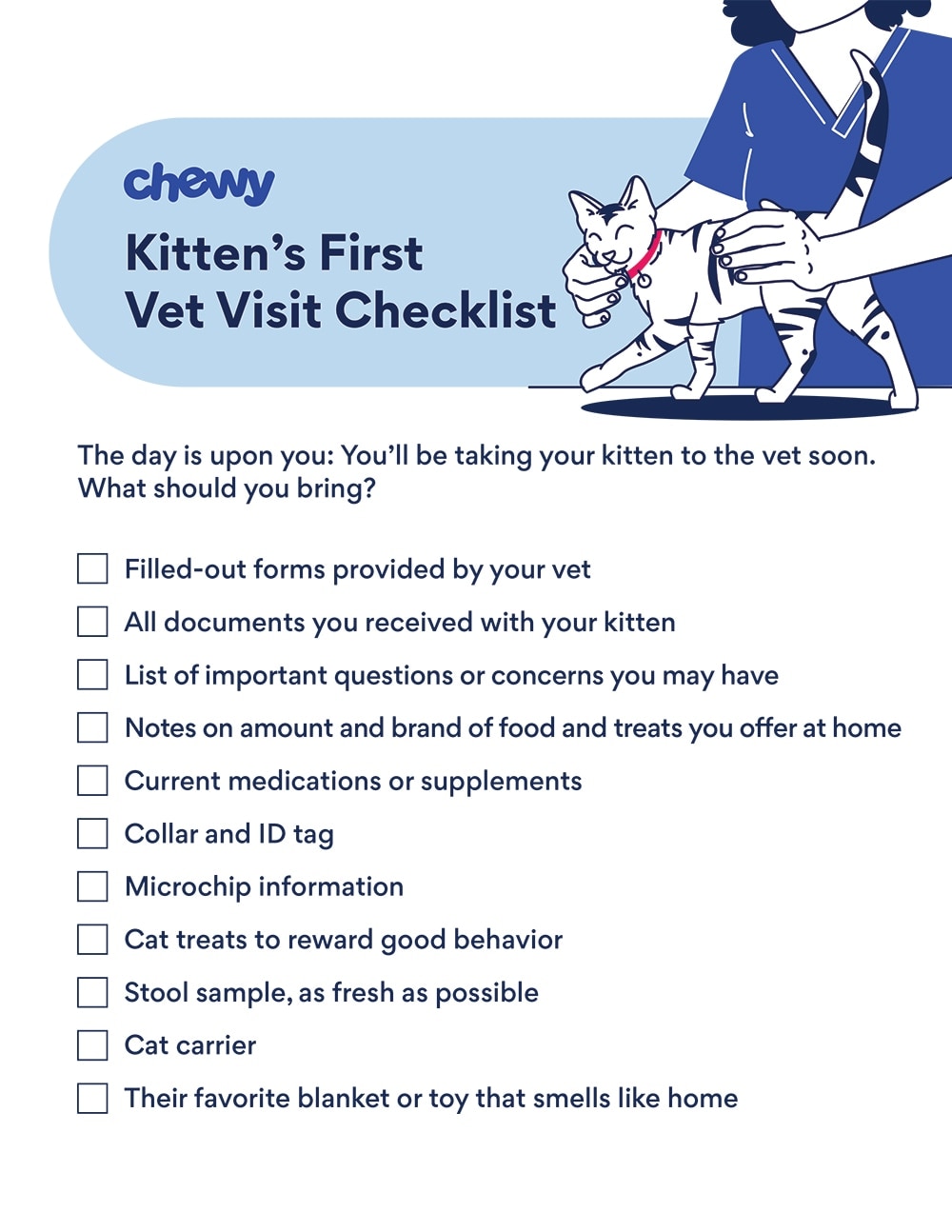
The day is upon you—you’ll be taking your new pal to the vet tomorrow. What should you do?
- Call the veterinarian’s office and confirm the appointment and time.
- Follow the instructions regarding kitten dry food or wet food and water from the vet’s office. (They may ask you to provide a stool sample or not feed the kitten after midnight).
- Give yourself an hour to 1 ½ hours for that first vet visit—bring a book or your tablet! Just like your doctor’s office, emergencies with other pets can happen, and your vet may not see you exactly at your appointment time.
- Bring all of the documents you received with your kitten.
- Be prepared to answer questions about your kitten’s life history. These can include your kitten’s travel history, in case you purchased from a breeder out-of-state; diet (be specific regarding the brand, amount fed, and frequency); environment (will he/she live strictly indoors, or is there access to a yard); and any medications that were or are being administered.
- Complete the vet’s registration form before your visit. Most clinics will have downloadable forms on their website. It will save you time!
Get Your Kitten Used To the Carrier
One thing about cats is that they know when you will be placing them in their carrier! I’m not sure how they know, but they do. Whether it’s your body language or how you approach them when you call “here kitty, kitty,” they know and they will hide.
The most popular hiding spot will be under the bed, directly in the middle so you can’t get to them, or they’ll go through some tiny opening to get behind a cabinet. Try to not tip them off!
Ideally, get them used to the carrier before the big day. Leave it out so they can investigate and feed them treats, or even their meals, inside.
Recommended Products



What To Expect at a Kitten’s First Vet Visit
It may be that you are already familiar with the practice, or maybe it’s your first time at a veterinarian’s office. Here is what will likely take place:
You’ll be asked to complete paperwork, which isn’t a big deal unless you don’t have or don’t remember anything about your new friend. Your vet will want to know things like vaccinations given, the type and manufacturer of the vaccines, and even where on the kitten’s body the vaccines were injected. This is why you want to bring any records you have to the appointment.
The Waiting Room
Your kitten will likely be very anxious while waiting. In vet waiting rooms, there’s often a lot of noise and all sorts of scents from dogs, other cats, and birds. Keep your kitten in the carrier, even if they’re upset and meowing.
Give your kitten attention through the carrier’s bars or through a small opening. If your kitten is very upset, ask the receptionist if you can wait in an exam room or in the car.
The Exam Room
It’s best to leave your kitten in the carrier until the staff arrive in the exam room. When they are ready, take her out. Just like hiding at home, if your kitten gets away from you in the exam room, she’ll find some tiny opening behind a counter and hide.
The Veterinary Technician
Veterinary technicians are the veterinarian’s right-hand support, similar to the relationship between a nurse and a doctor in human medicine. A vet tech will interact a lot with both you and your pet.
Many technicians have formal training and in some states, such as California, you must have a degree to be a licensed veterinary technician. Rest assured that they are professionals who are very knowledgeable.
The technician will perform a primary assessment, which is similar to what a nurse does at your doctor’s office. They’ll weigh the kitten and get a heart and breathing rate along with a rectal temperature.
Often, it is the technician who will discuss flea and tick prevention, internal parasites and the vaccine schedule with you.
Meeting With the Veterinarian
During your kitten’s first vet visit, your veterinarian will be able to tell you about some important aspects of the kitten life stage, such as:
- Cats are more active at night, and kittens love to get into all sorts of trouble when it’s dark. With time, however, you can teach your cat that nighttime is for sleeping.
- How to kitten-proof your home. Things like string, tinsel, and electric cords are intriguing for kittens, but they can be dangerous if chewed or swallowed.
- Kittens have an immature immune system. A kitten’s immune system is not as robust as an adult cat’s, so they are more prone to getting an upper respiratory infection (a kitty cold) and other diseases. Until completely vaccinated (16 weeks+), kittens are not fully protected against vaccine-preventable diseases.
- Kittens drink more water than adults, so have plenty of fresh water available for them.
- Kittens need to be socialized. The best time for kittens to “socialize” is from 2 to 9 weeks of age. It’s unlikely you’ll purchase or adopt a kitten less than 8 weeks old, but if there was a problem during the peak time of socialization, you may find that your kitten is aggressive or suffers fright. Interaction through play (chasing laser pointers, cat scratching post, batting small balls) is a great way to help your kitten become social with people.
Recommended Products



6. The way you introduce your kitten to other pets and family is important. Make sure the introduction is a positive experience. Don’t force your older cat to play and interact with your newest family member right away.
Head-to-Tail Assessment
Your veterinarian should perform a complete, head-to-tail physical exam. Is it painful? No. Some kittens really enjoy all of the attention.
During the head-to-tail assessment, your veterinarian should:
- Observe the kitten for a minute or two before performing the physical exam
- Wash their hands prior to touching your kitten
- Examine the kitten’s mouth
- Check the eyes and ears with lighted instruments
- Use their hands to feel the lymph nodes, the joints, and check the skin
- Perform an auscultation (listen) to the heart, lungs and the abdomen
- Palpate the abdomen using both hands to feel different organs
- Watch the kitten take a few steps on the table or floor
Blood and Stool Samples
After the physical exam, a stool sample will likely be taken to check for intestinal parasites. A blood sample may be taken to check for feline leukemia and feline immunodeficiency viruses, both of which can cause illness later in life. Depending on the kitten’s age, vaccines and other procedures or tests may be recommended at this time.
How Much Does It Cost to Bring a Kitten to the Vet?
The cost of a kitten’s first vet visit typically ranges from $30 to $200 depending on your location and what services are included.
Additional costs may arise if your kitten needs lab work, treatment for illness, or follow-up visits.
Some veterinary clinics offer kitten wellness packages that bundle services for a discounted rate. It’s a good idea to call ahead and ask for an estimate based on what your kitten might need.
Questions To Ask at Your Kitten’s First Vet Visit
It’s easy to feel overwhelmed during your kitten’s first vet visit, so bring a list of questions to ensure you don’t forget anything important. Here are some helpful questions to ask your veterinarian:
- What vaccinations does my kitten need and when?
- When should I schedule the spay or neuter procedure?
- What type of food should I feed, and how often?
- How do I prevent fleas, ticks, and worms?
- How should I socialize my kitten and introduce them to other pets?
- What symptoms should I watch for that may indicate illness?
- Do you recommend pet insurance or wellness plans for kittens?
FAQs About a Kitten’s First Vet Visit
Should I bring my kitten to the vet the same day of their adoption?
It’s not necessary to bring your kitten to the vet the same day unless they’re showing signs of illness, but you should schedule a visit within a few days to a week of adoption to establish care and review any shelter records.
What do kittens need from the vet?
Kittens need a full physical exam, age-appropriate vaccinations, parasite screening and prevention, and a care plan for nutrition, behavior, and future spay/neuter procedures.
How much is the first set of shots for a kitten?
The first set of kitten vaccinations typically costs between $60 and $300. This may vary depending on the type of vaccines, your vet’s pricing, and whether other services are bundled into the visit.
Attributions