Black Russian Terrier
Updated March 26, 2026
Black Russian Terrier
Updated March 26, 2026
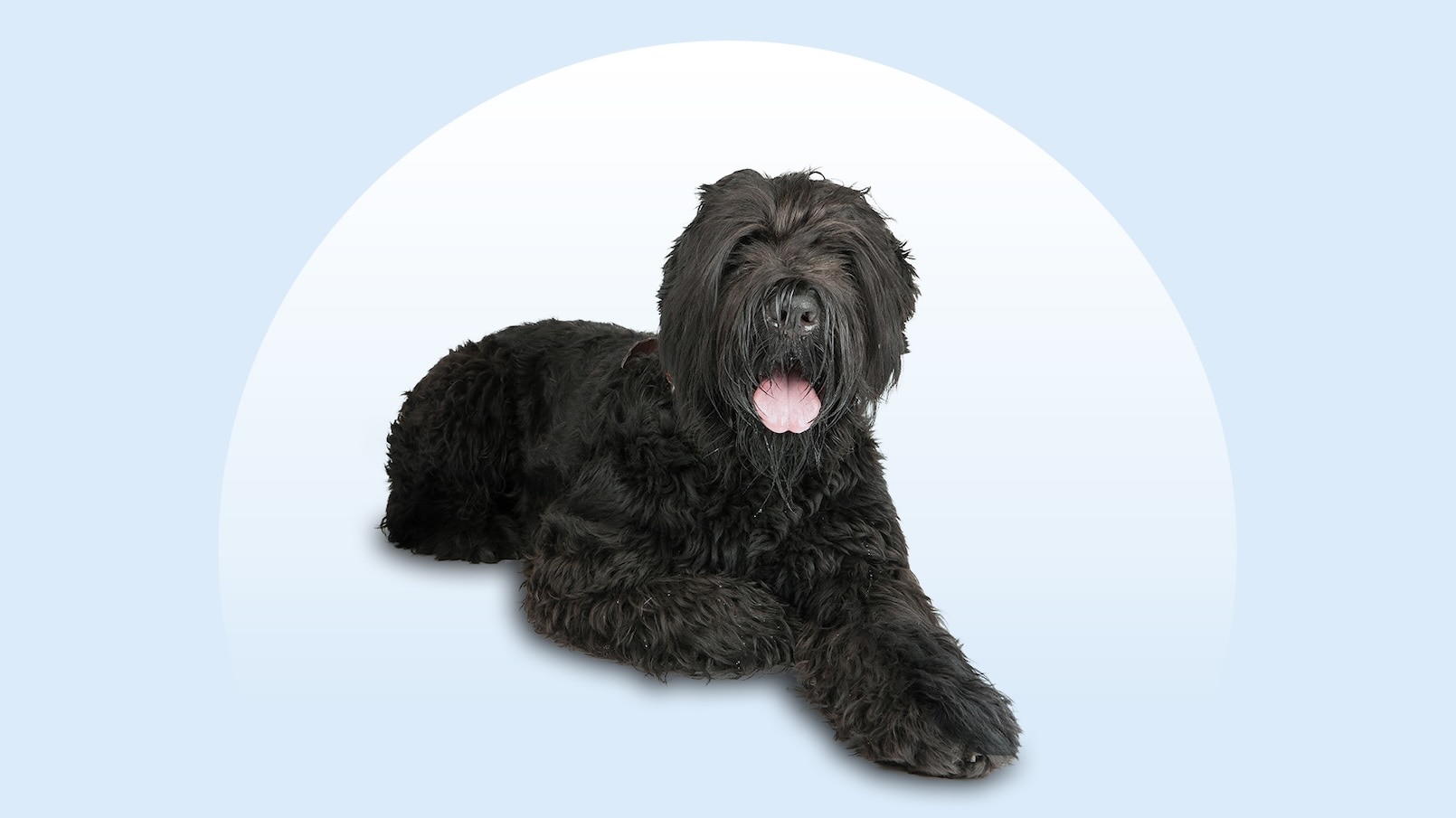
With a commanding presence and a heart of gold, the Black Russian Terrier is ready for duty as your steadfast bestie. These 100-pound dogs have strong working instincts and are highly trainable, eager to please, and affectionate with their favorite people.
Confident, Steady, Affectionate
80–130 pounds
26–30 inches
10–12 years
Black, Salt and Pepper, Sable, Blue, Black and Tan
The Black Russian Terrier has a calm personality and a high level of intelligence that can make them fast learners. These traits served them well in their historic role as military dogs in Russia, according to the breed club.
Today, Black Russian Terriers thrive in homes with experienced pet parents who are ready to spend time each day training, exercising, and brushing this large, fluffy dog breed.
Recommended Products



Black Russian Terrier Characteristics
Black Russian Terrier Appearance
The Black Russian Terrier was made to withstand harsh Russian winters, so the breed sports a thick, tousled coat of fur. The dog’s sturdy build shows off their athletic prowess.
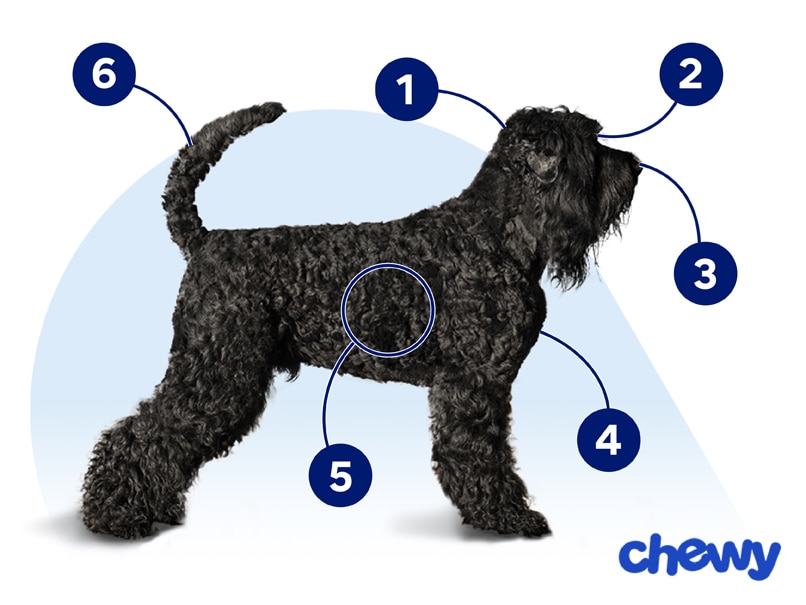
- Ears
The breed has medium-size folded ears set high on the head.
- Eyes
Black Russian Terrier eyes are dark and oval with black rims.
- Nose
A large, black nose is characteristic of the breed. It sits on the end of a broad muzzle, framed by a mustache and beard.
- Coat Length
The breed has a medium to long double coat, ranging from 1.5 to 6 inches in length. Long hair cascades down the forehead, and the beard is long as well.
- Coat Color
Most Black Russian Terriers are black, but other colors are possible, including salt and pepper, blue, sable, and black and tan.
- Tail
The medium-length tail is thick and set high. Some Black Russian Terriers may have docked tails, though this is a controversial practice that many medical organizations oppose, including the American Veterinary Medical Association.
Black Russian Terrier Temperament
The Black Russian Terrier temperament is calm, confident, and vigilant. These dogs are deeply loyal to family members, and at home they are far from their origin as stoic guardians. In fact, pet parents often describe the breed as a Velcro dog.
“They don’t just want to be in the room [with you]; they want to be leaning against your legs,” says Mary Robison, a Black Russian Terrier breeder at Rollo’s Vikings.
But with unfamiliar people, the Black Russian Terrier can be aloof. “Unlike more reactive breeds, a BRT is a guardian that assesses a situation before acting, which makes them deeply loyal but also naturally wary of strangers,” Robison says.
Black Russian Terriers have a working-dog heritage. And while this dog breed may not suit up for work every day, they still need a “job” to focus on, like running through an agility course.
“Ultimately, they are ‘work hard, nap hard’ dogs,” Robison says. “Once they’ve had their job for the day, they are more than happy to relax at your feet or on the couch.”
Related Breeds







How to Care for a Black Russian Terrier
This smart and active dog breed requires daily training and exercise. Along with that, consistent weekly brushing and regular visits to the dog groomer are important for keeping their coat healthy.
“Grooming is a significant lifestyle commitment rather than an occasional task,” Robison says. A diligent pet parent with the right tools can groom these dogs at home, but a professional grooming every six weeks or so is recommended.
Grooming
Training
Diet
Exercise
Environment
Black Russian Terrier Health
The average Black Russian Terrier lifespan is 10–12 years. The best strategy for keeping this breed healthy is to ensure your dog receives regular veterinary care throughout their life; maintains a good diet and healthy weight; and has plenty of opportunities for daily exercise and enrichment.
Even with proper care, Black Russian Terriers have some common health issues to be aware of:
- Joint conditions: Black Russian Terriers can be prone to hip dysplasia and elbow dysplasia. These conditions happen when a joint doesn’t fit together properly, and treatment varies depending on the severity. The Black Russian Terrier Club of America recommends hip and elbow testing for breeding dogs.
- Juvenile laryngeal paralysis and polyneuropathy: This inherited disease is caused by a gene mutation. Dogs affected by JLPP might have difficulty breathing during exertion, or the dog’s bark may noticeably change. The disease makes it difficult for the dog to swallow and causes paralysis in the hind limbs that progresses to the front limbs. There is no treatment, but genetic testing can show whether a dog is a carrier or affected by the gene mutation.
- Hyperuricosuria: Black Russian Terriers are at an increased risk for hyperuricosuria (HUU). This inherited condition causes a buildup of uric acid in the blood and urine, which in turn can cause kidney or bladder stones. Your veterinarian can use an ultrasound, X-ray, or other imaging test to confirm if your dog has kidney or bladder stones.
Black Russian Terrier History
Black Russian Terriers were first developed in the 1930s in Moscow. According to the breed club, the goal was to create a native breed of trainable and reliable dogs who could withstand the cold climate.
Seventeen dog breeds were used to create the Black Russian Terrier, including Giant Schnauzers, Rottweilers, Newfoundlands, and Airedale Terriers.
The breed worked as guardians for the military during the 20th century. In the mid-1950s, these dogs became accessible to civilian breeders as well.
In the 1980s, the breed received official recognition in Russia. It was also in this decade that Black Russian Terriers were first imported to the U.S. In 2004, the American Kennel Club officially recognized the Black Russian Terrier.