Brussels Griffon
Updated December 19, 2025
Brussels Griffon
Updated December 19, 2025
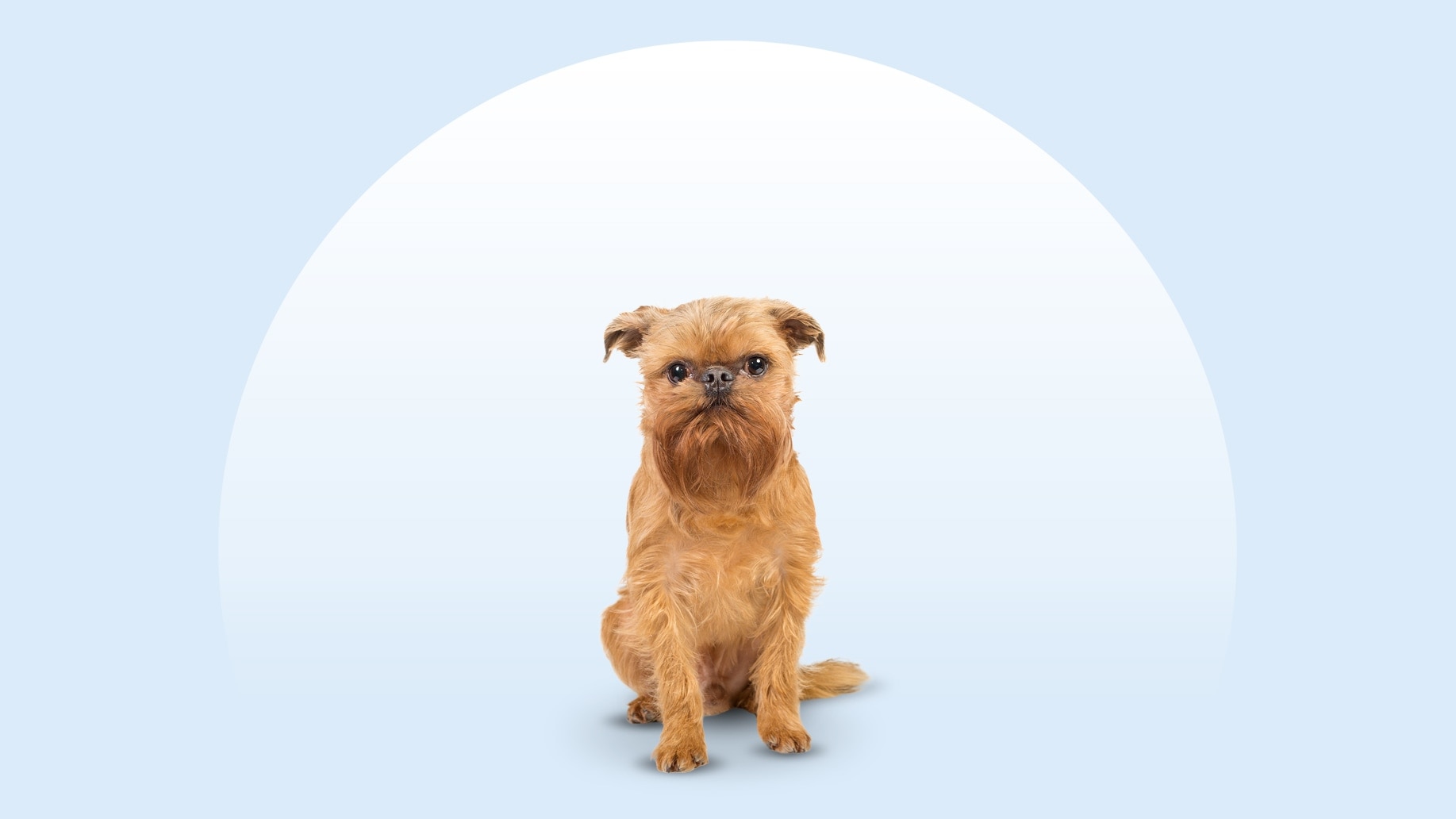
The Brussels Griffon is a small dog with a one-of-a-kind look: They have a flat face, big round eyes, and a dashing beard. But Griffons aren’t just cute—they’re lively, smart, and just a little goofy. Playful and charming, they form strong bonds with their family and are known to be Velcro dogs.
Clever, Sidekick, Silly
8–10 pounds
7–10 inches
12–15 years
Red, Belge, Black and Tan, Black
Have you decided you’re ready to have children—but, like, one with fur? A Brussels Griffon is a clever, smart companion, but they need their human mom or dad … like, right now.
Griffons want to hang out with you around the house, follow you around the yard, and sleep in your bed. They’re filled with personality and sass that you’d be sad if they didn’t want to be nearby. If you’re looking for an energetic canine who still wants to be a lapdog, the Brussels Griffon might be your perfect pup.
Brussels Griffon Characteristics
Brussels Griffon Appearance
The Brussels Griffon is a small dog with an expressive face characterized by large, round eyes and a short, smushed nose. Their coat can be either smooth or rough, and they come in a range of colors, from browns to reds to black.
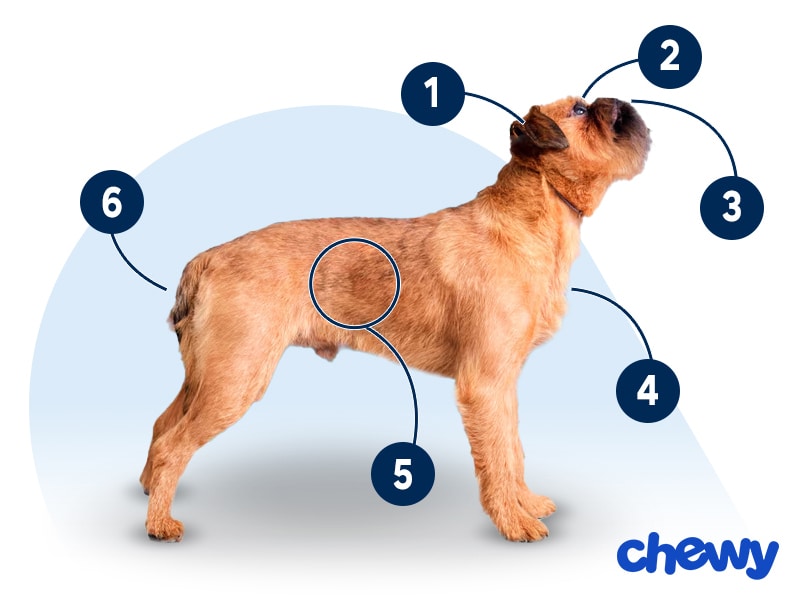
- Ears
Brussels Griffons' ears are small and set high on the head. While it was once common to crop ears, many groups, including the American Veterinary Medical Association, oppose ear cropping, and many countries as well as U.S. states have banned the practice. So, you’ll often see Griffons with their natural ears left intact.
- Eyes
Their eyes are one of their defining characteristics: wide-set, big, round, and dark.
- Nose
Brussels Griffon dogs are brachycephalic, meaning their black nose is flat, giving them an endearing “smushed face” quality.
- Coat Length
The Brussels Griffon dog breed comes in two types of coats: rough or smooth. The rough coat is wiry, while the smooth Brussels Griffon coat is straight, short, and shiny. Rough-coated Griffons have a long beard.
- Coat Color
Brussels Griffon colors include red, belge (sable with red and black hair), black and tan, or solid black.
- Tail
As with ear cropping, it was once common to dock a Brussels Griffon puppy’s tail. Today, groups including the American Veterinary Medical Association, oppose tail docking.
Brussels Griffon Temperament
Brussels Griffons are delightful, Ewok-esque little creatures.
As big fans of their people, these constant sidekicks need you around to feel safe and secure. But that doesn’t mean they’re always clingy—Griffons are energetic and playful, and they’ll enjoy games with other pups, whether atdaycare or the dog park.
It’s easy to pass off these pups as lapdogs who only want to snuggle, but you’d be absolutely wrong. Brussels Griffons thrive in environments where they can be active both physically and mentally.
The Brussels Griffon temperament makes them friendly dogs who generally take well to meeting new humans, pups, and cats. As they were originally bred to keep rats and other vermin out of stables, Brussels Griffons may not look so fondly on pets that speak to their inner hunting instinct (looking at you, hamsters and gerbils).
These Velcro dogs want nothing more than to be with their special person. They can be good family dogs if children understand that the Brussels Griffon, while part of the toy group, isn’t actually a toy.
Related Breeds


How to Care for a Brussels Griffon
You’ll want to make sure these happy pups get enough exercise and lots of attention.
Grooming
Training
Diet
Exercise
Environment
Brussels Griffon Health
The typical Brussels Griffons lifespan is 12–15 years. Here are some health issues to be aware of.
- Brachycephalic obstructive airway syndrome: Brachycephalic breeds (or flat-faced dogs) may have difficulty breathing during exercise or even at rest. This is called brachycephalic obstructive airway syndrome, and it’s caused by smooshed anatomy that creates narrow nostrils and airways, along with an elongated soft palate. Talk to your vet about symptom management and whether your dog is a good candidate for surgery, which can help them breathe easier.
- Cataracts: Cataracts are a common eye problem and can be hereditary. The most common symptom is a cloudy eye. Surgery is the go-to treatment.
- Hip dysplasia: Hip dysplasia is when the ball and socket of the hip and thigh bones doesn’t properly fit. It’s an inherited condition that can be made worse if a pup is overweight, eventually leading to arthritis and pain. More severe cases may require surgery, but the condition is often treated with medications, joint supplements, special diets, weight management, and/or physical therapy.
- Luxating patella: Brussels Griffons can develop a luxating patella, where the kneecap slips out of place. A bunny hop, skip, or limp could be a symptom. It may be treated with supplements and meds, if mild, though surgery may be necessary. Keeping your dog at a healthy weight can help prevent this condition.
- Progressive retinal atrophy (PRA): PRA leads to blindness in dogs, and while there is no cure, pups who lose their eyesight tend to adapt well and can still live full, happy lives.
Brussels Griffon History
Originating in Brussels, Belgium in the early 1800s, the Brussels Griffon is a mix of the Affenpinscher and several other breeds, including the Pug, Cavalier King Charles Spaniel, and the English Toy Spaniel.
The American Kennel Club recognized the Brussels Griffon dog breed in 1910. If this sweet pup’s face seems familiar, you might recognize them as the dog who stole the show in the 1997 film “As Good As It Gets.”
Finding a reputable Brussels Griffon breeder is important, as they breed puppies with health top of mind.
You can also adopt a Griffon. Reach out to a Brussels Griffon rescue like National Brussels Griffons Rescue, keep an eye out at your local animal shelter, or search Chewy’s database for adoptable Brussels Griffons in your area.