
Chinese Crested
Updated April 13, 2026

Chinese Crested
Updated April 13, 2026
Often called “Velcro dogs,” Chinese Cresteds are best for pet parents who can be by their side most of the day and don’t mind giving them lots of love and affection. They fit in well with gentle, affectionate families and can get along with other dogs and cats if properly socialized.
Sensitive, Sidekick, Spirited
8–12 pounds
11–13 inches
13–18 years
Apricot, Black, Black White And Tan, Blue, Chocolate, Cream, Palomino, Pink And Chocolate, Pink And Slate, Slate, White
Did you just see a pup in your neighborhood who looked so fantastical you’re sure they couldn’t possibly be real unless they lived in a Dr. Seuss story or Tim Burton movie? They were probably a Chinese Crested.
These fabulous little pups are either hairless or powderpuff varieties (with long, silky fur). Either way, their look is so unique that they’ll definitely get stares—the good kind. These cuddly, affectionate souls need you around a lot, and they live to make you happy, so tell them you’re proud of them about 100 times a day.
Recommended Products


Chinese Crested Characteristics
Chinese Crested Appearance
Hairless Chinese Cresteds have soft, silky skin, while powderpuff Chinese Cresteds shimmer with a soft coat of silky hair straight out of a shampoo commercial.
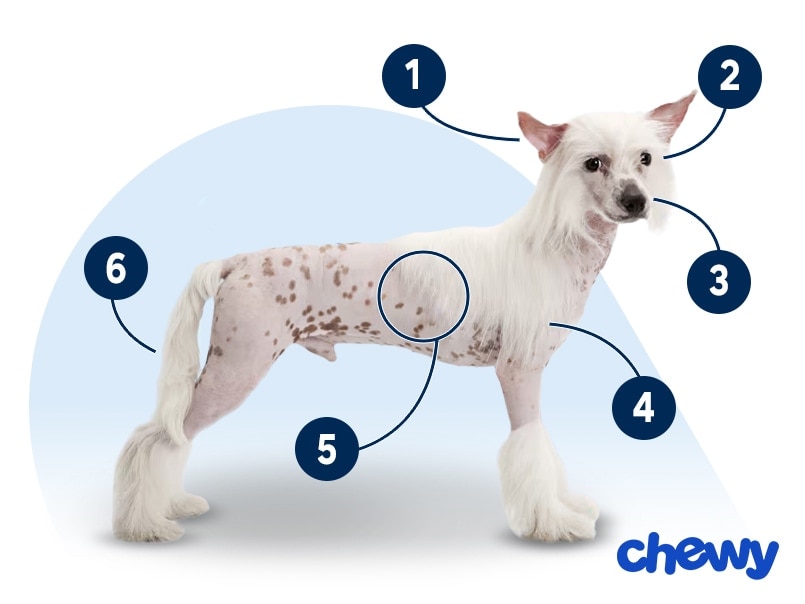
- Ears
Chinese Crested ears are large, perky, and triangular in shape.
- Eyes
Chinese Cresteds have wide-set eyes that are almond-shaped. The coloring typically reflects the dog's body: dark eyes for dark skin or coats, and light eyes for lighter-colored skin or coats.
- Nose
Chinese Cresteds typically have a tapered muzzle with a monochromatic nose. Dark-colored dogs have dark noses, while light-colored dogs have lighter noses.
- Coat Length
Chinese Crested hairless dogs have soft, silky hair on their head, tail, feet, and ankles. Chinese Crested powderpuff dogs have double coats, which means their silky undercoat is covered in a medium-length coat of thin, silky strands.
- Coat Color
Chinese Cresteds come in a variety of colors, including white; apricot; black; tri-color (black, white, and tan); blue; chocolate; cream; palomino (fawn); pink and chocolate; slate; and pink and slate.
- Tail
Their tails are slender and gently curved with an elegant and graceful swish. Hairless Chinese Crested dogs have plumed tails with a flowing, feathered fluff of hair at the tip, and a powderpuff Chinese Crested’s tail is completely covered with hair.
Chinese Crested Temperament
Your Chinese Crested is delighted to see you, and they’ll come rushing toward you with the most enthusiastic, adorable little trot.
These pups are playful and affectionate, but that doesn’t mean they’re necessarily happy-go-lucky all the time. They have a very sensitive soul, so be careful with criticism, as they’ll take it to heart.
They’re going to want to spend lots of time together. Does this mean you’re going to have less privacy? Yes. Does it also mean it’s totally worth it? Yes again.
Related Breeds








How to Care for a Chinese Crested
When it comes to grooming, Chinese Cresteds are low-maintenance pups. They still need attention, affection, and regular exercise too.
Grooming
Training
Diet
Exercise
Environment
Chinese Crested Health
Chinese Crested lifespan is 13–18 years. Here are some health issues to be aware of.
- Deafness: Deafness, which can occur in one or both ears, may be acquired via drug exposure or infection; it may also be hereditary and is often linked to dogs with light coats (such as white). There’s no treatment for inherited deafness, but most dogs acclimate well to the condition and lead a full, happy life. Pet parents can help communicate by teaching hand signals for basic cues.
- Dental disease: Researchers have found that hairless dogs are genetically prone to teeth issues. Daily teeth brushing and annual dental cleaning at your veterinarian can help prevent serious issues.
- Glaucoma: Glaucoma occurs when fluid in the eyes doesn’t drain and pressure builds. It’s painful and can result in blindness, so it’s a medical emergency. Treatment is topical medications or surgery.
- Legg-Calve-Perthes disease: A rare and likely genetic disease that causes bone death in the head of the femur and significant damage to the hip joint, this condition usually develops in a pup’s first year, causing pain and limping. Almost all cases require surgery, but most Chinese Cresteds make a full recovery.
- Lens luxation: A medical emergency, lens luxation occurs when the eye lens falls out of its normal position. Symptoms include tearing up, squinting, cloudiness, redness, a change in pupil size, and/or a white spot in front of the iris. This painful condition can lead to glaucoma and blindness, so it needs immediate attention from a veterinarian. It may be treated with medication or surgery.
- Luxating patella: Chinese Cresteds can develop a luxating patella, where the kneecap slips out of place. A bunny hop, skip, or limp could be a symptom. It may be treated with supplements and meds, if mild, though surgery may be necessary.
- Progressive retinal atrophy (PRA): PRA leads to blindness in dogs, and while there is no cure, pups who lose their eyesight tend to adapt well and can still live full, happy lives.
- Sunburn: Even if your pup loves the sun, they can burn if they stay out for too long (especially lighter-colored dogs). If you’re going to be outdoors for a while, slather on a dog-approved sunscreen. There are lots of options to choose from.
Chinese Crested History
The Chinese Crested origin story goes back centuries. The prevailing theory is that giant, hairless dogs arrived from African nations to China, where they were slowly miniaturized through selective breeding.
As Chinese Cresteds became more popular in Asia, they were also brought onto trading ships to chase all the rats. After showing up in ships across the world—from North Africa to South America—they became known as Chinese Ship Dogs.
There’s a breed often documented in European paintings and photographs from the 1800s, and it’s strikingly similar to the Chinese Crested.
The breed was further popularized in North America by two dog-loving professionals, Ida Garrett and Debra Woods. Through their observations and communications about Chinese Cresteds, the breed grew in popularity until they were recognized by the American Kennel Club in 1991.
Because of their spellbinding, fantastical appearance (especially that of the hairless variety), some folks refer to this breed as The Dr. Seuss Dog.
Chinese Crested puppies tend to cost thousands of dollars. If you choose this route, pick a responsible breeder.
But ideally, you should consider Chinese Crested adoption, as many of these dogs are patiently awaiting their forever best friend. Look for a Chinese Crested rescue like Tender Loving Crested Rescue, keep an eye out at your local shelter, or search Chewy’s database of adoptable dogs in your area.