Border Terrier
Updated August 21, 2026

Border Terrier
Updated August 21, 2026
Border Terriers have heart and spunk. Bright and energetic, they don’t like to be bored and will appreciate a pet parent who values adventure—even if that’s just taking a new route on your daily walk.
Affectionate, Bold, Independent
11.5-15.5 pounds
12–15 inches
12–15 years
Wheaten, Blue and Tan, Grizzle and Tan, Red
See that clever, wiry pup who’s very busy at the dog park? If you’re the kind of person who simply can’t sit still, your perfect pup might be the Border Terrier.
This pup has a to-do list a mile long and loves nothing more than checking things off. Tree investigated? Check. Squirrel chased? Check. These affectionate, happy-go-lucky dogs also make charming, loyal companions.
Border Terrier Characteristics
Border Terrier Appearance
The Border Terrier has an alert, expressive face that hints at their bold and intelligent personality, and their wiry and water-resistant coat is designed to protect them from the elements.
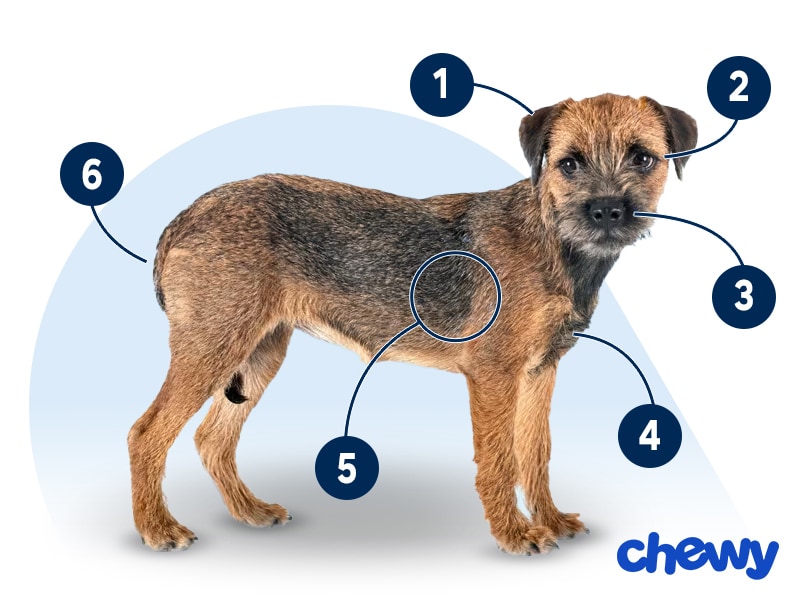
- Ears
A Border Terrier's small ears are V-shaped with a rounded curve. The ears are set on the side of their head and drop forward toward their cheeks.
- Eyes
The Border Terrier's round eyes are dark hazel in color.
- Nose
They have black noses and a dark muzzle with a few short whiskers.
- Coat Length
The Border Terrier has a double coat. The undercoat is short and dense, and the topcoat is wiry and lies close to the body.
- Coat Color
Their coat colors can be wheaten, blue and tan, grizzle (dark-tipped) and tan, or red. Dark muzzles and ears are characteristic. Some have a small white chest marking.
- Tail
The Border Terrier's tail is moderately short and set relatively low on their bodies. When alert, it's carried upright; when relaxed, their tail may drop.
Border Terrier Temperament
Border Terriers hate boredom. It’s simply not in their vocabulary, and they prefer to be busy, although they do tend to be more laid back than other terrier breeds.
But that doesn’t mean they need you to put on a show for them. On the contrary, these canines—while affectionate—can also be quite independent, so they might spend all their time at the dog park sniffing trees or running with other pups. Sure, they’re glad you’re there, but they’ll pay more attention to you back home.
They’ll love to be involved with everything you’re doing, though, and because they’re fairly outgoing and confident, they’ll be up for meeting new people. Don’t be surprised if you and your Border Terrier pick up a few new friends while you’re out for the day.
Bright and energetic, they’re also great family dogs; they usually adore children, and vice versa.
Related Breeds





How to Care for a Border Terrier
Border Terriers aren’t high-maintenance pups—but they do need regular grooming, exercise, a healthy diet, and training with positive reinforcement.
Grooming
Training
Diet
Exercise
Environment
Border Terrier Health
The average Border Terrier lifespan is 12–15 years. Here are some health issues to be aware of.
- Cataracts: Cataracts are a common canine eye problem, and they can be hereditary. The most common symptom is a cloudy eye and reduced vision. Cataracts can be surgically removed, if necessary.
- Cushing’s disease: Cushing’s disease is an endocrine (hormonal) disease where the body produces too much cortisol; it’s common in middle-aged and senior dogs. A blood test can help your vet diagnose it. Treatment usually involves daily medication.
- Dental disease: Small breed dogs are more at risk of dental disease. Prevent it before it starts by brushing daily with a dog toothpaste, and get a professional cleaning when recommended by your veterinarian.
- Gluten sensitivity: Border Terriers can develop paroxysmal gluten-sensitive dyskinesia (PGSD), sometimes called canine epileptoid cramping syndrome. It can cause a range of symptoms, including involuntary movement, collapse, and gastrointestinal discomfort. Your vet can diagnose this, and moving your Border Terrier to a gluten-free diet can help lessen or even resolve the symptoms.
- Hip dysplasia: Hip dysplasia is when the ball and socket of the hip don’t properly fit. It’s an inherited condition that can be made worse if a pup is overweight, and eventually leads to arthritis and pain. More severe cases may require surgery, but the condition is often treated with medications, joint supplements, special diets, weight management, and/or physical therapy.
- Luxating patella: Border Terriers can develop a luxating patella, where the kneecap slips out of place. A bunny hop, skip, or limp could be a symptom. It may be treated with supplements and meds, if mild, though surgery may be necessary.
- Mitral valve disease: Border Terriers may develop mitral valve disease, a heart condition that affects the way the heart pumps blood. Treatment depends on the stage of the disease, but it often involves medications.
- Progressive retinal atrophy (PRA): PRA leads to blindness in dogs, and while there is no cure, pups who lose their eyesight tend to adapt well and live full, happy lives.
- Spongiform leukoencephalomyelopathy (SLEM): Also known as shaking puppy syndrome, SLEM is a rare hereditary condition that causes uncontrollable shaking, usually starting in the hind legs. There is no treatment, and most affected puppies are euthanized due to poor quality of life.
Border Terrier History
This plucky little terrier hails from the border between England and Scotland.
Originally bred to hunt foxes, they’ve had a few different names, such as the Reedwater Terrier and Coquetdale Terrier. (It’s probably best that Border Terrier was the one that stuck.)
These dogs were famed for their bravery and sociability, and they still are today, though they’re now beloved family pets.
The American Kennel Club recognized the Border Terrier in 1930, and the Border Terrier Club of America was formed in 1949. However, the breed is still relatively rare in the U.S.
Border Terrier puppies tend to cost $2,000 or more. If you choose this route, pick a responsible breeder.
You can also consider Border Terrier adoption. Check out a Facebook group like Small Scruffy Terrier Mixes Needing Rescue to see dogs from all over the country, keep an eye out at your local shelter, or search Chewy’s database of adoptable dogs in your area.