How To Create a Pet-Friendly Home


Photo by Chewy
If you’re a pet parent, you know that animals can make a house feel like a home. But sharing your space with a furry, feathered, or scaly friend comes with the important responsibility to create a pet-friendly home.
“Pet-proofing isn’t just a one-time task—it’s an ongoing practice as your pet grows, gets smarter, and finds new ways to explore,” says Michael Hyder, DVM, medical director at Veterinary Emergency Group (VEG) ER for Pets in Palo Alto, California.
Whether you’re preparing to bring home a new pet or you’ve had your companion by your side for months or years, take time to consider how safe your home is for your pet, based on the species, age, activity level, and personality.
Key Takeaways
- Pet-proofing your home is a lifelong process that should be tailored to your pet’s needs, behavior, and species.
- Use physical barriers like pet gates and cabinet locks to stop your pet from accessing off-limits spaces.
- Common household items like electrical cords, toxic plants, and garbage cans can pose serious health risks to pets.
- Create a dedicated, safe space for your pet using beds, blankets, and toys in a quiet room to reduce stress and prevent accidents.
1. Set Up Pet Gates
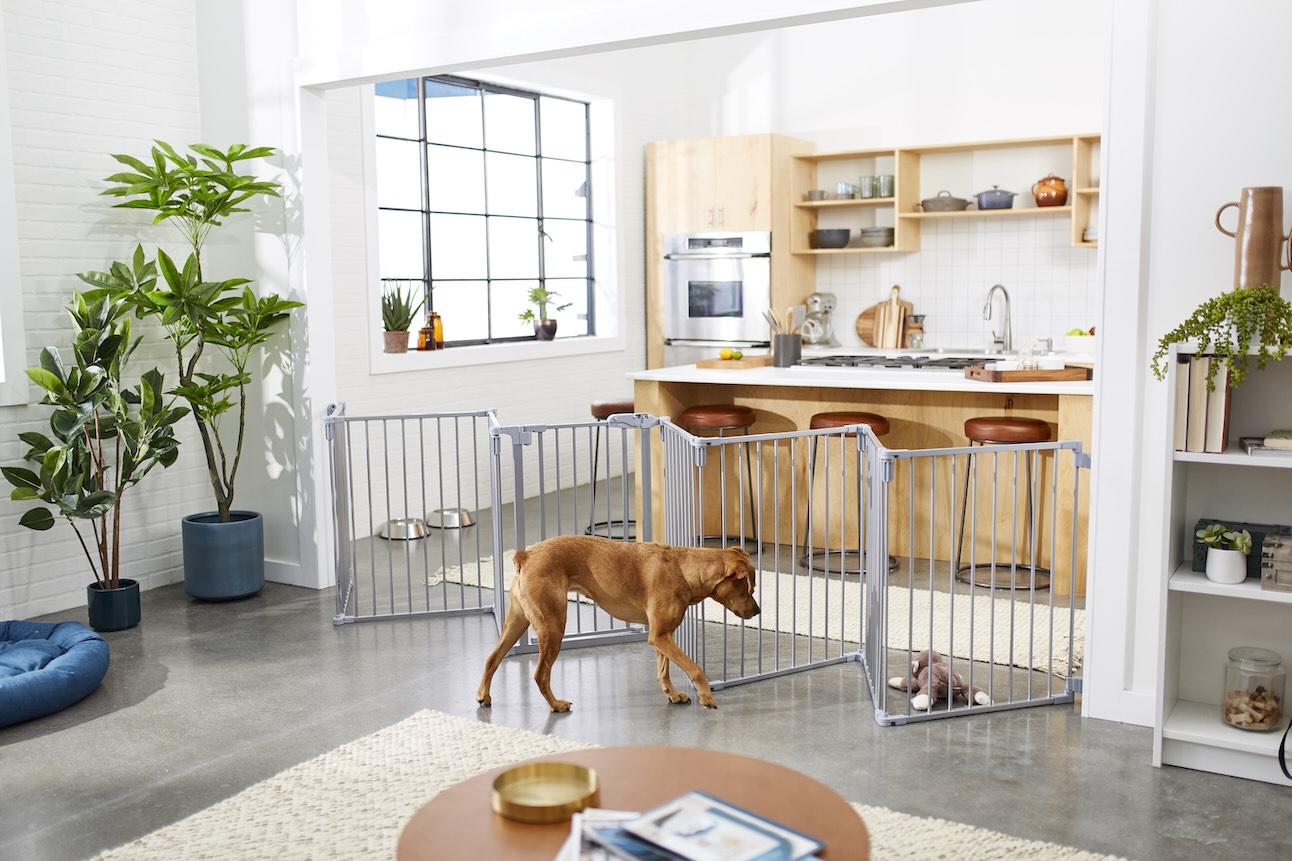
Photo by Chewy
Sometimes the best way to keep pets safe is to keep them out of specific rooms with known hazards or to limit them to a smaller, pet-safe zone using pet gates.
Recommended Products

“Just like with human toddlers, baby gates can be helpful to keep pets out of areas where they can get into trouble,” says Tina Wismer, DVM, MS, DABVT, DABT, senior director of toxicology at ASPCA Poison Control.
Just keep in mind how athletic and resourceful pets can be. Some pets can climb, jump, or knock over a gate that isn’t large enough or properly secured.
2. Block Off Small Enclosed Areas
Investigate each room of your house for tight spaces where your pet might hide or get stuck.
“Cats and small pets are notorious for squeezing into tight spaces, like behind dryers, inside reclining chairs, or under kitchen appliances,” Dr. Hyder says. Make any needed repairs or use physical barriers like vent covers to conceal these danger spots.
3. Keep Food and Cleaning Supplies Locked Up
You’d be surprised what your pet might mistake for a tasty treat. Cleaning supplies, pest control products, and foods toxic to pets should all be kept locked up or well out of reach.
Extra caution is needed with products like rodent poison.
“Be aware that child-proof rat poison containers are not pet-proof; dogs can and will chew into them,” says Dr. Wismer. If you use these types of rodent control measures in your home, yard, or garage, take strict measures to keep your pet away from these areas.
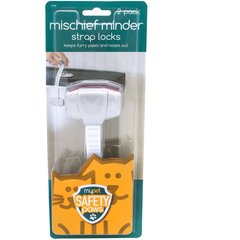
Cabinet locks can help keep pets out, especially if you have a clever cat who knows how to pry doors open.
Recommended Products
4. Set Up a Safe, Quiet Room
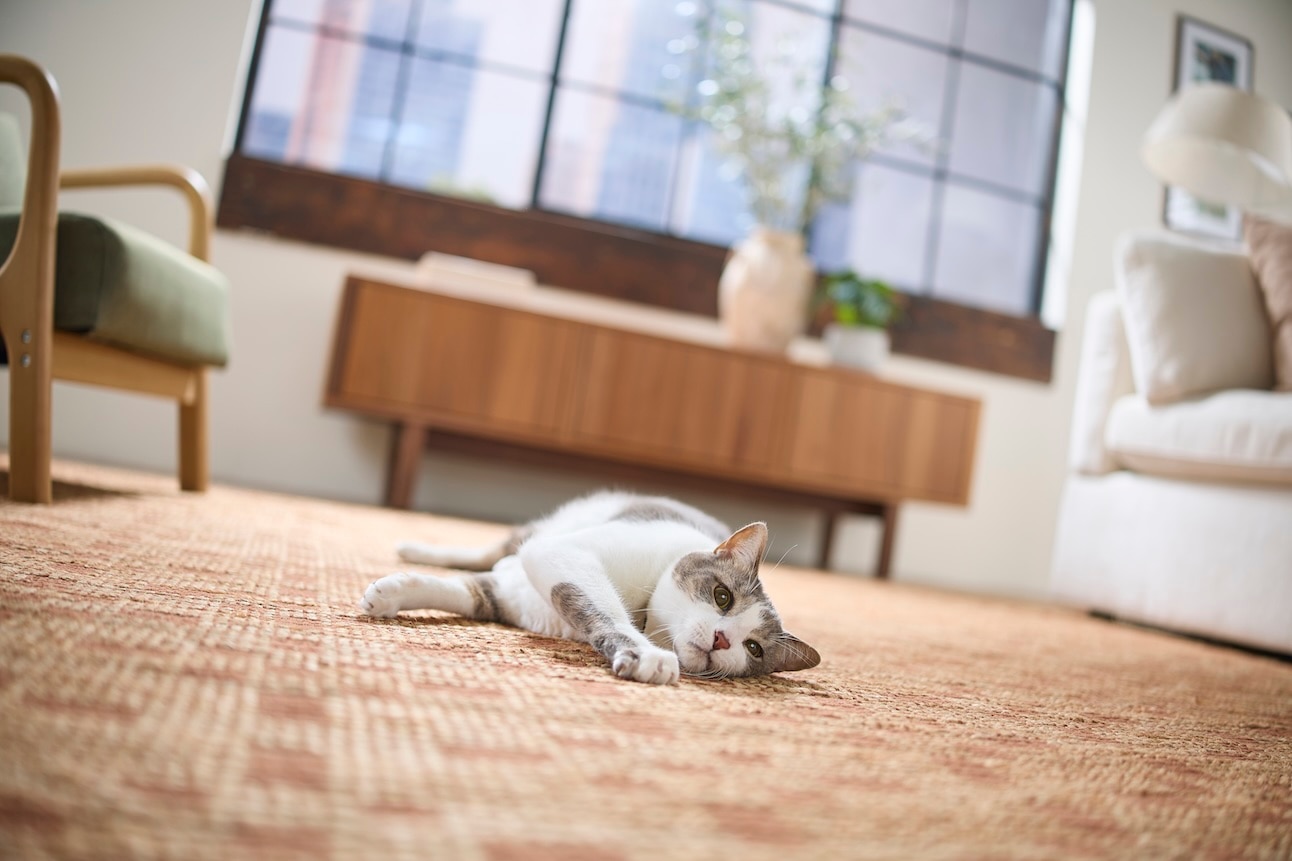
Photo by Chewy
One of the best ways to create a pet-friendly home is to give your pet a calm, inviting space set up with their needs in mind. Use this room to keep them safe while you’re cleaning, completing home projects, or managing household activity that might cause your pet stress.
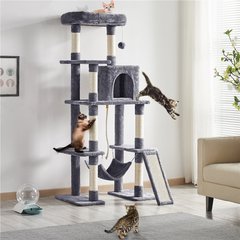
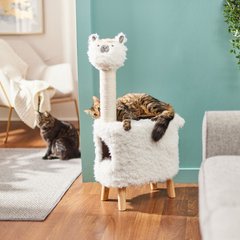
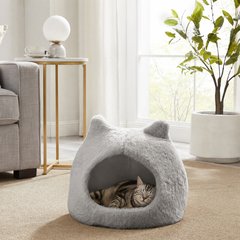
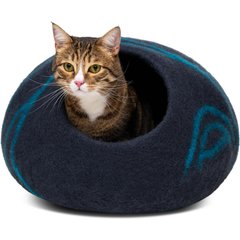
For cats, a bedroom or spare room works well. Provide cat towers, covered beds, and cozy hideaways for them to relax in.
Recommended Products
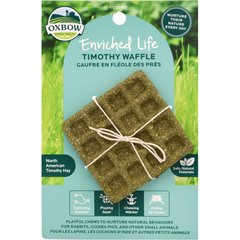
Smaller pets, like rabbits, also appreciate free-roam time in a room that is hazard-free and outfitted with enrichment toys or chew objects.
Recommended Products


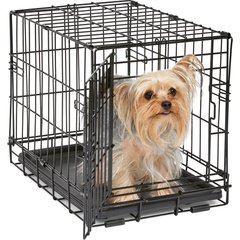
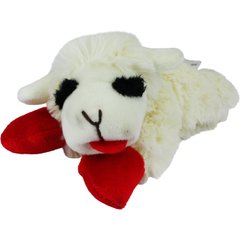
For dogs, you can use a cozy dog crate to create a den-like retreat. Fill it with plush toys and soft blankets for them to snuggle up with, or durable chew toys to keep them busy.
Recommended Products


5. Use Cord Protectors and Outlet Plugs
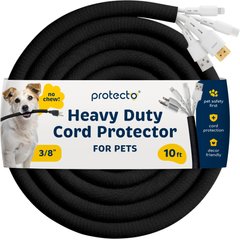
Many pets are tempted to chew on power cords or charging cables. Dr. Hyder says this is a common issue for puppies, kittens, and exotic pets like rabbits and guinea pigs.
You can’t eliminate cords entirely, but you can reduce the risk of electrocution by using cord covers, keeping outlets plugged, and securing wires behind furniture.
Recommended Product
“For pets that like to climb or jump, ensure cords are also tucked away higher up and not dangling like tempting toys,” Dr. Hyder says.
6. Stick With Non-Toxic Plants
Pet parents with a green thumb should choose non-toxic plants for indoor decorating or when creating a pet-friendly garden, Dr. Wismer says.
If you can’t part with a plant that may be toxic to pets, place it in an out-of-reach location, such as a closed room or high shelf. (But be warned: Cats can jump surprisingly high!)
7. Keep Your Pets From Chewing on Woodwork
Some pets have a strong urge to chew, and baseboards, door frames, and other woodwork may be too enticing to resist.
Beyond causing damage, this can pose choking or toxicity hazards. For example, Dr. Wismer notes that houses built before the 1970s may still have lead paint, which is dangerous for pets to ingest.
Keep a close eye on your pet to discourage unwanted chewing behaviors and securely crate or confine them when you’re away. Providing safe, appealing chew alternatives can help satisfy their instincts.
8. Keep Windows Shut
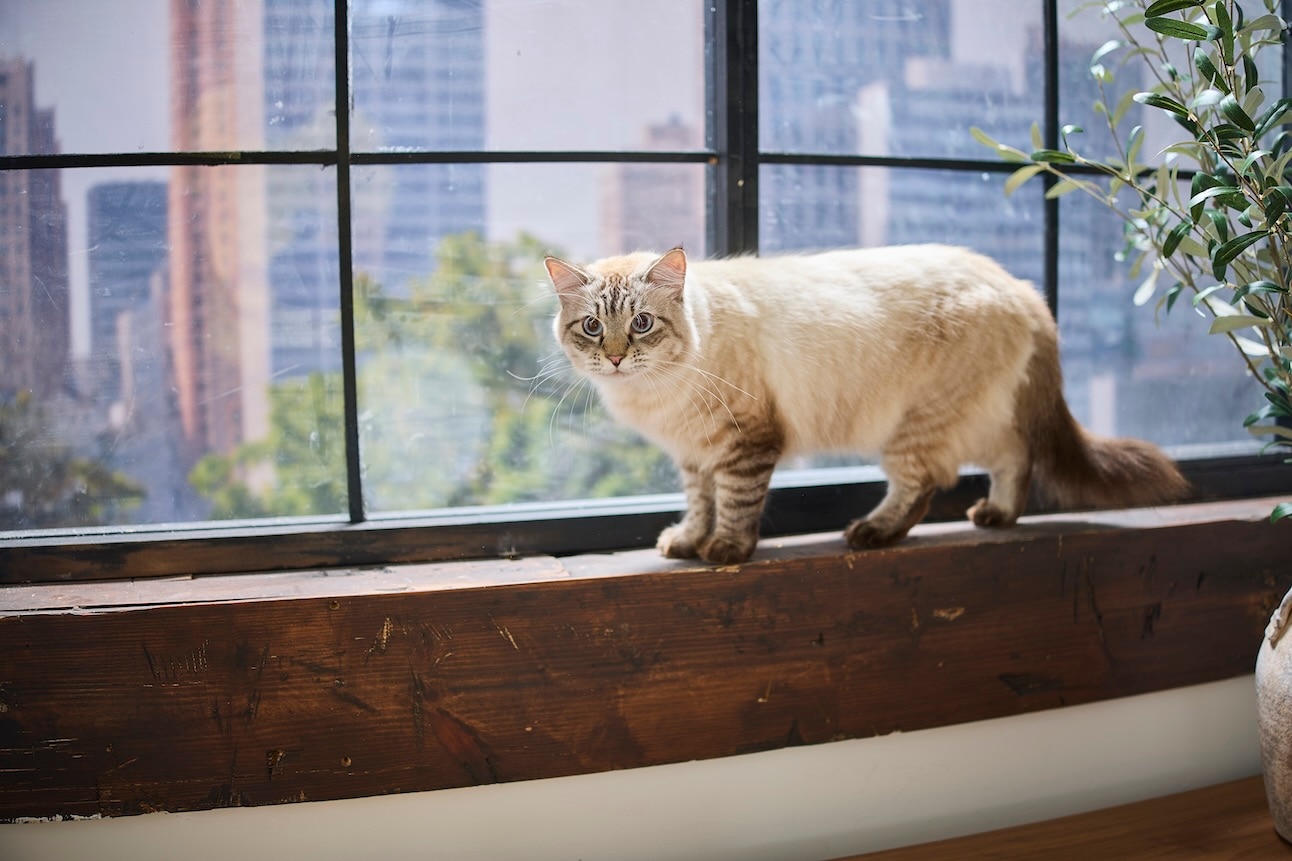
Photo by Chewy
Open windows can lead to escapes or accidental falls, so keep windows shut.
If you do open a window for airflow, make sure the window has a tight-fitting screen that’s free of rips or holes.
“Remember that cats can squeeze into smaller spaces than you might expect, so you shouldn’t rely on closing the window halfway to keep your cat safe,” Dr. Wismer says.
9. For Bird Parents, Avoid Non-Stick Cookware
One important way to make your home pet-safe for birds is to avoid the use of non-stick cookware that contains PTFE (polytetrafluoroethylene).
When heated, PTFE can release fumes that cause severe respiratory distress and potentially death in birds, Dr. Wismer says.
10. Keep Trash Bins and Litter Boxes Secure
Your trash might look like a treasure trove to your pets. Food scraps and waste materials can trigger a pet’s sense of smell or curiosity, and more than a mess is at stake if your pet goes digging through the garbage.
Dr. Wismer says trash often contains choking hazards, toxic scraps, or stringy materials like dental floss. For a pet-friendly home, she recommends using bins with locking lids and storing them behind closed doors when possible.
Pet parents with both cats and dogs might need to take extra precautions around the litter box. Dogs may dig or eat from litter boxes, which is both unsanitary and unsafe.
“Ingesting litter or cat feces isn’t just gross; it can also make dogs sick,” Dr. Hyder says.
You may need to place the litter box in an area only your cat can access or use a covered litter box with a cat-only entry.
Recommended Product

11. Check Furniture for Hazards
Furniture can be functional and comfortable for humans but dangerous for pets.
“Recliners, rocking chairs, and folding tables can accidentally trap paws or tails,” Dr. Hyder says. Always look before reclining or unfolding furniture, and teach kids to do the same.
Appliances can also pose a safety hazard. “Cats can jump into laundry machines, so always check before starting a load,” says Dr. Hyder.
Creating a pet-friendly home doesn’t require a complete overhaul—it’s about being mindful of the spaces your pet explores and taking proactive steps to ensure their safety.
Attributions