How To Aerate a Fish Pond


Nattawat Jindamaneesirikul via Getty Images
Proper aeration keeps pond water moving and helps maintain healthy oxygen levels for fish and beneficial bacteria. Whether you use an air pump, fountain, or waterfall, the right method depends on your pond’s size, depth, and fish population.
Here’s how to aerate a fishpond effectively and recognize when your pond needs more oxygen.
Key Takeaways
- Aeration helps maintain healthy oxygen levels for fish, improves water circulation, and reduces the risk of algae blooms.
- Your pond’s size is a main factor in choosing the right aeration system, since large ponds typically need more powerful or multiple aeration methods.
- Waterfalls, streams, fountains, air pumps or stones, and pond diffusers are all aeration tools and can be used in tandem.
- Aeration supports water quality and beneficial biological activity but does not replace filtration or maintenance.
Why Pond Aeration Matters
Aerating a fishpond increases oxygen levels and improves water circulation. Stagnant water is often warmer and can let nutrients and organic matter build up. These conditions favor algae blooms that further reduce oxygen and degrade water quality.
Additionally, goldfish and koi can produce substantial waste, particularly when a pond is overstocked or fish are overfed. Microorganisms that decompose fish waste and other organic matter consume oxygen.
Possible Signs Your Fish Pond Needs More Oxygen
Watch for these possible signs of low oxygen or poor water quality for your pond fish:
- Fish gasping at the surface
- Foul odors
- Murky or stagnant water
- Excess algae growth or algae blooms
- Fish lethargy, especially in warmer weather
- Increased sludge buildup
- Fish gathering at the surface, especially around dawn
Keep in mind that while these signs point to low oxygen, they can also mean your filter needs cleaning or your water needs testing.
Common Causes of Low Oxygen in Ponds
Several factors can cause oxygen levels in a pond to drop, including:
- Overcrowding
- Excess fish waste and decaying leaves or plant matter
- Overfeeding
- Hot weather
- Poor circulation
- Shallower, warmer ponds
Fish Pond Aeration Methods
You can aerate fishponds with air pumps, waterfalls, fountains, or bottom diffusers. The best aeration method depends on pond size, as some methods work better than others in certain situations.
Air Pumps and Air Stones
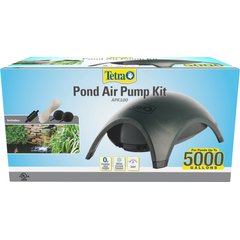
Many pond air pumps use a diaphragm to produce a steady stream of air. Air travels through tubing to an attached air stone, which releases bubbles that help circulate the water and promote gas exchange at the surface. Placing the air stone deeper in the pond can improve water circulation; however, this can depend on the season.
These pumps often suit small ponds, provided the pump is rated for the pond’s volume and depth.
When placing an air pump, keep the nearest power source in mind so you don’t have to run extension cords across large areas.
Recommended Products
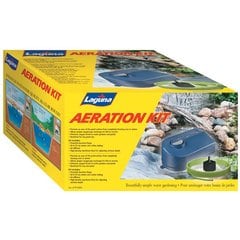
Pond Diffuser Systems
Diffuser systems often suit larger or deeper ponds, including many koi ponds.
Pond diffusers are energy efficient and create bubbles that support water circulation from the bottom up. As the bubbles rise, they gently move the surrounding water, mixing deeper, cooler water with warmer surface water and helping break up stratified layers.
The benefits of a pond diffuser system aren’t limited to the warmer months; they’re just as helpful in winter. Their winter use depends on pond depth, climate, diffuser placement, and whether the goal is circulation or maintaining an open area for gas exchange
Recommended Product

Waterfalls and Streams
Pond waterfalls and streams provide natural aeration through the surface agitation they create. They also look natural and add visual interest.
These water features aerate only while water flows through them. Otherwise, the water can become stagnant, lowering oxygen levels and reducing water quality.
Streams and waterfalls shouldn’t be the only form of aeration in large, heavily stocked ponds. In these cases, supplement them with another aeration method, such as a diffuser.
Recommended Products


Pond Fountains
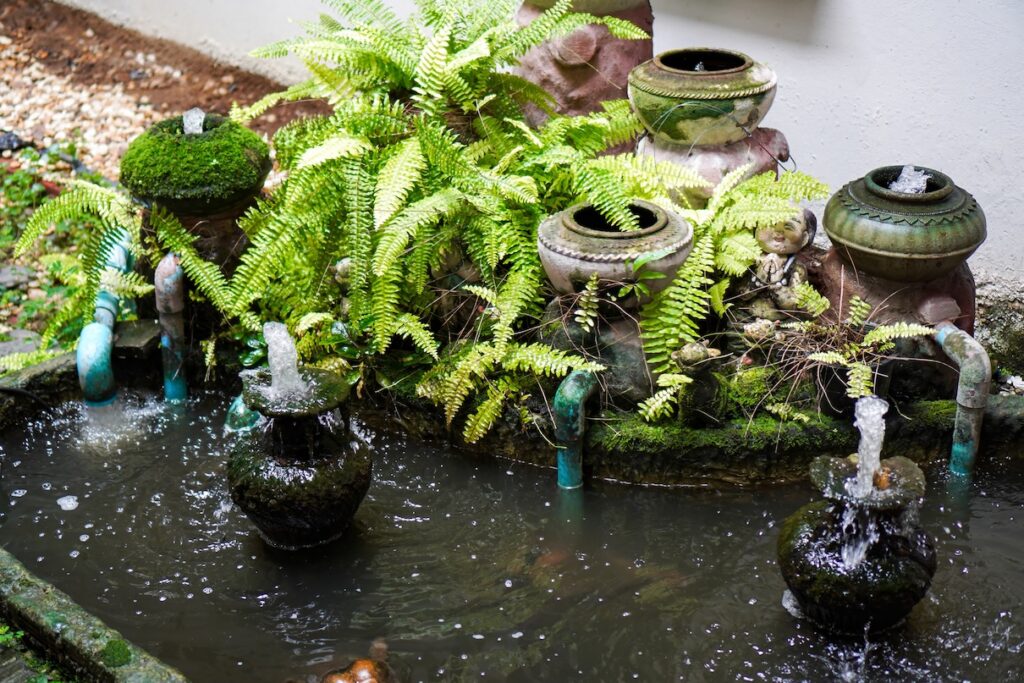
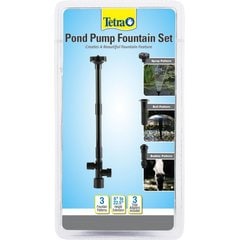
Fountains are aesthetically pleasing and provide surface agitation and gas exchange, but they have limited effect in deeper water.
As fountain water falls back into the pond, it agitates the surface and promotes gas exchange.
But while they look nice, fountains aren’t necessarily the best fit for every situation. They work well in shallow or sparsely stocked ponds, as well as settings where aesthetics are a priority. For larger ponds, use them alongside other aeration methods.
Recommended Products

How To Choose the Right Pond Aeration System
Consider these factors when selecting aeration for your pond:
- Pond size: Larger ponds need more aeration.
- Pond depth: Deeper ponds need aeration that can help mix stratified layers.
- Fish load: The more fish you have, and the larger they are, the greater the oxygen demand and the greater the need for aeration.
- Climate: Warm weather can increase aeration needs, while winter may require a different setup to maintain gas exchange.
- Existing filtration: Adequate filtration helps remove waste and support water quality, but it does not replace aeration.
- Noise considerations: Larger systems require larger pumps and compressors, which can be noisy.
- Electrical access: Aeration pumps need access to a power source.
| Pond Type | Recommended Aeration Type |
|---|---|
| Small patio pond | Air pump and air stone |
| Koi pond | Bottom diffuser system or appropriately sized air pump |
| Decorative, lightly stocked pond | Fountain or waterfall |
| Deep pond | Bottom diffuser system |
| Heavily stocked pond | Higher-capacity or multiple aeration methods |
How To Install a Pond Aerator
Once you’ve chosen the right aerator for your pond, follow these steps to install it properly:
- Measure the pond’s size and depth. Aerators are typically sized according to pond volume, depth, and fish load.
- Place diffusers or air stones strategically. Place them deep enough to promote circulation and help prevent stratification. Place diffusers or stones according to the manufacturer’s instructions and the season.
- Connect tubing to the pump. Securely attach the airline tubing to the pump and diffusers, checking for loose connections, leaks, or kinks that could restrict airflow.
- Plug in the equipment. Use a GFCI-protected, outdoor-rated outlet.
- Test airflow and circulation. Increase run time gradually, especially for established ponds. Rapidly mixing a stratified pond can bring oxygen-poor bottom water into contact with fish.
- Monitor fish behavior. Watch for gasping, lethargy, unusual swimming, and other signs of stress as fish adjust to the pond’s aeration system.
Pond Safety Tips to Remember
Water and electricity can be dangerous together. Take all necessary steps to stay safe when working on your pond’s aeration systems.
- Always unplug equipment before cleaning.
- Use extension cords only when necessary.
- Use outdoor-rated cords and outlets.
- Use only wiring rated and approved for burial; do not bury standard extension cords.
- Keep electrical components in weatherproof enclosures.
- Keep plugs, connections, and power strips above ground and protected from splash
- Avoid handling electrical connections with wet hands.
Seasonal Pond Aeration Tips
Pond aeration needs vary by season, with warmer months typically requiring more aeration than cooler months.
Summer Aeration
Warm weather increases fish metabolism and oxygen needs, and warmer water naturally holds less oxygen. Algae blooms can further deplete oxygen, especially at night when photosynthesis stops.
Appropriately sized, continuous aeration can help maintain healthier oxygen levels.
Winter Aeration
In winter, fish metabolism and oxygen needs decrease, but an iced-over pond still requires gas exchange. The goal is usually to maintain gas exchange without aggressively mixing the entire water column.
An aerator can keep part of the surface open so harmful gases escape. In winter, avoid placing the aerator in the pond’s deepest part, as it can disturb the warmer water below.
Common Pond Aeration Mistakes
Keeping a pond requires time, patience, and dedication. Even with an aeration system, a few common mistakes can reduce its effectiveness. Avoid:
- Using an undersized aerator
- Overstocking the pond with fish
- Running aeration only occasionally
- Skipping routine maintenance
- Poor diffuser placement
- Assuming waterfalls, streams, or fountains are enough
How Pond Maintenance Supports Healthy Oxygen Levels
Clean water and good circulation help maintain healthy oxygen levels in a fishpond. Regular pond maintenance should include:
- Debris removal
- Proper pond filtration
- Water testing
- Avoid overfeeding
- Algae management
- Routine equipment inspection and cleaning
- Removal of dead or decaying plant matter
Recommended Products
FAQs About Pond Aeration
How do you naturally aerate a fishpond?
Waterfalls and streams can naturally aerate fishponds, but they shouldn’t be your only method.
Larger ponds and warmer weather typically increase the need for additional aeration.
Can fish survive without pond aeration?
In small ponds with a strong filter, fish can survive without supplemental aeration if the pond naturally has enough oxygen and good water quality.
However, oxygen demand is higher in warmer months, so it’s best to use an appropriately sized aerator as the weather heats up.
What is the best aerator for a koi pond?
The best aerator for a koi pond depends on the pond’s size, depth, and fish load.
Bottom diffuser systems are often a good option because they help circulate and oxygenate water throughout the pond.
Should pond aerators run all the time?
Yes, pond aerators should generally run continuously, especially during warm weather when oxygen demand is higher.
Winter operation depends on pond conditions and the system type.
Does a waterfall aerate a pond enough?
Waterfalls can provide additional aeration, but they may not be enough on their own, especially for larger or deeper ponds.
Where should I place a pond aerator?
Place a pond aerator where it can circulate the most water without disturbing fish or stirring up sediment.
How do you aerate a pond without electricity?
You can aerate a pond with a windmill-powered aerator, solar aerator, or continuously flowing waterfall or stream. These methods may provide less consistent aeration than electric systems, so monitor fish behavior and keep a battery-powered backup aerator on hand for emergencies.
What should I do if my fish is gasping at the surface?
Fish gasping at the surface may indicate dangerously low oxygen levels. Immediately increase aeration and surface agitation, stop feeding, and remove any dead plant matter. If possible, test the water and contact a pond professional if the fish keep gasping or start dying.
Attributions