Appaloosa
Updated October 31, 2026
Appaloosa
Updated October 31, 2026
Appaloosas are known for distinctive coat patterns, mottled skin, and sometimes striped hooves. These athletic horses excel in Western and English riding disciplines.
Gentle, Intelligent, Athletic
950–1,200 pounds
14.2–16 hands (58–64 inches)
About 30 years
Blanket, leopard spotting, roan, spotted blanket, and solid
The Appaloosa is a versatile American horse breed distinguished by a beautiful spotted coat, gentle personality, and strong athleticism. These horses are popular with riders of all experience levels, from beginners looking for a dependable companion to experienced equestrians competing in Western and English riding events.
Developed by the Nez Perce people in North America, Appaloosas have a rich history. Today they’re valued for their intelligence, stamina, and willingness to work.
Appaloosa Appearance
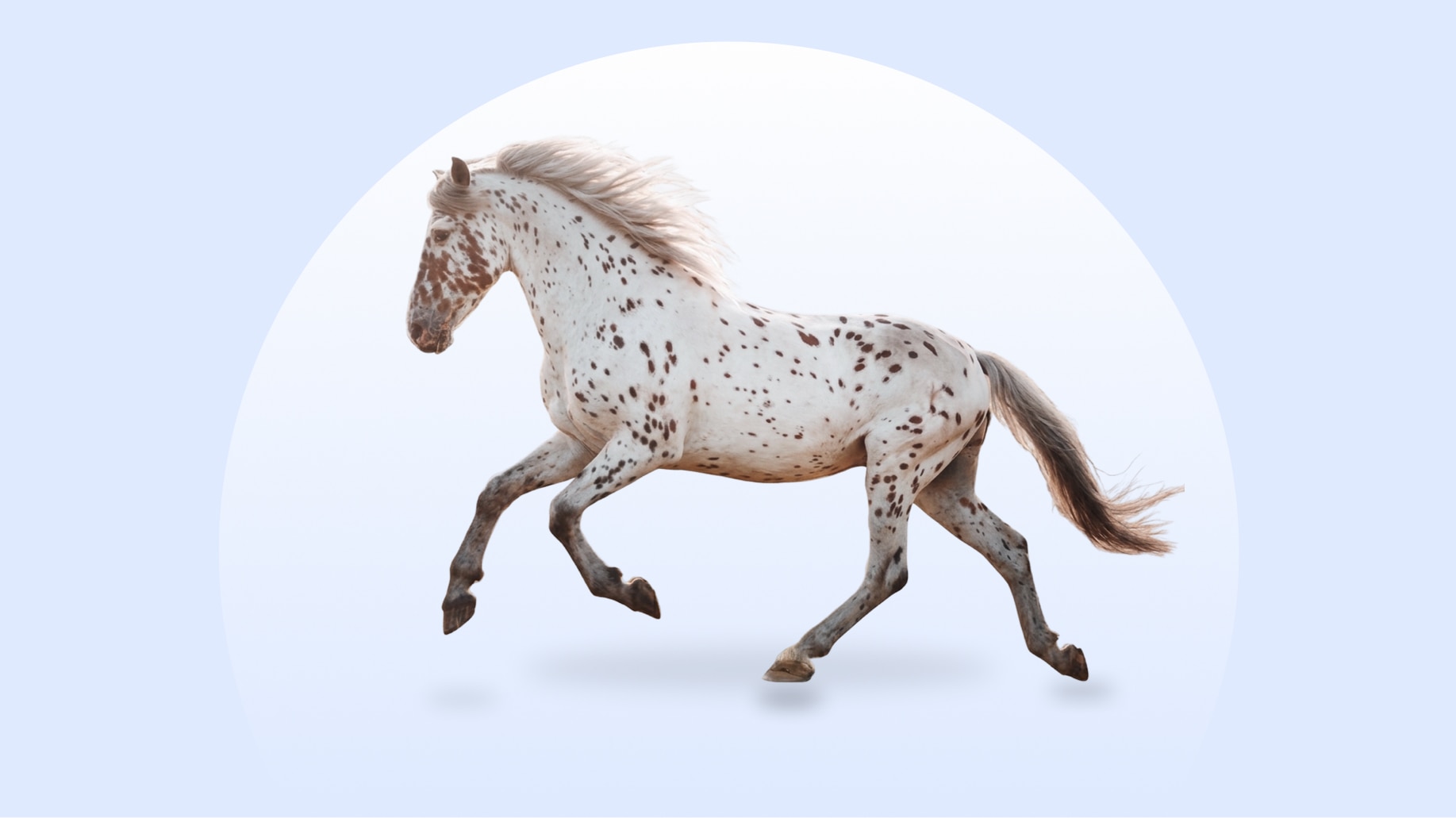
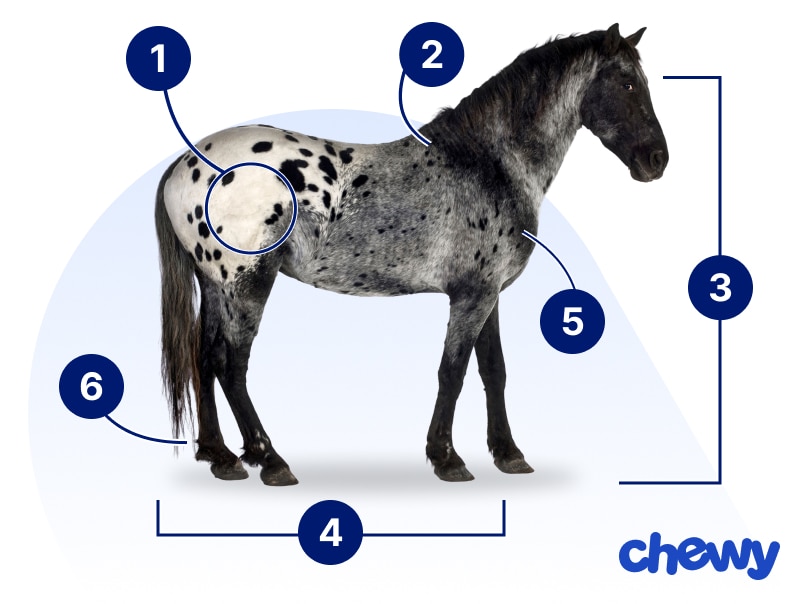
Appaloosas are athletic horses with strong bodies and distinctive markings. Their coats can feature spots, blankets, or roan patterns, although some have solid-colored coats. Other recognizable traits include mottled skin, visible white around the eyes, and striped hooves. No two Appaloosas have the same markings.
- Colors and Patterns
Appaloosas may have leopard spots, white blankets over their hindquarters, roan patterns, or solid coats. Their markings can change throughout their lives as they age, and seasonally from sun exposure.
- Height
Appaloosas typically stand 14.2–16 hands (58–64 inches) tall.
- Conformation
The breed standard emphasizes balanced proportions, correct leg alignment, and sound movement. Appaloosas are a stock-type horse and have an athletic build suited to many riding activities. They are generally well-muscled and have deep chests and a short, straight back.
- Movement
Appaloosas are not classified as a naturally gaited breed. Their strength and stamina support activities requiring controlled movement, speed, and endurance.
Some Appaloosas may “pace,” in which they move their lateral legs together rather than diagonally at the trot. Other individual horses may also exhibit a smooth, unique four-beat lateral or diagonal gait where one foot hits the ground at a time. This is called the Indian Shuffle or Appaloosa Shuffle. To modify the gait, trainers often use pole work and circle exercises to encourage a true trot.
- Head and Neck
The breed standard favors balanced physical proportions rather than a distinctive facial shape. Appaloosas generally have a wide forehead and expressive eyes, including visible white sclera around the eyes.
Their necks are elongated and muscular, flowing into long, sloping shoulders.
- Legs and Hooves
Appaloosas may have alternating light and dark stripes on their hooves. Their legs are short and robust, and should have correct alignment when viewed from the front, side, and rear.
Appaloosa Temperament
Appaloosas are generally friendly, gentle, intelligent, and eager to please. Their calm personalities make many suitable for beginner riders and children.
These horses enjoy working with people and often respond well to consistent, patient handling. Some also make good therapy horses.
Every Appaloosa has an individual personality, and bloodlines can influence temperament.
Related Breeds
How to Care for a Appaloosa
Appaloosas are generally easy to care for, but they need consistent attention to stay healthy. Regular grooming, proper nutrition, exercise, and veterinary checkups are important. Owners should pay special attention to eye health and sun protection, as some Appaloosas are more susceptible to vision problems and sunburn.
Grooming
Training
Diet
Exercise
Environment
Appaloosa Health
Appaloosas are generally healthy, but some are more susceptible to inherited conditions and eye problems.
- Congenital stationary night blindness (CSNB): This genetic condition affects horses with two copies of the leopard complex (LP) gene variant. Affected horses have difficulty seeing in dim light but can see normally during the day. There is no cure, but suitable lighting can help.
- Equine recurrent uveitis (ERU): Also called moon blindness, this condition causes repeated or persistent eye inflammation. Appaloosas are eight times more likely to develop ERU than other breeds. Symptoms include redness, tearing, light sensitivity, and eye pain. Veterinary treatment is essential because ERU can lead to blindness.
- Hyperkalemic periodic paralysis (HYPP): Appaloosas with certain Quarter Horse bloodlines may inherit this muscle disorder. Symptoms include trembling, weakness, stiffness, and episodes of paralysis. A veterinarian may recommend dietary changes and medication.
- Sunburn: Appaloosas with pink skin are more vulnerable to sun damage. Repeated sunburn can increase the risk of squamous cell carcinoma, a type of skin cancer. Shade, protective coverings, and equine-safe sunscreen can help.
Contact your veterinarian promptly if your Appaloosa develops eye problems, muscle weakness, or unusual behavior.
Appaloosa History
The Appaloosa was developed in North America through the selective breeding practices of the Nez Perce people.
The breed’s ancestors included horses brought to the Americas by Spanish explorers. The Nez Perce valued horses for transportation, hunting, and other important activities.
The breed was once called the Palouse horse, a name associated with the Palouse region of the Pacific Northwest.
The Appaloosa Horse Club (ApHC) maintains the breed registry and promotes Appaloosa activities and competitions. It was established in 1938 to preserve and promote the breed.
Today, registered Appaloosas can compete in organized shows, racing, and recreational programs.
FAQs
Are Appaloosas good for beginners?
Are all Appaloosas spotted?
How long do Appaloosas live?
Are Appaloosas hard to train?
What makes Appaloosas special?
This article was created with assistance from AI tools. The content has been reviewed for accuracy by Kaela Schraer, DVM, and edited by a human.