
Mustang
Updated September 30, 2026
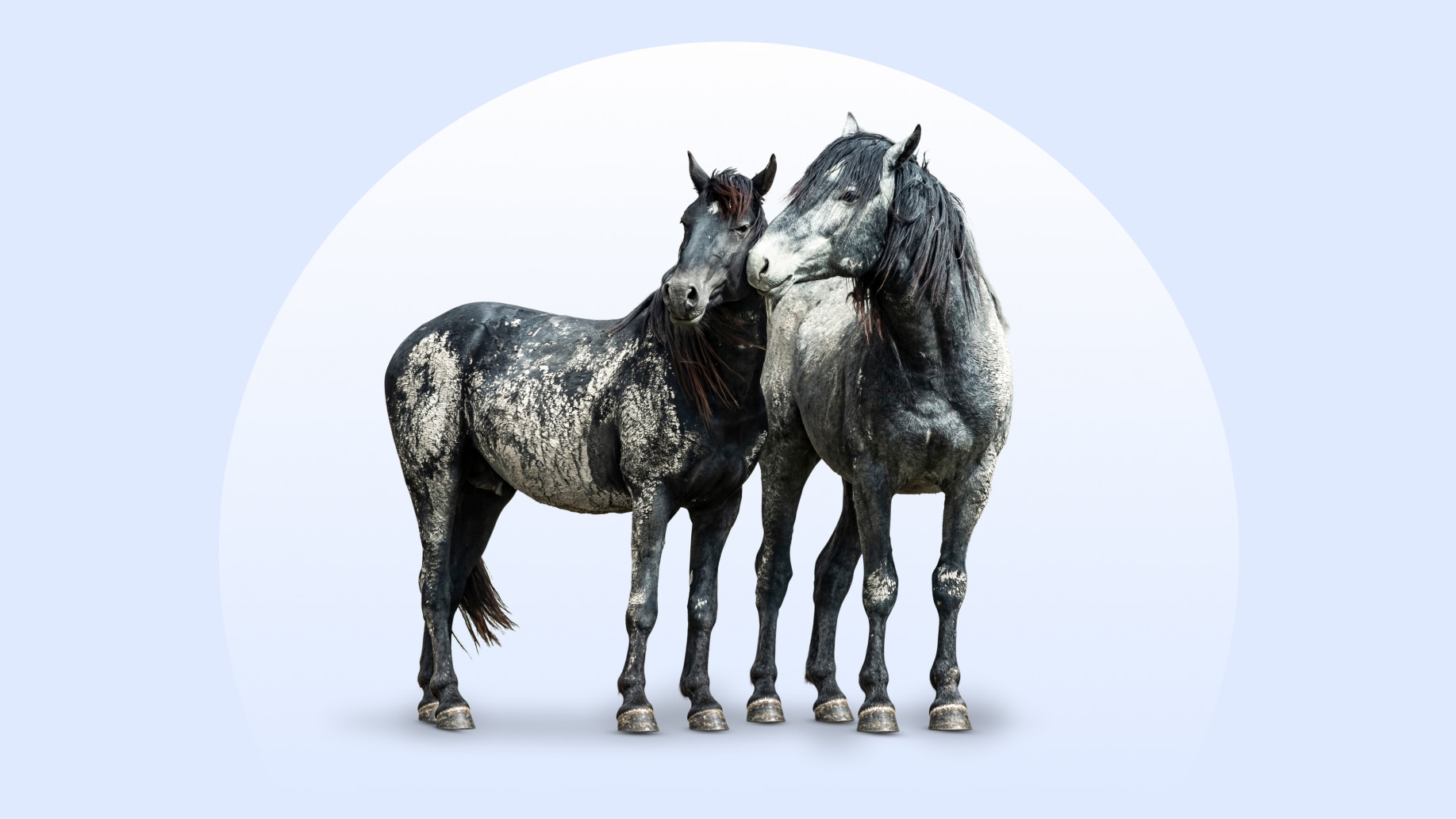
Mustang
Updated September 30, 2026
Mustangs are free-roaming horses closely associated with the American West. Once trained, Mustangs can participate in many riding disciplines, including trail riding, ranch work, dressage, and endurance riding.
Independent, Intelligent, Strong
About 800 pounds
14–15 hands (56–60 inches)
About 36 years
All colors and patterns
Today’s wild Mustangs descend largely from domestic horses brought to North America by Spanish explorers and from other horses who later escaped or were released.
Their lives on rugged rangelands have helped shape hardy, muscular horses with stamina and sure-footedness. Mustangs are very smart horses and once appropriately trained, they can become versatile riding and working partners.
Mustang Appearance
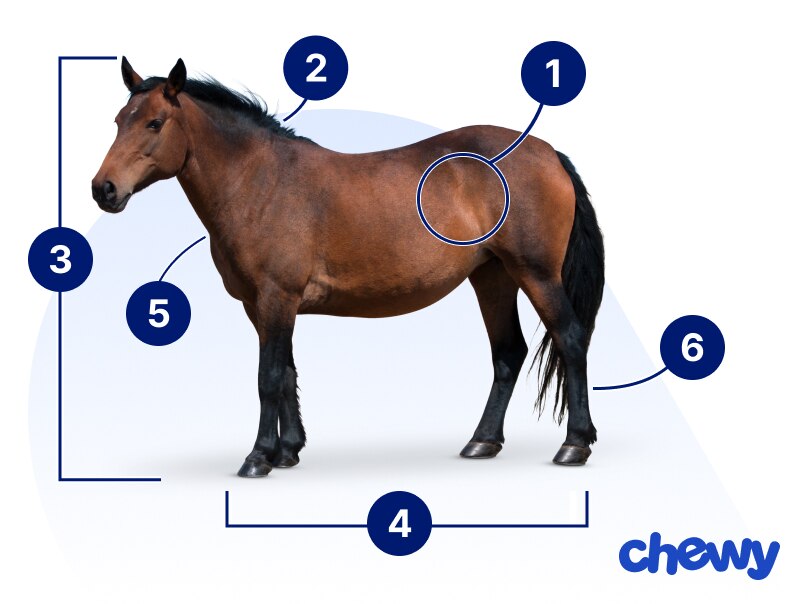
Mustangs vary considerably in appearance because they are free-roaming horses with diverse ancestry rather than a breed developed to meet a single conformation standard. In general, they’re muscular horses with long legs, a long, crested neck, and sloping shoulders.
- Colors and Patterns
Mustangs occur in all colors and patterns, including black, white, and buckskin.
- Height
The typical Mustang is 14–15 hands (56–60 inches).
- Conformation
There is no single breed conformation standard. Appearance varies between Mustangs populations, but they are generally muscular and capable of navigating different types of terrain.
- Movement
Mustangs have the strength and stamina to cover long distances and travel over varied terrain.
- Head and Neck
Mustangs generally have a long, crested neck.
- Legs and Hooves
Mustangs typically have long legs. They’re strong and sure-footed, but there is no single breed standard for their legs or hooves.
Mustang Temperament
Every Mustang is an individual, and a horse’s background can make a major difference in their behavior around people. Mustangs are generally known for intelligence and independence. Horses who have spent their lives in the wild know how to survive without human assistance, so building trust can take time.
After appropriate training, Mustangs can be willing, quick learners and versatile riding partners. They can participate in disciplines ranging from ranch work and reining to dressage and endurance riding.
Mustangs removed from public lands are managed through federal programs rather than a conventional breed registry. The US Bureau of Land Management (BLM) manages wild horses and burros on designated public lands and offers eligible animals for adoption or purchase. Wild Mustangs gathered and cared for by the BLM typically have a unique freeze brand—sometimes called a tattoo or neck marking—on the left side of the neck.
Related Breeds


How to Care for a Mustang
A trained Mustang has many of the same basic care needs as other horses, but an untouched wild Mustang requires additional planning. New adopters need appropriate facilities and should expect the horse to need time to adjust both physically and emotionally. Patience and knowledgeable handling are especially important during this transition.
Grooming
Training
Diet
Exercise
Environment
Mustang Health
Mustangs are generally considered hardy horses, but that does not mean they are immune to illness or injury. Several conditions can occur in Mustangs, including the following.
- Polysaccharide storage myopathy (PSSM): This muscle disorder causes excessive glycogen to accumulate in the muscles. Genetic factors can play a role in the condition.
- Equine metabolic syndrome: This condition causes horses to process insulin incorrectly. Maintaining an appropriate diet and healthy body condition is important because Mustangs can gain too much weight when their calorie intake is too high.
- Laminitis: Problems with metabolism and excessive weight can increase a horse’s risk for laminitis, a painful condition involving tissues within the hoof. Appropriate nutrition and weight management can help reduce risk.
Mustang History
Modern American Mustangs descend largely from domestic horses brought to North America by Spanish explorers roughly 500 years ago. Other domestic horses later escaped or were released, adding to free-roaming populations.
By the 20th century, wild horse populations on public lands faced significant pressure. Congress passed the Wild Free-Roaming Horses and Burros Act in 1971 to provide for the management and protection of wild horses and burros on public lands.
Mustangs were not originally developed for one particular riding discipline, and there is no conventional breed registry or breed show standard covering all Mustangs. However, trained Mustangs can participate in many equestrian activities and competitions.
FAQs
What is special about a Mustang horse?
How can you tell if a horse is a Mustang?
Why are Mustang horses called Mustangs?
Are Mustangs hard to ride?
Can you adopt a wild Mustang?
This article was created with assistance from AI tools. The content has been reviewed for accuracy and edited by a human.