Can Rabbits Eat Kale?


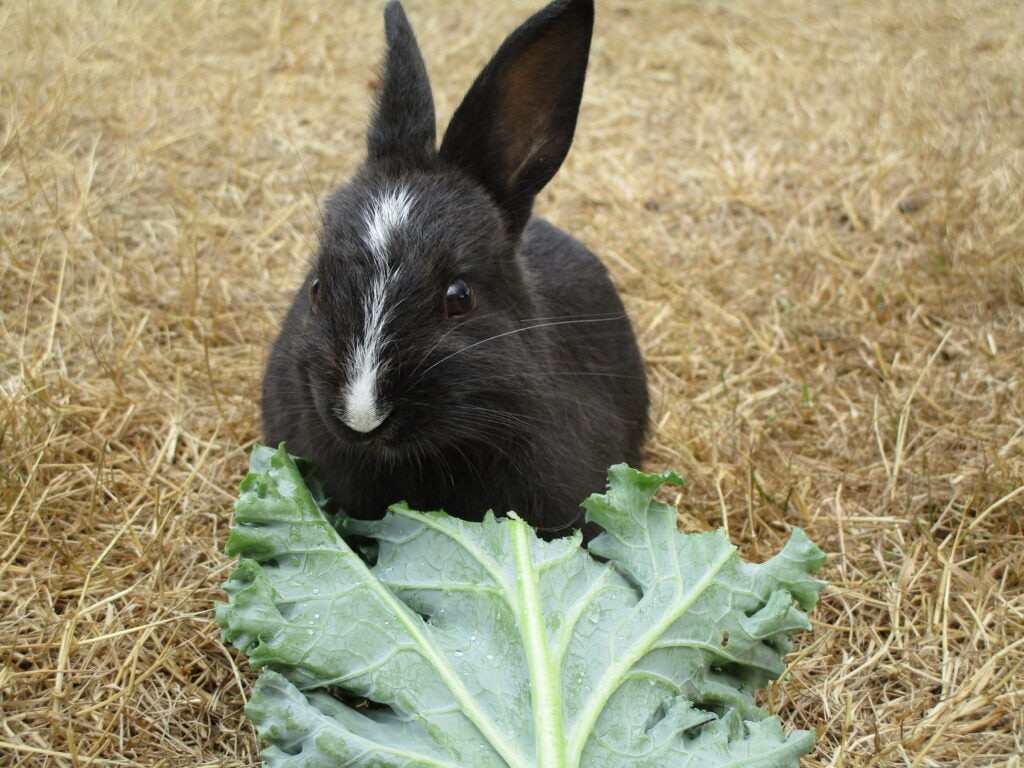
Photo by Rolleen Annie and Rowena Ho K./iStock/Getty Images Plus via Getty Images
Kale certainly looks the part of a rabbit-friendly food: It’s fresh, leafy, and green. But does that mean your bunny can munch on it whenever it’s around? Can rabbits eat kale?
Yes, adult rabbits can eat fresh, raw kale in moderation, but there’s no need to serve it every day. And as with any fresh green, kale should complement—not replace—the hay that makes up most of your rabbit’s diet.
Here’s how kale fits into a healthy rabbit diet, including how much to offer and when you may want to choose another green instead.
If your rabbit has urinary, kidney, or chronic digestive concerns, ask your veterinarian before offering kale.
Key Takeaways
- Yes, adult rabbits can eat fresh, raw kale in moderation, but it should be mixed with other rabbit-safe greens throughout the week.
- Kale provides fiber and nutrients like beta-carotene and vitamin K, but it also contains calcium—something to keep in mind if your rabbit has a history of urinary or kidney problems.
- Keep kale plain. Skip kale chips, cooked or creamed kale, and anything prepared with oil, butter, salt, cheese, garlic, onion, dressing, or sauces.
Can Rabbits Have Kale?
Yes, adult rabbits can have fresh, raw kale in moderation. Curly kale, lacinato (dinosaur) kale, and red or purple kale are all OK, so you don’t need to hunt down a particular variety.
Serve kale fresh and raw, and save the kale chips, creamed kale, and dressed salads for yourself. They often come with oil, butter, salt, cheese, garlic, onion, or other ingredients that aren’t a good fit for rabbits.
If you want something you can grab straight from the treat bag instead, a few rabbit-friendly options include:
Recommended Products


Is Kale Good for Rabbits?
Kale brings more to the bowl than just something leafy to munch on. It’s packed with nutrients, and when you serve it in reasonable amounts, it can be a healthy addition to your rabbit’s fresh foods.
Some of the benefits include:
- Plenty of beta-carotene: Kale is rich in beta-carotene, which your rabbit’s body can turn into vitamin A. Vitamin A supports healthy vision, immune function, and normal growth and development.
- Vitamin K: Kale provides plenty of vitamin K, a nutrient involved in normal blood clotting and bone health.
- Some fiber: Rabbits thrive on high-fiber diets, which support their digestion. Kale contributes some fiber to your rabbit’s diet, though it doesn’t come close to replacing the fiber they get from unlimited grass hay.
- Kale also contains vitamin C, but that’s not much of a selling point for rabbits—they make their own, so they don’t need to get it from food.
Is Kale Bad for Rabbits?
Kale isn’t bad for most healthy, adult rabbits, but there are a few reasons you wouldn’t want to make it the only green in their bowl day after day.
The biggest concerns are:
- Digestive upset: A big serving of kale—especially if your rabbit isn’t used to it—can lead to gas, bloating, soft stool, or changes in appetite. Introduce it gradually and see how your rabbit handles it.
- Calcium content: Kale contains a fair amount of calcium. That isn’t automatically a problem for a healthy rabbit, but rabbits excrete excess calcium through their urine. If your bunny has a history of bladder sludge, urinary stones, or kidney problems, ask your veterinarian whether kale is a good choice for them.
- Less room for hay: If your rabbit fills up on kale or other fresh foods, they may eat less hay—and that means less of the fiber that keeps food moving through their digestive tract. Without enough fiber, gut motility can slow, increasing the risk of GI stasis, a potentially life-threatening condition in which the digestive system slows down or stops moving normally.
- Spoiled greens: Kale that’s slimy, moldy, or past its prime can make your rabbit sick. Throw it out instead of adding it to your bunny’s bowl.
How Much Kale Can My Rabbit Eat?
You don’t need to load up your rabbit’s diet with kale to get the benefits. For most healthy, adult rabbits, one or two medium-size kale leaves mixed with other rabbit-safe greens is plenty.
If kale is a new addition, tear off a small piece for their first taste. Make sure your rabbit continues eating normally and that their droppings look normal before offering it again.
And change things up rather than reaching for kale every day. This gives your rabbit a wider range of nutrients and keeps any one food from taking up too much space in their diet.
How To Safely Feed Kale to Your Rabbit
Kale is pretty easy to prep for your bunny:
- Choose fresh leaves. Look for crisp kale without slimy, wilted, or moldy spots.
- Wash the leaves well.
- Remove any thick, woody stems that are harder to chew.
- Tear leaves into small pieces.
- Serve it raw and plain. Skip oil, butter, salt, cheese, dressing, garlic, onion, and other seasonings.
- Mix it with other rabbit-safe greens.
- Remove any uneaten kale before it starts to wilt or spoil.
My Rabbit Ate Too Much Kale—What Do I Do?
If your rabbit made their way through more kale than you planned to serve, go back to their usual foods and pay attention to how they’re eating, acting, and pooping. A bigger serving may lead to some digestive upset, especially if kale is new to them.
Call your veterinarian if you notice:
- Diarrhea or unusually soft stool
- Bloating
- Reduced appetite
- Fewer or no droppings
- Low energy or other unusual behavior
- Teeth grinding, a hunched posture, or other signs of pain
If your rabbit stops eating or producing droppings altogether, contact your veterinarian right away. These can be signs of GI stasis, which can become serious quickly. If your regular veterinarian is unavailable, take your rabbit to an emergency veterinarian that treats rabbits.
If your rabbit got into kale prepared with potentially harmful ingredients, such as garlic or onion, you can call the Pet Poison Helpline (855-764-7661) for guidance.
What Other Leafy Greens Can Rabbits Eat?
Kale is just one of many greens you can share with your rabbit. Other rabbit-safe options include:
- Arugula
- Basil
- Bok choy
- Cabbage
- Cilantro
- Dandelion greens
- Escarole
- Green leaf lettuce
- Parsley
- Romaine lettuce
- Watercress
You don’t have to pick one favorite and stick with it. Offering different greens throughout the week gives your rabbit a mix of flavors, textures, and nutrients while keeping any one food from dominating the bowl. Just make sure unlimited grass hay is always available—it should still make up most of your rabbit’s diet.
FAQs About Kale for Rabbits
Can baby rabbits eat kale?
Wait until your rabbit is at least 12 weeks old before introducing fresh greens like kale.
Young rabbits have more sensitive digestive systems, so start with a small piece and add new foods one at a time.
If you’re unsure whether your bunny is ready, check with your veterinarian first.
Can rabbits eat raw kale?
Yes, fresh, raw kale is the best way to serve it. Wash the leaves thoroughly and offer a reasonable portion alongside other rabbit-safe greens. There’s no need to cook it or add anything to make it more appealing.
Can rabbits eat kale stems?
Yes, rabbits can eat tender kale stems along with the leaves. If you come across a particularly thick or woody stem, though, it’s better to remove it—the leafy parts are easier for your rabbit to chew.
Can rabbits eat kale chips?
No, rabbits shouldn’t eat kale chips. They’re typically made with oil and salt and may contain cheese, garlic, onion, or other seasonings that aren’t appropriate for rabbits. Save the chips for yourself and give your bunny fresh, plain kale instead.
Attributions
This article was created with assistance from AI tools. The content has been reviewed for accuracy and edited by a human.