American Paint Horse
Updated October 30, 2026
American Paint Horse
Updated October 30, 2026
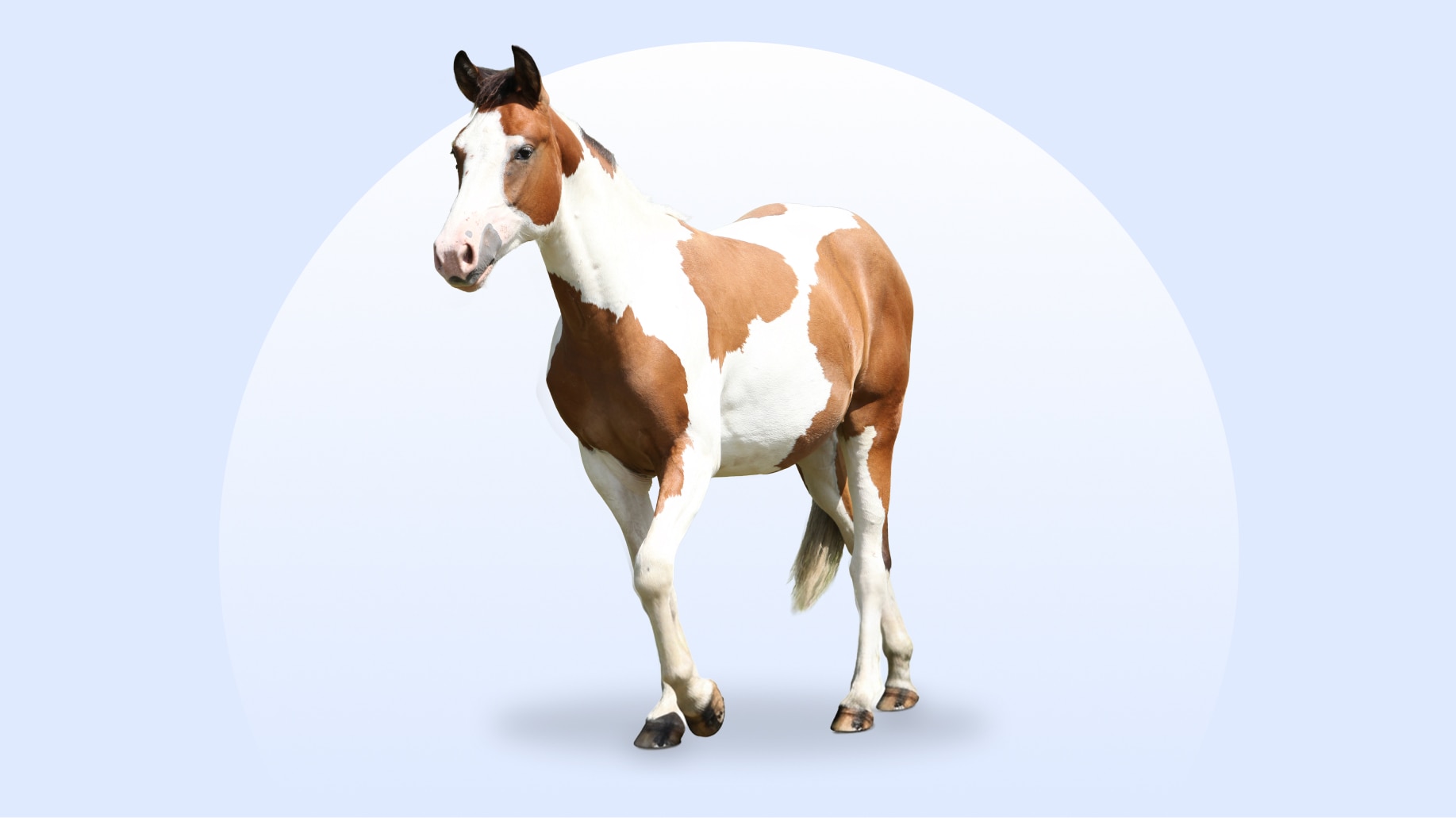
American Paint Horses are known for their colorful coats, intelligence, and friendly personalities. Their athletic build makes them suitable for Western and English riding disciplines.
Intelligent, Willing, Gentle
950–1,200 pounds
14–16 hands (56–64 inches)
About 30 years
White combined with black, bay, chestnut, brown, gray, palomino, buckskin, and other colors
The American Paint Horse is a breed known for colorful coat patterns, an athletic build, and a friendly personality. These versatile horses are popular with riders of all experience levels, from beginners learning the basics to professional equestrians competing in Western and English riding events.
With roots traced back to Spanish horses brought to North America in the 1500s, American Paint Horses have a long history of ranch work and companionship. Today, they’re valued for their intelligence, willingness to learn, and striking appearance.
American Paint Horse Appearance
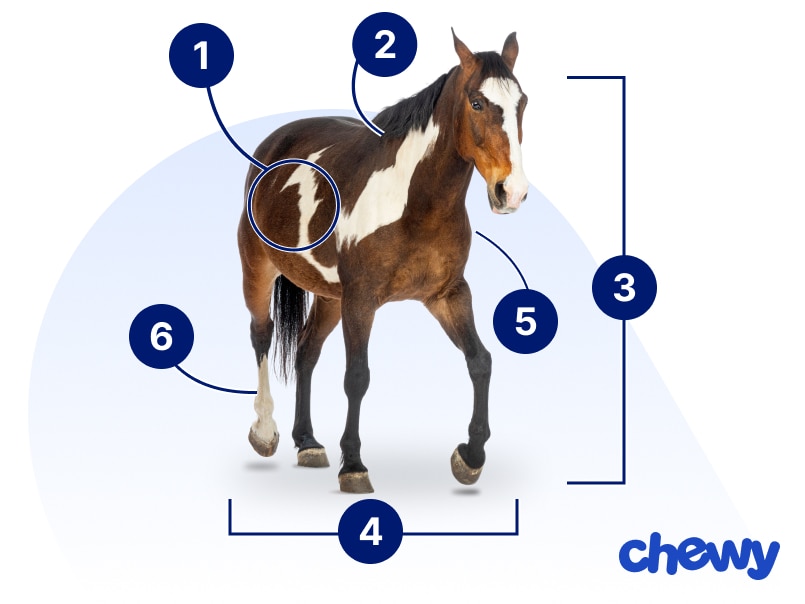
American Paint Horses are strong, athletic horses with a stocky build. Their most recognizable feature is their coat, which often combines white markings with another color. Although many Paint Horses have bold patches, some have minimal white markings or solid-colored coats.
The American Paint Horse Association (APHA) recognizes several coat pattern categories.
- Colors and Patterns
Tobiano coat patterns where white is the predominant color over much of the body, including the legs and across the back. Other colored markings typically cover both flanks and form rounded patches elsewhere on the horse’s body.
Overo coat patterns have irregular white markings that usually don't cross the back; dark legs and extensive facial markings are common.
Research into the genetics behind overo patterns is ongoing. In American Paint Horses, overo coloring generally falls into three genetically distinct patterns: frame overo, sabino, and splashed white.Frame overo is the classic overo pattern, with irregular white patches across the horse’s body. It is generally associated with horses of Spanish ancestry.
Sabino overos have jagged white markings that may extend upward from the legs onto the belly and body. Sabino patterns can occur in many horse breeds.
Splashed white is the least common overo pattern. These horses appear to have been dipped in white paint, with white markings covering the legs, head, and lower portions of the body.
Tovero Paint Horses have a combination of tobiano and overo patterns, often featuring extensive white markings and dark pigmentation around the ears.
As a rule, some paint coloring characteristics of the coat are required to register a Paint Horse. But if a horse has a solid coat pattern, they can still qualify by APHA breed standards if at least one of their parents are registered; this means they carry one of the genes associated with a spotting pattern typical of paint horses.
- Height
American Paint Horses typically stand 14–16 hands (56–64 inches) tall, although some individuals may fall outside this range.
- Conformation
Paint Horses have a stock-type build, reflecting their Paint Horse, Quarter Horse, and Thoroughbred ancestry.
- Movement
With their compact bodies and relatively low centers of gravity, these horses excel in activities requiring speed, agility, and controlled movement, including reining and barrel racing.
- Head and Neck
The APHA breed description emphasizes stock horse ancestry rather than one required head or neck shape.
- Legs and Hooves
Paint Horses may have white or dark-colored legs, depending on their coat pattern. Tobiano horses commonly have white lower legs, while overo horses often have darker legs.
American Paint Horse Temperament
American Paint Horses are generally calm, friendly, intelligent, and eager to please. Their relaxed personalities make many of them suitable for beginner riders.
They respond well to patient, gentle training and can learn new skills at different ages.
Individual personalities vary, so riders should consider each horse’s experience and temperament. For example, Paints with a higher percentage of Thoroughbred ancestry are often more sensitive, energetic, or reactive than those with traditional Quarter Horse blood.
Related Breeds

How to Care for a American Paint Horse
American Paint Horses are generally straightforward to care for. They need a balanced diet, regular activity, grooming, and preventive veterinary care. Although they’re typically hardy horses, owners should monitor their weight and understand the genetic conditions that can affect the breed.
Grooming
Training
Diet
Exercise
Environment
American Paint Horse Health
American Paint Horses are generally healthy but can inherit several genetic disorders.
- Lethal white syndrome (LWS): This inherited condition causes affected foals to be born with underdeveloped intestines. It is fatal, but genetic testing of breeding horses can prevent the birth of affected foals.
- Hyperkalemic periodic paralysis (HYPP): This genetic muscle disorder can cause trembling, weakness, paralysis, and collapse. Veterinarians may recommend dietary changes and medication to manage symptoms.
- Polysaccharide storage myopathy (PSSM): This condition causes abnormal glycogen storage in muscles, leading to stiffness, soreness, cramping, and reluctance to move. Diet and exercise adjustments may help manage affected horses.
- Glycogen branching enzyme deficiency (GBED): Affected horses cannot store glycogen properly, preventing vital organs from functioning normally. The condition is fatal and can cause stillbirth or weakness in newborn foals.
Genetic screening is particularly important when breeding American Paint Horses.
American Paint Horse History
American Paint Horses descend from horses brought to North America by Spanish explorers during the 1500s.
Their distinctive coats attracted the attention of Native Americans and cowboys. Over time, these horses became valued for ranch work and riding.
In 1962, the organization that eventually became the APHA was founded to preserve and promote colorful stock-type horses.
Today, eligible horses can be registered with the APHA and participate in organized breed competitions. Registration depends on ancestry and applicable registry requirements.
FAQs
Are American Paint Horses good for beginners?
How long do American Paint Horses live?
What are American Paint Horses used for?
How much does an American Paint Horse cost?
What makes an American Paint Horse different from other horses?
This article was created with assistance from AI tools. The content has been reviewed for accuracy by Kaela Schraer, DVM, and edited by a human.