Thoroughbred
Updated October 30, 2026

Thoroughbred
Updated October 30, 2026
The Thoroughbred is an athletic horse breed best known for speed, stamina, and success in horse racing. Originally developed in Britain, these elegant horses have become popular worldwide for racing, show jumping, dressage, and eventing.
Intelligent, Sensitive, Energetic
1,000–1,200 pounds
15–17 hands (60–68 inches)
25–30 years
Bay, dark bay, chestnut, black, gray, and occasionally roan
Although they’re often associated with racetracks, many become successful riding and competition partners after their racing careers end. Their athletic abilities make them especially appealing to experienced riders.
Thoroughbred Appearance
Thoroughbreds have lean, athletic bodies built for speed and endurance. Their long legs, muscular shoulders, prominent withers, and deep chests support powerful movement. Compared with heavier horse breeds, Thoroughbreds have a lighter build and relatively thin skin. Their appearance reflects generations of breeding for racing performance.
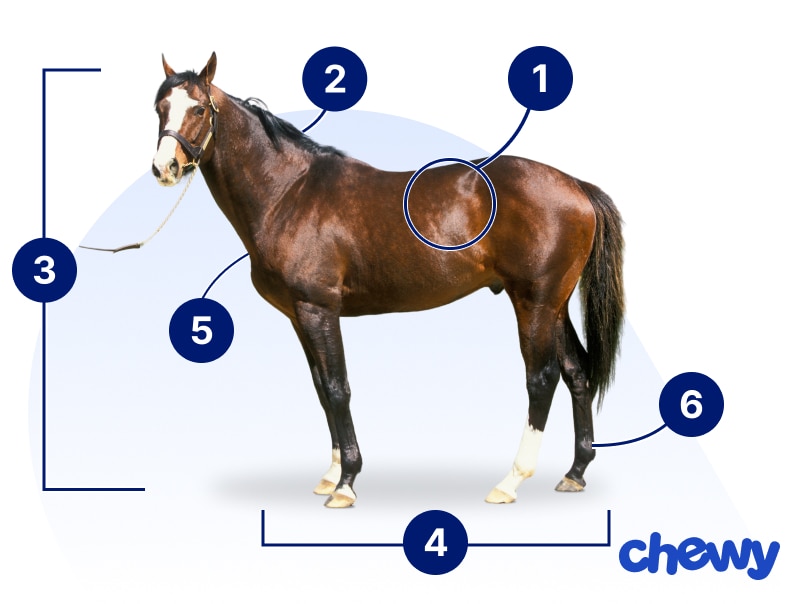
- Colors and Patterns
Thoroughbreds are usually bay, dark bay, chestnut, black, or gray. Roan coloring is rare, and some horses have white markings on their faces and legs.
- Height
Thoroughbreds typically stand 15–17 hands (60–68 inches) tall, with some individuals falling outside this range.
- Conformation
Thoroughbreds have a light, athletic build with prominent withers, a long back, a broad chest, and muscular, sloping shoulders. Body proportions vary among horses bred for sprinting, distance racing, and other activities.
- Movement
Thoroughbreds are not naturally gaited horses. They are especially known for their powerful gallop, which supports both speed and endurance. Their strides are typically long and low, covering a lot of ground to make them efficient long-distance racers.
- Head and Neck
The Thoroughbred typically has a small, refined head with a straight facial profile. Their eyes are wide and alert, their nostrils are prominent, and their neck is long and straight.
- Legs and Hooves
Thoroughbreds have long legs, muscular forearms, and large, mobile joints. Some develop thin hoof soles, long toes, and underrun heels, making proper farrier care especially important.
Thoroughbred Temperament
Thoroughbreds are intelligent, sensitive, and highly responsive horses. Their breeding for speed and endurance has given them a reputation for being energetic and sometimes challenging to handle.
However, a Thoroughbred’s behavior is influenced by their training and individual experiences. With patient handling and consistent training, many become attentive and cooperative riding partners.
Their sensitivity and athleticism can make them a better match for experienced riders, particularly when transitioning from racing to recreational riding.
Related Breeds


How to Care for a Thoroughbred
Thoroughbreds need consistent care to maintain their health and athletic ability. Horses with racing backgrounds may require additional attention to their joints, legs, and hooves.
Thoroughbred horse owners should work with an equine veterinarian and qualified farrier to create a care plan that fits each horse’s age, health, and activity level.
Grooming
Training
Diet
Exercise
Environment
Thoroughbred Health
Thoroughbreds can develop several health problems, particularly those associated with demanding athletic careers.
- Bone chips and fractures: High-energy racing puts considerable stress on bones and joints. Repeated stress or injuries can result in bone fragments or fractures. Veterinary evaluation is important if a horse develops lameness.
- Soft tissue injuries: Tendons, ligaments, and other soft tissues can be injured during strenuous exercise. These injuries may require rest, veterinary treatment, and a gradual return to activity.
- Arthritis: Repeated joint stress can contribute to arthritis over time. Affected horses may experience stiffness, discomfort, or reduced mobility. Veterinary care and appropriate exercise can help support joint health.
- Thin hoof soles: Some Thoroughbreds have naturally thin soles, making their feet more vulnerable to discomfort. A qualified farrier may recommend specialized trimming or shoeing.
- Long toes and underrun heels: Poor hoof balance can affect comfort and movement. Regular farrier attention helps manage these problems.
Not every Thoroughbred develops these conditions. Regular examinations and early attention to changes in movement are important for maintaining soundness.
Thoroughbred History
The Thoroughbred originated in Britain, where breeders developed horses for speed and racing during the 17th and 18th centuries.
Three influential foundation stallions helped shape the modern breed: the Darley Arabian, Byerley Turk, and Godolphin Arabian.
The General Stud Book was established in 1791 to document Thoroughbred bloodlines.
The Jockey Club was founded in 1894 and maintains Thoroughbred registrations in the United States, Canada, and Puerto Rico.
Today, Thoroughbreds are bred primarily for racing but also participate in dressage, show jumping, eventing, and other equestrian activities.
FAQs
Are Thoroughbreds good for beginners?
How long do Thoroughbreds live?
Are Thoroughbreds used only for racing?
Are Thoroughbreds difficult to train?
What is the difference between a Thoroughbred and a Quarter Horse?
This article was created with assistance from AI tools. The content has been reviewed for accuracy by Kaela Schraer, DVM, and edited by a human.