Best Toys for Lovebirds


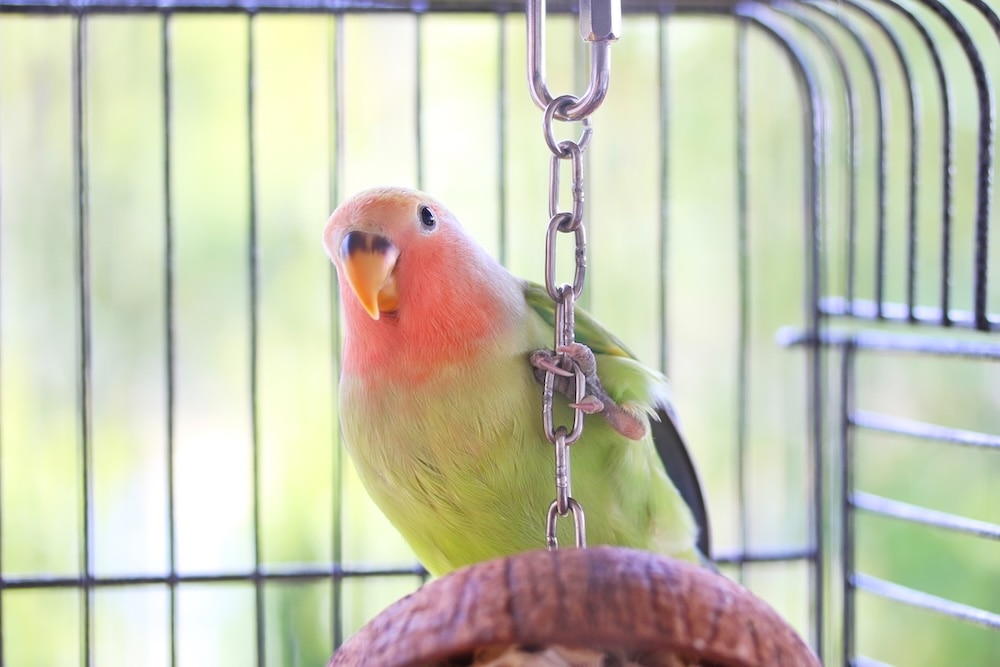
Photo by miwa_in_oz/iStock/Getty Images Plus
Lovebirds are small parrots with big opinions—and even bigger play needs. The best toys for lovebirds keep their brains busy, their beaks working, and their bodies moving. Below is a practical, safety-first guide to the types of toys that lovebirds usually adore, how to set up a “toy rotation,” and what to avoid.
Key Takeaways
- The best lovebird toys encourage natural behaviors like chewing, shredding, climbing, and foraging.
- Toys for lovebirds should be made from bird-safe materials, including non-toxic dyes and metal parts, and appropriately sized for small parrots.
- Lovebirds can vary in their play preferences, so the best toys match how they like to engage, whether that is soft wood to destroy, foraging and puzzle toys to test their problem-solving skills, and everything in between.
- Lovebird toy safety checks include regular inspections for frayed fibers or broken parts that could injure toes, beaks, and wings.
- Rotating toys every week or so helps prevent boredom, and placing a toy in a different area might suddenly spark a bird’s interest in it.
Best Toys for Lovebirds by Play Style
Every lovebird has a unique “play personality,” which is why it’s important to offer a range of different types of toys, depending on what your bird likes best.
Best Foraging Toys for Lovebirds
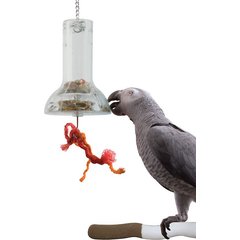
Foraging toys turn snack time into a puzzle—more fun, more brain work. This type of enrichment also helps satisfy a lovebird’s curiosity and provides meaningful daily engagement. There’s a variety of foraging toys available, from simple to complex, as well as DIY options you can make at home. Here are a few ideas to get you started:
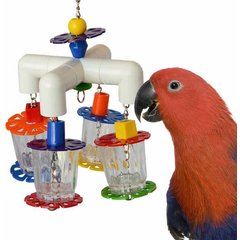
- Treat “foraging cups” or small puzzle pods challenge your lovebird’s ability to lift or twist open “barriers” to access a food reward.
Recommended Product
- Paper-wrapped treats are a simple DIY option that new foragers can quickly learn to master, and are a good intro to more foraging activity.
- Refillable foraging wheel toys sized for small parrots can be opened and loaded again and again, and many can be adjusted or reconfigured to increase the difficulty level.
Recommended Product
Best Shredding Toys for Lovebirds
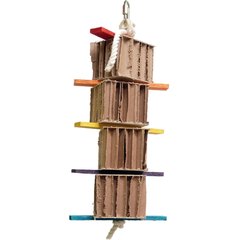
Shredding is a natural favorite activity for lovebirds. The best shredding toy options are easy to tear and made of bird-safe materials they can safely dismantle:
- Paper strips, crinkle paper, and cardboard layers give your lovebird fun textures to pull on and tear apart. It’s best to use ink-free paper.
Recommended Product
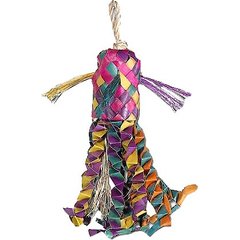
- Palm leaf or woven seagrass shapes offer a more natural shredding option. They also make good foraging toys, as treats can be hidden between their grooves and layers.
Recommended Product
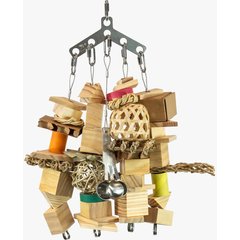
- Soft, bird-safe wood pieces (small, thin) are easy for small birds to shred and can be very satisfying to a lovebird who enjoys destroying toys.
Recommended Product
Best Chew Toys for Lovebirds
Chew toys should be just the right density for a lovebird’s busy beak—soft enough to work through yet challenging enough to keep them happily occupied. Examples include:
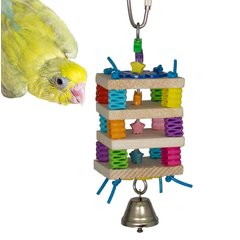
- Thin natural wood chew blocks: Lightweight wood pieces like balsa or sola wood are easy to chip away at and break apart.
Recommended Product
- Vegetable-tanned leather strips (bird-specific): Some lovebirds enjoy tugging on and methodically tearing apart the leather’s fibers or chewing through them.
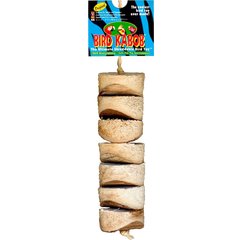
- Small bird-safe “kabob-style” chew toys: These hanging toys are typically made from cactus wood, which has some softness but is durable enough to challenge your lovebird’s beak.
Recommended Product
Best Foot Toys for Lovebirds
Foot toys offer “grab-and-go” fun, but don’t be surprised if your lovebird uses their beak to toss them around. They’re also small enough for a lovebird to carry or push around. Popular foot toys include:
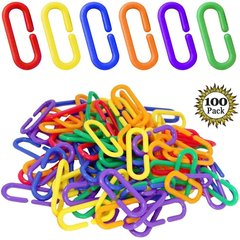
- Small plastic rings (bird-safe): These are light enough for lovebirds to fling across their play area and chase after.
Recommended Product
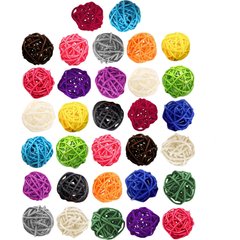
- Rattan balls: Their woven design makes it easy for lovebirds to pick up and carry, and many birds enjoy chewing them up to the point that the ball unravels.
Recommended Product
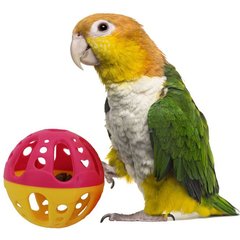
- Plastic rattle balls made with bird-safe materials: These offer both rolling and throwing fun, and the bell inside adds jingle sounds to your lovebird’s playtime.
Recommended Product
Best Climbing and Movement Toys for Lovebirds
Lovebirds crave movement and activity, so include toys with an obstacle course vibe. Toys that get your lovebird moving also help build their balance and coordination.
- Swings and mini boings: Lovebirds love their swings, which they might hop on and off of throughout the day just for fun. Coiled rope perches offer a spring-like bounce and are great for working birds’ feet because they have to grip to stay on.
Recommended Product
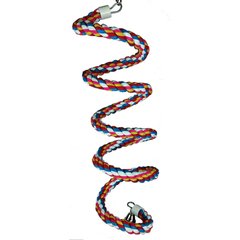
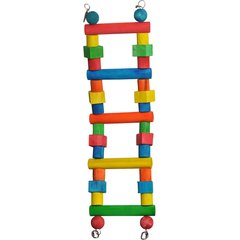
- Ladders and rope perches: Lovebirds are excellent climbers, which makes ladders a go-to movement activity, and rope perches can be transformed into climbing ladders or swings by hanging them. Always check to ensure your bird isn’t eating the rope strings.
Recommended Product
Lovebird Toy Safety Checklist
Toy shopping isn’t only about the fun, it’s also about ensuring every toy element is safe for your bird to touch, shred, chew, or explore without hidden risks.
Bird-safe means non-toxic materials, including non-toxic paints and dyes, and safe metals like stainless steel.
Toys designed for other pets or children might not be appropriate for pet birds, so shop reputable bird toy companies, and stick to the small-medium bird toy size to avoid your lovebird getting pinched or trapped in a toy designed for a much larger bird.
When To Toss Out a Toy
Bird toys aren’t meant to last forever, and many are designed for your bird to utterly destroy and beat up. Signs that your bird’s toy is ready to be tossed and swapped out with a new one include:
- Frayed, stringy, or loose elements
- Cracked or sharp edges
- Rusty, corroded, or too dirty to clean properly
- Missing pieces or loose fasteners
- Toys with foul odor
How Many Toys Should a Lovebird Have?
Start with a toy from each category—destroy toy, puzzle/forage toy, toy to shred, etc.—to offer variety and to zero in on your lovebird’s play style.
Avoid overcrowding the cage with toys, which can restrict your bird’s movement. Your bird should have plenty of room to spread their wings and move about without bumping into toys.
Stocking up on a few of your bird’s favorite toy types allows you to rotate them in and out of the cage so your pet isn’t looking at the same toys day in and day out. A weekly toy rotation will keep your bird happily engaged.
Try placing toys in different areas when you rotate them in, which can turn a previously ignored toy into one your bird interacts with.
When To Talk to an Avian Veterinarian
If your lovebird stops playing or shows less interest in play and interactions, talk to your avian vet to rule out health issues.
Also be aware that a hormonal bird might start regurgitating on a favored toy, rub against it, or chew it obsessively. In these cases, your veterinarian or an avian behaviorist can help guide care, such as removing triggering toys or items and setups that inadvertently encourage hormonal behavior.
FAQ — Best Toys for Lovebirds
What are the best toys for lovebirds who get bored easily?
Puzzle toys and foraging toys can be especially good boredom busters, as the former challenge your lovebird’s problem-solving skills, while the latter creates a fun scavenger hunt for favorite treats. Toys with different textures to explore can also keep your bird happily engaged.
Can lovebirds have mirrors?
Birds might view a mirror as a mate and spend much of their day protecting it—if that’s the case, it’s best to leave mirrors out of the toy rotation.
How often should I replace lovebird toys?
Toys should be replaced once they show heavy wear and tear, or if they no longer hold your bird’s interest. A good routine is to rotate toys in and out of your lovebird’s cage every week or so. Sometimes, just moving a toy to a different location is enough to pique your lovebird’s interest in it.
What size of toys are best for lovebirds?
Small– to medium–sized toys work best for most lovebirds.
What toy materials should I avoid for lovebirds?
Avoid overly hard wood, flimsy plastic pieces, and anything with sharp edges. Also keep any strings and threads on toys short so they don’t pose a tangle risk.
Attributions