Is Your Pet Bird Afraid of Hands?

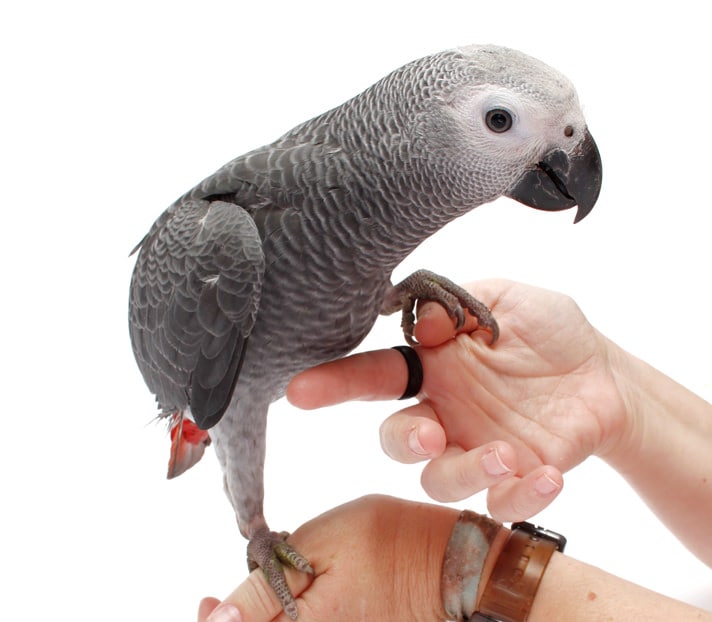
Photo by Chewy
Does your pet bird hide in the corner of their cage, nervously chew, or otherwise act evasively or show anxiety whenever your hands get near them? If you have a bird that’s been mishandled or even abused, they can become reactive when in close proximity to any human hands.
First of all, thank you for giving your anxious little bird a chance. Working with parrots that have been mishandled requires patience and compassion, but your pet can be rehabilitated if allowed to move at their own speed.
Whatever the cause of your pet bird’s fearful behaviors, the treatment is essentially the same. Here are the steps you can take to help end bird hand fear.
Key Takeaways
- Learning to recognize your bird’s body language can help you understand when it feels safe or unsafe.
- Creating trust with your pet bird takes time, and small, gradual steps can help them feel comfortable around your hands.
- Build positive associations with hands by offering favorite treats, toys, and praise.
- Not every bird enjoys being touched, and that’s okay—respecting your bird’s boundaries is key to building a trusting bond.
4 Steps To End Bird Hand Fear
Here are four steps to help your sweet feathered friend feel more comfortable around human hands.
1. Assess Your Pet Bird’s Fear
First, assess the parameters of your bird’s fear. Some parrots might be afraid of hands entering their bird cage but not of hands carrying delicious bird treats. At the other end of the spectrum is the pet bird that goes into frenzied terror at the mere sight of human hands—even from across the room.
Where on the spectrum does your pet bird fall? Are they worried about your hands if you scratch your nose while standing four feet away from their cage? If not, what about three feet away? When assessing this, stand or sit with your body turned slightly away from your pet bird, and do not make direct eye contact.
Try this exercise wearing a sweatshirt with the sleeves pulled down over your hands, and see how close you can get to your bird while their body language remains relaxed (eyes interested, feathers soft).
Now that you have identified your bird’s comfort zone, stay outside of that magic circle as much as possible in the beginning of your training with him. Your objective is to get him to relax in your presence. As this happens, you can begin to inch closer as long as their body language remains relaxed.
2. Desensitize Your Pet Bird
The easiest way to get a parrot over a fear of hands is through desensitization. Using this gentle approach, you’ll slowly expose your bird to hands for very short periods during the day, pushing the envelope a tiny bit each time. Hopefully, this will teach your pet bird through incremental steps that hands do not pose a threat and that hands can provide stuff they value—things they can only get when in proximity to these previously scary objects.
Animal trainers have long understood the benefits of desensitization training. To reduce a dog’s fear of thunderstorms, the trainer feeds the dog treats while it listens to a tape recording of thunder. This changes the animal’s perception of thunder from a negative to a positive.
“Oh no, there’s that terrible noise that scares me” becomes, “Oh boy, there’s that noise that means I’m going to get bites of hot dog!” When the positive association overrides the negative, food rewards can be phased out.
Using this same negative to positive concept with your pet bird, your hands should only do positive things around your pet bird. Whenever your hands appear, lovely food treats will also appear. Fascinating toys (if your bird likes toys) should materialize when your hands are nearby.
For now, negative or threatening things like servicing the cage should only be done with hands safely tucked away in sleeves, out of sight.
3. Teach “Step Up” to Your Pet Bird
You can still teach a hand-wary bird to step up. Many parrots don’t mind palm down hands. Rest your palm-down hand on a flat surface and have your bird step onto the back edge of that hand. Hold a treat high over your hand to encourage him. Once the pet bird doesn’t hesitate to step onto the back of a hand, gradually turn the hand into a more normal position as the pet bird continues to use it to reach the reward it seeks. Spread over weeks—or months—this process always works if done with sufficient patience.
Incidentally, I have seen many African greys become wary of hands when people made incorrect assumptions about petting. Many African greys (as well as individuals in other psittacine species) do not care to be “petted,” and do not behave kindly toward the rude humans who force themselves on them. I knew one very gentle African grey that finally resorted to biting to get his well-meaning but oblivious owner to stop forcing herself on him.
4. Respect Your Bird’s Body Language
Perhaps your pet bird’s aversion to hands—no matter what those hands are doing—stems from their past experiences. Some humans assume that they have the right to handle an animal—whether the pet likes it or not. And they insistently proceed to handle that animal!
Like cats, parrots and other pet birds often have opinions about what humans can and cannot do to their bodies. Watch your bird’s body language carefully, and you might find that it is not your hands that are the problem. There may be certain tasks (like cage cleaning) or types of petting or touch that your bird is taking issue with.
Again, you’ll need unyielding patience when working with birds with fear issues. Trust is not easily earned with parrots whose experiences with humans have been less than ideal. Be patient and compassionate, and your pet bird move at their own speed—lavishly rewarding them with enthusiastic praise for each tiny moment of bravery.
Watch him carefully, and you will find he will tell you what he wants from you. Respect your pet’s boundaries, and you’ll earn a lasting relationship with an incredible creature. There is no rush, after all. You have many years to enjoy each other if you take your time now.
FAQs About Bird Hand Fear
Why is my bird afraid of my hands?
Birds may be afraid of human hands due to negative experiences they’ve had in the past. A bird’s natural instinct to be cautious around potential threats may be at play, and can often (but not always) be overcome with proper handling and training.
How can I help my bird feel more comfortable around my hands?
Desensitizing your pet bird to your hands means you’ll need to take things slowly, offer treats and praise, and slowly build positive associations with your hands. Let your bird decide when they’re ready to come closer.
How can I tell if my bird is afraid of my hands?
If your bird backs away, squawks or scream, bites, or simply seems tense when your hands are nearby, they may be feeling scared or uncomfortable. Try approaching them with your hands tucked into your sleeves and watch for any differences in your bird’s body language.
Can I teach a fearful bird how to step up on to my hand?
Yes. With sufficient patience and time, you can teach even a hand-wary pet bird to step up. Begin by offering your pet bird the back of your hand (palm down) and hold a favorite treat high above your hand with your other hand.
In this way, you can slowly begin to rotate your hand to show your pet bird that all parts of your hand are safe.
Attributions