Can Cats Eat Chicken?


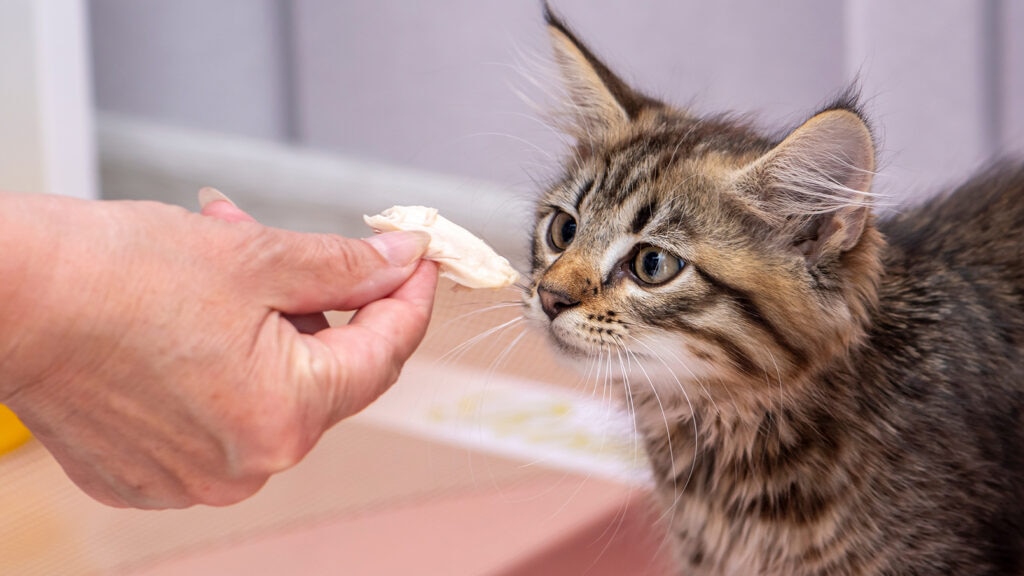
Photo by Anelo/Adobe Stock
If your cat magically appears in the kitchen the second chicken hits the cutting board, there’s a good reason for it. Cats are hardwired to love meat, and chicken tends to rank pretty high on the list of feline favorites. So, can cats eat chicken?
Yes, cats can eat plain, cooked chicken in small amounts. Compared to sugary snacks or carb-heavy table scraps, chicken is a much more natural fit for a cat’s meat-first diet. That said, it should still be treated as a topper or occasional treat—not a replacement for a complete and balanced cat food.
Before introducing any new food into your cat’s diet, always check with your veterinarian.
Key Takeaways
- Yes, cats can eat plain, cooked chicken that hasn’t been breaded or seasoned.
- Chicken is one of the better people-food options for cats because it’s high in protein and low in carbohydrates.
- Avoid bones, skin, and fat. The bones can be a choking hazard, while the skin and fat can cause stomach upset.
Can Cats Have Chicken?
Yes, cats can have plain, fully cooked chicken (with the bones, skin, and excess fat removed). In fact, cooked chicken is one of the best people foods to share with cats because, as obligate carnivores, their bodies are built to thrive on nutrients that come from meat.
Avoid fried chicken, breaded chicken, heavily seasoned chicken, and chicken cooked with onion or garlic. These versions are often higher in fat and sodium, and ingredients like onions and garlic can be toxic to cats.
If you’d rather skip cooking, there are plenty of meaty cat treats that can satisfy your cat’s chicken craving instead, including:
Recommended Products


Is Chicken Good for Cats?
Yes, chicken can be good for cats in small amounts. A few potential benefits include:
- High-quality protein: Chicken is naturally high in protein, which makes it a much better fit for cats than sugary or starchy table foods. Protein supports your cat’s muscles, skin, and overall health, which is why it shows up in so many cat foods and treats.
- Important nutrients: Chicken contains nutrients like B vitamins, phosphorus, and selenium that help support your cat’s energy levels, bones, and immune system.
- Gentle on the stomach: Plain, cooked chicken is fairly gentle on a cat’s stomach, which is one reason veterinarians often recommend it as part of a temporary bland diet for digestive upset.
Is Chicken Bad for Cats?
But chicken can also be bad for cats if it’s prepared the wrong way or you give your cat too much.
A few things to watch out for:
- Bones: Chicken bones can become a choking hazard or splinter into sharp pieces that can injure your cat’s mouth, throat, or stomach.
- Skin and fat: Rich, fatty parts can be harder to digest and may be a poor fit for cats with pancreatitis.
- Seasonings: Garlic and onions are toxic to cats, while salty sauces and spice blends can upset their stomach or contain other ingredients that aren’t safe for them to eat.
- Fried or breaded chicken: Fried chicken is greasy and much higher in fat than plain chicken. Eating it can lead to vomiting, diarrhea, or stomach upset.
How Much Chicken Can My Cat Eat?
While it does offer some benefits, chicken should still be considered a treat. And all treats combined should make up no more than 10% of your cat’s total daily diet. The rest should come from a complete and balanced cat food.
For most healthy adult cats, a tablespoon or two of plain, cooked chicken per day is plenty.
If your cat is on a veterinary diet or has a history of digestive issues, check with your vet before adding chicken to their diet regularly.
How To Safely Feed Chicken to Your Cat
If you do decide to share some chicken with your cat, a little prep can go a long way in ensuring it’s safe. Follow these steps:
- Use plain, fully cooked chicken only.
- Remove all bones, skin, and excess fat.
- Skip salt, sauces, breading, and seasonings.
- Cut the meat into small, bite-size pieces.
- Keep portions small.
My Cat Ate Too Much Chicken—What Do I Do?
If your cat ate too much chicken, try to stay calm. Overindulging on plain chicken may cause stomach discomfort, but it usually isn’t an emergency. Your cat might show signs of an upset tummy like:
- Vomiting
- Diarrhea
- Low appetite
- Belly discomfort
Typically, these resolve on their own in less than 24 hours, but you can withhold food for a few hours to let your kitty’s stomach settle. Call your veterinarian if:
- Your cat ate chicken bones.
- The chicken was fried, heavily seasoned, or cooked with onion or garlic.
- Your cat ate a large amount of skin or fat.
- Your cat keeps vomiting after 24 hours.
If your cat got into heavily seasoned chicken and you can’t reach your veterinarian right away, you can also call Pet Poison Helpline (855-764-7661). They can help you decide if it warrants a visit to the emergency vet.
FAQs About Chicken for Cats
Can cats eat cooked chicken?
Yes, cats can eat a small amount of cooked chicken as long as it’s plain and served without bones or seasonings.
Is chicken good for cats?
Chicken can be good for cats because it’s high in protein and gentle on their stomach. You should still think of it as a treat though, and it shouldn’t replace a properly formulated cat food.
Can cats eat chicken breast?
Yes, cats can eat plain chicken breast. It’s one of the leaner and simpler cuts you can share, which makes it a popular choice for cats.
Can kittens eat chicken?
Chicken may sound wholesome, but it’s better to save treats like this until your kitten is around 1 year old. Until then, kittens should get their nutrition from complete kitten food.
Attributions
This article was created with assistance from AI tools. The content has been reviewed for accuracy and edited by a human.