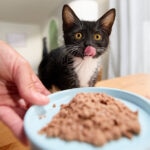
Kitten Food Guide: What To Feed Kittens at Every Age



Photo by Nattakorn Maneerat/iStock
We all know that good nutrition is vital to our cats’ health and wellbeing throughout their lives, but determining what to feed kittens is especially important.
Growing from a 4-ounce newborn kitten to a full-grown adult takes energy, proteins, fats, vitamins, minerals, and more—all in just the right amounts and proportions to avoid potentially dangerous nutritional deficiencies and excesses.
Read on to learn how and what to feed kittens so they can get the nutrients they need to grow into happy and healthy adult cats.
Key Takeaways
- Newborn kittens should nurse from their mother whenever possible. Orphaned or rejected kittens need bottle-feeding with a kitten-specific milk replacer.
- Kittens begin weaning around 4 weeks of age and should transition to a high-quality wet or softened dry kitten food.
- Kitten food should be higher in protein, calories, and essential nutrients like DHA, calcium, and taurine to support growth.
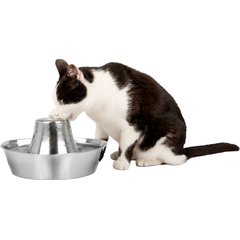
- Wet food is often preferred due to its hydration and protein benefits, but dry food can be included for convenience if kittens drink enough water.
- Feed kittens multiple small meals a day and monitor their weight to avoid over- or underfeeding.
- Most kittens can switch to adult cat food by 10 months of age, though timing may vary based on breed and growth rate.
What Do Newborn Kittens Eat?
0–4 Weeks of Age
The best food for kittens from birth up to around 3 or 4 weeks of age is their mother’s milk. You simply can’t beat nature! This is especially true during the first day of life.
The milk that mothers initially produce is called colostrum. It is extremely nutrient dense and even contains antibodies (disease fighting proteins) that help protect kittens against infectious diseases. After kittens are 1 or at most 2 days old, they can no longer absorb antibodies through their intestinal tract.
Thankfully, most queens (the official—and perfect—name for unspayed female cats) are excellent mothers and will provide their newborn kittens with all the care they need. The best way to check that kittens are getting adequate nutrition during this time is to weigh them daily.
In general, kittens should gain approximately ½ to ¾ of an ounce (15-20 grams) each day. Momma cats should have 24/7 access to fresh water and cat food labeled for growth and reproduction for all life stages so they can produce enough milk for their litter.
When Bottle Feeding Kittens Becomes Necessary
In some cases, kittens need to be bottle-fed—particularly orphaned or rejected kittens under 4 weeks of age who don’t have access to their mother. You may also supplement feedings in very large litters or with underweight kittens.
If you find yourself in this situation, it’s critical to use a milk replacer specifically formulated for kittens—not cow’s milk or formula for other species.
Recommended Products
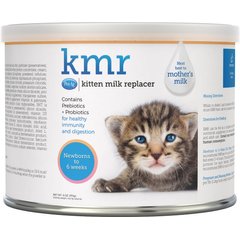
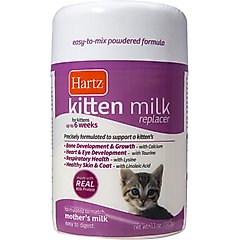
Newborn kittens are delicate, and it’s essential to bottle-feed them the right way. Work with your veterinarian to learn the process.
4–6 Weeks of Age: Weaning Begins
Weaning is the gradual transition from a diet of only mother’s milk or an appropriate milk replacer to solid foods. For kittens, this generally begins around 3 to 4 weeks of age.
Start by offering a gruel made from high-quality canned kitten food mixed with warm water several times a day.
Recommended Products
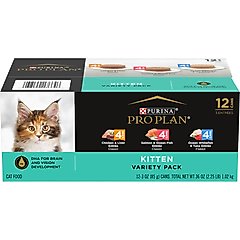
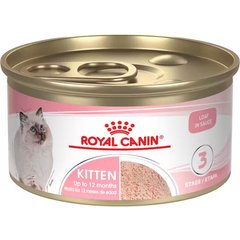
Also put out a small bowl of water.
Recommended Products
For large litters, set up several feeding stations to ensure that everyone has access to what they need.
Bottle-fed kittens will let you know that they are ready to try solid food when they start chewing on the nipples while they nurse. Initially, continue to offer a bottle every 6 to 8 hours while food is freely available, but once the kittens are eating canned food well and drinking water from a bowl, you can stop the bottle feedings.
By 5 to 6 weeks of age, kittens should be able to eat canned food without added water because their baby teeth are more fully erupted.
8–10 Weeks
Mom cats usually start to drastically limit their kitten’s access to milk at around 6 weeks of age. When they are 8 to 10 weeks old, most kittens are fully weaned and eating only solid food and drinking water.
Bottle-fed kittens can be transitioned a little quicker—full weaning by 6-8 weeks is reasonable.
So, what should you feed your kitten toward the end of weaning? Canned kitten food is still the best option—but if you want to switch to or add dry kitten food, start by soaking it in some warm water. Food and water should always be available to young kittens to fuel their rapid growth and development.
Whenever possible, kittens should remain with their mother and littermates until they are at least 8 weeks old. These first two months are vital from both a nutritional and a behavioral standpoint.
What To Feed Kittens
10+ Weeks of Age: A Kitten’s Diet After Weaning
Most kittens need to continue eating foods designed specifically for growth until they are around 10 months of age.
Only feed your kitten commercial diets that meet (ideally exceed) the standards put forward by the Association of American Feed Control Officials (AAFCO). Look for a statement on the product’s label that says something along the lines of:
- Kitten Food A is formulated to meet the nutritional levels established by the AAFCO Cat Food Nutrient Profiles for growth and reproduction.
- Animal feeding tests using AAFCO procedures substantiate that Kitten Food B provides complete and balanced nutrition for growth and reproduction.
If you are interested in feeding a home-prepared diet, only do so with input from a veterinary nutritionist. Nutritional imbalances can be especially catastrophic when they occur while a kitten is still growing and developing. Most recipes that are available online or in books have been found to provide inappropriate nutrient levels.
The Best Food for Kittens
High-quality kitten food differs from adult cat food in several important ways:
- Higher protein content: Kittens need more protein than adult cats to support rapid growth and muscle development.
- Increased calories: Their fast metabolism and active lifestyle require more energy-dense food.
- Added DHA (docosahexaenoic acid): An omega-3 fatty acid important for brain and vision development.
- Higher levels of calcium and phosphorus: Supports healthy bone and teeth growth.
- Extra vitamins and minerals: Including B vitamins and vitamins A, D, and E to fuel their development and support immune function.
- Taurine: An essential amino acid for heart and eye health in cats.
- Small kibble size or soft texture: Easier for kittens’ small mouths and developing teeth to manage.
These features help ensure kittens are getting everything they need to grow into healthy, strong adult cats.
The best cat foods for kittens have meat/fish and meat/fish meals at the top of their ingredient lists. Plant-based sources of protein, like peas or soy, and carbohydrates, like corn, rice or potatoes, should only be included in kitten foods in small amounts, if at all.
A good kitten food will provide all the nutrients that a healthy kitten requires. Dietary supplements are not necessary and can actually be harmful if they lead to nutrient excesses or imbalances.
Wet Food vs. Dry Food for Kittens: What’s Better?
Recommended Products
How Much To Feed a Kitten
Once you make the switch from free-feeding to meal-feeding, you need to have a general idea of how much food to feed a kitten each day.
Kitten feeding guides and calorie counts are printed on kitten food labels. Keep in mind that kittens are all individuals, and their caloric needs can vary wildly.
For example, a very active and rapidly growing large breed kitten will need more food than will an older, relatively inactive small breed kitten even if they both weigh 4 pounds.
Kittens should remain slim, but it can be hard to recognize what normal looks like. All but the youngest of kittens should have an observable waist when looked at from above, and it should be easy to feel their ribs with gentle pressure.
Use a body condition scoring system to monitor your cat’s weight and adjust the amount of food you offer accordingly.
How Often To Feed a Kitten
The most common nutritional disease of cats is obesity. In most cases, a kitten’s growth rate and need for extra calories declines around 6 months of age, which makes overfeeding more likely.
Cats who are spayed or neutered also have reduced caloric needs in comparison to intact individuals.
For these reasons, it’s generally a good idea to stop leaving food out all the time and switch to a kitten feeding schedule with measured meals when kittens are 4 to 6 months old.
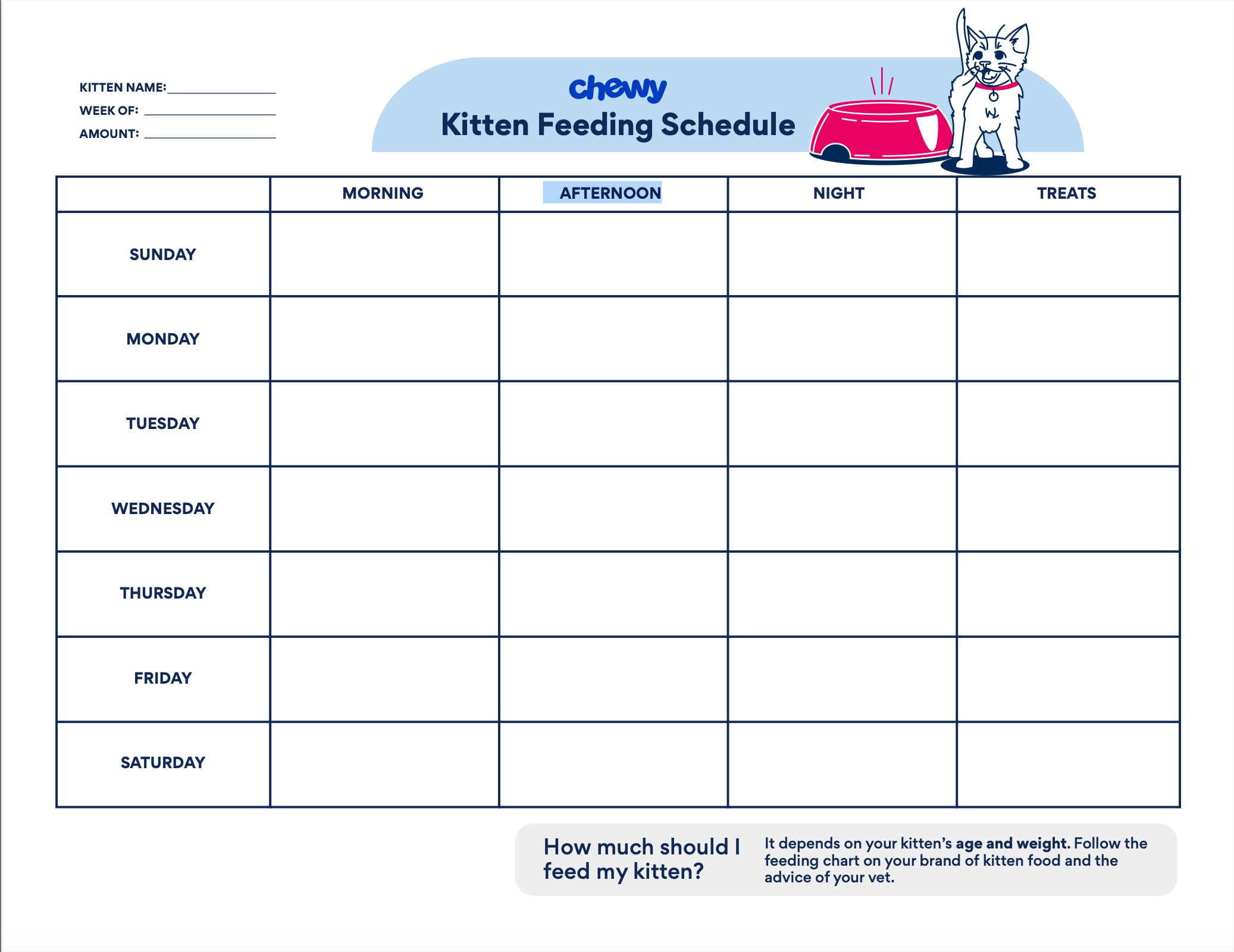
Photo by Chewy
Cats are designed to eat multiple small meals a day. A 4- to 6-month-old kitten’s food should be divided up into at least three meals a day. Older kittens and cats can handle being fed roughly every 12 hours, but more frequent, smaller meals are even better.
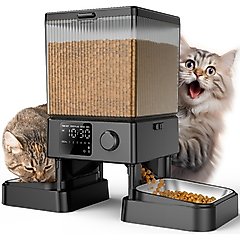
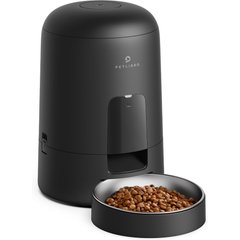
Try placing small meals in several locations around your house to encourage exercise or use an automatic timed feeder when you will be gone for extended periods of time.
Recommended Products
When To Switch From Kitten Food to Adult Cat Food
Kittens should be switched to an adult cat food when they have reached their full adult height, even if they still have some filling out to do. For most cats, this occurs around 10 months of age.
Especially large-framed cats tend to stop growing later and may need to eat kitten food until they are a bit older.
Petite cats or kittens who are gaining too much weight on kitten food may need to make the switch a little earlier.
Despite all the effort that goes into determining what to feed kittens, know that your hard work will be well worth it. After all, good nutrition is the cornerstone of good health. If at any time you have questions or concerns, talk to your veterinarian.
FAQs About Kitten Food
What nutrients do kittens need in their food?
Kittens need a complete and balanced diet formulated for growth, with higher calorie and protein density than adult-maintenance food. Their diet should also provide adequate taurine, DHA, and appropriately balanced calcium and phosphorus to support healthy brain, eye, muscle, and bone development.
Choose food labeled for kitten growth or all life stages. Do not add supplements unless directed by your veterinarian, since excess nutrients can also be harmful.