Russell Terrier
Updated December 15, 2025

Russell Terrier
Updated December 15, 2025
The Russell Terrier is a high-energy, brainy breed that works hard and plays harder. Their love for action is rivaled only by their love for family, but don’t expect them to slow down for you. You’ll just have to pick up the pace.
Quick-Witted, Vigilant, Eager
9–15 pounds
10–12 inches
12–14 years
White with Tan, Brown, and/or Black Markings
The Russell Terrier is similar to the more widely known Parson Russell Terrier, aka the Jack Russell Terrier. And while they may be shorter in length than the average baguette, the breed’s energy stretches for days.
After all, these sprightly dogs were designed for fox hunting, a task where stamina, smarts, and even their compact size are key to their success. So regardless of whether they make their home on a farm or in a flat, Russell Terriers need a job—which can include anything from hunting and hiking to a game of fetch in the backyard.
Russell Terrier Characteristics
Russell Terrier Appearance
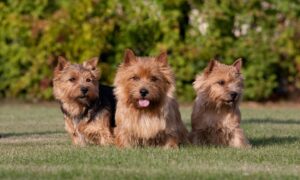
Russell Terriers are small but mighty in both build and ability. The breed standard describes them as “strong, active, lithe … with a flexible body of moderate length and rectangular profile.”
Their weatherproof coat is predominantly white with tan, brown, and/or black markings and comes in three different types: smooth, rough, and broken (somewhere between smooth and rough).

- Ears
The Russell Terrier’s small, triangular ears fold downward so the points are even with the corners of their eyes. The fold is either in line with the top of the head or just above it.
- Eyes
Russell Terrier eyes are dark, alert, and shaped like almonds.
- Nose
They have a black, fully pigmented nose.
- Coat Length
The Russell Terrier’s coat varies from short to medium in length and comes in one of three textures: smooth, rough, or broken.
- Coat Color
Russell Terriers are mostly white and have black, brown, and/or tan markings.
- Tail
Russell Terriers carry their high-set tail straight or slightly curved forward when on the move or when alert. It’s common to see their tail docked short, though this is a controversial practice that veterinary organizations, including the American Veterinary Medical Association, oppose.
Russell Terrier Temperament
The Russell Terrier’s working dog DNA is key to understanding their temperament. Designed for long days chasing down foxes and making quick decisions, the breed is vigilant and feisty, with intellect and energy in ample supply.
As the breed standard notes, the Russell Terrier’s “intensity for life is one of their most endearing traits,” and you’ll soon notice that this intensity isn’t limited to work. Russell Terriers are eager, tireless playmates and devoted companions.
One trait that is less endearing, however, is their propensity for barking. While prized during hunting, their vocal talents are less welcome in the home. Early socialization and consistent training can help nip the noise.
Russell Terriers can make fast friends with humans and dogs alike. But because of their hunting background and prey drive, caution is needed when introducing them to smaller animals like cats. And they may be a bit too lively to be a playmate for very young children.
Russell Terriers are naturally intelligent dogs and keen to learn. But with a mind and body that’s always on the move, it can be difficult to keep Russell Terriers focused on training.
Related Breeds






How to Care for a Russell Terrier
A small dog like the Russell Terrier can seem easier to care for, and in many ways that’s true. They need less space and less food, and have less fur to maintain. They’re also easy to tote around when needed.
However, what Russell Terriers lack in size, they more than make up for in spirit, which could cause frustration for first-time pet parents expecting a laid-back lap dog. The Russell’s need for attention, daily exercise, and lifelong training are best met by experienced and active dog parents.
Grooming
Training
Diet
Exercise
Environment
Russell Terrier Health
The average Russell Terrier lifespan is 12–14 years. They are a generally healthy breed but, like all dogs, they are prone to develop certain health conditions. It’s important to partner with an ethical breeder who prioritizes health and genetic testing.
Common health considerations include:
- Patellar luxation: Patellar luxation occurs when the patella (kneecap) moves outside of its normal groove within the femur. Dogs with luxating patella may have to hop or limp when walking, and you may hear a popping or cracking sound coming from the knee joint. The condition doesn’t always require treatment, but severe cases may need surgery.
- Congenital deafness: The Russell Terrier’s characteristic predominantly white coat puts the breed at a higher risk of carrying genes that cause deafness in one or both ears. While the deafness can’t be reversed, dogs don’t have to be limited by their hearing loss. With some adjustments and training, they can have an excellent quality and quantity of life.
- Primary lens luxation: Dogs with a primary lens luxation (PLL) have an eye lens that has moved out of its normal position. One or both eyes may be affected. This can result in red, teary, cloudy, painful eyes and cause inflammation, glaucoma, and, if left untreated, blindness. When caught early, PLL can be managed and even corrected with medications and surgery.
- Periodontal disease: Small dogs are particularly predisposed to developing periodontal disease (also called dental disease), a progressive condition in which bacteria build up in the mouth to the point that they damage teeth, gums, jaw bones, and other tissues. The best way to prevent periodontal disease is to brush your dog’s teeth every day and to follow your veterinarian’s recommendations regarding professional cleanings.
Russell Terrier History
The Russell Terrier dog breed owes its creation to a 19th-century English reverend named John Russell.
Two different lines from his fox-working dogs were later developed into two distinct foxhunting breeds: the Russell Terrier and the Jack Russell (or Parson Russell) Terrier. For Russell Terriers, this development took place in Australia.
The Russell Terrier joined the American Kennel Club’s (AKC) Foundation Stock Service in 2005. And in 2012, the Russell Terrier became the 175th AKC-recognized breed (Terrier Group).
A Russell Terrier puppy can cost anywhere from $500 to $1,500. You can also look for a dog to adopt at breed-specific rescues, like Russell Rescue.