L-Theanine for Dogs: What You Need to Know



Photo by courtneyk/iStock/Getty Images Plus
L-theanine is an amino acid found in tea leaves. It’s been studied for its ability to promote calm and reduce anxiety, especially for stressful situations like storms, noisy events, car rides, or travel. Unlike stronger sedatives, L-theanine is not linked to drowsiness, but may be able to “take the edge off” fear reactions. As with all supplements, it’s best to consult your vet before giving your dog L-theanine.
Key Takeaways
- L-theanine is a tea-derived amino acid that interacts with the central nervous system to help regulate mood and behavior.
- It is sometimes recommended for situational stressors, like travel, storms, and loud noises.
- It’s generally well tolerated in dogs, but may cause mild stomach upset.
- Use a L-theanine product formulated for dogs and consult your veterinarian before starting any new supplement, especially if your dog takes medication or other supplements.
Benefits of L-Theanine in Dogs
Pet parents mainly reach for L-theanine to support situational stress. Many dogs become uneasy during thunderstorms, fireworks, car rides, moving, visits to the vet, or other big changes in routine.
L-theanine isn’t usually a stand-alone supplement for dogs, but can be included in calming products available as chews or liquids. Some formulas pair it with other ingredients. Although the label may look simple, review the entire ingredient list and confirm with your veterinarian that the product is safe for your dog.
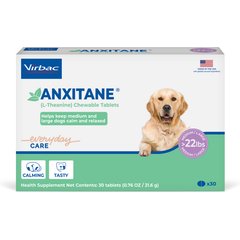
Research shows that l-theanine may influence brain activity linked to relaxation. An open-label study examining dogs between the ages of 1 and 8 years of age found that giving dogs Anxitane, a supplement containing l-theanine, before a thunder storm showed less anxiety than dogs in a control group. The dogs given L-theanine had less panting, drooling, following people around, and hiding. Overall, 94% of pet parents in the study reported satisfaction with the treatment.
L-theanine has shown similar benefits in humans and cats. Based on this, your vet may suggest trying l-theanine as a support during stressful events.
Recommended Product
Potential Side Effects of L-Theanine in Dogs
L-theanine has been well-tolerated in available human studies, and the dog study reported no side effects.
Any time you start a new supplement, however, watch for changes such as sleepiness, stumbling, vomiting, diarrhea, not eating, or unusual behavior. If you see these signs, check in with your veterinarian instead of assuming it’s harmless.
How to Give Your Dog L-Theanine
Use a dog-specific product whenever possible, and ask your vet to review the label to make sure every ingredient is safe for your dog. To avoid possible interactions, be sure to tell your vet about any other supplements and medications your dog takes.
Dog-friendly L-theanine products come in different forms, including chews and liquids, that make administration easy. However, the ingredients can vary from one product to the next, so it’s smart to pick one product and check with your vet to see if they recommend it.
If you’re tempted to use a supplement meant for humans, pause and read the label twice. Human products may include ingredients, such as xylitol, that are toxic to dogs.
What to Do If Your Dog Takes Too Much L-Theanine
If your dog gets into a supplement bottle or you accidentally gave them too much L-theanine, call your veterinarian, an emergency hospital, or the Pet Poison Helpline (855-764-7661) right away. Be ready to share the product name and ingredients, how much your dog may have eaten, their weight, and the time it happened.
Don’t wait for symptoms to appear or worsen, and don’t assume the product is harmless. If your dog is vomiting, very sleepy, weak, trembling, or acting strangely, they need help immediately.
FAQs about L-Theanine for Dogs
Does L-theanine make dogs sleepy?
Since L-theanine can have a calming effect, a dog may seem a little more subdued after taking it. Watch your dog’s response and check with your vet if the effect seems too strong.
How long does L-theanine take to work in dogs?
Since research in dogs is lacking, there isn’t a solid timeline that fits every pet.
Can I give L-theanine with other calming supplements?
Only if your veterinarian says it makes sense. Some products combine several ingredients, so never combine products without first clearing it with your vet.
Is L-theanine a stand-alone answer for stressful situations in dogs?
No. It may be one part of a broader plan, but it shouldn’t be relied on to calm dogs in stressful situations alone.
Attributions
This article was created with assistance from AI tools. The content has been reviewed for accuracy and edited by a human.
References
- Stressful Situations For Accessed April 14, 2026. https://vetmed.tamu.edu/news/pet-talk/stressful-situations-for-pets/
- FDAs Regulation Pet Food. Accessed April 14, 2026. https://www.fda.gov/animal-veterinary/animal-health-literacy/fdas-regulation-pet-food
- Definition Of Food Drugs. Accessed April 14, 2026. https://www.aafco.org/resources/startups/definition-of-food-drugs/
- When To Call A Accessed April 14, 2026. https://vetmed.tamu.edu/news/pet-talk/when-to-call-a-veterinarian/
- Recognizing Pet Emergency. Accessed April 14, 2026. https://vetmed.tamu.edu/news/pet-talk/recognizing-pet-emergency/
- Toxic Household Items. Accessed April 14, 2026. https://vetmed.tamu.edu/news/pet-talk/toxic-household-items/