How To Get a Puppy To Sleep Through the Night

Just when it seems like they’ve settled down for the night, your puppy is awake and ready for attention. Helping a puppy sleep through the night takes patience, a consistent bedtime routine, well-timed potty breaks, and realistic expectations for their age. If you’re struggling, you’re not alone—sleep issues often go hand in hand with common mistakes new puppy parents make.
This guide covers puppy sleep training, how to create a comfortable sleeping space, and tips to help your puppy (and you) get more rest.
Key Takeaways
- Most puppies consistently sleep through the night by 3–4 months of age.
- Young puppies require about 18–20 hours of sleep each day.
- Regular exercise, bedtime, feeding, and potty routines are key to your new puppy sleeping through the night.
- The right dog bed, dog crate, and bedtime chew toy can help your puppy get cozy and restful sleep.
- Puppies may not sleep well if they're teething, anxious, ill, overtired, or otherwise uncomfortable.
Is My Puppy Old Enough To Sleep Through the Night?
Most puppies consistently sleep through the night by three or four months of age. But until they reach this age, you may experience times when your puppy needs to use the bathroom in the middle of the night. This is due to their small bladder, which has a shorter “hold time” the younger they are.
So, how long can you expect your dog to hold it? A good rule is to go by their age in months: The number of months old they are is approximately how many hours they can be expected to hold their bladder. So, for example, if your puppy is two months old, they’ll likely need to go outside to do their business every two hours—and yes, that means you’ll have to wake up in the middle of the night and take them out.
Of course, this stage doesn’t last forever. Over time and with more practice, they’ll be able to hold their bladder for longer, especially when they’re asleep and not active, notes Dr. Michelle Lugones, DVM, veterinarian for Best Friends Animal Society.
How can you tell if your puppy is just begging for attention? To tell that, you’ll have to learn their cues. Most puppies whine or cry if they need to go outside, with or without pacing and fidgeting in their dog crate.
Recommended Products
“Emergency” situations, such as needing to pee really badly or impending diarrhea, may cause your puppy to bark urgently. That said, each dog has different ways of communicating what they need, so you’ll want to learn how to read your puppy’s behavior.
How Much Sleep Does a Puppy Need?
Sleep is vital for all of us, puppies and humans alike—but it’s especially crucial for a growing puppy who needs the extra energy for developing important parts of their bodies, like central nervous and immune systems. Young puppies require about 18 to 20 hours of sleep each day. Adult dogs, on the other hand, require about 12 to 14 hours of sleep. Most pups easily get that much sleep, but pups who don’t can suffer health effects and behavioral problems. Find out more.
How To Help Your Puppy Sleep Through the Night
1. Help Them Get Plenty of Exercise Throughout the Day
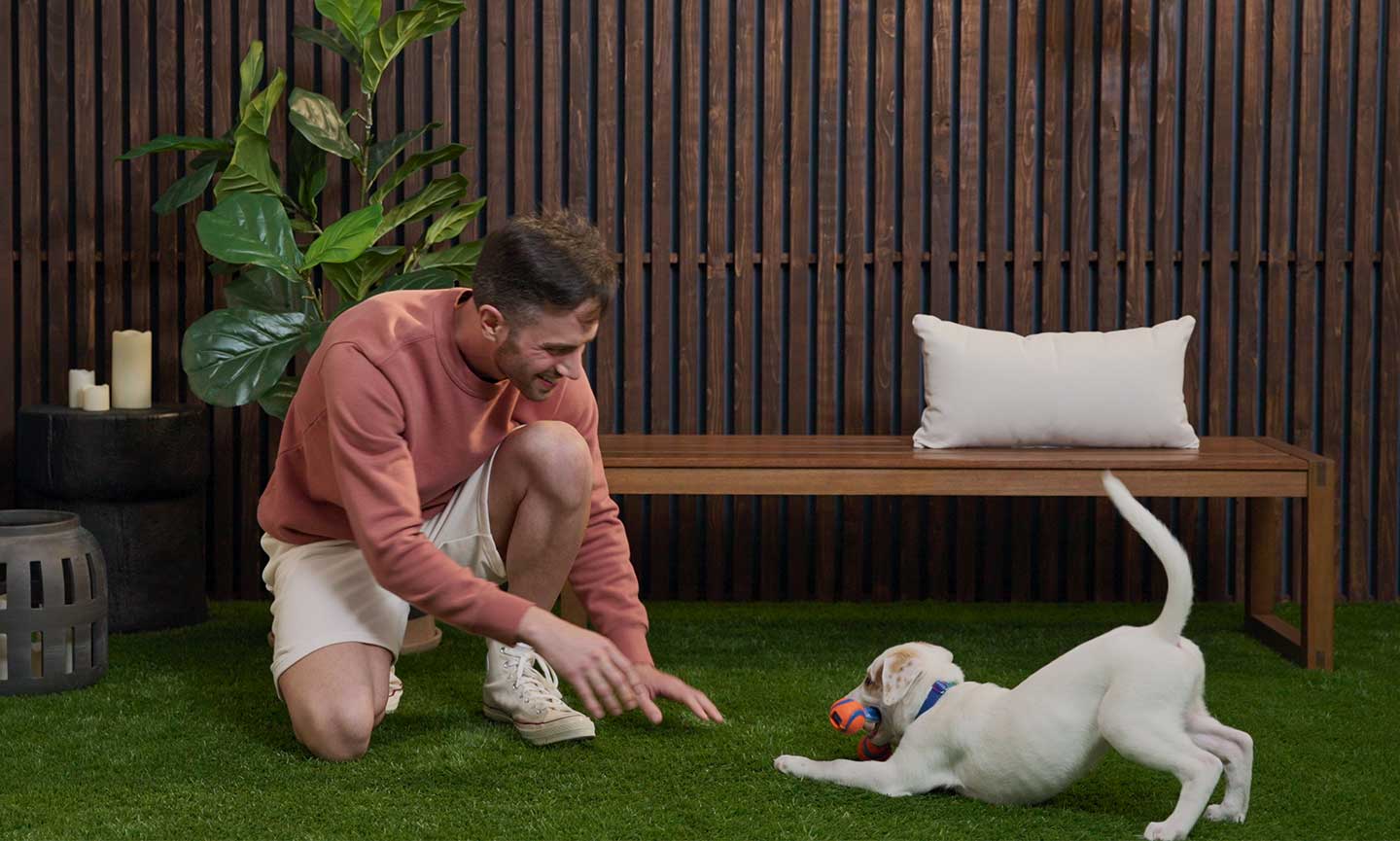
As they say, “A tired puppy is a good puppy!” Give your puppy some physical and mental stimulation by giving them ample opportunities for playtime and snuggles. Also make sure they have access to age-appropriate activities and toys, like the KONG Puppy Chew Toy, during the day.
Recommended Product

Toys and activities help you bond with your puppy and use up their energy. As your puppy grows up, they will need more exercise.
2. Keep Bedtime Routines Calm
Try to avoid intense games of tug or other overly stimulating activities that get your puppy amped up within the last half hour or so before bedtime. Also, note that many dogs benefit from consistent sleep schedules and routines and will naturally fall into the rhythm of falling asleep with you over time if you keep things consistent.
3. Make Sure They Have Peed and Pooped
As part of your shared bedtime routine, schedule their last potty break as late as possible in the evening. An “empty” puppy will sleep much longer than one who needs to go.
Sometimes when puppies go outside, they get distracted by the sights and sounds of the world and forget that they are out there for a reason. As a broader part of potty training your dog, Dr. Lugones says it’s good practice to use positive reinforcement. Whenever your puppy pees or poops outside, immediately reward them with praise and a small, tasty dog treat so they learn this is a desired and rewarded behavior.
Recommended Products


4. Make Their Crate Comfortable
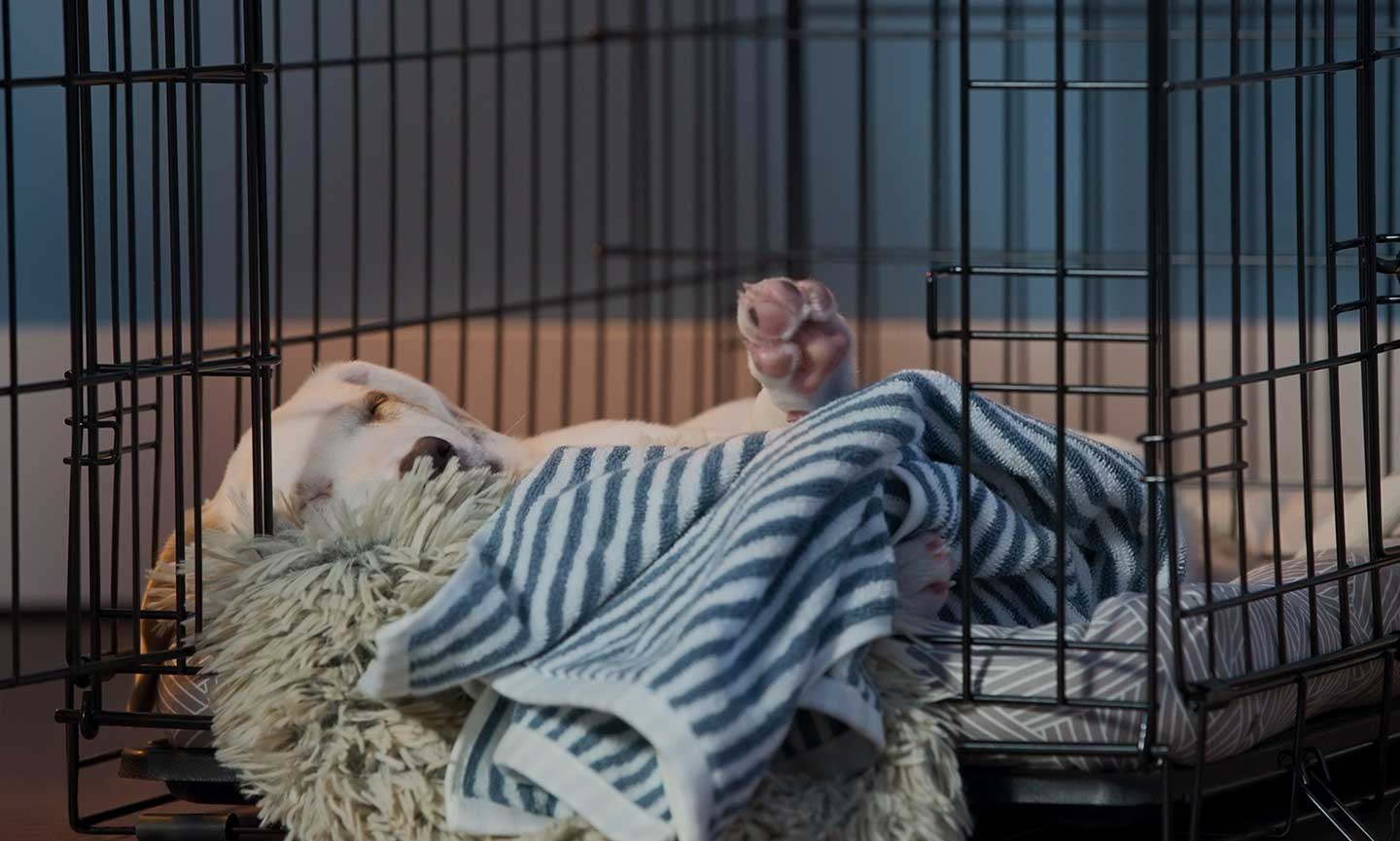
Many dogs enjoy soft blankets, such as the Frisco Sherpa Dog & Cat Blanket, to curl up with at night in their dog crate.
Recommended Product

Consider the temperature and time of year when choosing the bedding that will be most comfortable for your pup. No one, not even your cute pup, wants flannel bedding when it’s 90 degrees out! Keeping items they love in the kennel can also help them feel more at peace as they wind down for the night.
5. Give Them Something To Chew On
Chewing is a calming activity that all dogs enjoy, and even more so when your puppy is teething! Some people give their dogs a biscuit or a dental chew at bedtime. Others offer a bone or chew toy.
Recommended Products




Having a dog toy or bone in the crate will also help to keep your puppy quietly entertained if they wake up before you do. Just make sure that your puppy cannot break any bone or toy into small pieces that could be ingested or cause choking.
6. Keep Your Puppy’s Crate Close By
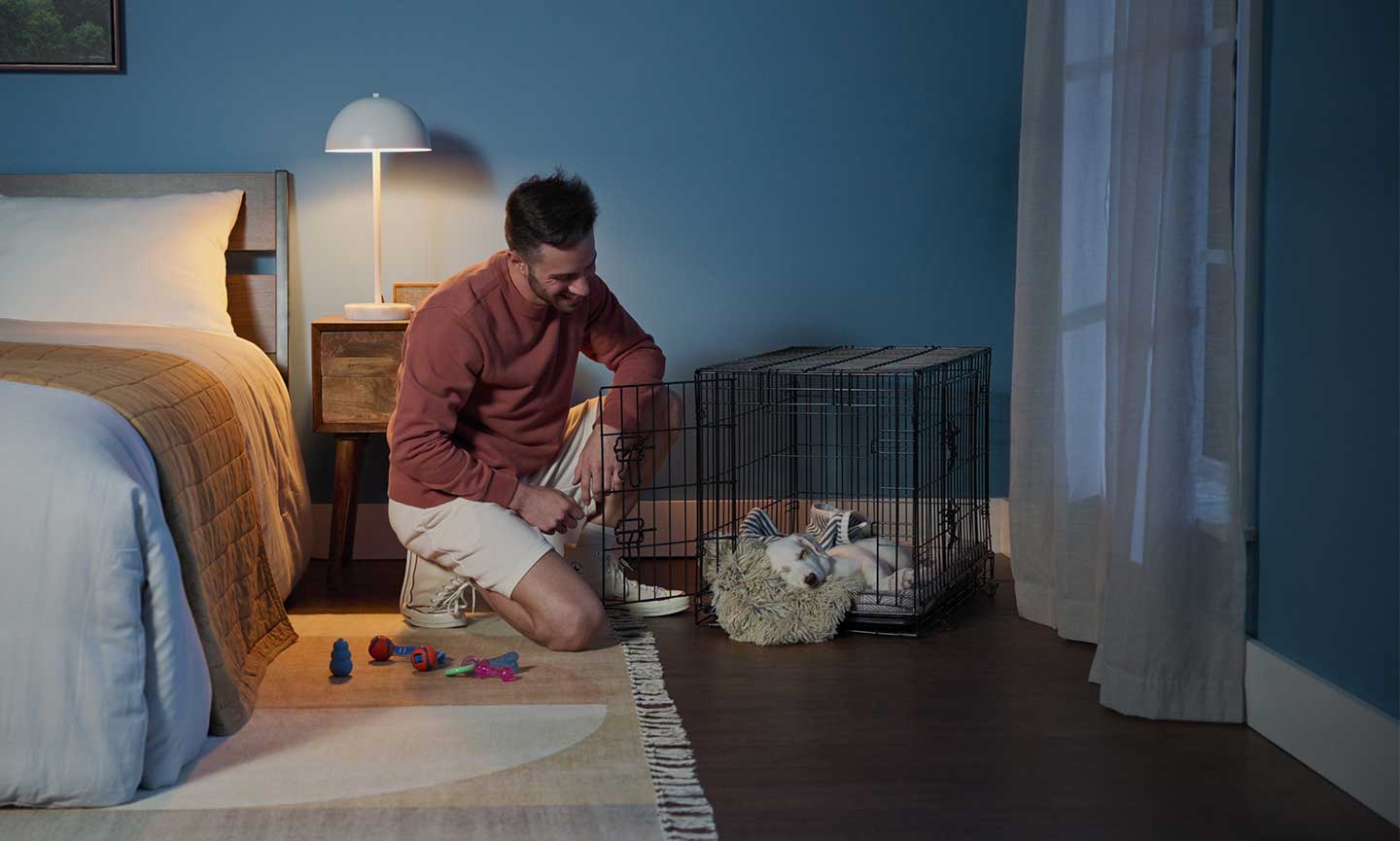
In those early stages of puppy training, you may find it’s helpful to place their dog crate close to your bed. That way, they aren’t alone and you’ll be more apt to hear them if they do need to go potty in the middle of the night. If they do so, set them up for success by taking them outside right away. And when they go, reward them.
Over time, you may find that a kennel isn’t necessary overnight and that your dog can be allowed more freedom. In this case, upgrade your pup to a cozy dog bed and congratulate yourself on making it through this phase of pet parenthood.
Recommended Product
7 Reasons Why Your Puppy Is Still Not Sleeping Through the Night
If you and your pup are dealing with sleepless nights beyond that three to four months of age mark, there could be an underlying issue. Here are some common reasons to explore:
- They’re teething: Puppies that are teething may be uncomfortable because of their teeth. If your new pup is teething, offer some soft toys or treats to chew on. Ice cubes or frozen treats are another popular option to help soothe sore gums. Be patient and know that this stage will pass!
- They’re uncomfortable: Just like you prefer a cozy bed, your dog would like to be as comfortable as possible while sleeping. Place their favorite toys in the crate along with clean, soft bedding they like. If you notice they struggle to settle down and are constantly fidgeting or scratching, check if they or their bedding has fleas or another biting insect. Even if you don’t find any bugs, wash their crate and bedding in hot, soapy water, just to be sure there aren’t any unwanted guests.
- They’re too tired: Another possibility, particularly with very young puppies, is that your puppy is overtired. You know how tired toddlers get cranky and throw a tantrum, then fall fast asleep? Your puppy can do that, too. This will typically happen after a very big day where a lot of new or exciting things happened. Be patient until they settle down.
- They don’t like their crate: Your puppy will need time to acclimate to their crate. Crate training helps them adapt to spending time and sleeping in this space, so take your time to train your pup. As a bonus, crating at night is an excellent way to speed up house training because your puppy will naturally avoid soiling their space, and it prevents messes or damage throughout your house. Crating is also a valuable life skill that your dog will probably need at some point in their life.
- Separation anxiety: Some puppies get anxious when they’re separated from their parent. You can address this by having them sleep next to your bed until they’re older. Once they are comfortable sleeping in their crate right next to your bed, you can gradually move the crate farther away if desired. Your puppy may enjoy having an old shirt or something else with your pheromones on it to sleep with.
- They have a medical issue: If you notice that your puppy is showing any signs of illness such as vomiting, diarrhea, coughing, sneezing, decreased appetite or energy, or acting uncomfortable or not like themselves, they should be examined by your veterinarian. Even if there are no outward signs but you’re pup isn’t able to sleep through the night, it’s still a good idea to bring your puppy to the vet to make sure there aren’t any underlying issues.
You will know your puppy and their normal behaviors better than anyone else. If they are inexplicably fussy at night, you’ve tried several solutions and things just don’t seem right to you, consult your veterinarian or a dog trainer. Your pup may just be going through a difficult stage, but it can’t hurt to seek help if you are concerned.
What To Expect on Your Puppy’s First Night Home
Like their human counterparts, dogs are most active during the day and naturally prefer to sleep at night. Even if they take frequent naps in the daytime, they usually still fall into a deep, extended sleep after nightfall.
This cycle will likely feel like second nature for your puppy by the time you bring them home. However, like other baby animals, they may experience things such as anxiety of being in a new sleeping environment, and they also may not be able to hold their small bladders very well.
When you bring your puppy home, that first night will probably go one of two ways:
- They will be totally exhausted from the excitement of the day, and fall asleep in their sleeping area or kennel.
- They will have trouble settling in. After all, moving to a new home with strangers for the first time can be a stressful event for any dog, including young and old puppies. This is true even if all introductions go smoothly and you’ve made their new environment as comfy as possible.
The younger your puppy is, the less likely it will be that they are able to sleep all the way through that first night. Dogs don’t like to soil the areas where they sleep, so if your puppy needs a bathroom break during the night, you may hear your puppy cry, whine, or bark. Older puppies can hold their bladders for longer stretches (more on that below).
If you hear your puppy crying, then it’s a good idea to take them outside for a short walk and bathroom break. Then you can bring them back inside and put them back into their kennel.
FAQs About Puppy Sleep Training
My puppy fusses at night. What should I do?
Give your puppy a chew at bedtime to calm them down. If their fussing lasts less than half an hour and you’re sure they don’t need to go potty, wait them out. They may just be overtired.
Don’t let their late-night walk turn into playtime, as that’ll reinforce your puppy’s behavior.
Keep their bedtime walk focused on eliminating, and then bring them back to their crate—rewarding this desired behavior with a treat, if necessary.
How do I know if my puppy actually needs to go outside?
Every puppy has their own potty signals—like pacing, fidgeting, whining or crying. You’ll need to learn to read your puppy’s behavior through trial and error, but until then, play it safe and take them outside.
Your pup may bark urgently if they need to pee very badly or need to poop—especially if previous efforts to wake you haven’t worked.
How can I reinforce good potty habits with my puppy?
When your puppy communicates with you that they need to go out or when they potty on cue, always reward their good behavior with praise and even a small treat, and make sure their late-night leash walks are be all business.
My puppy sleeps during the day, but not at night. What should I do?
Start by exercising them more in the afternoon and early evening to have them tired before bedtime. You may also need to go back through all or part of the crate training process to make it clear to them that crate time is downtime.
My puppy used to sleep through the night, but now is waking me up frequently. What should I do?
If your puppy suddenly needs to go out to pee a lot more often, they may have a bladder infection. This is very easy to check for and treat—your vet will look at a urine sample for signs of infection and, if necessary, your puppy will be put on a course of dog antibiotics.
My puppy fusses a lot at night, but doesn’t need to go outside. What should I do?
Teething can make puppies uncomfortable and restless. Give your pup soft chew toys, frozen treats, or ice cubes to help sore gums.
Sometimes puppies just get overtired from all the new and exciting discoveries in their busy day. Be patient and ignore their fussing until they settle down.
If your puppy won’t settle and is scratching, check them for fleas and wash their bedding and crate, just to be safe.
You’ll get to know your puppy and what’s normal for them, so if something doesn’t seem right, contact your veterinarian.
My puppy won’t sleep in their crate. What should I do?
Revisit crate training to get your puppy comfortable with being and sleeping in their crate. Crating at night is an excellent way to speed up house training, because your puppy will naturally avoid soiling their space, and it prevents messes or damage throughout your house.
Crating is also a valuable life skill that your dog will probably need at some point in their life. The Frisco Fold & Carry double door dog crate comes with a divider panel so you don’t have to keep buying bigger crates as your puppy grows.
My puppy won’t sleep in their bed. What should I do?
Try having your puppy sleep in a crate with good ventilation and light bedding—and try washing your dog’s bed or bed cover as they may be reacting to a smell that they don’t like.
Your puppy may be too hot, or they don’t like to sleep right next to someone. Some dogs prefer their own space to stretch out.
In hot weather, many dogs prefer to sleep on bare tile or linoleum because it is cooler (but only allow this if they’re house broken).
My puppy won’t sleep unless next to me. What should I do?
If they are house-trained and you enjoy cuddling, great! If not, it’s time to establish ground rules.
Practice crate training during the day, making it a fun game so they will think of their crate as a happy place.
Then at night, bring their crate right next to your bed so you can reach down and assure your pup that you are close.
Once your comfortable sleeping in their crate right next to your bed, you can gradually move the crate farther away if desired.
Be patient and consistent—caving in and letting them onto the bed will teach them that whining is a great way to get what they want.
With time and gentle, positive reinforcement—combined with patience, a calm bedtime routine, well-timed potty breaks, and realistic expectations—your sweet pup will learn how to sleep through the night. Stay the course, and enjoy your journey together.
Attributions
Expert input for this story provided by: Katherine Eldredge Basedow, LVT, licensed vet technician; and Michelle Lugones, DVM, veterinarian for Best Friends Animal Society.