Alpaca vs Llama: What’s the Difference?

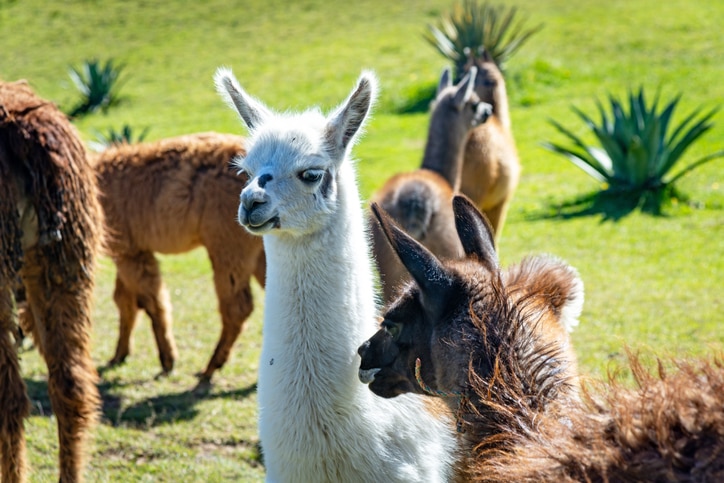
Photo by AlanFalcony/iStock/Getty Images Plus via Getty Images
With their shaggy coats, alert ears, and big, round eyes, alpacas and llamas are both part of the camelid family, just like camels. They’re also adorable.
But before you bring home a new friend, it’s important to learn what the differences are.
Key Takeaways
- A big physical difference is the ears: Alpacas have short, fluffier ears, while llamas tend to have long, banana-like ears.
- Alpacas are no more than 5 feet tall, while llamas can be a whole foot taller.
- Alpacas tend to be more nervous than llamas, who are slightly braver.
- Both animals need to be part of a herd—they need camelid friends and should be kept in same-sex groups to avoid breeding.
What Is an Alpaca?
Here’s what to know about alpacas and their features.
Size and Features
Alpacas are small mammals of the camel family (aka a camelid) with a long neck and short snout, short ears, and a fleece-like coat on a slender body.
They’re usually about 3 feet tall at the shoulder and no more than 5 feet tall at the top of the head. Alpacas have a round body shape and a short, curved tail.
Traditional Uses
Alpacas originated in the Andes Mountains of South America. The alpaca’s coat fibers have long been used for clothing.
Type of Coat
There are two possibilities: The huacaya alpaca has a dense coat of crimped fleece, which is the most common type and gives the animal a fluffy, teddy bear look, says Deborah Logan, who serves on the board of directors for the Southeast Llama Rescue in Trion, Georgia.
The rare suri type has a coat of finer fibers that twist together into long curls like dreadlocks.
Personality
Alpacas generally have a docile personality but they’re cautious of new people and situations. At the same time, they are inquisitive and intelligent, so they’ll learn new tasks easily.
While typically quiet, alpacas do vocalize to communicate with each other, including a soft humming sound or a high-pitched alarm call.
How To Care For Them
The average lifespan of an alpaca is 15–20 years. Since alpacas are social animals, they need to be raised with camelids—either other alpacas or llamas.
Alpacas are grazing animals that require access to a grassy pasture or a supply of hay. You might also supplement an alpaca’s diet with pellets, or mineral or other nutritional supplements.
Recommended Products



Alpacas also need their coat sheared annually.
While the dense coat protects against the elements, an alpaca will sweat underneath the coat in hot weather, which can cause skin issues and heat stress, according to Logan.
What Is a Llama?
Here’s what to know about llamas and their features.
Size and Features
Llamas are the largest type of South American camelid.
They’re usually 3 to 4 feet tall at the shoulder and about 6 feet tall at the top of the head. They have a square body and a double coat of hair.
The most telltale characteristic of a llama is their long ears, which are curved like a banana.
“Some curve in so much that the tips touch to form a heart shape,” Logan says.
Traditional Uses
Native to the Andes Mountains, llamas have long been used as working animals and for their coat fibers.
Type of Coat
Llamas have a double coat that consists of longer, coarse guard hairs that protect a finer, woolly undercoat.
Personality
Llamas are bold and curious. They easily engage with humans and other animals.
They can occasionally be defensive; this might include adopting a tall, aggressive stance, along with charging, kicking, or stomping, if they feel threatened.
Llamas are intelligent and easy to train.
How To Care For Them
Llamas usually live about 25 years and should be part of a herd with other same-sex camelids.
When kept in a pasture, a llama’s diet is typically foraging grass. If grass is in short supply, hay is a good alternative.
Recommended Product

Llamas also need mineral supplements. You can also offer pellets or other nutritional supplements to address specific dietary needs, but consult a large animal veterinarian for advice.
Recommended Product

The llama’s woolly coat should be sheared in the spring; if they have a very heavy coat, they may need to be sheared twice a year.
“Heat stress kills,” says Logan.
Some very short-wooled llamas shed their hair and don’t require routine shearing—however, these animals are rare, and almost all llamas will need regular shearing.
What Are the Similarities Between Alpacas and Llamas?
Since llamas and alpacas are both domesticated South American camelids, it’s not surprising to find that they share similarities.
Personality
Both alpacas and llamas are curious and intelligent. It’s easy to teach them basic tasks like being led or even to sit on command.
However, they aren’t particularly fond of being touched or pet.
Care Requirements
There is no significant difference in their diets. Both species will take advantage of the opportunity to graze but you can also feed them hay and pellets.
But you should keep in mind each animal’s stage of life and consult a vet regarding their diet, says Mary Smith, DVM, DACT, a professor at the Cornell University College of Veterinary Medicine.
Both animals also need to be protected from overheating.
“Not shearing a llama or an alpaca can be a death sentence,” Logan says. In hot weather, alpacas and llamas can also benefit from a shaded area with a fan, hosing down their underside with cool water, or even having access to a kiddie pool with fresh water.
What Are the Differences Between Alpacas and Llamas?
The physical differences are obvious, but alpacas and llamas also have different personalities and care needs.
Appearance
“Llamas are taller and heavier than alpacas,” says Dr. Smith. “Many alpacas are 125 to 150 pounds; many llamas are 250 to 400 pounds.”
Llamas have long ears and elongated snouts, while alpacas have a shorter muzzle and short, triangular-shaped ears.
“Many [alpacas] will have a lot of wool on their cheeks whereas the face of a llama is usually smooth,” Logan explains.
Coats
Llamas have a double coat with coarse guard hairs covering a finer, downy layer of hair, while alpacas have a single type of fiber.
“Llamas have less long fiber on their heads and legs, while alpacas have a topknot of fiber and fiber going down the legs to well below the knees and hocks,” Dr. Smith says.
Personality
Llamas are generally less timid than alpacas. Both llamas and alpacas have a protective instinct and are sometimes used as guardian animals, although llamas are more often chosen for this task due to their larger size and personality.
While mostly even-tempered, alpacas and llamas might spit, foot stamp, or kick if annoyed, afraid, or otherwise provoked.
FAQs About Llama vs. Alpaca
Are llamas or alpacas friendlier?
Both camelids make excellent pets, but llamas are more self-assured. That confidence makes them a bit less suspicious of new people and could be interpreted as being “friendlier” than an anxious alpaca.
Can llamas mate with alpacas?
Yes, it’s possible, so don’t mix male and female camelids, or you could contribute to an overpopulation problem.
Do alpacas or Ilamas spit?
Yes, both alpacas and llamas spit as a means of defense or aggression. Warning signs include a head held high, pinned ears, and vocal protests.
Attributions