Where Did Horses Originate?


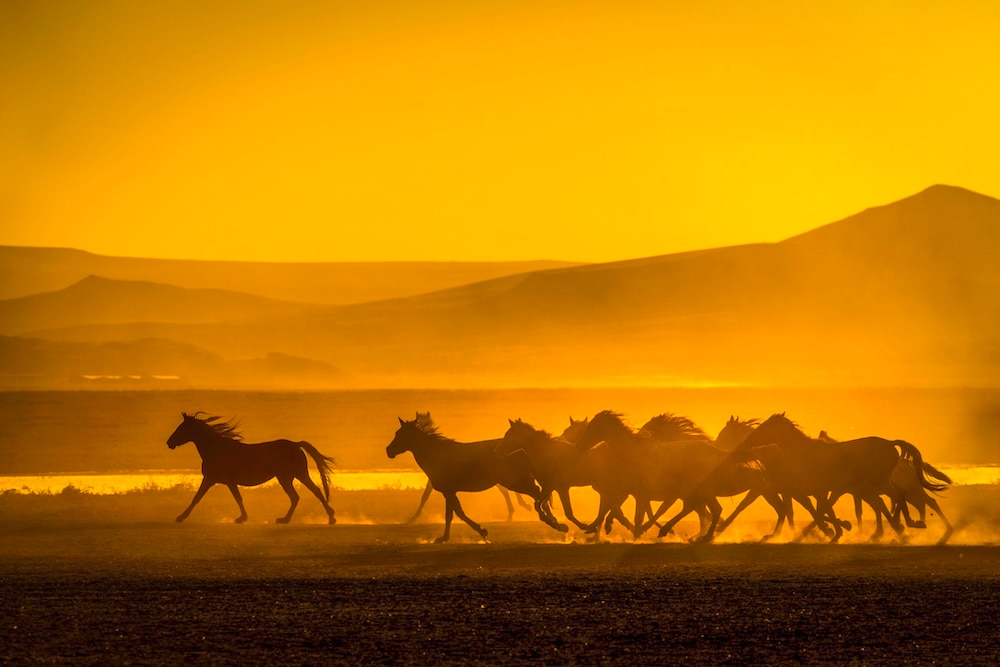
Photo by 101cats/E+
When you picture a horse galloping across an open plain, you might imagine the American West, the Mongolian steppes, or the rolling countryside of Europe. But the story of where horses originated involves both their movement between continents and human intervention.
Although horses are now found around the globe, their earliest ancestors evolved in North America more than 50 million years ago. Over millions of years, horses changed dramatically, spread across continents, disappeared from their birthplace, and were eventually reintroduced by humans.
Their evolutionary journey is one of the most remarkable stories in the animal kingdom.
Key Takeaways
- The earliest known horse ancestors evolved in North America about 55 million years ago before spreading to other continents.
- Horse ancestors grew larger, developed single hooves, and adapted from forest habitats to open grasslands.
- They disappeared from North America around 10,000 years ago, likely due to a combination of climate change and other environmental pressures.
- Spanish explorers brought domesticated horses back to the Americas in the late 1400s and early 1500s, where they rapidly spread and became an important part of many Indigenous cultures.
Where Did Horses Originate?
The earliest known ancestors of modern horses evolved in North America about 55 million years ago during the Eocene Epoch. One of the best-known early ancestors is Eohippus, also called Hyracotherium.
Unlike today’s horses, Eohippus was only about the size of a small dog. It had several toes on each foot instead of a single hoof and lived in forests, feeding on leaves and soft vegetation.
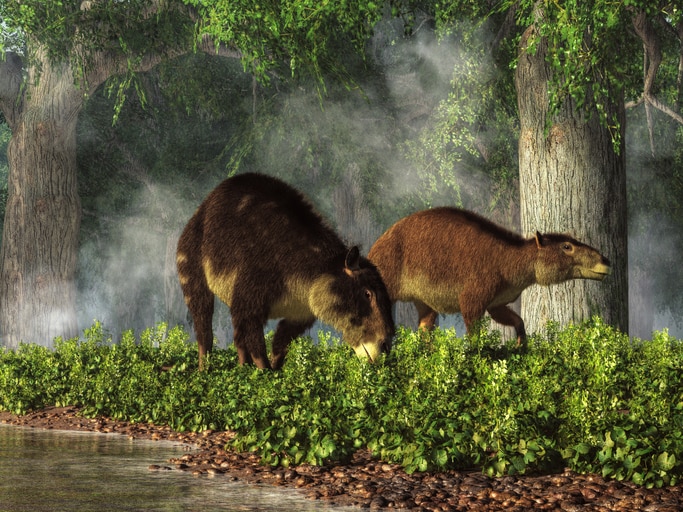
Photo by Daniel Eskridge/iStock/Getty Images Plus
Over millions of years, changing climates transformed forests into open grasslands. These environmental changes drove the evolution of horses into larger, faster animals better suited for grazing and escaping predators.
How Horses Evolved Over Millions of Years
Horse evolution occurred gradually over tens of millions of years.
From Small Forest Animals to Grassland Grazers
As habitats changed, horse ancestors developed several important adaptations:
- Longer legs for running across open landscapes
- Larger body size
- Stronger teeth capable of grinding tough grasses
- A transition from multiple toes on each foot to a single hoof for more efficient movement
These changes helped horses survive in increasingly open environments where speed became essential.
The Emergence of Modern Horses
Around 4 to 5 million years ago, the genus Equus evolved. This group includes all modern horses, donkeys, and zebras.
Members of the genus closely resembled today’s horses, with a single hoof on each foot, larger bodies, and adaptations for grazing on grasses.
How Horses Spread Around the World
Although horses evolved in North America, they didn’t stay there.
During periods when sea levels were lower, a land connection known as the Bering Land Bridge linked North America and Asia. Horse ancestors gradually migrated across this route into Eurasia.
From there, horses spread into:
- Europe
- Asia
- Africa
As they expanded into different environments, various equine species evolved, including the ancestors of modern zebras and donkeys.
Why Did Horses Disappear From North America?
Around 10,000 years ago, near the end of the last Ice Age, horses became extinct in North America.
Scientists continue to study why this happened, but several factors may have contributed:
- Rapid climate change
- Shifts in vegetation and habitat
- Pressure from human hunters
It’s likely that more than one factor played a role. While the exact cause remains uncertain, horses disappeared from the continent where they had first evolved.
How Horses Returned to North America
Horses didn’t return to North America until the arrival of European explorers.
Spanish explorers brought domesticated horses to the Americas during the late 1400s and early 1500s. Some escaped or were released, establishing wild populations that spread across much of the continent.
Many Indigenous peoples quickly recognized the value of horses for transportation, hunting, trade, and warfare. Horses transformed daily life for numerous Native American cultures and became deeply woven into their traditions and histories.
How Domestication Changed Horses
While horses evolved in North America, scientists believe they were first domesticated on the Eurasian steppes, likely in parts of present-day Kazakhstan, around 5,500 years ago.
Early humans selectively bred horses for desirable traits such as:
- Speed
- Strength
- Endurance
- Temperament
Over thousands of years, selective breeding led to the hundreds of horse breeds that exist today, each adapted for specific jobs, climates, or riding disciplines.
Through millions of years of evolution, horses developed into the powerful grazers we recognize today, migrated across continents, disappeared from their original homeland, and were later reintroduced by humans. Their remarkable journey through evolution, migration, extinction, and domestication has shaped one of the world’s most beloved and influential animals.
Frequently Asked Questions
Were horses originally from North America?
Yes. Fossil evidence shows that the earliest horse ancestors evolved in North America more than 50 million years ago before spreading to other continents.
What was the first horse called?
One of the earliest known horse ancestors is Eohippus (also known as Hyracotherium), a small, forest-dwelling mammal that lived about 55 million years ago.
When were horses domesticated?
Current evidence suggests horses were first domesticated approximately 5,500 years ago on the Eurasian steppes.
Did horses evolve from dinosaurs?
No. Horses are mammals and evolved long after the extinction of non-avian dinosaurs. Their ancestors were small mammals that gradually evolved into the modern horses we know today.
Attributions
This article was created with assistance from AI tools. The content has been reviewed for accuracy and edited by a human.