Newborn Horse Hooves: What Foal Owners Should Know


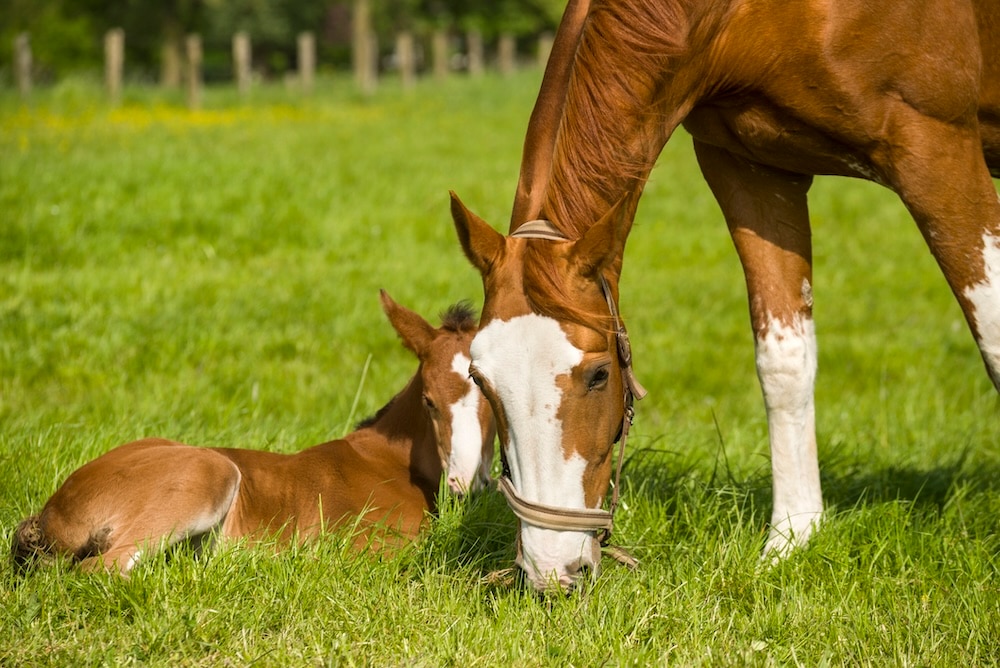
Photo by ae-photos/iStock/Getty Images Plus
In a newborn horse’s first few hours of life, their hooves look different from an adult horse’s feet. A soft, temporary, rubbery layer covers baby horse hooves to protect the mare’s reproductive tract during foaling.
While these “foal slippers” may look frightening after the foal is born, they are completely normal and will harden within the first few days of life. Evaluating the foal’s legs and hooves shortly after birth helps identify deformities or leg problems that need to be addressed.
Key Takeaways
- Foal slippers are a soft, spongy covering that encases a foal’s hooves in utero to protect the mare’s reproductive tract from damage caused by sharp, pointy hooves.
- The outer layer dries out and wears off within the first few hours of a foal’s life.
- A veterinarian should evaluate a foal within a few days after birth, and a farrier should visit within the first two weeks to check for any leg deformities or hoof abnormalities.
What Do Newborn Horse Hooves Look Like?
The outer coverings on baby horse hooves are soft and rubbery, called eponychium or deciduous hoof capsules. You may also hear them called foal slippers or fairy fingers.
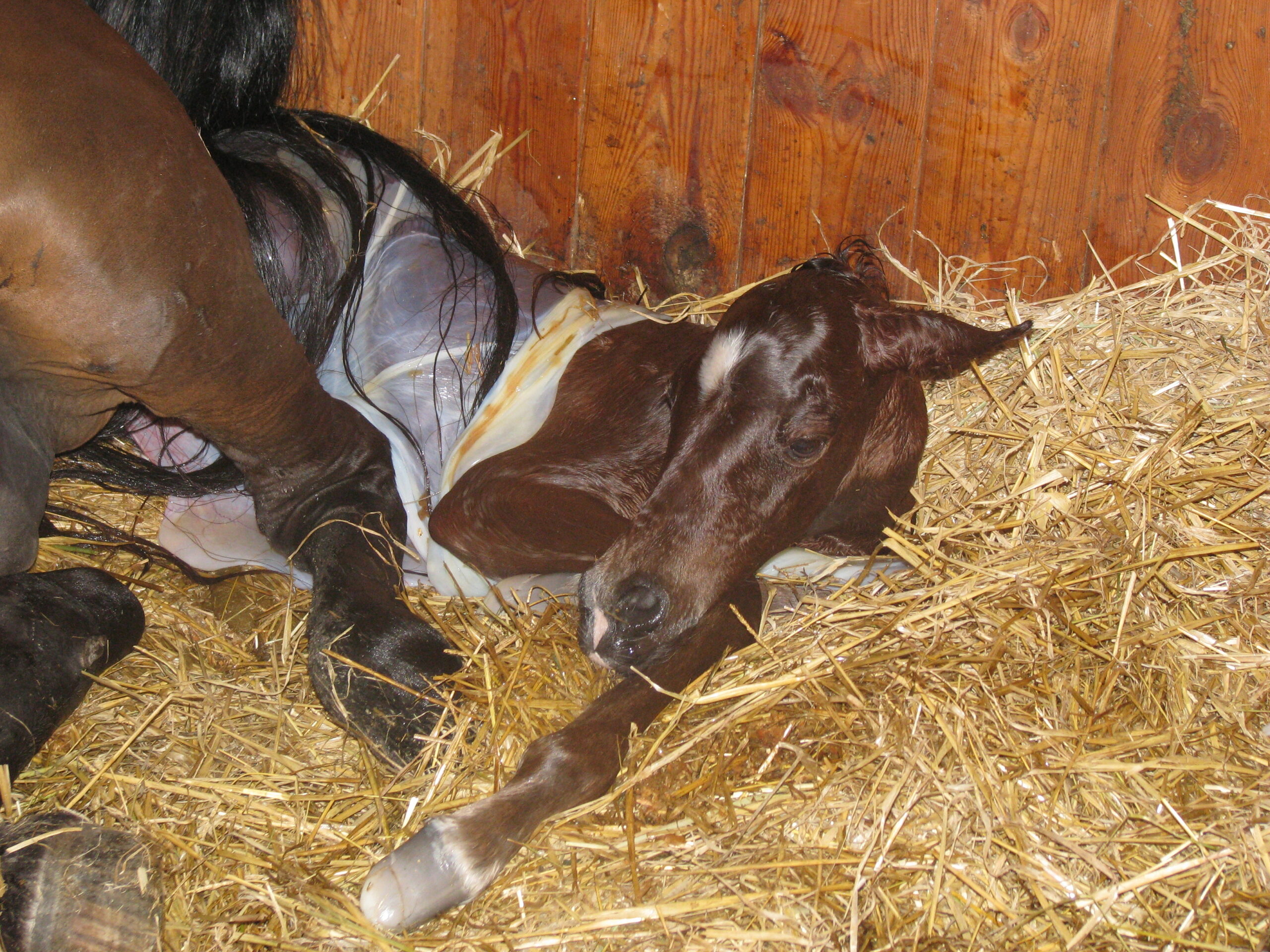
Photo by sangriana/iStock/Getty Images Plus
Why Are Foal Hooves Soft?
This temporary covering helps protect the mare during delivery and provides the foal with short-term cushioning until their hooves harden.
The hoof capsule begins hardening immediately after birth, and the soft covering usually wears away within a few days. If you see foal slippers, resist the urge to pull or remove the membrane; this can cause damage to the underlying hoof structure.
Normal Newborn Foal Hoof and Leg Development
During the first few hours—or days—after foaling, the young horse may look awkward and gangly as they begin to find their legs. Foals often show mild looseness or unevenness until they gain strength. Their legs are typically very long in relation to the rest of their body, and their joints are very loose because their bones have not fully developed yet.
Regular movement encourages blood flow, which supports healthy hoof growth and limb development.
Early Hoof Care for Foals
Many horse owners and breeders schedule a veterinary evaluation within the first 24 hours after birth to confirm overall wellness and assess the foal’s limbs. However, if a foal has a significant deformity at birth or an abnormality that worsens, have a veterinarian evaluate them as soon as possible.
Your veterinarian will also check the mare to make sure she has fully passed the foal’s placenta and is thriving as a mom.
You can gently start handling a foal’s legs and feet after birth. Start slowly for a few minutes at a time daily. Teach the foal to lift each foot without forcing or frightening them to prepare for their first farrier visit. While handling the feet, check the hoof shape and wear, and look for any cracks, swelling, or tenderness.
Schedule a farrier visit within the first two weeks to have a professional examine the foal’s hooves for problems, and to gently introduce the foal to routine hoof care.
After an evaluation, the farrier and veterinarian will determine a hoof trimming schedule based on the foal’s needs. Early, balanced trimming may help manage minor deviations, but major deformities may require additional veterinary treatment.
Newborn Hoof and Leg Problems to Watch For
Some foals are born with hoof or leg complications that require veterinary or farrier care. The most common newborn foal leg problems and foal hoof abnormalities include:
- Severe toe-in or toe-out
- Crooked or uneven limbs
- Hooves that do not contact the ground normally
- Contracted or overly upright heels
- Excessively lax joints or fetlocks
- Swelling, heat, pain, or lameness
- Abnormal hoof growth or rapid changes in shape
- Difficulty standing, walking, or nursing
Limb problems in foals can change quickly, so an early assessment is important to reduce the risk of worsening complications. Do not begin corrective trimming without professional guidance, as it can inadvertently make an issue worse.
How To Support Healthy Hoof Growth
You’ve likely heard the saying, “No hoof, no horse.” A horse’s hoof quality is influenced by genetics, but good horse keeping practices go a long way in supporting healthy hoof growth. These include:
- Providing safe, regular movement
- Keeping footing clean and dry, without excessive hardness or deep mud
- Feeding a balanced diet appropriate for the mare and growing foal
Recommended Product

- Avoiding overfeeding calories or supplements
- Monitoring body condition and growth
- Scheduling regular veterinary and hoof evaluations
If you are concerned about a mare or foal’s body condition, work with a veterinarian or equine nutritionist to create a plan based on their individual needs.
The first time you see a newborn foal’s hooves, they’ll look pretty unusual because of the temporary protective covering. But remember, the outer layer will naturally wear off within the first day or two of a foal’s life. If you have any additional questions or concerns, always reach out to your veterinarian.
FAQs About Newborn Horse Hooves
Are newborn foals born with hooves?
Yes. Newborn foals are born with fully formed hooves, but they have a temporary covering during foaling.
What are the soft coverings on foal hooves?
The soft covering on a foal’s hooves is the eponychium, or deciduous hoof capsule, also called foal slipper, fairy slipper, fairy finger, or golden slipper.
Should you trim a newborn foal’s hooves?
Typically, newborn foals do not receive a trim. Schedule a farrier visit for an evaluation within the first two weeks of a foal’s life unless a severe abnormality or deformity is present at birth and requires immediate attention.
When do foal hooves harden?
As soon as a foal is born, their hooves begin to harden, with the eponychium wearing off within the first day or two.
When should a foal see a veterinarian or farrier?
Often, a veterinarian will visit within the first 24 hours of foaling to check overall health and look for obvious limb deformities, severe laxity, pain, swelling, or difficulty standing or nursing. Plan to have a farrier who is experienced with foals out within the first two to three weeks to establish a hoof care plan based on the foal’s individual needs.
Attributions