Can Bearded Dragons Eat Apples?


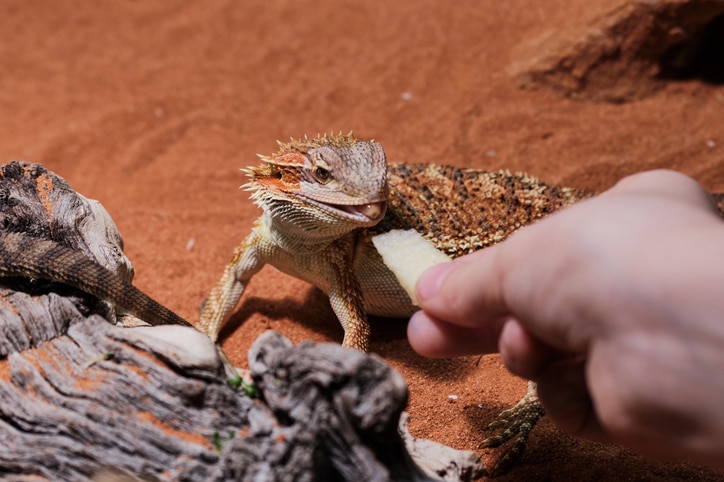
Photo by Claudia Nass/iStock/Getty Images Plus
If your bearded dragon perks up when you’re slicing an apple, you might be wondering if it’s safe to share a bite.
So can bearded dragons eat apples? Yes—but only in small, carefully prepared portions. While apples can be a refreshing and tasty treat, they should never replace the nutrient-rich staples your beardie needs to thrive.
Before introducing any new food into your bearded dragon’s diet, always check with your veterinarian.
Key Takeaways
- Yes, bearded dragons can eat apples—but only as an occasional treat. That means a small portion no more than once every two weeks for adults, and about once every three to four weeks for babies.
- Apples contain natural sugars, which can contribute to weight gain or long-term health issues if fed too often.
- Always remove the seeds and peel the apple before serving, as seeds contain potentially toxic compounds and the peel can be tough for bearded dragons to digest.
- Serve apples in small, pea-sized pieces to reduce choking risk.
- Apples don’t provide enough nutrition in such small portions to make a meaningful impact, so your dragon’s health depends far more on leafy greens, vegetables, and insects.
Can Bearded Dragons Have Apples?
Yes, bearded dragons can eat apples, but only as an occasional treat. Fresh apples are best, and they should be served in bite-size pieces.
Can Bearded Dragons Eat Apple Skin or Seeds?
Apple skin and seeds are unsafe for bearded dragons. Here’s why:
- Seeds: They contain amygdalin, which can release cyanide during digestion.
- Skin: The skin is not toxic, but it’s difficult to digest and a potential choking hazard, so it’s best to peel it off.
Are Apples Good for Bearded Dragons?
Not exactly. While it’s tempting to think of fruit as “healthy,” apples are more of a fun extra than a nutritional powerhouse for your bearded dragon.
However, apples do have some benefits:
- Fiber, which supports digestion—but in the tiny portions bearded dragons are offered, this benefit is minimal and won’t significantly impact gut health
- Vitamin C, which contributes to overall wellness, though bearded dragons don’t rely on fruit as a primary source
- Water content, which can offer a small hydration boost
Are Apples Bad for Bearded Dragons?
Apples aren’t toxic to bearded dragons, but they do come with a few nutritional downsides that make them a “sometimes” treat rather than a go-to food.
For example, apples:
- Are high in natural sugar: While a small amount is fine, too much sugar can lead to weight gain and may upset your dragon’s digestion over time.
- May contribute to long-term health issues: Diets too high in sugary or imbalanced foods can increase the risk of metabolic bone disease and other nutritional problems.
The seeds of an apple are toxic to bearded dragons and should never be ingested.
How Much Apple Can Bearded Dragons Eat?
When it comes to fruit, a little goes a long way, especially for reptiles with specific nutritional needs.
Fruit, including apples, should make up no more than 5% of your dragon’s total diet.
The portions below are general guidelines and may vary based on your bearded dragon’s size, health, and overall diet:
| Age | Portion Size | Frequency |
|---|---|---|
| Baby (under 12 months) | 1–2 pea-sized pieces | Once every 3–4 weeks |
| Adult (12+ months) | 1–2 ¼-inch cubes | Once every 2 weeks |
How To Safely Feed Apples to Bearded Dragons
A little prep goes a long way in making apples a safe treat for your reptile friend.
- Remove the seeds and core. They contain compounds that can be toxic when ingested.
- Peel off the skin. This makes it easier to digest and reduce choking risk.
- Cut the apple into small, bite-size pieces. This makes them easier to eat and helps prevent choking.
- Offer only raw, fresh apple. Avoid cooked versions with added sugars or ingredients that aren’t safe for reptiles.
My Bearded Dragon Ate Too Much Apple—What Do I Do?
If your curious dragon got into more apple than you planned for, don’t panic—but do keep a close eye on them.
If your bearded dragon overindulges, you might notice:
- Diarrhea or runny stool
- Decreased appetite
- Lethargy
If your bearded dragon has eaten too much apple, you should:
- Remove any leftover apple so they don’t keep eating it.
- Offer fresh water to support hydration in an easy-to-access water pool.
Recommended Product

3. Return to their normal diet of greens and insects.
4. Monitor them closely over the next 24 hours.
In most cases, mild digestive upset will resolve within a day.
If your dragon ate toxic seeds or core, if symptoms worsen, or if your bearded dragon shows more severe symptoms like the ones below, call your veterinarian immediately or head to the emergency vet.
More serious symptoms include:
- Severe or ongoing diarrhea
- Extreme lethargy or weakness
- Signs of dehydration (wrinkled skin, sunken eyes)
What Should Bearded Dragons Eat Instead of Apples?
A healthy bearded dragon diet is built on nutrient-rich, species-appropriate foods—with fruit playing only a small supporting role.
Daily nutrition should focus on:
- Leafy greens like collard greens, mustard greens, and dandelion greens
- Vegetables like squash and bell peppers
- Insects such as crickets or dubia roaches
Recommended Products


FAQs About Bearded Dragons and Apples
Can baby bearded dragons eat apples?
Yes, baby bearded dragons—typically under 12 months old—can eat apples, but only in very small amounts and very infrequently (about every two weeks).
Can bearded dragons eat green apples?
Yes, bearded dragons can eat pea-sized bites of green apples. The same feeding rules apply: Remove the seeds and skin, cut into small pieces, and offer only occasionally.
How often can bearded dragons eat fruit?
Adult bearded dragons can have fruit about once a week in small portions. Juveniles should have fruit less often—about once every two weeks—to prioritize protein intake and proper growth.
Attributions
This article was created with assistance from AI tools. The content has been reviewed for accuracy and edited by a human.