Why Is My Bearded Dragon’s Beard Black?


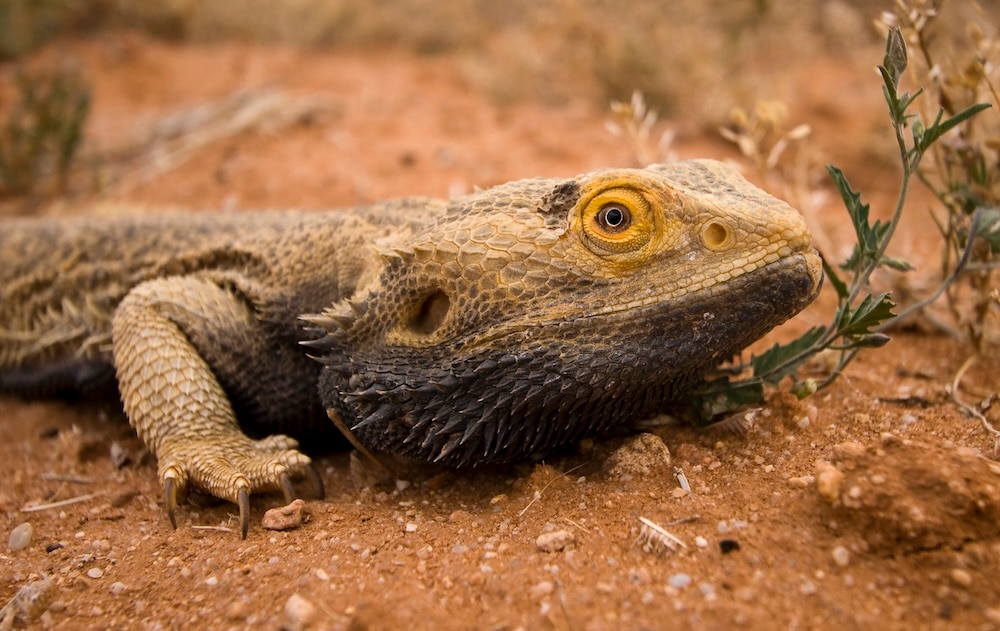
Photo by samvaltenbergs/iStock/Getty Images Plus
Seeing your bearded dragon’s beard suddenly turn black can be startling. But a black beard does not automatically mean something is wrong.
Bearded dragons can change color quickly, and their beard is an especially important part of their visual communication. Research has found that some of the biggest color changes happen on the beard and upper chest during social interactions.
So why is your bearded dragon’s beard black? The answer depends on what else your reptile is doing and what is happening around them.
Key Takeaways
- A black beard is often part of normal bearded dragon communication, especially during social displays.
- Temperature can affect overall body color, but beard color is influenced more strongly by social signaling than by temperature alone.
- Watch your dragon’s overall behavior. Persistent beard darkening along with poor appetite, weakness, breathing changes, or trouble moving deserves veterinary attention.
Why Do Bearded Dragons’ Beards Turn Black?
Bearded dragons have pigment-containing skin cells called chromatophores. Pigment can move within these cells, allowing the skin to become lighter or darker relatively quickly.
This color-changing ability has several purposes. Studies have connected bearded dragon color changes with communication, temperature regulation, camouflage, and normal daily rhythms. The beard in particular appears to be especially important for social signaling.
5 Reasons Your Bearded Dragon’s Beard May Turn Black
There’s no one meaning behind every black beard. Look at the situation, your dragon’s other behaviors, and whether the color change is prolonged or quickly disappears.
1. Your Bearded Dragon Is Communicating
A dark beard can be part of a bearded dragon’s normal visual “language.”
During social interactions, you may observe beard darkening alongside behaviors such as head bobbing, push-ups, circling, and expanding the beard.
If your dragon’s beard turns black while they are watching another bearded dragon, the color change may simply be part of that interaction.
2. Your Bearded Dragon Is Reacting to Their Surroundings
Sometimes the trigger may be something in the environment.
Your bearded dragon may notice another animal, their reflection in glass, or an unfamiliar enrichment activity nearby. If their beard repeatedly turns black around the same trigger, note what happened immediately before the color change.
Giving your dragon some space and reducing unwanted stimulation may help if they seem unsettled.
3. Your Bearded Dragon Is Displaying Breeding Behavior
Adult bearded dragons use both body movements and color during breeding encounters.
A black beard may occur along with behaviors such as head bobbing or other displays. These signals can play a role in mating interactions between bearded dragons.
Beard darkening is not exclusive to males, so beard color alone should not be used to determine your dragon’s sex.
4. Your Bearded Dragon’s Color Is Changing Naturally
Not every color change has an obvious trigger.
Bearded dragons have a circadian rhythm in pigmentation, a natural internal cycle that lasts about 24 hours. Therefore, their skin coloration can change with the time of day and light cycle.
Their overall body color can also respond to background color and temperature.
5. Your Bearded Dragon May Not Feel Well
A black beard cannot by itself determine a particular illness, but persistent beard darkening is worth more attention when it happens along with other changes.
Contact taking your dragon to an exotic animal veterinarian if you notice signs such as:
- Reduced appetite
- Unusual weakness or low activity
- Trouble walking or moving
- Labored breathing
- Nasal discharge
- Swelling, wounds, or other physical changes
Loss of appetite, lethargy, movement problems, and respiratory changes can occur with a variety of reptile health problems. A veterinarian can examine your dragon and review their diet, lighting, temperature, and other care factors to determine the cause of your pet’s symptoms and prescribe an appropriate treatment plan.
Does a Bearded Dragon Turn Black When They’re Cold?
Bearded dragons are ectotherms, meaning they rely heavily on environmental heat to regulate their body temperature.
Bearded dragons can darken portions of their body to affect how much heat they absorb. However, temperature-related color changes are much more strongly documented on their back than on their beard.
So a black beard should not automatically be interpreted as “my bearded dragon is cold.”
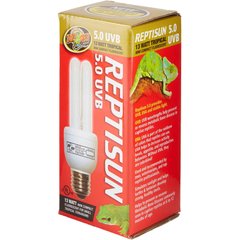
Instead, confirm that your dragon has an appropriate temperature gradient and lighting setup in their enclosure. Bearded dragons also require broad-spectrum lighting with UVB, which helps support vitamin D3 production and calcium regulation.
Recommended Products

What Should I Do if My Bearded Dragon’s Beard Turns Black?
Start by looking at the whole picture rather than trying to decode beard color alone.
Ask yourself:
- When did the beard turn black?
- What happened immediately beforehand?
- How long does the color change last?
- Is your dragon eating and moving normally?
- Is their heating and UVB lighting appropriate?
- Could another animal or reflection be triggering a display?
If your dragon looks and behaves normally and their black beard fades after an obvious interaction, you may simply be seeing normal bearded dragon communication.
If the beard stays black, occurs much more often than usual, or appears alongside changes in appetite, activity, movement, or breathing, contact a reptile-experienced veterinarian for personalized advice.
FAQs About a Bearded Dragon’s Black Beard
Does a black beard mean my bearded dragon is angry?
Not necessarily. A black beard is a communication signal, but beard color alone cannot tell you exactly what your dragon is experiencing. Consider their posture, movements, surroundings, and other behaviors.
Why is my bearded dragon’s beard black in the morning?
Bearded dragons have natural daily rhythms in skin pigmentation, so their color can vary depending on time of day and lighting. Look at your dragon’s overall behavior rather than using beard color alone to judge their health.
Can female bearded dragons have black beards?
Yes. Beard darkening is not limited to males. Social context and individual behavior can affect color displays.
How long should a bearded dragon’s beard stay black?
There is no research-backed amount of time that separates normal beard darkening from abnormal beard darkening. A brief change during an interaction is different from persistent darkening accompanied by other signs of illness.
Should I take my bearded dragon to the vet for a black beard?
A temporary black beard by itself may be normal. If it persists or occurs with reduced appetite, weakness, abnormal breathing, movement problems, or other concerning changes, contact a veterinarian who’s experienced in reptile care.
Attributions
This article was created with assistance from AI tools. The content has been reviewed for accuracy and edited by a human.