Rabbit Ear Mites: Symptoms and Treatment Options


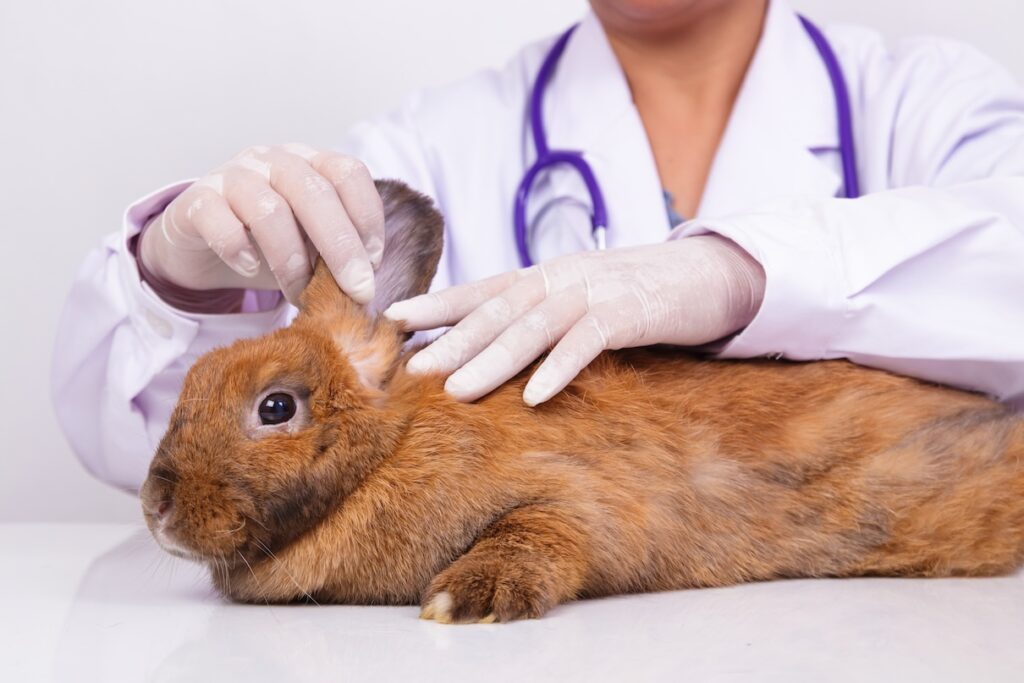
Photo by Adobe/SUPERMAO
Rabbit ear mites are a contagious parasite that causes itchy ears, thick brown crusts, and discomfort in rabbits. Fortunately, prompt veterinary treatment is highly effective and can prevent serious complications.
Here’s how to recognize rabbit ear canker, what treatment involves, and how to prevent future Psoroptes cuniculi infestations.
Key Takeaways
- Rabbit ear mites are highly contagious parasites that cause itchy, painful ears and a dark crust in the outer ear canals.
- Treatment typically involves prescription anti-parasitic medication and thorough cleaning of the rabbit's environment to prevent reinfestation.
- You can reduce your rabbit’s risk of ear mites by keeping their enclosure clean, checking their ears regularly, and avoiding contact with infected rabbits.
What Are Rabbit Ear Mites (Rabbit Ear Canker)?
Rabbit ear mites, or rabbit ear canker, are a common contagious parasitic condition caused by the Psoroptes cuniculi parasite. They can spread from direct contact with an infected animal and live in a rabbit’s ear canal.
Symptoms of Rabbit Ear Mites
Early on, rabbits with ear mites may scratch their ears more frequently, shake their head, or become sensitive to having their ears touched, says Leonne Chung, DVM, a volunteer with the California-based House Rabbit Society.
However, Dr. Chung says as the infestation progresses, the most obvious physical symptom of rabbit ear mites is a brown or black crust on your pet’s outer ear canal that becomes itchy, inflamed, and painful.
Other signs your rabbit is sick with ear mites may include:
- Head tilting
- Weight loss
- Excessive grooming
- Secondary bacterial infections
- Ear discharge
- Lack of appetite due to uncomfortable chewing
What Causes Ear Mites in Rabbits?
Ear mites are extremely contagious. They spread primarily through direct contact with an infected rabbit or a contaminated environment. The parasites are hardy and can live up to three weeks without a host, so it’s important to keep your rabbit away from contaminated bedding, enclosures, or equipment.
Additionally, ear mites thrive anywhere warm, humid air accumulates. As a result, lop-eared bunnies are at a higher risk since their folded ears trap moisture and create ideal conditions for mites.
How Veterinarians Diagnose Ear Mites
If you think your rabbit has ear mites, take them to the vet right away. Your veterinarian will likely start with a physical exam and use an otoscope to examine your rabbit’s ear canals. In many cases, that’s enough to diagnose a Psoroptes cuniculi infection.
However, if not, they’ll likely swab your bunny’s ears and examine the sample under a microscope to confirm the presence of the parasites.
Rabbit Ear Mite Treatment
Rabbit ear mites are commonly treated with anti-parasitic medications. Research has shown ivermectin to be one of the most effective treatments.
Other well-studied options include selamectin and imidacloprid/moxidectin.
These medicines can be applied topically, orally, or via injection depending on the severity of the infection and your vet’s guidance. Additionally, Dr. Chung says if a secondary bacterial infection happens, your rabbit might need antibiotics or pain medication too.
Because ear mite eggs can continue to hatch after the initial treatment, Dr. Chung says many rabbits require repeat treatments and follow-up examinations from their veterinarian.
Most rabbits recover completely with prompt veterinary treatment and proper environmental cleaning.
Home Care for Rabbits With Ear Mites
While your rabbit is recovering, thoroughly clean and disinfect their living space by replacing bedding and cleaning their cage or pen thoroughly.
Rabbit ear mites can live up to three weeks without a host, so decontaminating will help ensure your pet isn’t reinfected.
When you’re at home, never remove the ear crusts or scabs from an infected rabbit since it can worsen pain and delay healing for your bunny.
What Happens When Ear Mites Go Untreated?
Ear mites won’t go away without veterinary treatment. Dr. Chung warns that they don’t go away on their own and can lead to serious complications if left untreated.
Over time, rabbits with long-standing ear mites can develop complications such as:
- Severe pain
- Secondary bacterial infections
- Narrowed ear canals from chronic inflammation
- Damage to deeper ear structures
- Decreased appetite and weight loss
- Reduced quality of life
Untreated ear mites can also spread to other pets, so it’s important to seek help from a veterinarian as soon as possible if you suspect your rabbit has an infection.
When Rabbit Ear Mites Are an Emergency
Rabbit ear mites become an emergency if your rabbit isn’t eating, loses balance, their symptoms rapidly worsen, or their symptoms don’t improve after treatment.
Follow up with your rabbit’s vet ASAP if they experience any of these concerns.
How to Prevent Rabbit Ear Mites
Luckily, you can reduce your rabbit’s risk of ear mites. Dr. Chung says the best methods include:
- Quarantining new rabbits for several weeks before introducing them to other rabbits
- Scheduling regular veterinary wellness examinations, especially if you notice any ear scratching or head shaking
- Keeping the enclosure clean and replacing bedding regularly
- Avoiding contact with rabbits that have unknown health histories until they’ve been examined
- Checking your rabbit’s ears periodically so you can catch problems early
The sooner ear mites are diagnosed and treated, the easier they are to treat and the less uncomfortable they are for your bunny.
Recommended Product
Rabbit Ear Mites vs. Other Rabbit Ear Problems
We love the floppy, fluffy ears of rabbits. However, those ears are susceptible to multiple problems besides ear mites. Here’s a breakdown:
| Condition | Itching? | Crusts? | Infection Risk? |
|---|---|---|---|
| Ear mites | Yes | Yes | Yes |
| Ear infection | Sometimes | Sometimes | Sometimes |
| Allergy | Sometimes | Sometimes | Unlikely |
| Injury | Not usually | Sometimes | Unlikely |
Rabbit Ear Mites FAQs
Can indoor rabbits get ear mites?
Yes, indoor rabbits can contract ear mites, especially if they come in contact with another infected animal.
Regularly cleaning their enclosure and keeping them away from wild animals or infected domestic animals can help prevent an infestation.
What do rabbit ear mites look like?
Psoroptes cuniculi can sometimes appear as tiny brown specks, though they’re often too small to see with the naked eye.
The most obvious visual way to tell if your rabbit has ear mites is the appearance of brown, waxy canker buildup on their outer ears.
Are rabbit ear mites painful?
Yes, rabbit ear mites can be very painful. This is especially true if a secondary bacterial infection happens because your rabbit scratches the irritated skin of their outer ear canal.
Pain medicine can help, but always consult your veterinarian before giving your pet any medications.
Should I isolate a rabbit with ear mites?
Yes, if you have multiple rabbits or other pets, you should isolate the infected rabbit away from the others, so the mites don’t spread from animal to animal.
How long does treatment take for rabbit ear mites?
Dr. Chung says that most rabbits start feeling better one to two weeks after treatment begins.
However, she explains that, depending on how severe the infestation was, complete resolution can take three to six weeks.
Can ear mites spread to other pets?
Ear mites are highly contagious between rabbits who come in direct contact with one another. They primarily spread between rabbits and are unlikely to cause disease in dogs or cats.
Rabbits in shelters or hutches with other rabbits are more likely to spread ear mites amongst each other because of the proximity.
Can humans catch rabbit ear mites?
Rabbit ear mites (Psoroptes cuniculi) are highly contagious between rabbits but are not considered a significant risk to humans.
In rare cases, people who handle an infected rabbit may develop temporary skin irritation, but the mites cannot complete their life cycle on humans.
Can rabbits get ear mites from hay?
Hay itself isn’t a common source of ear mites.
Rabbits are much more likely to become infected through direct contact with an infected rabbit or by sharing contaminated bedding, enclosures, grooming tools, or other items where the mites can survive for a short time.
Can ear mites kill a rabbit?
Ear mites are rarely life-threatening on their own, but they can lead to serious complications if left untreated.
Severe infestations may cause chronic pain, secondary bacterial infections, ear damage, and reduced appetite, which can become dangerous—especially if a rabbit stops eating. Prompt veterinary treatment helps prevent these complications.
How do indoor rabbits get ear mites?
Even indoor rabbits can develop ear mites if they’re exposed to an infected rabbit or contaminated items, such as bedding, carriers, or grooming equipment.
Quarantining new rabbits and cleaning shared supplies can help reduce the risk of infection.
Attributions