Best Dog Ramps & Steps
Our Top Picks


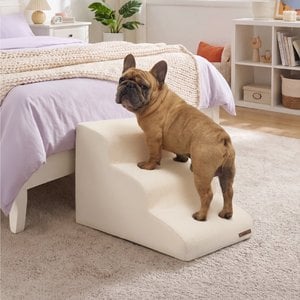


Frisco 18.5 or 24.5 Inch 2-in-1 Cat & Dog Stairs
$51.99 Chewy Price
Promo, New Customers Only: Spend $49+, get $25 eGift Card
Our ratings
Adjustability
4.6/5
ExcellentDurability
4.7/5
ExcellentEase of Use
4.7/5
ExcellentStability
4.7/5
Excellent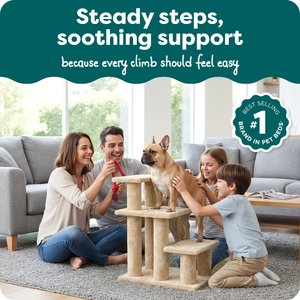
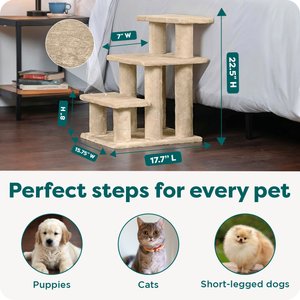
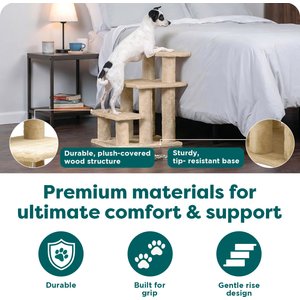
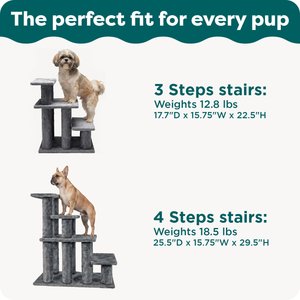
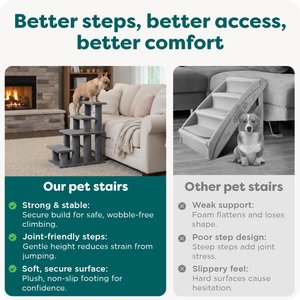


FurHaven Steady Paws Cat & Dog Stairs, Cream, 3-Step
$35.28 Chewy Price
Promo, New Customers Only: Spend $49+, get $25 eGift Card
Our ratings
Adjustability
4.6/5
ExcellentDurability
4.6/5
ExcellentEase of Use
4.6/5
ExcellentStability
4.6/5
Excellent


Lesure Dog Stairs Non-Slip for Bed & Couch Small Dogs Pet Stairs, Beige, 3-Step
$43.99 Chewy Price
Promo, Save 10% at Checkout
Our ratings
Adjustability
4.5/5
GreatDurability
4.5/5
GreatEase of Use
4.6/5
ExcellentStability
4.5/5
Great


TRIXIE Foldable Velour Pet Stairs with Storage, Gray, 3-Step, 11-in Wide
$24.46 Chewy Price
Promo, New Customers Only: Spend $49+, get $25 eGift Card
Our ratings
Adjustability
4.5/5
GreatDurability
4.5/5
GreatEase of Use
4.5/5
GreatStability
4.5/5
Great


Niubya High Density Foam Extra Wide Non-Slip Bottom High Bed, Couch & Sofa Dog Stairs, Grey, 3 steps
$39.99 Chewy Price
Promo, New Customers Only: Spend $49+, get $25 eGift Card
Our ratings
Adjustability
4.3/5
GreatDurability
4.3/5
GreatEase of Use
4.4/5
GreatStability
4.3/5
Great


Pet Gear Easy Step II Cat & Dog Stairs, Tan
$54.99 Chewy Price
Promo, New Customers Only: Spend $49+, get $25 eGift Card
Our ratings
Adjustability
4.5/5
GreatDurability
4.5/5
GreatEase of Use
4.6/5
ExcellentStability
4.6/5
Excellent


Our ratings
Adjustability
4.5/5
GreatDurability
4.6/5
ExcellentEase of Use
4.6/5
ExcellentStability
4.6/5
Excellent


Armarkat Real Wood Pet Steps, Ivory, 3 steps
$64.99 Chewy Price
Promo, New Customers Only: Spend $49+, get $25 eGift Card
Our ratings
Adjustability
4.7/5
ExcellentDurability
4.7/5
ExcellentEase of Use
4.7/5
ExcellentStability
4.7/5
Excellent


Frisco Plastic Easy Step Cat & Dog Stair, Gray
$48.99 Chewy Price
Promo, New Customers Only: Spend $49+, get $25 eGift Card
Our ratings
Adjustability
4.5/5
GreatDurability
4.4/5
GreatEase of Use
4.5/5
GreatStability
4.5/5
Great


Heininger PortablePET SUV Twistep Dog Hitch Step
$329.99 Chewy Price
Promo, New Customers Only: Spend $49+, get $25 eGift Card
Our ratings
Adjustability
4.6/5
ExcellentDurability
4.4/5
GreatEase of Use
4.7/5
ExcellentStability
4.5/5
Great