5 Cockatiel Sounds And Vocalizations Explained

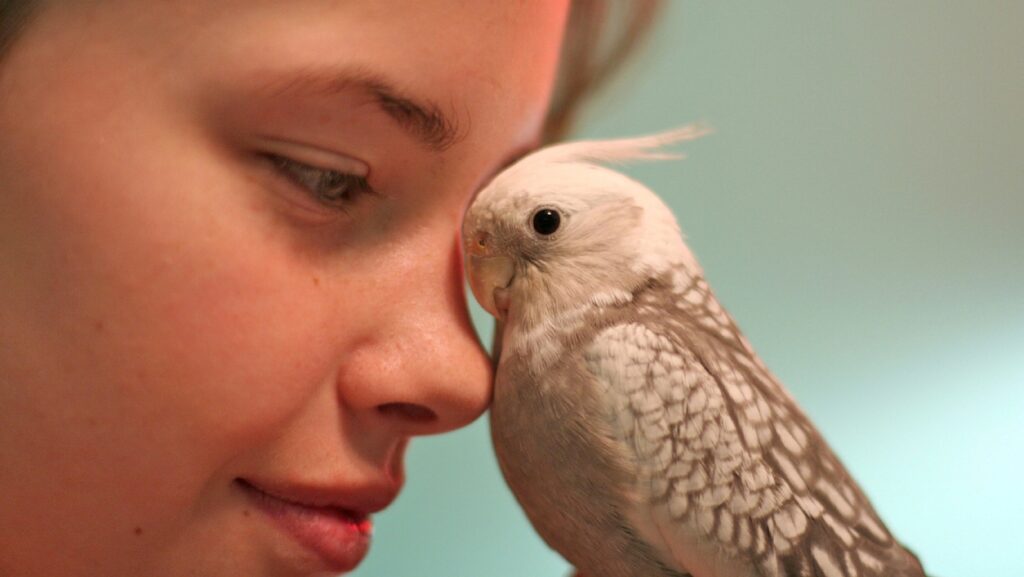
Photo by girl snuggling with cockatiel
Cockatiel sounds are distinctive and varied, and while they’re known for their powerful whistle, their vocalizations can include squawks, screeches, chatter, chirps, singing, hissing, and more. Some of the cockatiel’s unique sounds can have different meanings depending on the context. A loud “scristle: (a combo of whistle and screech) might mean your cockatiel is upset or scared, but can also mean they’re simply excited to see you.
All companion cockatiel parrots belong to the same species, Nymphicus hollandicus, and come from the dry inland and outback regions of Australia. Generally, a cockatiel’s sounds and vocalizations are used to express a range of emotions, or to mimic their human flock to help them blend into their household. Here are five common cockatiel sounds and vocalizations, what each one can mean, plus how to respond to your cockatiels contact calls.
Key Takeaways
- A cockatiel's loud scream-plus-whistle is often referred to as a “scristle” and it's used to express a variety of emotions.
- Whistling can come from sounds a cockatiel learns from their family, TV, or radio, and may be a bid to connect with you.
- A contact call is a check-in call your cockatiel may use when a bonded bird or person is out of sight (and they expect a reply).
- Always give a hissing cockatiel plenty of space as it's a sign they feel afraid or threatened.
1. The Cockatiel “Scristle”
Some people will call this a “scream” and some a “squawk,” while others a “screech”—but whatever you call it, the cockatiel “scristle” (a scream plus whistle) is a frequent cockatiel vocalization. Cockatiels will utter this attention-getting squeal when they are upset, scared, lonely or excited.
I call this vocalization a “scristle” because cockatiels have very melodic, high-pitched voices, so it doesn’t sound like a scream that a macaw or cockatoo makes, but more like train on helium.
Why is your cockatiel is making this sound? That’s easy. As you get to know your bird’s personality, you will come to understand when he’s afraid or just excited. If he’s vocalizing like crazy after you come home from work, clambering around the cage, and begging for a tasty treat or some head scratches, you’ll know you’re got a happy—yet loud—tiel.
If a cat is stalking your cockatiel, a bunch of helium balloons have floated near his cage, or you’re vacuuming, and your bird is making the same excited noises, it’s likely because he’s upset or scared.
2. Whistle
Cockatiels are expert whistlers and will learn to mimic whistles that they hear from their humans, television and the radio. This can be quite cute, because there are a lot of recognizable whistles, from the standard cat-call (or wolf-whistle) to the Andy Griffith television show theme.
There are special whistle teaching CDs and song file downloads that you can play for your bird to teach him or her specific whistles. Male cockatiels are more likely to repeat human vocalizations, but females can be competent whistlers, too.
A whistling cockatiel can be trying to connect with you by picking up human sounds. He also might be bored if he’s sitting alone and whistling to a toy, or excited, based on what’s going on in his surroundings.
3. Chatter/Talking/Singing
Cockatiels pick up a lot of human chatter, words and songs, especially the males. This is their way of blending in—making themselves part of your flock and trying to communicate with you. A talking cockatiel is usually a happy tiel, but they will also talk when bored.
4. Hiss
Cockatiels hiss when they’re afraid or threatened. A hissing bird is a bird who’s feeling cornered and is likely to bite. Do not put your hand (or anything else) near a hissing cockatiel. Allow the bird to decompress and give him some space.
5. Contact Call
Cockatiels will develop a contact call that they use with each other or with their human friends. A contact call is typical between family members and pairs when one or more of the birds is out of sight. It communicates well-being, kind of like asking, “I’m safe, are you?” Or even, “Hey, come back!” The sound of the vocalization depends on whether the bird is trying to locate an avian pal or a person.
If you’re out of the room and your cockatiel constantly whistles until you come back, that might be his contact call with you. What should you do? Call back! Whistle mimicking your cockatiel if you can (so he comes to understand that you’re calling back), or if your whistling skills aren’t great, say “Hi, [your bird’s name]!” in a high-pitched voice.
Not calling back can create some anxiety for your cockatiel, who will wonder if you’re OK—and if he’s going to be alone forever. Typically, a bird will only contact call if he’s bonded with his human. A stressed and unhappy bird is unlikely to do this, unless he’s desperately calling for a bird or human he misses (in the case of being separated).
FAQs About Cockatiel Sounds and Vocalizations
What are the most common cockatiel sounds?
The most common cockatiel sounds and vocalizations include the “scristle” (a loud scream and whistle combo), chatter, talking, singing, hissing, contact call and whistle.
What does a cockatiel scristle mean?
Cockatiels often make a high-pitched scream-plus-whistle sound known as a “scristle” that often means they are upset, scared, lonely, or simply excited.
Why does my cockatiel hiss at me?
Cockatiels hiss when they feel afraid or threatened, and it’s important to give them plenty of space and avoid putting your hand near them because a hissing cockatiel may bite.
Why does my cockatiel whistle or call when I leave the room?
A cockatiel that is bonded with you (or another bird in your home( will whistle or call out when their flock mate is out of sight—and it’s best to call or whistle back so that they know you are there.
Can cockatiels talk or sing?
Cockatiels easily mimic human chatter, words, and songs—and this is especially true for male birds. Mimicry is a way for cockatiels to blend into their flock (both humans and pets in your home) and to communicate and connect with them.
Learn more about keeping a cockatiel as a pet, including how to care for cockatiels, and common questions about these unique Australian parrots.
Attributions