Bird Carriers: How To Choose the Safest Option and Travel With Your Bird


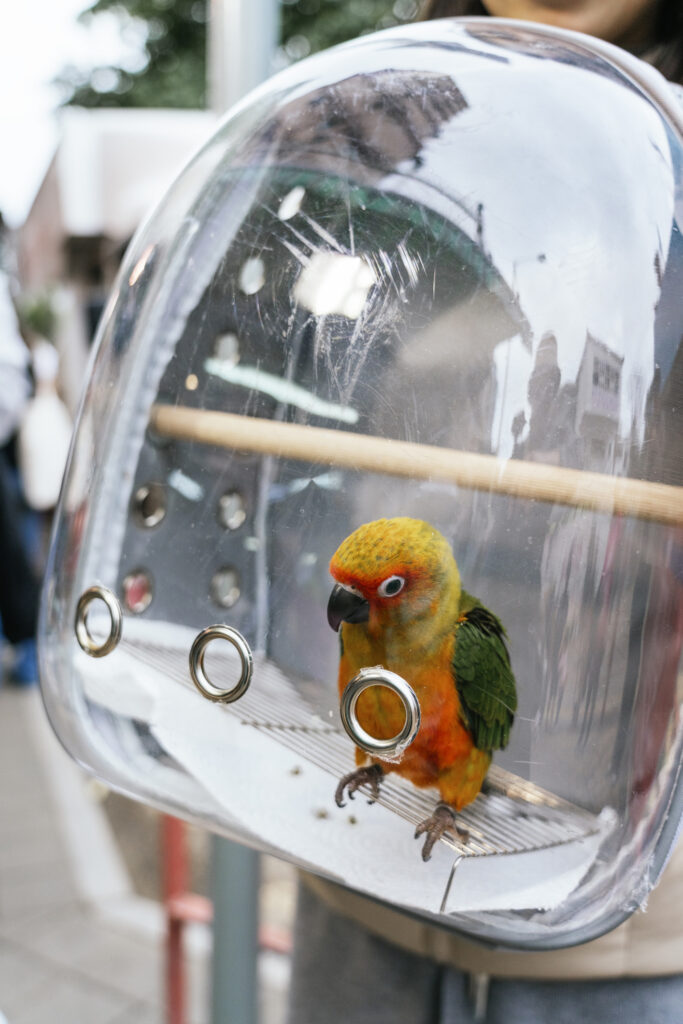
Photo by Javier Ballester/iStock/Getty Images Plus
Whether you’re heading to the veterinarian or moving across the country, a good bird carrier is an important piece of travel gear. It helps protect your bird from escape, sudden movement, and other hazards while giving them a secure place to ride.
But not all bird carriers are right for every feathered traveler. Your bird’s species and size, the length of the trip, and whether you’re traveling by car or plane can all affect which carrier makes the most sense. Here’s how to choose one and make travel safer and less stressful.
Key Takeaways
- Bird carriers should be sturdy, secure, well-ventilated, and appropriately sized for the bird using them.
- Keep your bird contained in a secured carrier whenever you travel by car.
- Introduce your bird to their carrier before a trip by using gradual, positive experiences.
- Protect traveling birds from extreme temperatures, direct sun, drafts, and escape risks.
- Airline and international bird-travel rules vary, so confirm current requirements before your trip.
How To Choose a Safe Bird Carrier
The safest bird carrier is one that fits your individual bird and your type of travel. Before buying one, look beyond color and style and focus on the features that help keep your bird secure.
Choose the Right Size
A carrier should give your bird enough room to stand or perch comfortably without their head, crest, or tail being cramped.
At the same time, a travel carrier generally should not be so roomy that your bird could be tossed a long distance inside it during a sudden stop. Consider your bird’s body size, tail length, usual posture, and mobility when choosing a carrier.
If your bird has a health condition or trouble perching, ask an avian veterinarian about the safest carrier setup for them.
Check the Ventilation
Good airflow is a must. Choose a carrier with plenty of ventilation openings, and make sure luggage, blankets, or a vehicle seat won’t block them.
Some carriers have covers or shades that can reduce your bird’s view of a busy environment. If you use a cover, make sure it does not restrict airflow or make the carrier too warm inside.
Inspect Every Door and Closure
Parrots can be talented problem-solvers, so before you buy one, check every latch, zipper, and door to make sure they are beakproof.
The carrier should:
- Close securely
- Have no openings your bird can squeeze through
- Have doors or zippers that your bird cannot easily open
- Be made from material sturdy enough to withstand your bird’s beak
- Have no sharp edges or exposed hardware inside
Check the carrier again before every trip, especially if your bird likes to chew.
Keep the Inside Simple
Travel is not the time to turn the carrier into a playground. A swinging toy or other loose accessory could strike your bird during a sudden stop or bumpy ride.
If the carrier has a perch, make sure it’s firmly attached, appropriately sized, and positioned so your bird can sit comfortably without hitting the carrier walls. A stable, easy-to-clean floor is helpful too.
Types of Bird Carriers
Bird carriers come in several styles, and each has pros and cons. No single type is best for every bird.
Hard-Sided Bird Carriers
Hard-sided carriers can offer good structural protection and are often easy to clean. Look for secure doors, adequate ventilation, and materials that can stand up to your bird’s chewing ability.
Recommended Product
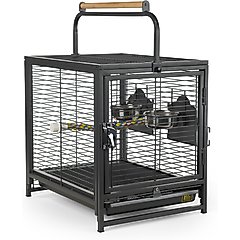
Their downside? They can be heavier and bulkier than other options.
Soft-Sided Bird Carriers
Soft-sided carriers are usually lightweight and easier to store. But pet parents need to pay extra attention to mesh, seams, zippers, and other areas a determined bird might chew.
Recommended Product
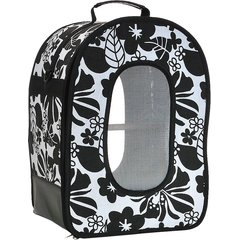
A soft carrier should also maintain its shape rather than collapsing onto your bird.
Bird Carrier Backpacks
A bird carrier backpack can be convenient for short outings because it leaves your hands free. Some include perches, mesh panels, clear windows, or sunshades.
Recommended Product
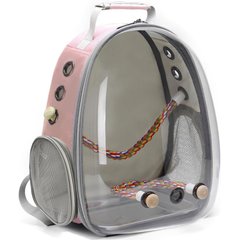
Before choosing one, check the ventilation and temperature inside the carrier. Large clear panels may become warm in direct sunlight, so keep the backpack shaded and monitor your bird carefully.
Travel Cages
A small travel cage can work well for some birds and car trips, especially when it can be securely restrained.
Recommended Product

Your bird’s everyday cage isn’t necessarily a safe travel cage. Large cages can be difficult to secure, and swings, toys, or other accessories may move dangerously while the vehicle is in motion.
How To Get Your Bird Used to a Carrier
Don’t wait until the morning of a veterinary appointment to unveil a mysterious new box.
Instead, introduce the carrier gradually in a familiar room. Let your bird see and investigate it without immediately placing them inside.
You can use positive reinforcement to help your bird get used to the carrier:
- Reward your bird for approaching it.
- Encourage them to enter voluntarily.
- Offer a favorite treat after they go inside.
- Practice closing the door for brief periods.
- Gradually increase the amount of time they spend inside.
Once your bird seems comfortable, consider practicing a short car ride before a longer journey.
Never scold your bird for avoiding the carrier. If getting into one causes intense or ongoing stress, an avian veterinarian or qualified bird behavior professional can help you develop an individual plan.
Tips for Traveling With a Bird by Car
Once you’re on the road, the carrier becomes your bird’s seat belt, escape barrier, and temporary home all in one.
Secure the Carrier
Your bird should remain inside the carrier while the vehicle is moving. Secure the carrier so it cannot slide, tip, or become a projectile during sudden braking.
Don’t allow your bird to ride loose on your shoulder, the dashboard, or a seat. Even a bird who’s normally calm can become frightened by traffic, horns, or sudden movement.
Watch the Temperature
Birds need protection from temperature extremes. Preheat or cool the vehicle before bringing your bird inside when weather conditions are uncomfortable.
Keep the carrier away from direct sunlight and strong blasts from heating or air-conditioning vents. And never leave your bird unattended in a parked vehicle.
Pack Familiar Food and Water
For longer trips, bring your bird’s usual food rather than introducing something new on the road.
Water bowls can spill in moving vehicles, so plan rest stops when appropriate and talk with your avian veterinarian about the best hydration setup for your bird and their journey.
Tips for Traveling With a Bird by Plane
Airline travel requires more homework because each airline sets its own pet policies.
Before buying your ticket, ask the airline:
- Whether pet birds are allowed
- Whether your bird can travel in the cabin
- What carrier dimensions and materials are permitted
- What health documents are required
- Whether you need to reserve space for your bird in advance
- What food and water arrangements are required
The US Department of Agriculture’s Animal and Plant Health Inspection Service (USDA APHIS) advises pet parents to contact airlines directly because each may have different rules for cages or carriers, food and water, and documentation.
Don’t assume that a product described as “airline-approved” will be accepted on every flight. The airline’s current requirements are what matter.
Traveling Internationally With a Bird
International bird travel can involve health certificates, permits, inspections, identification, testing, or quarantine.
If you’re traveling from the United States to another country, USDA APHIS recommends contacting a USDA-accredited veterinarian as soon as you decide to travel. Your veterinarian can help determine which entry requirements apply to your destination.
Rules for bringing birds into the U.S. also vary depending on where the bird is coming from and whether the bird traveled through an area affected by diseases such as highly pathogenic avian influenza. Some situations require permits, veterinary health certificates, inspection, testing, or quarantine.
Because these requirements can change, check government and airline rules for your exact route before every international trip.
Frequently Asked Questions About Bird Carriers
What is the safest bird carrier?
There isn’t one carrier that’s safest for every bird. Look for an appropriately sized carrier that’s sturdy, escape-resistant, well-ventilated, and free from hazards, and choose materials that can withstand your bird’s beak.
Can I use a cat carrier for my bird?
Some carriers made for other pets may be adaptable for birds, but they aren’t automatically bird-safe. Check ventilation, door spacing, materials, and the interior setup, and ask your avian veterinarian if you’re unsure.
Should a bird carrier have a perch?
A perch can be appropriate for many birds, but it needs to be firmly secured and properly sized. Birds with balance, mobility, or medical concerns may need a different setup recommended by their avian veterinarian.
Should you cover a bird carrier?
Partially covering a carrier may reduce visual stimulation for some birds. But never block ventilation, and monitor the temperature and your bird’s behavior throughout the trip.
Can birds travel in cars?
Yes, but they should travel securely contained rather than loose inside the vehicle. Secure the carrier to reduce sliding and tipping, and protect your bird from direct sunlight and temperature extremes.
Can you take a bird on an airplane?
Some airlines accept pet birds, but policies differ by airline and route. Contact your airline before booking to confirm whether your bird can fly and what carrier and documentation requirements apply.
How can I make travel less stressful for my bird?
Give your bird time to become familiar with their carrier before the trip and use positive reinforcement to encourage calm carrier entry. If your bird has severe travel stress or a medical condition, talk with an avian veterinarian before traveling.
Attributions
This article was created with assistance from AI tools. The content has been reviewed for accuracy and edited by a human.