Lovebirds: 14 Things New Pet Parents Should Know

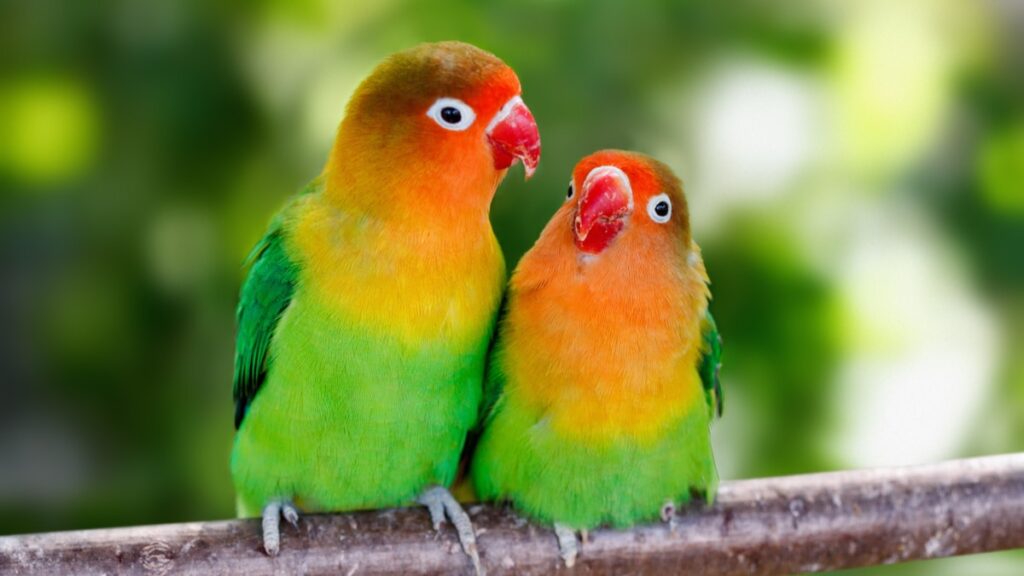
Photo by BravissimoS
Lovebirds are popular parrots known for their vibrant plumage and their charming habit of sitting very close together and preening each other affectionately. Their scientific genus Agapornis (agape means love and ornis means bird) stems from their habit of forming monogamous, lifelong pair bonds—as well as their tendency to behave in attentive, lovey-dovey ways with one another.
Got an interest in one of the nine types of lovebirds? These African beauties live 10 to 15 years, are highly social, and packed with personality. But before you go looking for a lovebird of your own to care for, here’s what new parents should know about these playful parrots.
Key Takeaways
- Lovebirds are affectionate, highly social birds that make wonderful companions.
- These colorful African parrots are playful, entertaining, intelligent, and full of energy.
- Being part of a bonded pair isn't a requirement; a single lovebird can develop a strong bond with their pet parent.
- These social birds need plenty of daily interaction with their humans, plus lots of enrichment and toys to keep them busy.
- Despite their small size and sweet reputation, some lovebirds can display territorial, dominant, or aggressive behaviors.
1. Lovebirds Don’t Need To Be Paired
While lovebirds do form strong pair bonds, if you’re looking for a pet that wants to interact with you, it would be best to keep a single bird, says Lawrence Oei, a lovebird enthusiast who owns 70 lovebirds. Oei is also a member of the Belgian Lovebird Association and runs a Facebook page for all of his birds.
This way, your lovebird will bond with you. “The single biggest misconception is that you need two of them to make them happy,” said Oei.
But if you choose to keep more than one lovebirds, he said, “It actually quite easy to pair them up with other lovebirds, the key being you introduce a female to a male in an established cage.”
2. Lovebirds Love Toys
However, a solitary lovebird can act out and turn to self-destructive behaviors like over-preening and chewing without the interaction and enrichment that toys can provide. Fortunately, this is extremely rare because of their penchant for finding ways to play.
Because of their curiosity and activity level, lovebirds require stimulation, says Byron J.S. de la Navarre, DVM at the Animal House of Chicago. As a general guideline, de la Navarre recommends choosing toys that are categorized for lovebirds and use simple methods to keep them entertained.
Choosing appropriately-sized foot toys as a lovebird’s first toy—even before they learn to perch—introduces safe play with their feet and beak and contributes to the development of coordination.
Rotate your bird’s toys, put them away for a few weeks and then re-introduce them, says de la Navarre. Not only will this add to the longevity of the toy, it will be like reuniting your bird with a long-lost friend.
3. Lovebirds Enjoy Hiding
Fascinated by tiny spaces that they can crawl into, lovebirds make their way into sleeves, drawers, and other tight spots. Without proper bird toys, lovebirds will turn to their own devices and make ordinary objects into toys. There is no cavity too small for a lovebird to try to explore, no enemy too large to be challenged by this little feathered dragon.
Unfortunately, this puts them at risk for plenty of accidents in the home, including suffocation/smashing dangers (bed covers, furniture), hiding in places where they might not be found for a while (infrequently-used drawers, couch cushions), or entanglement (afghans, drapes, rope toys).
Protect your birds from accidents by giving them approved areas and toys to hide and snuggle into when they want like the Super Bird Creations Peekaboo Perch Bird Tent. They also like to hide or play peeking out games from behind a toy. For this purpose, the larger the toy, the better.
4. Lovebirds Love To Nest
“Lovebirds like toys they can snuggle with, but if you have a female bird, these toys could stimulate egg production,” says de la Navarre. “This can be taxing on their health.”
Oei also recommends that you don’t provide lovebirds with a nest box if you are not breeding them and want to discourage this behavior. Egg production can deplete your bird of calcium and protein, which can lead to serious health issues, so you may want to avoid nest boxes and similar toys, he says.
5. They’re Both Lovers and Fighters
Lovebirds also like to fight their toys. This surrogate enemy or rival is often metal and probably hangs near the side of their bird cage where it can be loudly banged against bars. A lovebird might have many surrogate enemy toys. If a toy isn’t a surrogate enemy, it could be a surrogate mate. It might be both.
Many pet birds are attracted to mirrors, but provide these to your lovebird with careful observation. Actual glass mirrors have the potential for both behavioral and physical damage because of their very accurate images, their backing and breakability.
Some birds become obsessed with their reflections, sitting in front of them for hours while they talk and show off for their friend. Shiny acrylic, stainless-steel, or nickel-plated mirrors are more durable and behaviorally desirable for their indistinct, inaccurate reflections in which the bird can see movement but not another bird.
Try JW Pet Activitoy Birdie Bowling Toy which features a shiny mirror to keep your bird engaged while he tries to “knock over” the bowling pins.
6. Lovebirds Enjoy Foraging
Like most parrots, your lovebird has a natural instinct to forage. Lovebird keepers sometimes just clip a spray of millet someplace unexpected to encourage their bird’s foraging instinct. Try Kaytee Natural Spray Millet Bird Treats.
Foraging toys, whether foraging is the primary function of the toy or a small part of its function, offer long-term play opportunities.
7. Lovebirds Are Very Active
Many lovebirds love swings and do so vigorously, almost violently. Some swing front to back in the manner of traditional human swings, but many enjoy swinging side to side or in circles. For this type of activity, try the JW Pet Activitoy Birdie Lattice Chain Toy.
Many lovebirds like to hold onto their perches and flap their wings. To facilitate this healthy behavior, outfit your bird’s cage with grippable perches, something small enough to be gripped all the way around rather than simply stood upon.
Large spirals of stiff cotton rope perch like the Super Bird Creations Rainbow Bridge Toy, can provide many happy hours of swinging, bouncing and climbing. A bridge or boing placed over a toy also provides more opportunities to present toys in interesting ways as well as exercise.
8. Lovebirds Love a Bath
Lovebirds love to bathe and will do so in any manner they see fit—in the sink, the water dish, or any bowl of water.
Because these bold-feathered explorers love water, they’ll also hop into a toilet, a half-full glass, a mop bucket, or an undrained bathtub—all of which pose drowning hazards.
Keep an eye on your bird when its out of the cage, and be sure to create a bathing area for your lovebird, such as with the JW Pet InSight Inside the Cage Bird Bath.
9. Lovebirds Test Boundaries
Lovebirds are playful, active, adventurous and seem to live to play. They like to explore new places (tentatively at first, until they’re sure there’s no danger).
But don’t let their size or sweetness fool you! They’re not as lovey as their name suggests. They can be nippy and territorial—particularly female lovebirds who perceive their cage as their territory. Lovebirds have a tendency to test boundaries with their dominant, and even at times, aggressive behavior.
Lovebirds are not always the easiest birds to keep, warns Oei. “They are a step up from cockatiels and budgies, but easier to handle than the bigger parrots. Weaned, hand-fed babies are best to start with if you want them as pets,” Oei says.
10. Lovebirds Are Very Social
While they do not need to be kept in pairs, a single bird will need to spend plenty of time with her human flock. A bird bonded to you can be an exceptionally good companion.
You’ll need to spend a few hours each day interacting with your lovebird. Outside of those hours, interactive toys can help satisfy a lovebird’s intellectual and emotional needs.
Usually constructed of indestructible or difficult-to-destroy materials, these toys challenge your smart, busy bird. Food or destructible elements incorporated into the design get the bird’s initial attention.
11. Lovebirds Can Be Noisy
With their need for social interaction comes a good deal of vocalization. Lovebirds may not be as loud as big parrots, but they do vocalize often to keep in contact with their flock—human or feathered.
Sound-related toys create or enhance sounds, which appeal to the lovebird’s instinct to communicate. Bells are the most common and easily accessible sound-related toys. Bird-safe liberty bells are now especially designed for safety with one-piece clappers that drop to the floor when removed by the lovebird.
Lovebirds use toys with cavities of any kind for resonating—for chirping into and listening. Try the JW Pet Activitoy Birdie Disco Ball Toy. You might also try plastic pipe bells, rattles and clackers with hard plastic beads, because they make sound but create less noise.
12. Lovebirds Can Be Messy
Oei feeds his lovebirds fresh, grated, bird-safe vegetables every morning as well as giving the birds access to seed.
As for their water, Oei says, “One important thing to note is to change the water at least once a day or once it becomes muddy. Lovebirds love to make soup out of their water bowl by putting seeds inside.”
13. Lovebirds Can Be Quirky
Some lovebird species have quirky but cute ways of gathering nesting materials. The most well known of these species is the peach-faced lovebird.
Female peach-faced lovebirds will tear nesting materials, like paper, into strips and then stuff it into the feathers near her tail. The result is comical, but this behavior is also a good way to determine the sex of your bird, as this is a female-specific behavior.
14. Lovebirds Love To Chew
Destructible bird toys appeal to a parrot’s instinct to chew, but use them with caution for lovebirds. The chewing instinct of most lovebirds is probably geared toward the production and collection of nesting material.
Again, if you don’t want to breed your lovebird, choose chew toys that come apart in strips like Planet Pleasures Pineapple Foraging Bird Toy.
Alternatively, opt for leather, sisal, or plastic ropes of appropriate length and design; soft woods that splinter; bird-safe materials that break apart in chunks—any items that don’t resemble nesting material.
FAQs About Lovebirds
Are lovebirds good pets for beginners?
Lovebirds can make wonderful companions, but their strong personalities, territorial tendencies, and need for a lot of daily interaction may be challenging for first-time bird keepers.
Do lovebirds need to be kept in pairs?
No, lovebirds can thrive on their own as long as they receive plenty of attention and social interaction from their pet parents. In the wild, they are known for living as bonded pairs for life.
Are lovebirds affectionate?
Yes, lovebirds can form close bonds with their pet parents and enjoy spending time with their favorite people. Lovebirds are known to sit closely together and preen each other attentively.
How long do lovebirds live?
Lovebirds typically can live 10 to 15 years with proper care, making them a long-term commitment for pet parents.
Are lovebirds noisy?
Lovebirds are vocal birds that frequently chirp and chatter to communicate, although they are generally not as loud as larger parrot species.
How much attention do lovebirds need?
Lovebirds are very social and need plenty of daily interaction with their pet parents to stay happy and build strong bonds.
Attributions