9 Types of Lovebirds


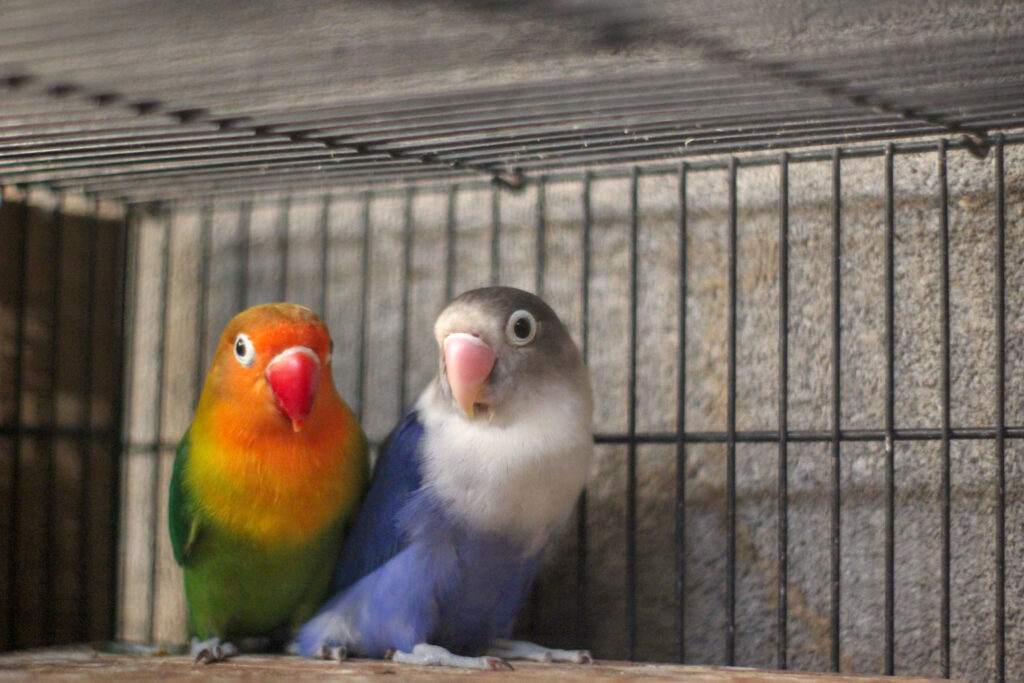
Photo by Arif Wihananto/iStock/Getty Images Plus
Small, bright, and full of parrot charm, lovebirds pack a lot of color into a body only a few inches long. There are nine recognized types of lovebirds. Eight are native to mainland Africa, while the grey-headed lovebird is native to Madagascar.
If you’re researching lovebird breeds, there’s one helpful vocabulary tweak: “Species” is the more accurate term. Many companion lovebirds also come in color mutations, which can make the same species look very different from the green, red, yellow, or black markings seen in wild birds.
Key Takeaways
- There are nine recognized lovebird species in the genus Agapornis.
- Lovebird species vary in native range, size, facial markings, eye-rings, and other physical traits.
- Blue, lutino, pied, and others are usually color mutations, not separate lovebird species.
- An avian veterinarian can help with individual care, diet, health, and species identification questions.
What Are the Different Types of Lovebirds?
The nine lovebird species are compact parrots, but their markings can be quite different.
| Lovebird Species | Approx. Length | Standout Feature |
|---|---|---|
| Rosy-faced lovebird | 6 in | Rose-pink face; no white eye-ring |
| Fischer’s lovebird | 5.8 in | Orange-red face; white eye-ring |
| Masked lovebird | 5.6 in | Dark head; yellow collar; white eye-ring |
| Black-cheeked lovebird | 5–5.5 in | Dark face; white eye-ring; red beak |
| Lilian’s lovebird | 5.3 in | Orange-red face; white eye-ring |
| Red-faced lovebird | 6 in | Orange-red face; sexes differ |
| Black-winged lovebird | 6.6 in | Black flight feathers; sexes differ |
| Grey-headed lovebird | 5.5 in | Male has grey head and chest |
| Black-collared lovebird | 5 in | Narrow black neck collar |
These measurements are approximate adult lengths. Also, color mutations, hybrids, age, and sex can sometimes make visual identification harder, so appearance alone may not tell the whole story.
1. Rosy-Faced Lovebird
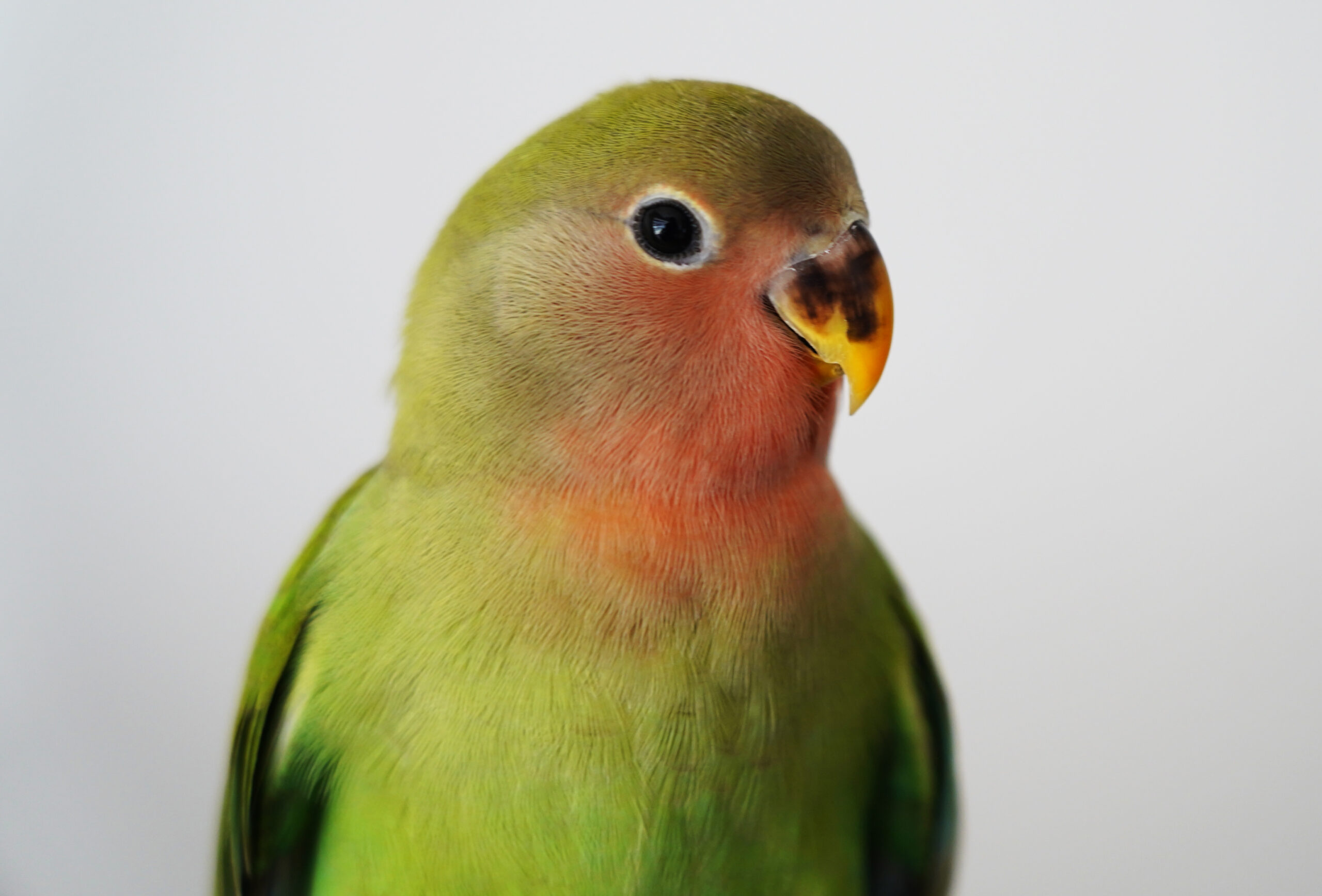
Photo by Stossi mammot/iStock/Getty Images Plus
Rosy-faced lovebirds, also called peach-faced lovebirds, are about 6 inches long. Wild-type adults are mostly green with a rose-pink face and upper chest, a redder forehead, and a bright blue rump. Unlike several other lovebird species, they do not have bold white rings of bare skin around the eyes.
This is one of the lovebird types pet parents are especially likely to find. Companion rosy-faced lovebirds have been bred in many colors, so a pet bird may look quite different from the wild-type green-and-pink bird—just one reason why color alone is not always a reliable way to identify a lovebird.
2. Fischer’s Lovebird
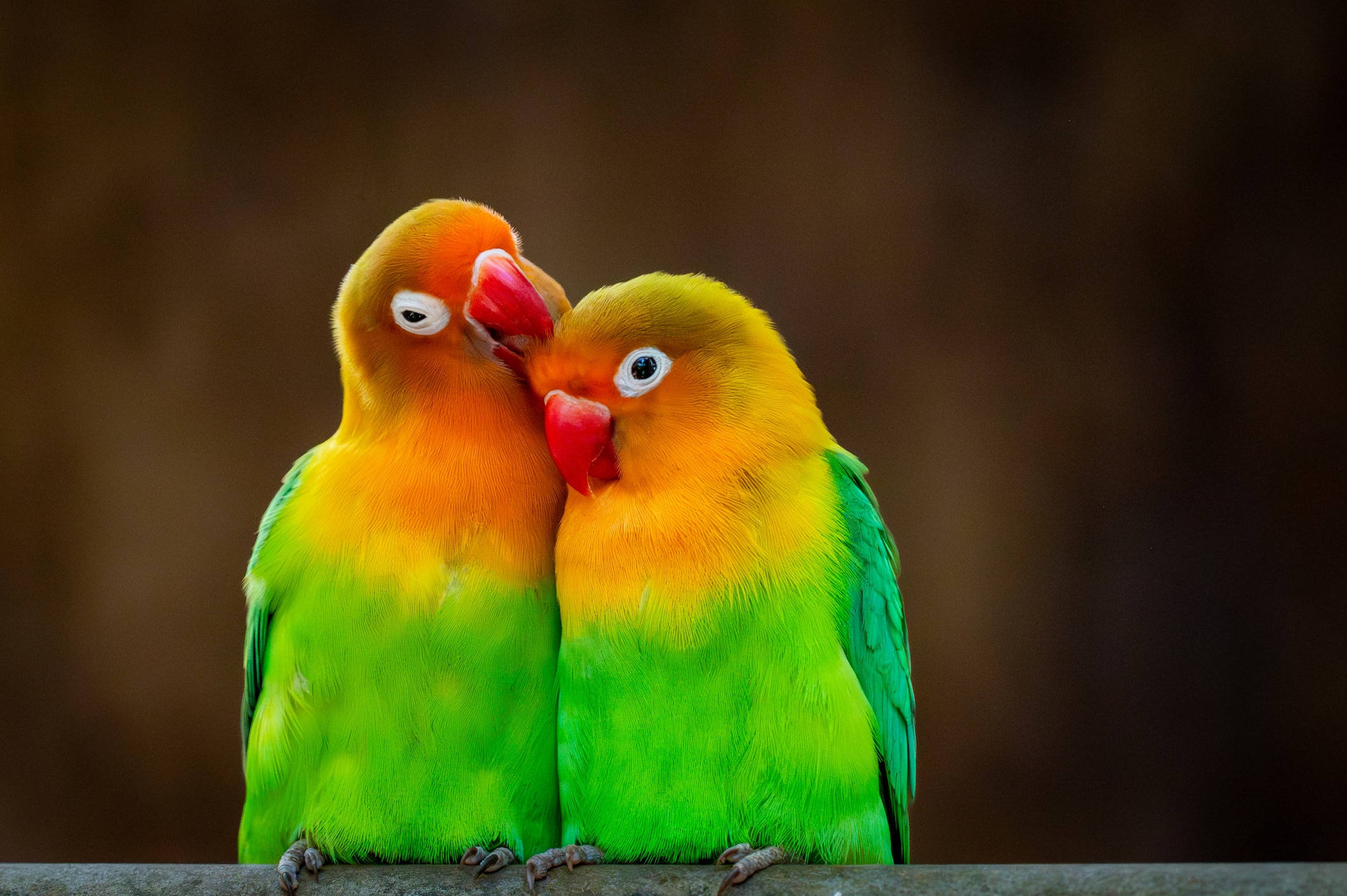
Photo by Zocha_K/E+
Fischer’s lovebirds are about 5.8 inches long. Wild-type adults have an orange-red face, yellow upper chest and neck, green body, red beak, and noticeable white eye-rings.
Fischer’s lovebirds are part of the group commonly called eye-ring lovebirds. Their markings can look similar to those of other members of this group, especially when companion birds have unusual color mutations. Looking at several traits together, such as the face, neck, eye-ring, and beak, is more useful than relying on one color patch.
3. Masked Lovebird
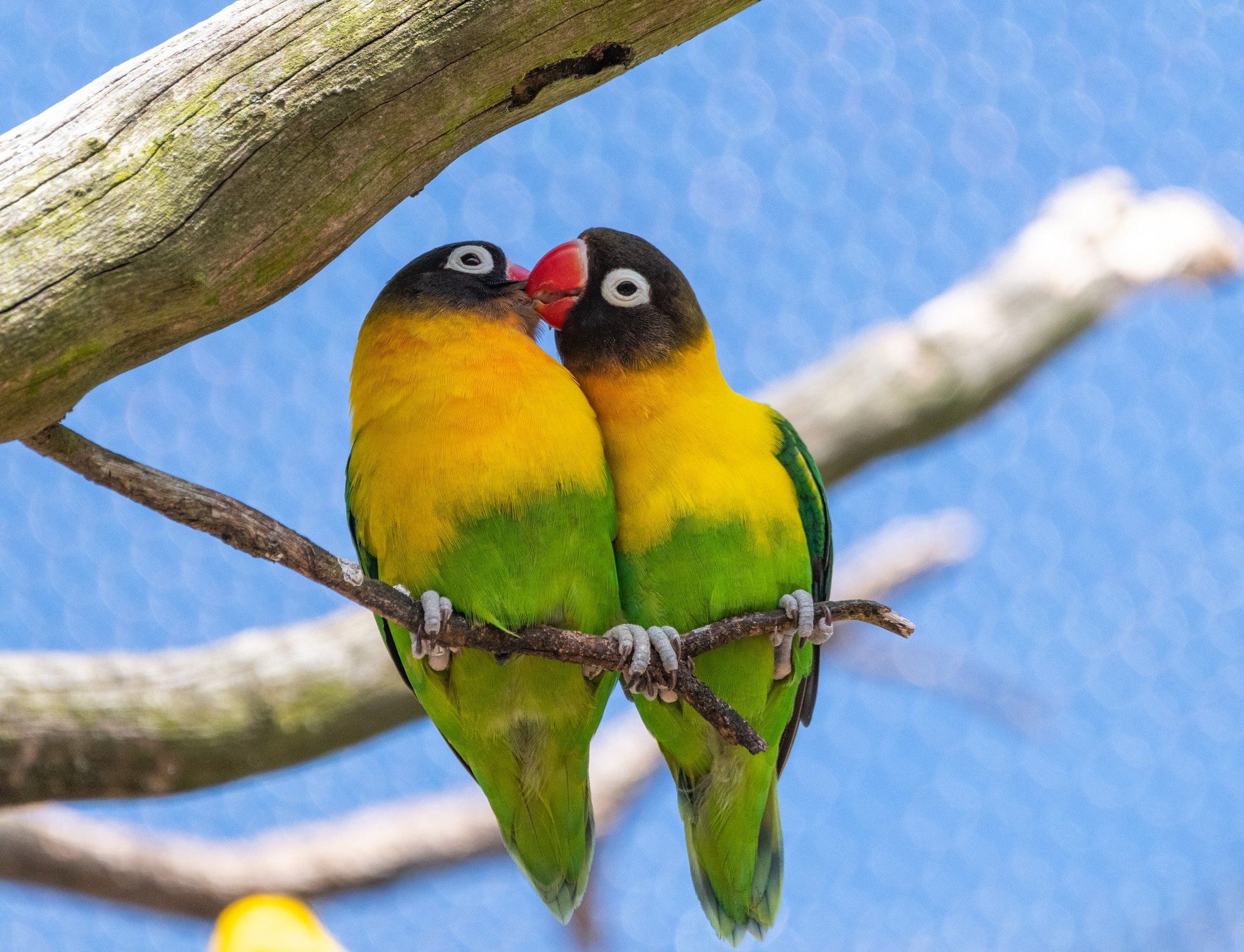
Photo by Khanh Le/iStock/Getty Images Plus
Masked lovebirds, also called yellow-collared lovebirds, measure about 5.6 inches. Wild-type adults have a dark brown-to-black head, a broad yellow collar and breast, a green body, and a white eye-ring.
A blue color mutation of the masked lovebird can replace much of the green and yellow appearance with blue and pale tones. That striking look is still a masked lovebird, not a separate species. For pet parents comparing types of lovebirds, the dark head and eye-ring are useful identification clues.
4. Black-Cheeked Lovebird
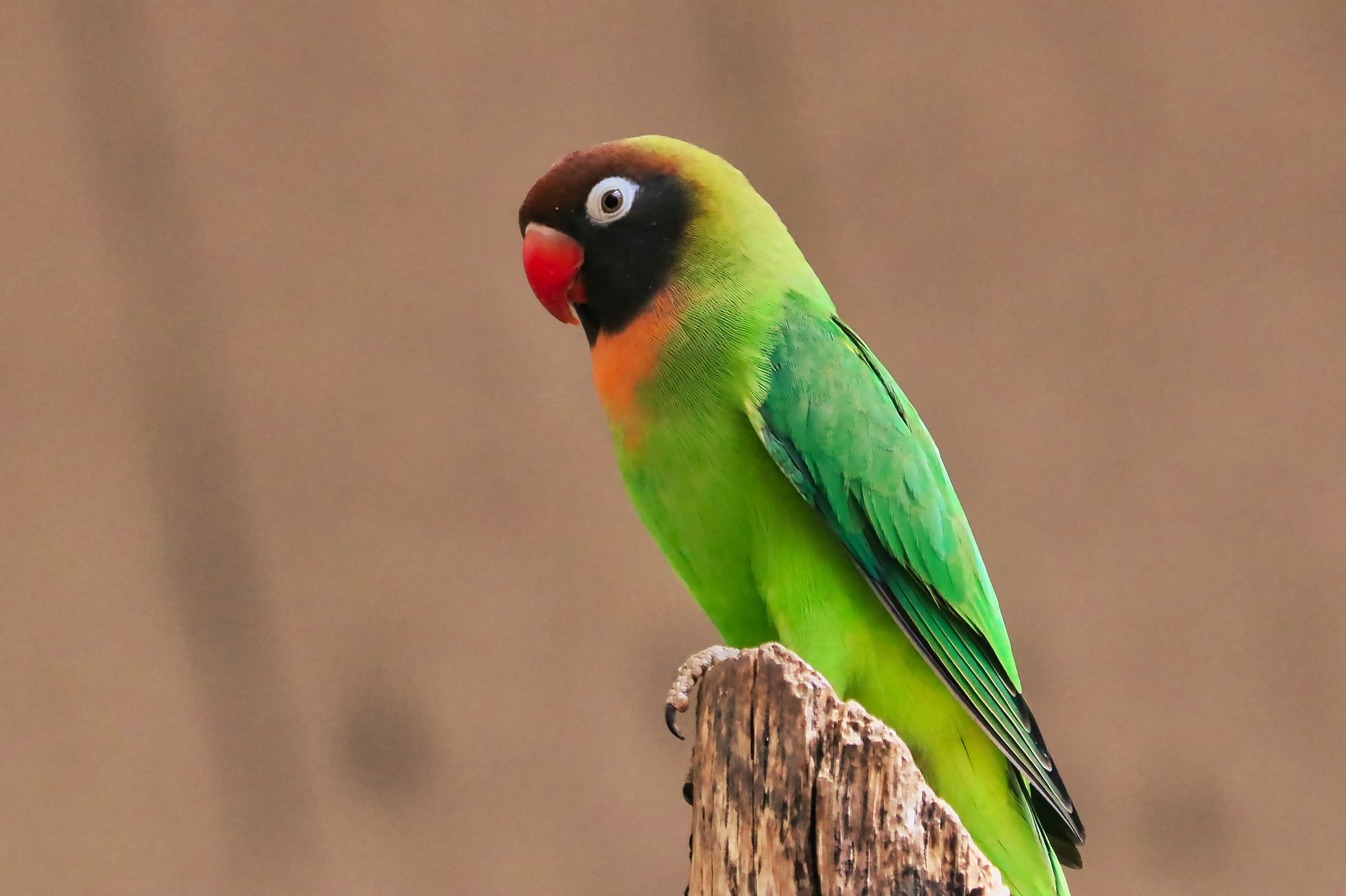
Photo by Wirestock/iStock/Getty Images Plus
Black-cheeked lovebirds are among the smaller species at roughly 5–5.5 inches long, and this species has a limited natural range in southern Africa. Adults have a dark face, olive-toned nape, green body, bold white eye-ring, and red beak. They also have a small pinkish-to-rust patch on the chest.
Because lovebird species can resemble one another, especially within the eye-ring group, pet parents should avoid identifying a bird by cheek color alone.
5. Lilian’s Lovebird
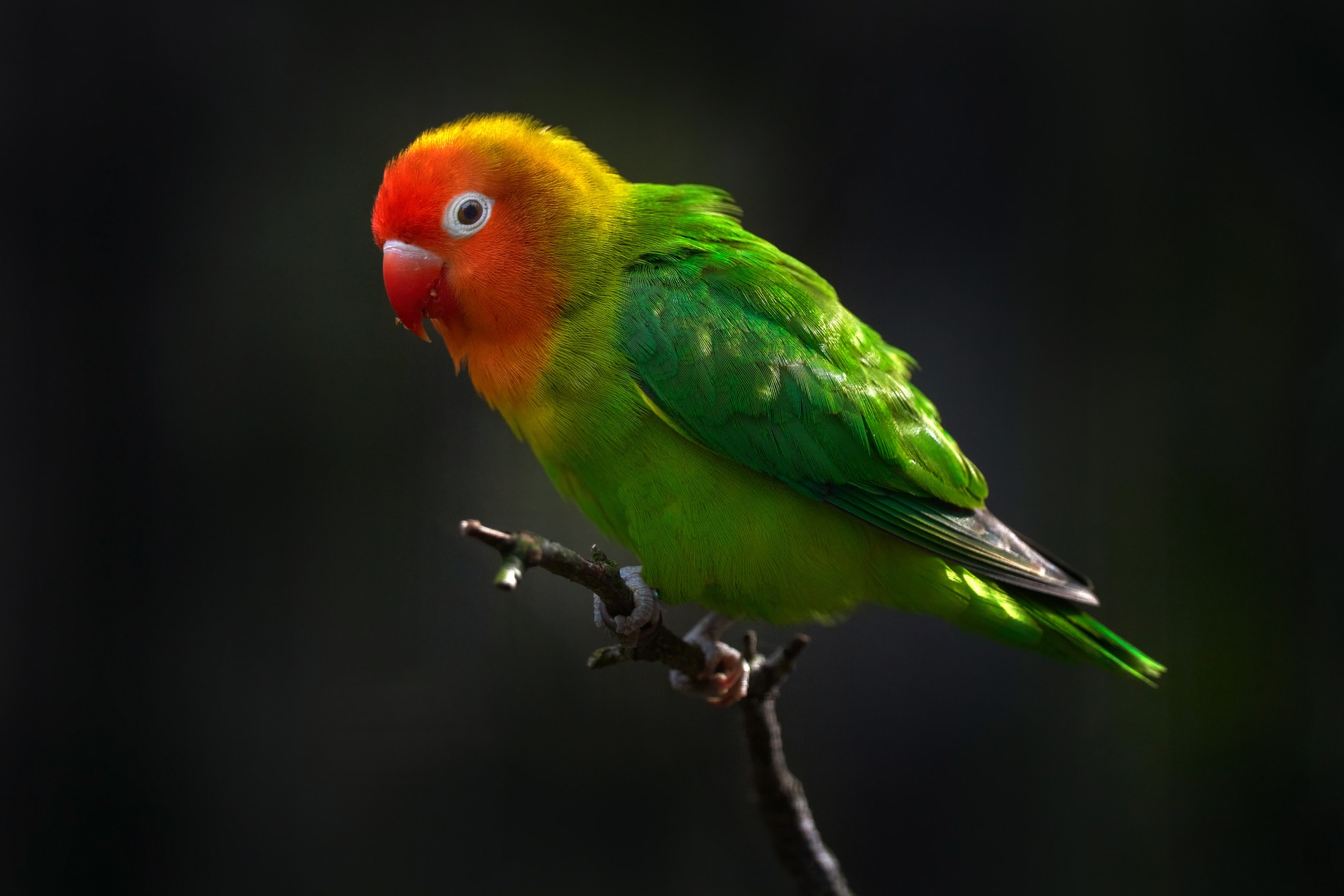
Photo by Ondrej Prosicky/iStock/Getty Images Plus
Lilian’s lovebirds, also called Nyasa lovebirds, are about 5.3 inches long. Adults have an orange-red forehead and throat that blend into salmon-pink on the crown, face, and upper chest. They also have a white eye-ring and a bright red beak.
Lilian’s lovebirds can resemble Fischer’s lovebirds at a glance. Differences in the head and breast pattern can help, but color mutations and hybrid ancestry may complicate identification. If knowing a companion bird’s species is important for records or care, an avian veterinarian or experienced avian professional can help.
6. Red-Faced Lovebird
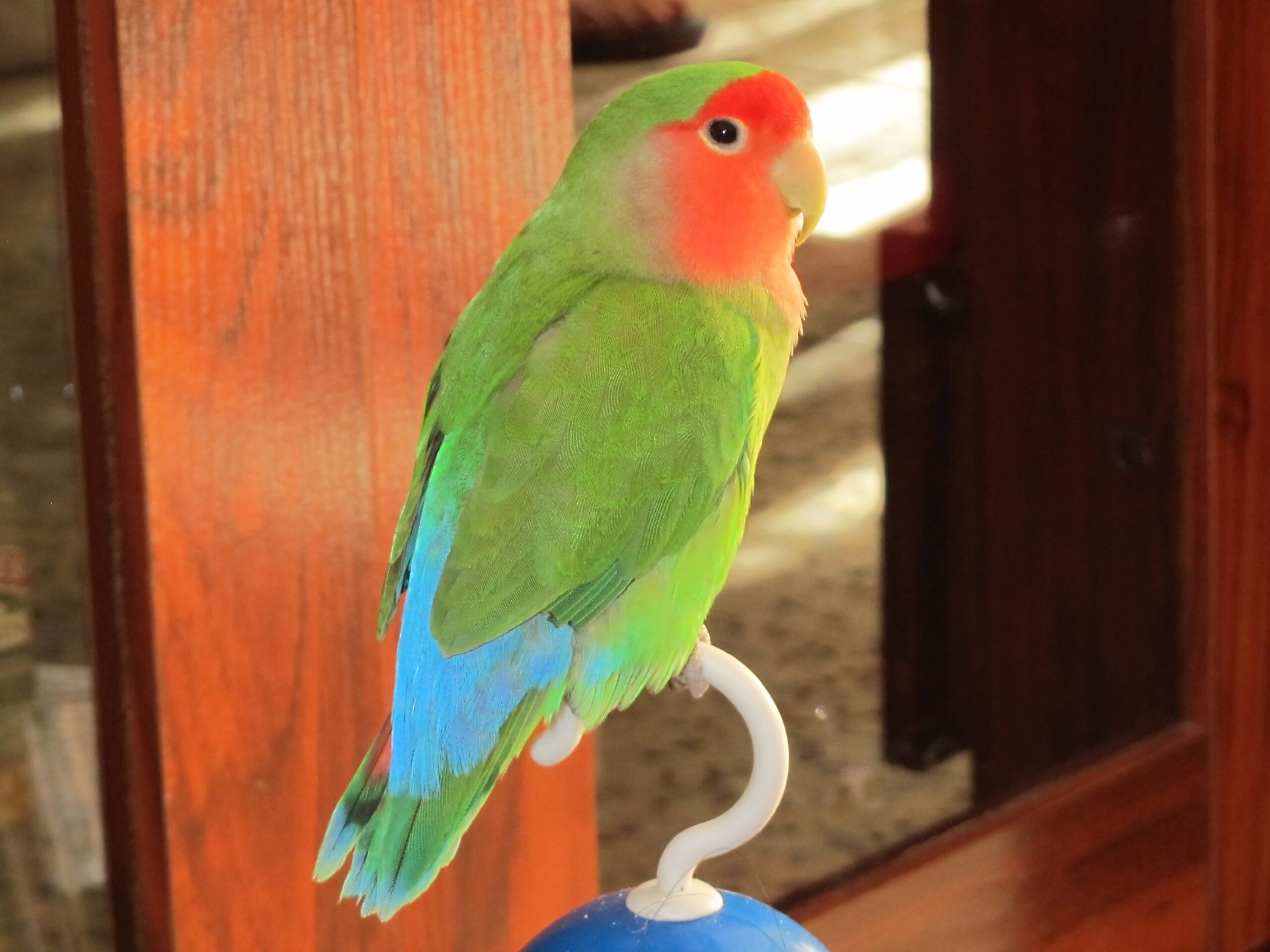
Photo by Jackeline Torres/iStock/Getty Images Plus
Red-faced lovebirds are about 6 inches long. Adult males are mostly green with an orange-red face, while females have a more orange facial mask. The sexes also differ in the color of the feathers under the wings.
This species has a broad range across parts of Africa. Compared with the other lovebirds seen in pet homes, red-faced lovebirds are much less common in companion-bird settings. Their natural history and behaviors also differ in interesting ways—for example, they are known to use termite mounds as nesting sites.
7. Black-Winged Lovebird
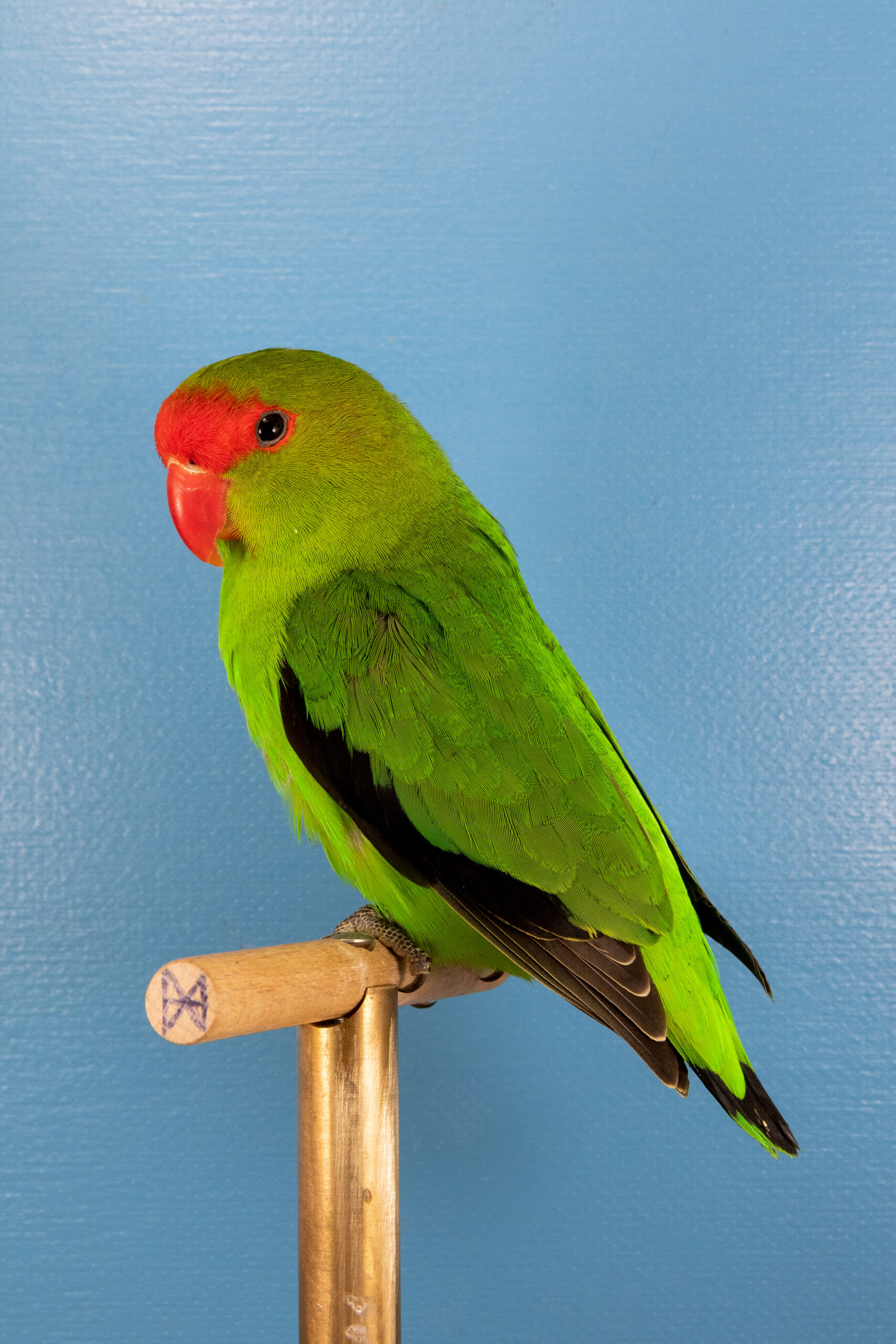
Photo by Wirestock/iStock/Getty Images Plus
Black-winged lovebirds, also called Abyssinian lovebirds, reach about 6.6 inches, making them the largest of the nine lovebird species listed by the World Parrot Trust. Both sexes are mainly green with dark flight feathers, but adult males typically show red on the forehead and around the eyes, while adult females have a green head.
Their natural range is in the highlands of Ethiopia and southern Eritrea. This species is uncommon in aviculture, so most pet parents are less likely to meet one than a rosy-faced, Fischer’s, or masked lovebird.
8. Grey-Headed Lovebird
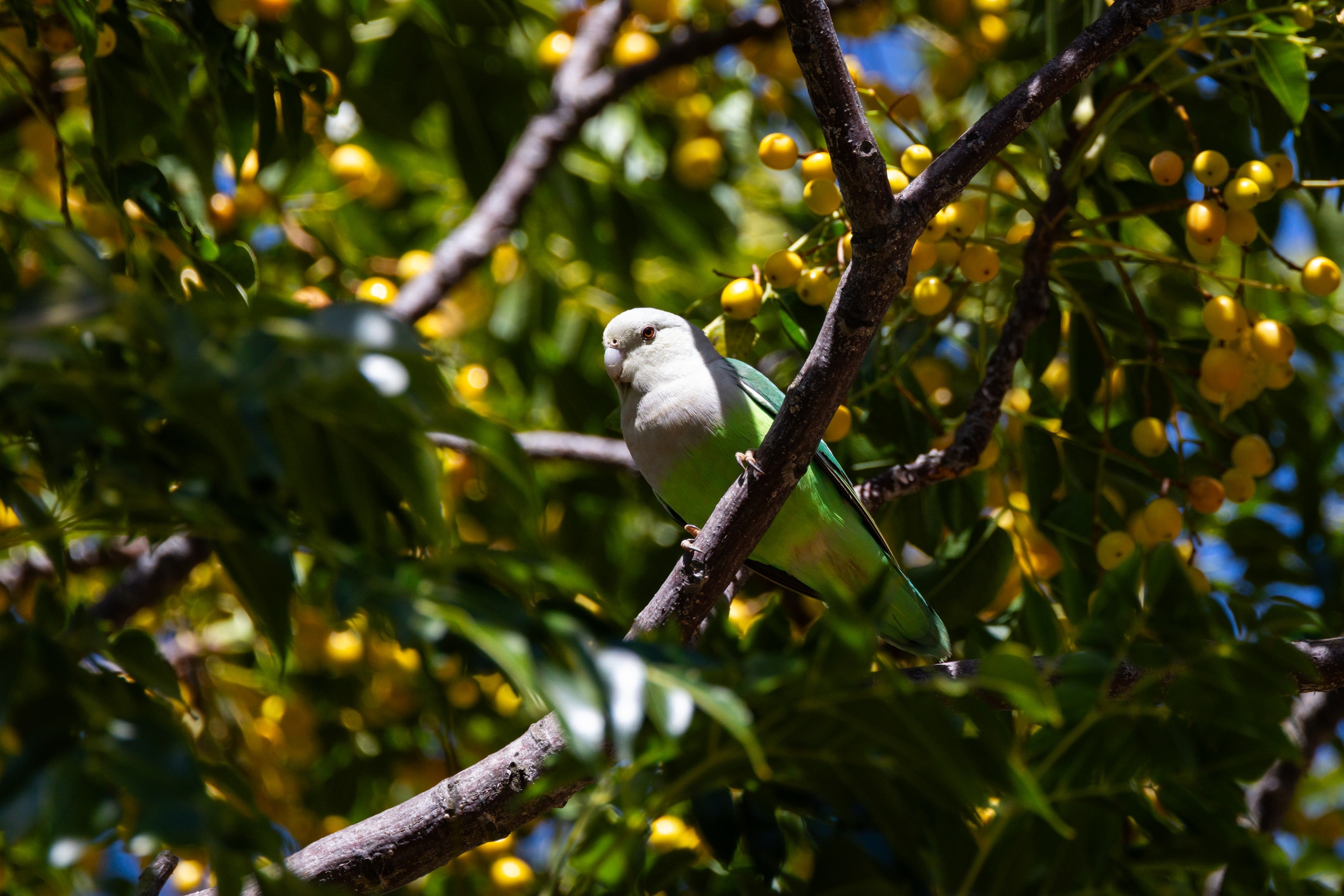
Photo by Magnus Gommers/iStock/Getty Images Plus
Grey-headed lovebirds, also called Madagascar lovebirds, are about 5.5 inches long. They are the only lovebird species native to Madagascar. Adult males have a light gray head, neck, and chest, while females are greener in those areas.
Because males and females look different, sex strongly affects appearance in this species, unlike several lovebird species in which adult males and females look broadly similar.
9. Black-Collared Lovebird
Black-collared lovebirds, also called Swindern’s lovebirds, are about 5 inches long. Adults are mostly green with a narrow black collar at the back of the neck and a muted yellow area below it.
This forest-dwelling species is rarely encountered in the pet trade. For most pet parents, the black-collared lovebird is more likely to be a species they read about than one they see in a typical companion-bird home.
What Types of Lovebirds Are Commonly Kept as Pets?
Not all nine lovebird species are equally common as companion birds, but several types are commonly available, including peach-faced, masked, and Fischer’s lovebirds.
This doesn’t mean one species is automatically the right fit for every home. A species name can tell you something about a bird’s biology, but it cannot predict an individual bird’s behavior. Before bringing home a lovebird, consider the individual bird’s age, health, history, social needs, housing, diet, daily enrichment, and access to an avian veterinarian.
Lovebird Species vs. Lovebird Colors
Search for types of lovebirds online and you may find labels such as blue lovebird, lutino lovebird, pied lovebird, or violet lovebird. These names often describe color mutations rather than separate species.
A color mutation is an inherited change that affects feather color or pattern. Selective breeding has produced many companion lovebirds whose colors differ dramatically from their wild-type relatives. A blue masked lovebird and a wild-type masked lovebird, for example, can look surprisingly different while still belonging to the same species.
Hybridization can add another wrinkle. Fischer’s and masked lovebirds, for example, can hybridize, and conservation researchers have studied hybrid populations where the species occur together. So some birds may have traits from more than one species.
How To Tell Different Types of Lovebirds Apart
Lovebird identification is a bit like putting together a tiny feathered puzzle. Instead of focusing on one feature, compare several physical clues at the same time.
- Eye-ring: Fischer’s, masked, black-cheeked, and Lilian’s lovebirds have a prominent white eye-ring.
- Face and head color: Look at whether the face is rose, orange-red, dark, gray, or green.
- Neck markings: A yellow collar points toward a wild-type masked lovebird, while a narrow black collar is characteristic of the black-collared lovebird.
- Beak color: Beaks may be red, coral, horn-colored, or gray-black, depending on the species.
- Body size: Lovebirds are small parrots, but adult lengths range from about 5–6.6 inches depending on species.
- Sex-related differences: Male and female black-winged, grey-headed, and red-faced lovebirds look different.
Color mutations, age, and hybrid ancestry can blur these clues. If you are unsure which type of lovebird you have or are interested in purchasing, ask an avian veterinarian or another qualified avian professional rather than guessing from a photo.
Does a Lovebird’s Species Affect Their Care?
Though each species has varying natural histories and physical traits, companion lovebirds have the same basic needs. They require safe housing, opportunities to move and explore, social interaction, appropriate enrichment, clean water, and a nutritionally balanced diet.
Recommended Products


Diet deserves special attention. Pet birds benefit from species-appropriate feeding, and individual needs can change with age, health, reproduction, and other factors. Do not make major diet changes based only on a species description or bird food label. An avian veterinarian can help you choose a feeding plan for your bird.
Regular veterinary care matters, too. Birds can hide signs of illness, so changes in appetite, droppings, energy, breathing, posture, or behavior deserve prompt veterinary attention. Your avian veterinarian can also advise you on housing, nutrition, enrichment, and preventive care.
Frequently Asked Questions About Types of Lovebirds
How many types of lovebirds are there?
There are nine recognized lovebird species in the genus Agapornis. Eight are native to mainland Africa, while the grey-headed lovebird is native to Madagascar.
What is the most common type of pet lovebird?
Rosy-faced, Fischer’s, and masked lovebirds are among the common species kept as pets. Species availability varies, and an individual bird’s health, care needs, and background matter more than looks alone.
Are peach-faced and rosy-faced lovebirds the same?
Yes. “Peach-faced lovebird” is another name for the rosy-faced lovebird. Wild-type birds have a rose-pink face and chest with a mostly green body.
Are blue lovebirds a separate species?
No. “Blue lovebird” describes a color mutation within a recognized lovebird species rather than a separate species. Because mutations can change a bird’s usual markings, identifying the species might require a closer look at other physical traits.
Which lovebirds have white rings around their eyes?
Fischer’s, masked, black-cheeked, and Lilian’s lovebirds have prominent white eye-rings. They are sometimes grouped informally as eye-ring lovebirds, but try to compare other features as well when identifying a bird.
What is the largest type of lovebird?
The black-winged lovebird is the largest of the nine species listed by the World Parrot Trust, reaching about 6.6 inches long.
Do different types of lovebirds have different personalities?
Species may differ in natural behavior, but species alone does not predict exactly how a lovebird will behave. Socialization, environment, health, training, and individual temperament all play a role. A qualified avian behavior professional or avian veterinarian can help with personalized guidance.
Attributions
This article was created with assistance from AI tools. The content has been reviewed for accuracy and edited by a human.