Parrotlets: Pint-Sized Parrots

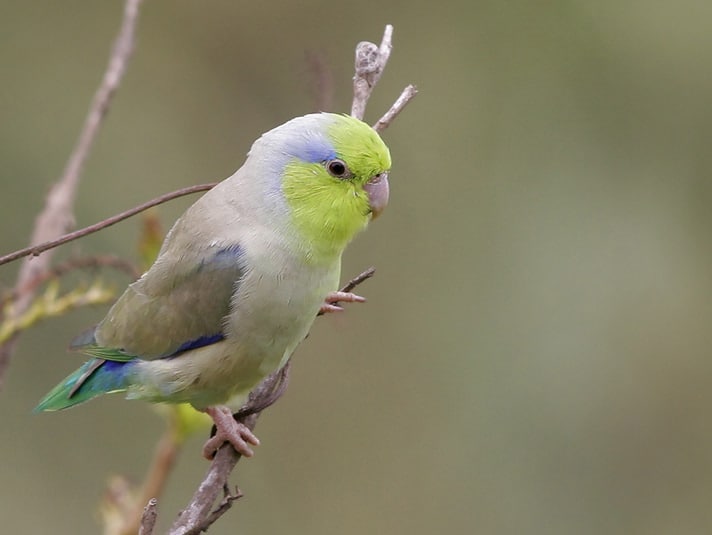
Photo by peterdehaas2317/Flickr
Parrotlets, affectionately known as “pocket parrots,” are charming, miniature-sized, true parrots. Most pet parents describe them as lovable and easy to maintain, yet very territorial. They aren’t easily paired with other birds in the same cage.
They’re quiet compared to other parrots, making them ideal for apartment or condo dwellers looking for one pet. Best of all, they’re affordable. As a new pet parent, you can expect an active bird that bonds very quickly, as well as a pet that’s entertaining, fearless, and a wonderful companion.
Here’s everything you need to know about caring for a parrotlet.
Key Takeaways
- These cute little parrots can be territorial so they're best kept alone in a cage of their own.
- Parrotlets are quiet compared to other parrots, making small chirps and peeps, and can learn to mimic words.
- Like other parrots, they thrive on a diet of formulated pellets, plus seeds, fresh vegetables, and fresh fruits.
- Green-rumped, Pacific, and spectacled parrotlets are three of seven species commonly available in the U.S.
Parrotlet Overview
“Kerly is a good talker, likes to cuddle, and is sweet-natured and very playful,” says Carol Gillertson of Illinois about her 9-month-old Pacific blue parrotlet. “I haven’t found any negatives.”
Parrotlets usually weigh between 18 and 28 grams and are approximately 3 to 5.5 inches in length.
There are seven species of parrotlets:
- Blue-winged parrotlets (Forpus xanthopterygius)
- Guiana or green-rumped parrotlets (F. passerinus)
- Mexican parrotlets (F. cyanopygius)
- Pacific or Celestial parrotlets (F. coelestis)
- Sclater’s parrotlets (F. sclateri)
- Spectacled parrotlets (F. conpicillatus)
- Yellow-faced parrotlets (F. xanthops)
The most commonly kept parrotlets in the United States are the green-rumped, Pacific, and the spectacled. They are relatively inexpensive at prices ranging from $100 to $350 each.
Fun Facts About Parrotlets
- Parrotlets can be sexed at a glance, since they are sexually dimorphic.
- Parrotlets have been sighted in Central and South America, mostly in Colombia, Ecuador, northwestern Mexico, Panama, and Peru.
History of Parrotlets
The first recorded breeding of parrotlets in the U.S. was in the 1920s and 1930s, according to Sandee Molenda, a certified avian specialist through the Pet Industry Joint Advisory Council (PIJAC), exclusive parrotlet breeder since 1986, and cofounder of the International Parrotlet Society (IPS).
“Unfortunately, they were difficult to keep in quarantine stations due to their aggressive natures, so many importers declined to deal with them,” says Molenda.
When she started breeding parrotlets in the U.S., she was told that they are “impossible to breed, cannibalistic to mates, destroy eggs, kill babies and [she would be] crazy to consider hand-feeding them and making them into pets.”
We now know that even though parrotlets are somewhat aggressive, these myths were mostly unfounded. However, it’s not advisable to keep parrotlets caged with other birds.
Parrotlet Behavior
Parrotlets are said to be aggressive toward other birds and unless they are breeder birds, only one is best per cage. Keep in mind that they can be aggressive toward their young as well, therefore, take caution and consult a parrotlet expert when attempting to breed them.
Most parrots bite their humans on occasion. “They can be temperamental at molting and during hormonal temperatures, but it’s not horrific and very manageable,” says April Winger, breeder of parrotlets for seven years, a certified avian specialist through the PIJAC program, and member of both the IPS and American Federation of Aviculture (AFA).
Many birds can be trained not to bite. Although training is easier with a newly weaned baby rather than an adult bird, hope is never lost with proper care and guidance
Parrotlet Cage Requirements
“Parrotlets can be kept in a cage or an aviary,” says Darlene Fitchet, a 12-year breeder of parrotlets, member and current president of the IPS, and director of Liberty Wildlife (a rehabilitation and education center in Scottsdale, Arizona).
Parrotlets should have fairly large enclosure—especially when nesting. Birds should at least have a cage large enough to allow them to fully extend their wings, without getting their wing feathers caught on the sides or touching their tail feathers against the bottom grill.
The larger the cage, the happier the parrotlet will be. Fitchet recommends a cage that is 24 by 18 by 18 inches. “You need room for a lot of toys. A swing is a must. Toys are an important part of any pet’s cage or breeder’s cage.”
Parrotlets spend much of their time entertaining themselves with toys but also seem to enjoy snuggling up to their owners. Always use safe toys, such as those without small movable parts, wire, or string.
Parrotlet Diet
A varied diet of pellets, seeds, fruits, and vegetables is the healthiest diet for parrotlets.
According to Winger, the parrotlet diet should consist of cockatiel food that includes black oiled sunflower seeds. She believes parrotlets also need need fresh veggies and fruits to give their plumage a healthy sheen.
She also adds, “I have found that they are much more inclined to eat fresh foods if their food is minced into small pieces.”
Parrotlet Vocalization
Parrotlets are relatively quiet and they make an ideal parrot for someone who lives in an apartment or who doesn’t care for loud noise.
In fact, Molenda says, “Parrotlets are the quietest hookbills. They cannot scream and do not squawk. They chirp and can, at times, have loud chirps, but even my canary is louder. They are much quieter than even budgies and cockatiels.”
Some learn to say a few words, and others learn to say many words and phrases. “According to the IPS survey taken every year, about 80 percent of the males and about 20 percent of the females kept as pets talk,” says Molenda.
The more time spend with your parrotlet, the better behaved they become and the more they will learn to mimic speech.
Parrotlet Handling
Birds, like most pets, thrive on attention, so they will appreciate all the time you can possibly spend with them.
They need at least 15 minutes of one-on-one attention at least two or three times a day. Their cage should be kept in the high-traffic areas where their human family spends the most time because they like to be around people and see what’s going on.
Parrotlet Health
As with all pets, pet birds should have annual checkups. Birds are known to hide their distress, so an avian veterinarian should see them regularly.
“Parrotlets that are kept in clean conditions, fed well and not exposed to other birds, should live a good long time (20 to 30 years),” Molenda advises. “Most typically, they can get simple bacterial or yeast infections but no more so than any other bird. It is believed that they are resistant to polyomavirus, but not immune.”
Tips for Adopting a Parrotlet
Here are some important tips to ensure your new parrotlet makes a smooth transition into your h0me:
- Research the bird species by reading books, magazine, and the searching the internet.
- Buy the largest cage possible and make sure that you have its habitat well-prepared in your home before the new addition arrives.
- Purchase a travel carrier in order to ensure a safe trip for your parrotlet for the trip home, and for future trips to the veterinarian.
- Talk to all family members, especially young children, about caring for and feeding your new pet bird. Most children will enjoy active participation with the new pet, such as helping with food preparation. This is a great way to get them involved and teach them about the responsibility of pet ownership.
- Bring your parrotlet home on a weekend, preferably not a holiday weekend where there may be great excitability and more people than usual in your home. It can cause the bird unnecessary anxiety during a traumatic transition.
- Give your new pal time to get used to its new cage and surroundings. Children can be especially excited and want to constantly play with a new pet. Let them know that that their feathered friend needs time alone in order to adjust to its new environment.
- Find a good avian veterinarian in your area for regular check-ups as well as any emergencies that may arise.
- You will want to see an avian vet for the bird’s first health examination. You can search for a Chewy Connected Vet Clinic or ask the breeder, family, or friends for recommendations.
FAQs About Parrotlets
Do parrotlets make good pets?
Yes. Parrotlets make active, lovable pets, especially for those who prefer a relatively quiet pet and those who want only one bird. Parrotlets can be territorial and are best kept by themself in their own cage, so they can be ideal for those with small spaces.
How many species of parrotlets are there to choose from?
There are seven species of parrotlet, but only three are typically found in the United States, and these include the green-rumped, Pacific, and spectacled parrotlets.
Do parrotlets make a lot of noise?
No. Parrotlets are among the quietest of all parrots, and are more likely to chirp and peep, as they are unable to squawk and screech like larger parrots. They can learn to mimic human speech and they make what pet parents describe as adorable noises.
Do parrotlets need a lot of space?
Not really. Parrotlets need a cage or aviary of at least 24 by 18 by 18 inches, but the space is largely for the toys and cage accessories these active birds will need to keep themselves entertained.
Do parrotlets like to be handled?
Yes, parrotlets are known to be affectionate and cuddly, like make other parrots, and enjoy one-on-one time with their pet parents outside their cage at least two to three times per day. Keep their cage in well-used area of your home so they can be around their human family.
Can I put two or more parrotlets together?
No. It’s not advisable to keep more than one parrotlet in the same cage as they can be territorial and even aggressive with other birds, especially those of their own size or smaller.
Attributions