Bombay Cat
Updated March 31, 2026
Bombay Cat
Updated March 31, 2026
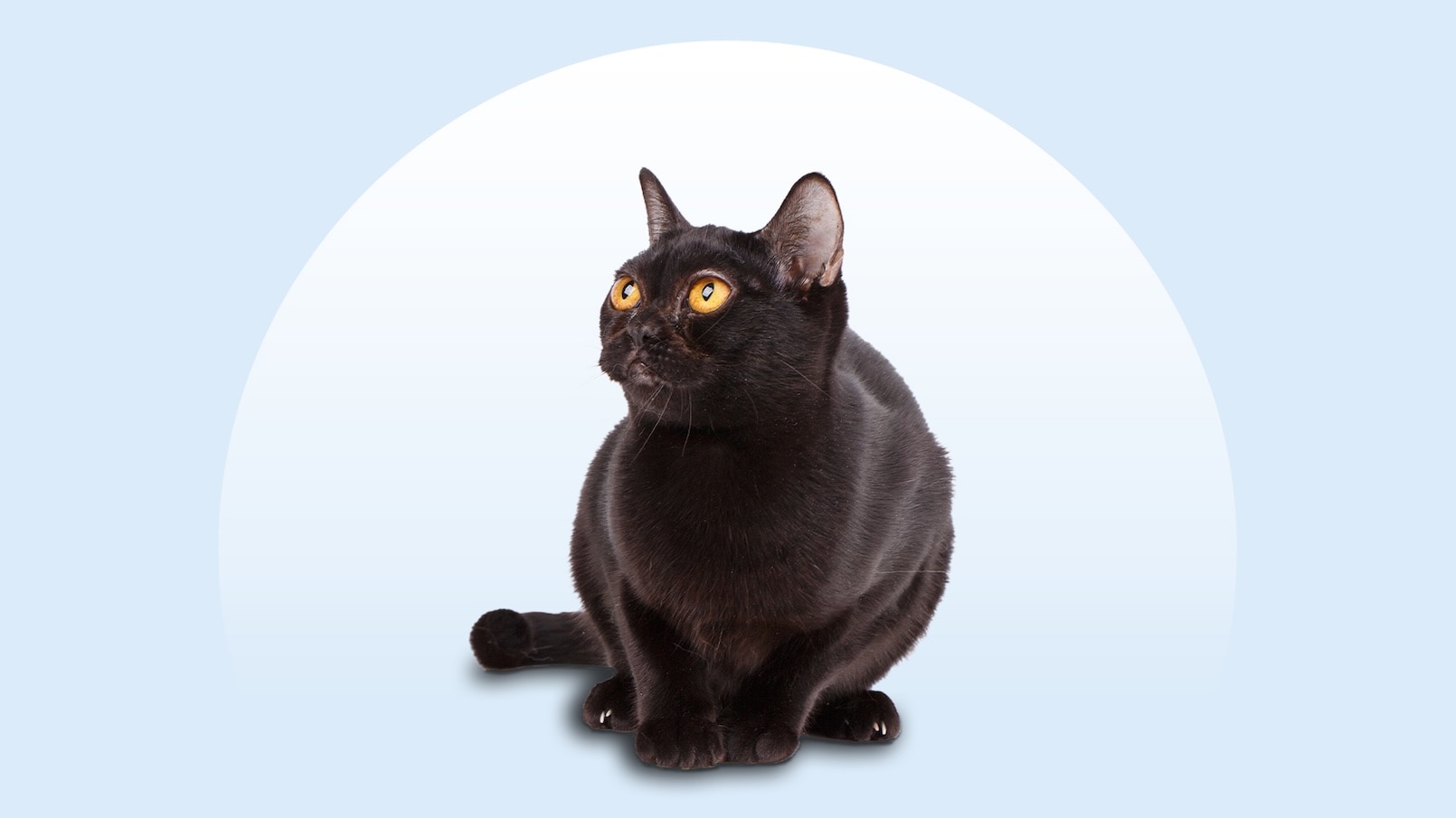
Nicknamed "parlor panther," Bombay cats are as stunning as they are snuggly. These sleek, all-black felines live for attention, playtime, and curling up on the closest available lap. With copper eyes and loving personalities, they combine big-cat looks with housecat devotion.
Affectionate, Playful, Social
6–12 pounds
12+ years
Ever wish you had a panther as a pet? Meet the Bombay, a 100% domestic cat with an elegant jet-black coat and mesmerizing copper-penny eyes. They might look like they belong in the jungle, but these cats will be right at home on your couch.
If Bombay cats had a motto, it would be “love hard, play hard.” They form deep bonds with their families and thrive on quality time together. Friendly and affectionate, they get along great with kids of all ages and other pets.
Give them plenty of love and attention (don’t forget the toys!), and you’ll have a best friend for life.
Recommended Products




Bombay Cat Characteristics
Bombay Cat Appearance
Bombay cats are basically mini panthers, minus the spicy attitude. These monochrome kitties are black from head to paw and have a signature eye color similar to a shiny penny.
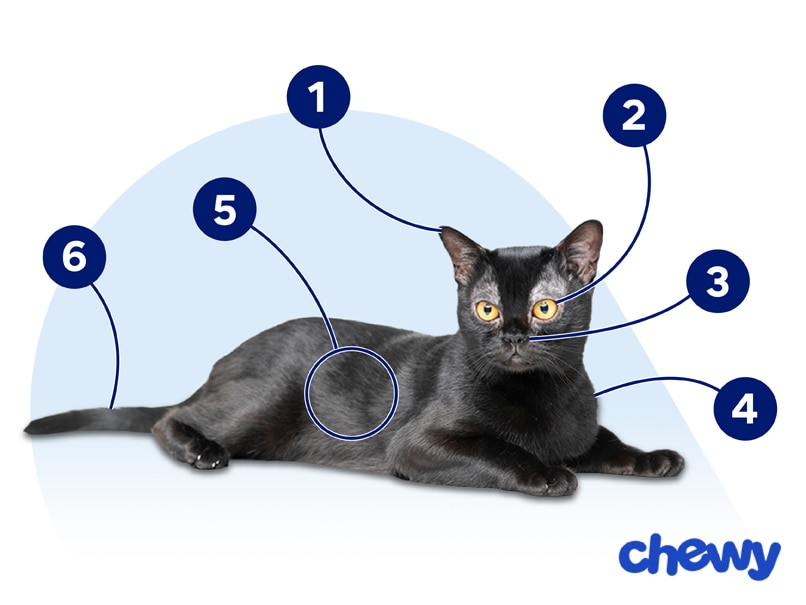
- Ears
Bombay cats have medium-sized ears with rounded tips that sit wide on their heads.
- Eyes
Their large, round eyes range from an intense gold to deep copper.
- Nose
Bombay cats have a solid black nose shorter than the average cat's.
- Coat Length
Their short-haired, satinlike coats shed minimally. The fur is dense and has a glossy, patent-leather sheen.
- Coat Color
Bombay cats are exclusively one color: black. Their fur is black to the roots, and their whiskers, nose, and paw pads are all black, too.
- Tail
Bombay cats have a straight, medium-length black tail.
Bombay Cat Temperament
“Bombay cats are outgoing, friendly, relaxed, and curious,” says Bonnie Beaver, DVM, MS, DSc(hon), FNAP, DACVB, DACAW, professor at the Texas A&M College of Veterinary Medicine & Biomedical Sciences.
As social butterflies, Bombay cats seek attention from every member of your household, guests included. They’ll greet visitors at the door and bask in the spotlight at every social gathering.
Don’t be surprised if they trot after you when you leave the room or bring you toys for games of fetch. These doglike kitties are devoted to their humans, highly intelligent, and easy to train.
Bombays are also extremely affectionate. They’ll claim your lap on the couch and snuggle with you under the covers. While individual personality always plays a role, Bombay cats are typically easygoing and tolerant, making them a great choice for families with children.
This laid-back attitude extends to other pets, too. Whether another cat or dog, they welcome new friends to play with and cuddle—as long as everyone has been properly socialized and introduced.
These playful cats can also have a mischievous streak. You might find them investigating your bathroom cabinets, so keep potentially dangerous items locked away.
And if they want attention or food, they’ll be sure to let you know. But they’re not as chatty as some breeds, like the Siamese and Sphynx, says Dr. Beaver.
Related Breeds




How to Care for a Bombay Cat
Bombay cats’ short-haired coats are surprisingly low-maintenance.
“These cats are very good at keeping their own coat clean with routine self-grooming,” says Katherine Pankratz, DVM, DACVB, a veterinarian at Animal Behavior Clinic in Portland, Oregon.
But like all cats, they benefit from a regular grooming routine that includes dental care and nail trims.
Grooming
Diet
Exercise
Environment
Bombay Cat Health
The Bombay cat’s lifespan is 12 years or more, with some reaching their late teens or even twenties. Regular vet checkups, a balanced diet, and plenty of playtime will keep your mini panther in great shape.
While these cats are generally healthy, there are some breed-specific concerns to note:
- Hypertrophic cardiomyopathy (HCM): Because the Bombay population is relatively small, Dr. Beaver notes the risk of passing along HCM-related genes is higher. HCM in cats is a condition that causes the heart’s walls to thicken and the heart to pump less efficiently. Yearly visits to your veterinarian or a veterinary cardiologist can help catch this condition early.
- Respiratory issues: The Bombay’s shorter facial structure can be associated with narrowed airways and other problems that make breathing more difficult, especially in heat or during intense exercise. Dr. Beaver recommends keeping your Bombay cool, limiting exposure to respiratory illness (wash your hands after petting another cat), and confirming that breeders screen for respiratory problems.
- Obesity: Bombay cats’ stocky frame can easily pack on weight if overfed. Dr. Pankratz says the best prevention relies on appropriate amounts of a nutritious diet, physical activity, and regular vet checkups.
- Excessive eye tearing: Dr. Beaver says some Bombay cats experience frequent tearing due to their facial structure. A gentle wipe-down with a cat-safe, hypoallergenic wipe will help keep their eyes clean.
- Dental disease: Due to their jaw structure, Dr. Pankratz says some Bombay cats may have overcrowded teeth that can lead to dental disease. She recommends routine veterinary dental exams paired with an at-home brushing routine.
- Feline lower urinary tract disease (FLUTD): FLUTD in cats can be triggered by a range of factors, from stress to urinary stones. Dr. Pankratz suggests proactively meeting your cat’s mental and emotional needs (enrichment, playtime, and companionship) to help reduce stress-related flare-ups. Feeding a wet food diet can also help.
Bombay Cat History
The Bombay breed’s panther-esque looks were by design. In the late 1950s, Kentucky breeder Nikki Horner set out to develop a domestic cat that looked like a miniature black panther.
By 1965, Horner had locked in the signature Bombay cat characteristics we know today: a midnight-black, high-gloss coat and copper-penny eyes.
While these cats originated in the United States, Horner named them after the black leopards found in Bombay (now Mumbai), India.
The Bombay cat breed was accepted for registration with the Cat Fanciers’ Association (CFA) in 1970 and earned championship status in 1976. The International Cat Association (TICA) accepted the Bombay in 1979.
Despite the recognition, the Bombay remains a rare cat breed. Both the CFA and TICA maintain lists of active breeders, but Bombay kittens can be hard to come by, and waitlists are common.
The American Bombay cat isn’t the only one to carry the name. There’s a British Bombay cat that also looks like a mini panther, but it’s a separate breed with distinct differences. Most notably, British Bombay cats can have green eyes, whereas American Bombays always have copper or gold eyes.