Can Cats Eat Coconut?


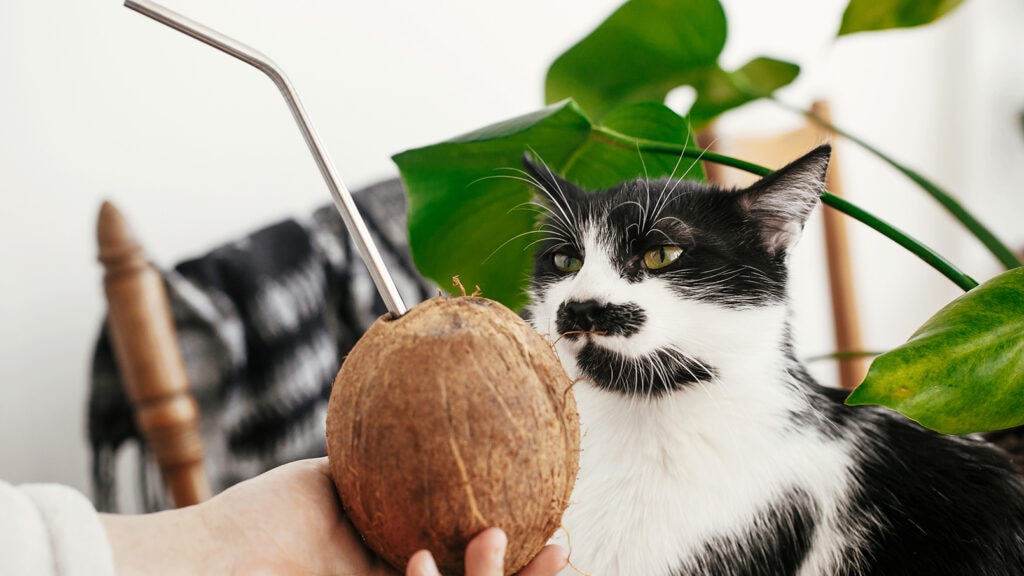
Photo by sonyachny/Adobe
If you’ve ever opened a bag of shredded coconut and immediately had a furry inspector appear in the kitchen, you might wonder whether it’s something that’s safe to share. So, can cats eat coconut?
Yes, cats can eat a small amount of plain, unsweetened coconut. But just because cats can eat coconut doesn’t mean it’s a good treat.
Most healthy cats don’t need extras like coconut to stay healthy—they get what they need from a complete and balanced cat food.
Before introducing any new food into your cat’s diet, always check with your veterinarian.
Key Takeaways
- Yes, cats can eat a small amount of plain, unsweetened coconut.
- Coconut is rich and fatty, so portions should stay small.
- Avoid sweetened coconut, coconut desserts, and coconut milk.
- Too much coconut can lead to vomiting, diarrhea, or stomach upset.
Can Cats Have Coconut?
Yes, cats can have a small amount of plain, unsweetened coconut—either shredded or a small bite of plain coconut flesh. A tiny amount of plain coconut oil isn’t considered toxic either, but because it’s highly concentrated in fat, it’s generally not the best choice for cats.
Avoid sweetened coconut flakes, coconut-flavored candy, coconut desserts, and coconut milk. These versions typically have more sugar, fat, or extra ingredients cats don’t need.
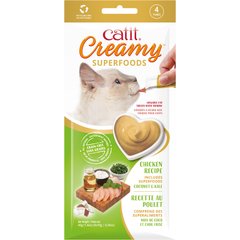
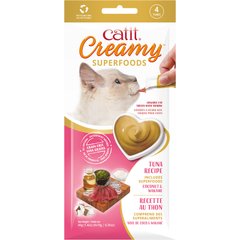
If you’d rather offer a treat made specifically for cats, these creamy options contain coconut alongside other cat-friendly ingredients:
Recommended Products
Is Coconut Good for Cats?
Coconut isn’t especially good for cats, but it does have a few small nutritional benefits.
Coconut contains:
- Fiber: Fiber helps support normal digestion and gut health. However, the amount a cat can safely eat is so small that the benefit is likely limited.
- Minerals: Cats get some minerals they need to stay healthy, like manganese and copper, from coconut, but most of the nutrients they need come from meat-based, balanced cat food.
Is Coconut Bad for Cats?
While a small amount of plain coconut isn’t toxic to cats, problems can arise if they eat too much or if the coconut is prepared with ingredients that aren’t cat friendly.
These are the biggest concerns with giving coconut to your cat:
- Too much fat: Coconut is high in fat, which can be hard for cats to digest (and a poor fit for cats with pancreatitis). Too much can lead to vomiting, diarrhea, or an upset stomach.
- Sweetened versions: Some versions of coconut, like sweetened flakes, coconut baked goods, and coconut-flavored desserts, have added sugar your cat doesn’t need. Too much sugar can add empty calories, contribute to weight gain, and make already-rich foods even harder on your cat’s stomach. Cats can’t taste the sweetness of sugar anyway, so don’t worry: They’re not missing out.
- Not much nutritional payoff: Coconut may be popular in human health foods, but it doesn’t offer many benefits for cats. Since cats need to get most of their nutrients from animal-based ingredients, coconut is more of a novelty snack than a nutritious addition to their diet.
How Much Coconut Can My Cat Eat?
All treats, including coconut, should make up no more than 10% of a cat’s daily calories. That means that for most healthy adult cats, a small pinch of plain, unsweetened coconut once or twice a week is enough.
Start with just a little bit at a time and see how your cat handles it. Even in safe portions, coconut can be a little rich for some cats, which may lead to stomach discomfort.
How To Safely Feed Coconut to Your Cat
If your cat is curious about coconut, keeping things simple is the best way to keep snack time safe. Follow these tips to safely feed coconut to your cat:
- Use plain, unsweetened coconut only.
- Keep the portion small. Go easy on coconut oil, which is especially high in fat.
- Stop if your cat shows any sign of stomach upset.
My Cat Ate Too Much Coconut—What Do I Do?
A tiny taste of coconut usually isn’t a cause for panic, but eating too much can be hard on a cat’s digestive system. Because coconut is relatively high in fat, some cats may develop stomach upset after overindulging.
Watch for signs such as:
- Vomiting
- Diarrhea
- Low appetite
- Belly discomfort
- Lethargy
Call your veterinarian if:
- Your cat’s symptoms are severe or last longer than 24 hours.
- Your cat ate a large amount of coconut oil.
- The coconut was part of a dessert, candy, baked good, or another rich dish.
- Your cat has pancreatitis, diabetes, or another health condition.
- Your cat doesn’t eat their normal food within 24 hours.
If you can’t reach your veterinarian right away and you’re not sure what to do, you can also call the Pet Poison Helpline (855-764-7661) for help.
FAQs About Coconut for Cats
Can cats eat coconut oil?
Yes, but less is more. Coconut oil isn’t toxic to cats, but it’s very high in fat and doesn’t offer many benefits that a cat can’t get from a balanced cat food. A tiny amount is unlikely to cause problems for most cats, but too much can lead to stomach upset.
Is coconut safe for cats?
It can be. Plain, unsweetened coconut is generally safe for cats in very small amounts. The trouble starts when coconut is mixed into desserts, candies, or rich, creamy dishes.
Can cats eat sweetened coconut flakes?
No, sweetened coconut flakes have added sugar and extra calories that cats don’t need. They’re especially problematic for cats with diabetes.
Can kittens eat coconut?
It’s best to save treats like coconut until your kitten is at least a year old. Growing kittens need every bite to count, and their nutrition should come from a complete kitten food instead of people food.
Attributions
This article was created with assistance from AI tools. The content has been reviewed for accuracy and edited by a human.