How To Stop a Kitten From Biting


Photo by lulia Alekseeva/Getty
Kittens are pint-sized, aww-inspiring wonders whose playful spirit can make even the most buttoned-up adults swoon. As sweet as kittens are, their teeth are razor sharp and they have a propensity for nips and bites in their first year, as they’re teething, playing, socializing, and exploring the world.
Rest assured that kitten biting is perfectly normal, albeit ouchy kitten behavior. You’ll be happy to learn that kitten biting is a habit they often outgrow as they mature into adult cats. It’s important to gently curb kitten biting through redirection, healthy socialization, guided playtime, and positive reinforcement.
So when do kittens stop biting? Learn why kittens bite, at what age kittens stop biting, and the steps you can take to help minimize your kitten’s biting behavior.
Key Takeaways
- Kitten biting is completely normal and even expected, and it's important to provide them with an extra dose of patience, kindness, and care.
- Provide plenty of interactive toys to give your kitten an appropriate outlet for their natural biting, pouncing, and tackling behaviors.
- Some of the best ways to curb kitten biting include redirecting them to engaging toys, encouraging hands-free play, and using positive reinforcement.
- Socializing your kitty with their littermates or other cats helps them learn when biting is (and isn't) appropriate.
Why Is My Kitten Biting Me?
If you’ve noticed that your kitten bites you during play sessions, when you’re holding them, or simply while snuggling, you’re not alone. Kitten biting is a very common and natural behavior and seldom means that your kitten is upset or aggressive.
One of the primary reasons why kittens bite (even if it’s a gentle nibble) is to explore the world around them. Just like other young animals and even human babies, who display a similar biting habit and often put things in their mouths, your kitten uses their mouth to interact with the world around them.
Other reasons why kittens bite, nip, or nibble include:
- Teething: Chewing on things, including our fingers, feels good on those growing teeth and painful gums. (More on this in a second.)
- Nursing instincts: Kittens will suckle on things, which can feel like a bite, if they’re not wholly weaned. They should nurse on their mother or a bottle until they are 4-6 weeks of age.
- Play aggression: This is an ingrained play behavior inspired by natural hunting instincts. It’s often playful, but mimics how they’d capture and interact with prey in the real world.
How To Stop Kitten Biting
As your new kitten matures into an adult cat, this biting behavior will typically begin to fade away. However, it’s still important to address this habit as much as possible to prevent it from lingering into adulthood. It also makes sense to curb biting behavior simply because, well, those sharp teeth kinda hurt!
Follow these simple steps to reduce kitten biting.
nensuria/Getty
1. Provide Them With Lots of Toys
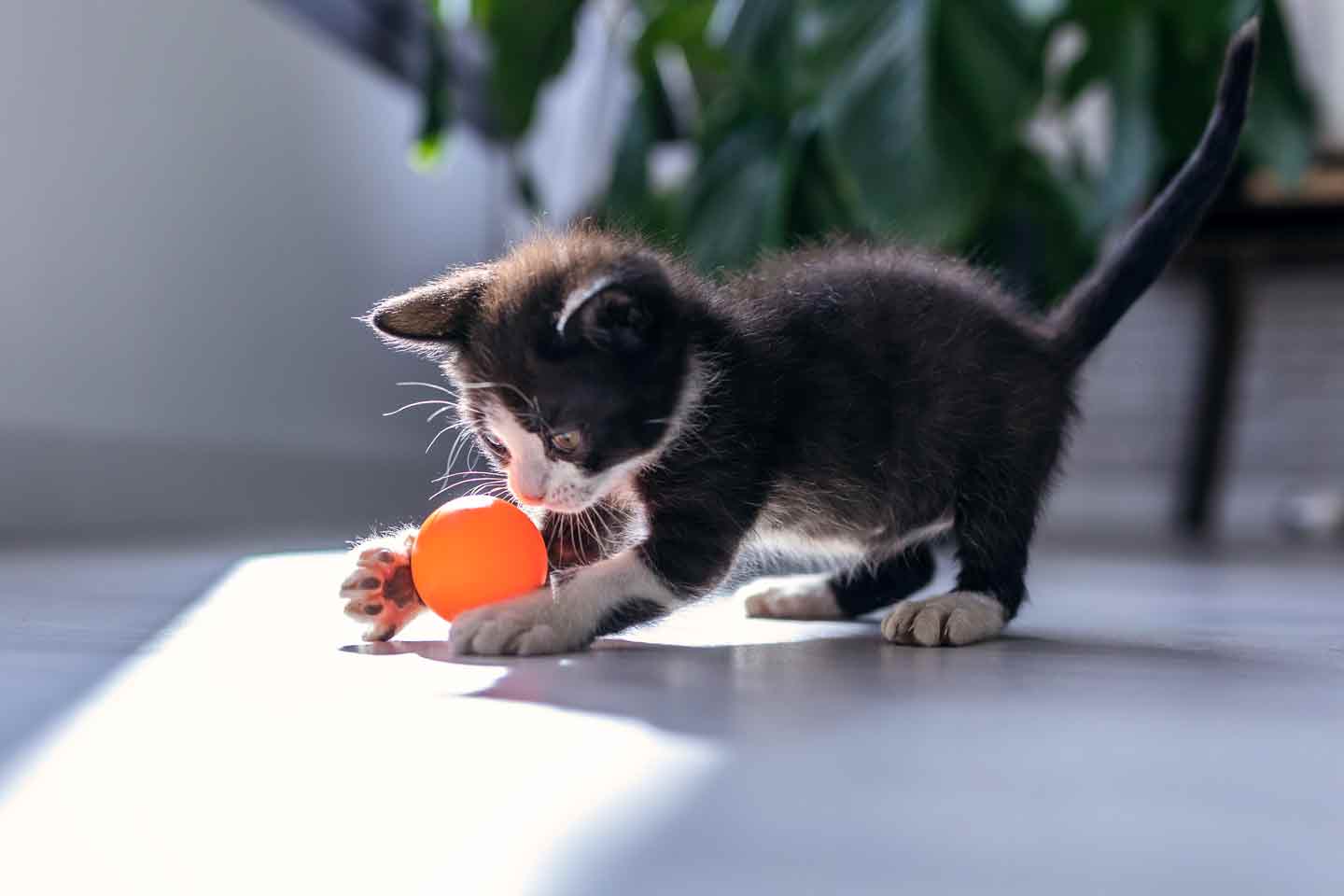
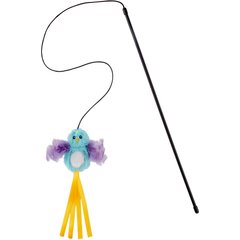
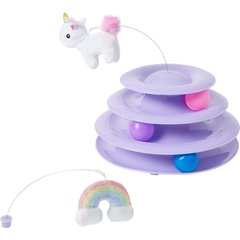
To curb playful biting in kittens, provide plenty of toys, such as wand toys, balls, scratching posts or interactive toys, to keep them engaged, advises Dr. Bradley Krohn, DVM, a veterinarian with The Vets based in Portland, Oregon. The Frisco Bird with Feathers Teaser Wand Cat Toy with Catnip is a good option because it attracts your cat with its irresistible scent and keeps your hands away from their mouth.
Recommended Products
2. Avoid Using Your Hands as Toys
On that note, avoid using your hands as toys. “This can encourage kittens to view your fingers as playthings,” Dr. Krohn explains.
It’s important to play with your kitten in a way that doesn’t encourage them to bite. This means avoiding rough play—which only encourages them to tap into their feisty side—and instead gently playing with a variety of toys. Think of playtime as an opportunity for you to bond and to encourage and reward good behavior.

SunRay BRI Cattery RU/Getty
3. Use Positive Reinforcement
If your kitten bites you, don’t snap at them or punish their behavior. Rather, Dr. Krohn says, it’s best to redirect their attention to an appropriate toy. “Consistency and positive reinforcement can help shape their behavior,” he says.
Also, scolding them is usually ineffective. Instead, it will likely just leave them feeling confused because they’re simply acting on natural instincts and are unaware that what they’re doing is wrong.
NickyLloyd/Getty
4. Encourage Socialization With Playmates
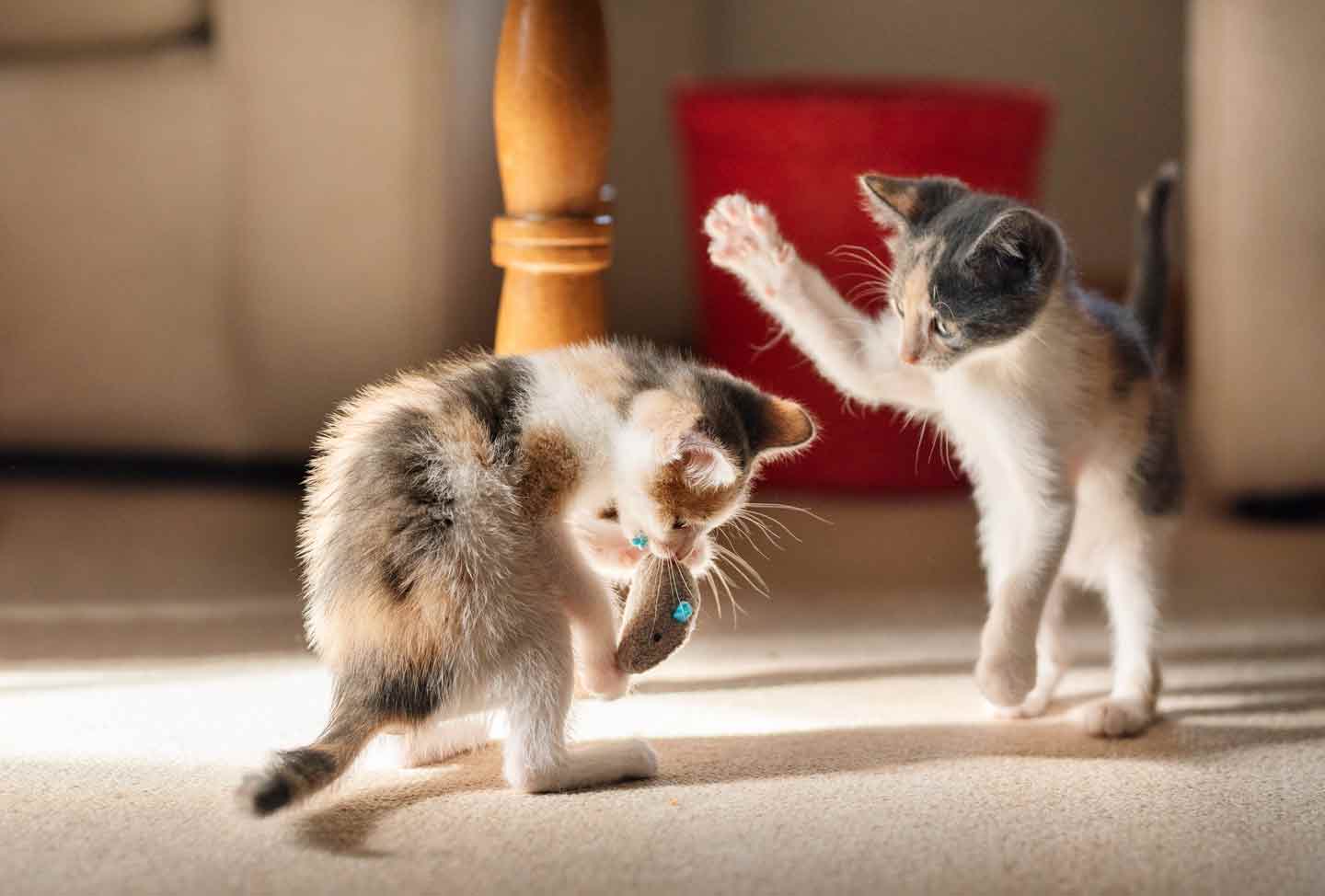
If your circumstances permit, it might be helpful to adopt kittens in pairs or allow your kitten to play with their littermates up until adoption. This gives them time to interact and socialize with other kittens—including pouncing, tackling, and biting—as much as they desire.

South_agency/Getty
5. Consult an Expert
If kitten biting remains a persistent issue, is causing harm or seems out of the ordinary, then this behavior could be a sign that something else is going on with your kitten.
It’s possible they are dealing with a hidden injury or aren’t feeling well, or that they’re feeling anxious, scared or upset. In this case, speak with your veterinarian about the best next steps or consult an animal behaviorist for guidance on modifying their behavior, Dr. Krohn advises.
When Do Kittens Stop Biting?
So, at what age can you expect your kitten to stop biting you? A kitten’s 30 adult teeth typically come in from about about 10 weeks to six months of age, after which, their biting habit may begin to wane.
Chewing and biting can help alleviate the discomfort of a kitten’s incoming teeth. It’s especially crucial to give them appropriate toys to chew on at this stage of their development, like SunGrow Teething Chews Cat & Ferret Chase & Kicker Mouse Plush Toy or the Catstages Fresh Breath Mint Stick Cat Chew Toy.
While there’s no definitive time when kittens stop biting altogether, their kitten behaviors—including chewing, nibbling, nipping, scratching and suckling—may begin to decrease once they’ve finished teething and start to seek affection and companionship.
“Biting usually stops around a year or so, when they start to outgrow their kitten playfulness and become more like adult cats,” says Dr. Krohn. “However, individual kittens can vary, and some may continue to exhibit playful biting tendencies even as adults.”
Consistent training, appropriate playtime, and socialization during kittenhood can help reduce these behaviors early on and ensure they’re not prominent or problematic as adult cats.
FAQs About How To Stop a Kitten From Biting
When do kittens stop biting?
A kitten’s inclination to bite often begins to fade as they mature into an adult cat. You can help reduce the habit by redirecting your kitten to toys, by avoiding using your hands as toys, and by using positive reinforcement.
Why does my kitten bite me?
Kittens bite as a way of exploring or interacting with the world. Biting is a natural aspect of kitten behavior used in play and to comfort themselves when they are teething.
How do I stop my kitten from biting my hands?
To stop your kitten from biting and curb this natural behavior, it’s important to avoid using your hands as toys. Instead, redirect your kitten to an appropriate cat toy when they bite, and use consistently positive reinforcement to encourage better play habits.
Can teething make kittens bite more?
Teething can be one reason kittens bite, nip, or chew. Offer appropriate kitten-safe chew toys and redirect your kitten away from hands or other off-limits items, like electrical cords or small items that could be choking hazards.
Should I punish my kitten for biting?
Never punish your kitten for their natural biting behavior. Instead, outfit the rooms of your house with a variety of enticing toys, stick to hands-free toys, and use a positive reinforcement approach to ensure your kitten grows out of their natural biting habit.
Attributions