Why Is My Kitten Biting Me?

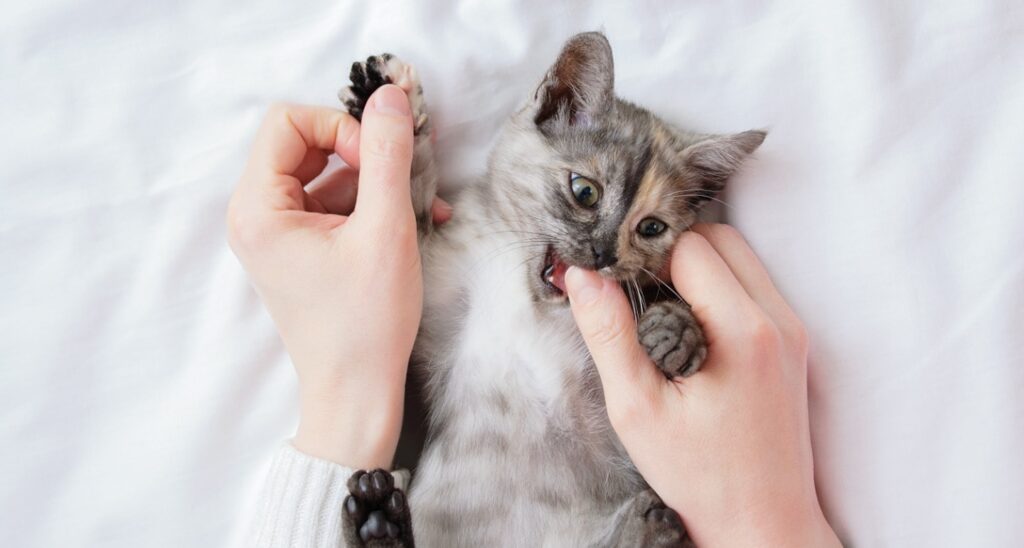
Photo by iStock.com/Iuliia Alekseeva
If you wonder, “Why is my kitten biting me?”—you should know that biting is a natural kitten behavior. They’re not being naughty. Rather, kittens explore their world by mouthing objects with (OUCH!) their mouths.
Kittens bite for many reasons, including teething. However, if left unchecked, their normal exploration and play habits can turn into a problem once they reach adulthood. Learn why kittens bite and how to stop your kitten from biting with effective training methods like redirection and hands-free playtime.
Key Takeaways
- Kitten biting is normal and kittens mouth objects, people, and toys as they explore the world.
- Other reasons why your kitten may bite include attention-seeking, stranger danger, and play aggression.
- Play biting starts at about 3 weeks of age, social play peaks between 9 and 16 weeks, and begins to fade thereafter.
- To stop kitten biting, interrupt the bite right away, redirect your kitty to an appropriate toy, and reward good behavior.
Why Is My Kitten Biting Me?
To figure out the reasons behind kitten biting, ask yourself what the cat gets out of it. Depending on the kitten’s personality, socialization, age and other factors, there may be several reasons why your kitten is biting.
1. They’re Exploring
2. They’re Teething
A common reason kittens bite is because they’re teething. Incoming teeth can cause discomfort, and kittens have figured out (just like human babies) that chewing on things can help alleviate some of that pain. Like humans, they tend to chew on pretty much anything they can sink their tiny teeth into—your arm, random objects, and even cords.
Along with providing your kitten with the right chew toys, it’s also imperative to eliminate any access to potential hazards, such as small objects they can choke on or electrical cords. Once your cat has all 30 of their adult teeth—which typically occurs between 10 weeks and six months of age—this chewing frenzy may cease.
It’s important to give them appropriate toys they can safely chew on. The SunGrow Teething Chews Cat & Ferret Chase & Kicker Mouse Plush Toy features an assortment of catnip-filled toy mice, which helps satisfy both their need to chew and their hunting and pouncing instincts.
Another option to consider is the Catstages Fresh Breath Mint Stick Cat Chew Toy, which gives them a biting toy while imparting a minty scent to improve kitty breath.
3. They Feel Bad
4. Stranger Danger
5. Play Aggression
Kittens start play biting at about 3 weeks of age, and social play reaches its peak between 9 weeks through week 16 and begins to fade thereafter. Momma cat and siblings teach kittens that bites hurt and to pull their punches.
Singleton kittens (kittens without siblings) increase play aggression games around 5 months of age, and the biting can be explosive. These kittens have no other playmates, and so may go from sweet lap snuggles to biting in seconds.
Adopting a pair of kittens allows them “legal” outlets to wear each other out, until they outgrow the behavior by about 9 to 12 months of age. I recommend when possible that you adopt a pair of kittens together, so they teach these lessons naturally. Otherwise, it’s up to us humans to teach kittens to stop biting.
6. They Need Attention
How to Stop a Kitten From Biting
You won’t eliminate kitten biting entirely, but you can offer better alternatives to nailing your tender toes, ankles or nose. Punishment that hurts or scares kittens is NEVER acceptable and can make biting worse by turning play-bites into defensive aggression. The key to bite training is four-prong:
- Interrupt the inappropriate bites
- End positive attention
- Offer a better target
- Reward good behavior
Interrupt Inappropriate Kitten Biting
Kittens have a very short attention span, so the interruption must happen right as they chomp your ankle or nails or your hand. A very effective way to interrupt a young kitten from biting is to make a percussive “SSSST!” hissing sound that imitates the mother cat. Since a feline hiss means, “Back off, I’m warning you!” this works especially well with young kittens under about 4 months of age.
The second effective bite interruption is a loud and short noise, like a shriek or howl. A short yelp is effective because it explains that biting hurts you. Kittens are smart and learn cause-and-effect very quickly. Kittens who play don’t want to hurt you; they want the games to continue. The short “EEEK!” not only startles and interrupts the biting, it explains what you think of their out-of-control play behavior, too.
This yelping tactic is most effective for older kittens up to 6 or 7 months of age. Please reserve this method for play aggression in kittens 7 months or younger, though. A shriek near a growling or hissing older cat could increase feline aggressive behavior or even prompt an attack.
End Positive Attention
When consequences are pleasant, they increase the chance a behavior will be repeated. It’s cute to allow kittens to play with your fingers when they’re tiny, right? Then they get big and it’s not so cute anymore. Whoops! You’ve taught the kitten it’s fun to target your hands—a hard lesson to un-learn.
People often reward biting without realizing it. Jerking away your hands or dancing around to dodge kitten bites make hands and feet even more alluring, because cats are triggered by movement.
It’s hard to do, I know, but grit your teeth and hold still. If they’re latched on to your hand, instead of pulling away, gently apply pressure into their mouth. That will prompt them to open wide and release your hand. Do this at the same time as you hiss or yelp.
Then stop the games and positive attention. The sequence should be: bite = no games. They’ll learn that any time they bite, the fun stops. The only way for playtime to continue is if they learn to inhibit their bite.
Choose Better Targets and Rewards
Don’t just wonder, “Why is my kitten biting me?” Offer your kitten a “legal” object to bite. Use cat plush toys or a cat feather wand to wear out all that energy. Encourage the kitten to bite and chase the toy (rather than your hands or ankles). Praise them for bunny-kicking the stuffing out of the toy! But if they nail you again, end the game immediately.
During the crazy kitten times, carry a stuffed toy with you to offer as a positive interruption/distraction. When you see Junior Kitten revving up to zoom out and grab your ankle, offer a preemptive toss of the toy and redirect the attack.
In the case of my own cat who arrived when she was about 5 months old, the “hiss” didn’t work on her. The “yelp” interruption was very effective, although at that age, she easily got wound up with play-aggression and sometimes forgot herself. The “bite = no games” cured her of all biting, because she wanted so badly to be with her people.
Kitten biting may be cute in the beginning, but it can become a bigger problem later on by encouraging the behavior. It may take trial and error of different techniques, but in the end you will help your new kitten to learn how to play nice.
FAQs About Why Kittens Bite
Why does my kitten bite me?
Kittens often bite because they are exploring, playing, seeking attention, reacting to stranger danger, or feeling bad.
Mouthing is a normal way kittens learn about the world, but pet parents still need to redirect biting behaviors so they don’t become problematic as they reach adulthood.
How do I stop my kitten from biting my hands and feet?
You can stop your kitten from biting your hands and feet by interrupting the bite right when it happens, then end the positive attention that may be rewarding your kitty’s behavior. Offer an appropriate toy or other target, and reward good behavior so your kitten learns what to bite instead.
When do kittens stop biting?
Kittens start play biting at about 3 weeks of age, and social play peaks between 9 and 16 weeks before beginning to fade. Many kittens outgrow much of the behavior by about 9 to 12 months.
Nonetheless, pet parents should still help kittens learn better play habits through redirection, socialization, rewards for good behavior, and by providing plenty of engaging toys to keep their kitten entertained.
Should I punish my kitten for biting?
No, you should not punish a kitten for biting. Hurting or scaring a kitten is never acceptable, and punishing a kitten can make their biting behavior worse by turning play bites into defensive aggression. Instead, interrupt the bite and use redirection and positive reinforcement.
Attributions